

 搜索
搜索
2026年江苏13大市中考名卷优选38套英语
注:目前有些书本章节名称可能整理的还不是很完善,但都是按照顺序排列的,请同学们按照顺序仔细查找。练习册 2026年江苏13大市中考名卷优选38套英语 答案主要是用来给同学们做完题方便对答案用的,请勿直接抄袭。
第55页
- 第1页
- 第2页
- 第3页
- 第4页
- 第5页
- 第6页
- 第7页
- 第8页
- 第9页
- 第10页
- 第11页
- 第12页
- 第13页
- 第14页
- 第15页
- 第16页
- 第17页
- 第18页
- 第19页
- 第20页
- 第21页
- 第22页
- 第23页
- 第24页
- 第25页
- 第26页
- 第27页
- 第28页
- 第29页
- 第30页
- 第31页
- 第32页
- 第33页
- 第34页
- 第35页
- 第36页
- 第37页
- 第38页
- 第39页
- 第40页
- 第41页
- 第42页
- 第43页
- 第44页
- 第45页
- 第46页
- 第47页
- 第48页
- 第49页
- 第50页
- 第51页
- 第52页
- 第53页
- 第54页
- 第55页
- 第56页
- 第57页
- 第58页
- 第59页
- 第60页
- 第61页
- 第62页
- 第63页
- 第64页
- 第65页
- 第66页
- 第67页
- 第68页
- 第69页
- 第70页
- 第71页
- 第72页
- 第73页
- 第74页
- 第75页
- 第76页
- 第77页
- 第78页
- 第79页
- 第80页
- 第81页
- 第82页
- 第83页
- 第84页
- 第85页
- 第86页
- 第87页
- 第88页
- 第89页
- 第90页
- 第91页
- 第92页
- 第93页
- 第94页
- 第95页
- 第96页
- 第97页
- 第98页
- 第99页
- 第100页
- 第101页
- 第102页
- 第103页
- 第104页
- 第105页
- 第106页
- 第107页
- 第108页
- 第109页
- 第110页
- 第111页
- 第112页
- 第113页
- 第114页
- 第115页
- 第116页
- 第117页
- 第118页
- 第119页
- 第120页
- 第121页
- 第122页
- 第123页
- 第124页
- 第125页
- 第126页
- 第127页
- 第128页
- 第129页
- 第130页
- 第131页
- 第132页
- 第133页
- 第134页
- 第135页
- 第136页
- 第137页
- 第138页
- 第139页
- 第140页
- 第141页
- 第142页
- 第143页
- 第144页
- 第145页
- 第146页
- 第147页
- 第148页
- 第149页
- 第150页
- 第151页
- 第152页
- 第153页
- 第154页
- 第155页
- 第156页
- 第157页
- 第158页
- 第159页
- 第160页
- 第161页
- 第162页
- 第163页
- 第164页
- 第165页
- 第166页
- 第167页
- 第168页
- 第169页
- 第170页
- 第171页
- 第172页
- 第173页
- 第174页
- 第175页
- 第176页
- 第177页
- 第178页
- 第179页
- 第180页
- 第181页
- 第182页
- 第183页
- 第184页
- 第185页
- 第186页
- 第187页
- 第188页
- 第189页
- 第190页
- 第191页
- 第192页
- 第193页
- 第194页
- 第195页
- 第196页
- 第197页
- 第198页
- 第199页
B) 根据短文内容在文章后表格中的空白处填入一个最恰当的词,每空一词。
Food waste is not just a problem at the dinner table, but a big problem all over the world. Serious losses of food happen from farmers' fields to customers' fridges. What's worse, pollution and natural disasters may cause food shortage.
In developing countries, forty percent of food waste happens during harvesting and processing(加工). Because of this, farmers making little money are trapped in a cycle of poverty. They are also short of rapid transportation and refrigeration(冷藏), so a large amount of crops may go bad before they reach the market. Few farmers can afford industrial - sized fridges to keep their products in good condition.
Food waste is also discovered in developed countries. More than forty percent of food waste happens during the process of selling and buying. Shockingly, this amount reaches near the yearly food production in some part of Africa. In many cases, the vegetables and fruit are thrown away because they look "ugly", falling short of industry standards.
Polluting and destroying the environment does harm to producing food. A few countries are reducing natural areas for growing food crops and raising livestock(牲畜). Most surprisingly, in the Brazilian Amazon rainforest, 800 million trees in the past six years have been cut down to make beef cattle farms. Also, fish farms still create a great deal of pollution as well as diseases. At present, it seems that food production doesn't reduce, but it may influence all the living things on the earth in the future.
Natural disasters like droughts and storms can destroy a whole year's crop for an unlucky farmer. Climate change will make such events that were previously thought of as "once in a hundred years" happen more and more often. This means that we'll need more resources to produce the same amount of food.
Food waste is harmful to humans, as well as other life on the earth. It's not only the problem on customers' dinner table, but also an international problem that must be dealt with by the governments.
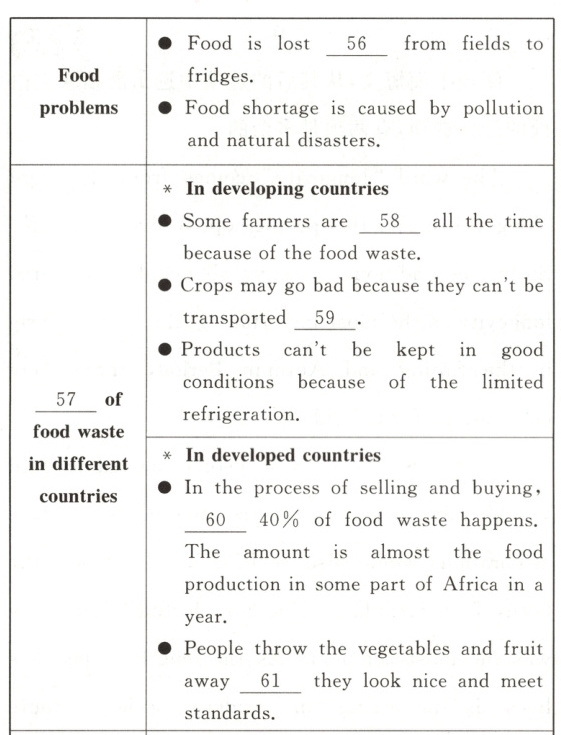

56. 57. 58.
59. 60. 61.
62. 63. 64.
65.
Food waste is not just a problem at the dinner table, but a big problem all over the world. Serious losses of food happen from farmers' fields to customers' fridges. What's worse, pollution and natural disasters may cause food shortage.
In developing countries, forty percent of food waste happens during harvesting and processing(加工). Because of this, farmers making little money are trapped in a cycle of poverty. They are also short of rapid transportation and refrigeration(冷藏), so a large amount of crops may go bad before they reach the market. Few farmers can afford industrial - sized fridges to keep their products in good condition.
Food waste is also discovered in developed countries. More than forty percent of food waste happens during the process of selling and buying. Shockingly, this amount reaches near the yearly food production in some part of Africa. In many cases, the vegetables and fruit are thrown away because they look "ugly", falling short of industry standards.
Polluting and destroying the environment does harm to producing food. A few countries are reducing natural areas for growing food crops and raising livestock(牲畜). Most surprisingly, in the Brazilian Amazon rainforest, 800 million trees in the past six years have been cut down to make beef cattle farms. Also, fish farms still create a great deal of pollution as well as diseases. At present, it seems that food production doesn't reduce, but it may influence all the living things on the earth in the future.
Natural disasters like droughts and storms can destroy a whole year's crop for an unlucky farmer. Climate change will make such events that were previously thought of as "once in a hundred years" happen more and more often. This means that we'll need more resources to produce the same amount of food.
Food waste is harmful to humans, as well as other life on the earth. It's not only the problem on customers' dinner table, but also an international problem that must be dealt with by the governments.
56. 57. 58.
59. 60. 61.
62. 63. 64.
65.
答案:
B)文体:说明文
文章大意:本文主要介绍了食物浪费的原因以及污染和自然灾害对食物生产的影响。
56. seriously 根据题干定位到第一段中,Serious losses of food happen 转换为题干,即 Food is lost seriously。
57. Causes 第二、三段分别分析了发展中国家和发达国家食物浪费的“原因”。
58. poor 根据题干定位到第二段中,are trapped in a cycle of poverty 转换为题干,即 are poor all the time。
59. rapidly 根据题干定位到第二段中,are also short of rapid transportation 转换为题干,即 can’t be transported rapidly。
60. over 根据题干定位到第三段中,More than forty percent 转换为题干,即 over 40%。
61. unless 根据题干定位到第三段中,the vegetables and fruit are thrown away because they look “ugly”转换为题干,即 People throw the vegetables and fruit away unless they look nice,此为连词的转换。
62. influences 第四、五段分析了污染和自然灾害对食物生产的不好的“影响”。
63. reduced 根据题干定位到第四段中,A few countries are reducing natural areas 转换为题干,即 Some natural areas are reduced。是主动语态,这里改成被动语态。
64. century 根据题干定位到第五段中,将原文的 once in a hundred years 同义转换为 once in a century。
65. both 根据题干定位到最后一段中,将原文的 not only ... but also ...转换为 both ... and ...结构。
文章大意:本文主要介绍了食物浪费的原因以及污染和自然灾害对食物生产的影响。
56. seriously 根据题干定位到第一段中,Serious losses of food happen 转换为题干,即 Food is lost seriously。
57. Causes 第二、三段分别分析了发展中国家和发达国家食物浪费的“原因”。
58. poor 根据题干定位到第二段中,are trapped in a cycle of poverty 转换为题干,即 are poor all the time。
59. rapidly 根据题干定位到第二段中,are also short of rapid transportation 转换为题干,即 can’t be transported rapidly。
60. over 根据题干定位到第三段中,More than forty percent 转换为题干,即 over 40%。
61. unless 根据题干定位到第三段中,the vegetables and fruit are thrown away because they look “ugly”转换为题干,即 People throw the vegetables and fruit away unless they look nice,此为连词的转换。
62. influences 第四、五段分析了污染和自然灾害对食物生产的不好的“影响”。
63. reduced 根据题干定位到第四段中,A few countries are reducing natural areas 转换为题干,即 Some natural areas are reduced。是主动语态,这里改成被动语态。
64. century 根据题干定位到第五段中,将原文的 once in a hundred years 同义转换为 once in a century。
65. both 根据题干定位到最后一段中,将原文的 not only ... but also ...转换为 both ... and ...结构。
查看更多完整答案,请扫码查看

