

 搜索
搜索
2026年江苏13大市中考名卷优选38套英语
注:目前有些书本章节名称可能整理的还不是很完善,但都是按照顺序排列的,请同学们按照顺序仔细查找。练习册 2026年江苏13大市中考名卷优选38套英语 答案主要是用来给同学们做完题方便对答案用的,请勿直接抄袭。
第170页
- 第1页
- 第2页
- 第3页
- 第4页
- 第5页
- 第6页
- 第7页
- 第8页
- 第9页
- 第10页
- 第11页
- 第12页
- 第13页
- 第14页
- 第15页
- 第16页
- 第17页
- 第18页
- 第19页
- 第20页
- 第21页
- 第22页
- 第23页
- 第24页
- 第25页
- 第26页
- 第27页
- 第28页
- 第29页
- 第30页
- 第31页
- 第32页
- 第33页
- 第34页
- 第35页
- 第36页
- 第37页
- 第38页
- 第39页
- 第40页
- 第41页
- 第42页
- 第43页
- 第44页
- 第45页
- 第46页
- 第47页
- 第48页
- 第49页
- 第50页
- 第51页
- 第52页
- 第53页
- 第54页
- 第55页
- 第56页
- 第57页
- 第58页
- 第59页
- 第60页
- 第61页
- 第62页
- 第63页
- 第64页
- 第65页
- 第66页
- 第67页
- 第68页
- 第69页
- 第70页
- 第71页
- 第72页
- 第73页
- 第74页
- 第75页
- 第76页
- 第77页
- 第78页
- 第79页
- 第80页
- 第81页
- 第82页
- 第83页
- 第84页
- 第85页
- 第86页
- 第87页
- 第88页
- 第89页
- 第90页
- 第91页
- 第92页
- 第93页
- 第94页
- 第95页
- 第96页
- 第97页
- 第98页
- 第99页
- 第100页
- 第101页
- 第102页
- 第103页
- 第104页
- 第105页
- 第106页
- 第107页
- 第108页
- 第109页
- 第110页
- 第111页
- 第112页
- 第113页
- 第114页
- 第115页
- 第116页
- 第117页
- 第118页
- 第119页
- 第120页
- 第121页
- 第122页
- 第123页
- 第124页
- 第125页
- 第126页
- 第127页
- 第128页
- 第129页
- 第130页
- 第131页
- 第132页
- 第133页
- 第134页
- 第135页
- 第136页
- 第137页
- 第138页
- 第139页
- 第140页
- 第141页
- 第142页
- 第143页
- 第144页
- 第145页
- 第146页
- 第147页
- 第148页
- 第149页
- 第150页
- 第151页
- 第152页
- 第153页
- 第154页
- 第155页
- 第156页
- 第157页
- 第158页
- 第159页
- 第160页
- 第161页
- 第162页
- 第163页
- 第164页
- 第165页
- 第166页
- 第167页
- 第168页
- 第169页
- 第170页
- 第171页
- 第172页
- 第173页
- 第174页
- 第175页
- 第176页
- 第177页
- 第178页
- 第179页
- 第180页
- 第181页
- 第182页
- 第183页
- 第184页
- 第185页
- 第186页
- 第187页
- 第188页
- 第189页
- 第190页
- 第191页
- 第192页
- 第193页
- 第194页
- 第195页
- 第196页
- 第197页
- 第198页
- 第199页
三、阅读理解(共20小题;每小题2分,计40分)
第一节 阅读下列短文,从每题所给的A、B、C、D四
个选项中选出最佳答案。
A
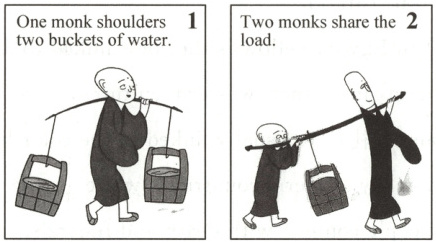
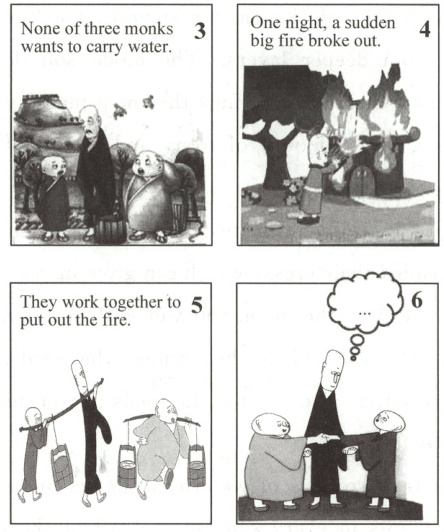
21. The pictures above are
A. a news report B. a comic strip
C. a poster D. a notice
22. In Picture 3, the monks most probably talk
about
A. who to carry water
B. how to put out the fire
C. who to harvest crops
D. how to climb up the hill
23. What can we learn from the pictures?
A. It never rains but it pours.
B. Out of sight, out of mind.
C. All for one and one for all.
D. Many hands make light work.
第一节 阅读下列短文,从每题所给的A、B、C、D四
个选项中选出最佳答案。
A
21. The pictures above are
B
.A. a news report B. a comic strip
C. a poster D. a notice
22. In Picture 3, the monks most probably talk
about
A
.A. who to carry water
B. how to put out the fire
C. who to harvest crops
D. how to climb up the hill
23. What can we learn from the pictures?
A. It never rains but it pours.
B. Out of sight, out of mind.
C. All for one and one for all.
D. Many hands make light work.
答案:
21.B 文本类型。根据图文内容可知,该文图文并茂,讲述了三个和尚挑水喝的故事,因此是漫画书。
22.A 图片理解。根据图三可知,三人在讨论谁去挑水。
23.D 推理判断。根据图五可知,最后三人齐心协力扑灭了大火,说明了团队合作的重要性,即说明了“众人拾柴火焰高”的道理。
22.A 图片理解。根据图三可知,三人在讨论谁去挑水。
23.D 推理判断。根据图五可知,最后三人齐心协力扑灭了大火,说明了团队合作的重要性,即说明了“众人拾柴火焰高”的道理。
B
Can plants grow on the moon? Here's the good
news. Scientists at the University of Florida have
grown plants in soil from the moon.
The moon soil was collected by NASA's
astronauts over 50 years ago. The soil is so valuable
that it took the scientists 11 years to get NASA's
agreement to use it. NASA didn't give them much
soil—just 12 g. Some of the soil was taken from the
top layer(层) of the moon's surface, and the rest
came from deeper layers. The moon soil doesn't
have many nutrients—things that help plants grow.
It has a large amount of iron, and is full of tiny
pieces of glass.
For their scientific test, the scientists chose a
plant called thale cress, which can grow in very little
soil. They got the moon soil wet with water mixed
with nutrients. Then they added the seeds. To
compare, they also planted the seeds in volcanic ash
(火山灰).
After two days of watering, the scientists saw
green plants in every soil layer. "All of the seeds
grew. I can't tell you how surprised we were!" said
one of the scientists. As time went on, the scientists
began to notice differences. The plants grown in the
moon soil weren't as healthy as those grown in
volcanic ash. They were smaller and grew more
slowly, and some leaves turned red. The plants
grown in the top layer moon soil did the worst of all.
Anyway, showing that plants can grow on the
moon is a really good starting point. It is the first
step toward growing plants for food and O₂ on the
moon one day. By studying changes in the DNA of
the plants grown in the moon soil, scientists may
find new ways to help plants grow better on the
moon. It is actually a huge step in achieving humans'
long-time dream of living on the moon.
24. What can we learn from Paragraph 2?
A. The astronauts collected the moon soil 11
years ago.
B. It was difficult for the scientists to get the
moon soil.
C. NASA gave most of the moon soil to the
scientists.
D. Many nutrients can be found in the soil from
the moon.
25. Why did the scientists choose thale cress?
A. It is a common plant.
B. It can live for a long time.
C. It can grow without water.
D. It doesn't need too much soil.
26. How was the growth of the plants (from good to
poor)?
a. the plants grown in volcanic ash
b. the plants grown in the top layer moon soil
c. the plants grown in the deeper layer moon soil
A. c>a>b.
B. a>b>c.
C. a>c>b.
D. b>a>c.
Can plants grow on the moon? Here's the good
news. Scientists at the University of Florida have
grown plants in soil from the moon.
The moon soil was collected by NASA's
astronauts over 50 years ago. The soil is so valuable
that it took the scientists 11 years to get NASA's
agreement to use it. NASA didn't give them much
soil—just 12 g. Some of the soil was taken from the
top layer(层) of the moon's surface, and the rest
came from deeper layers. The moon soil doesn't
have many nutrients—things that help plants grow.
It has a large amount of iron, and is full of tiny
pieces of glass.
For their scientific test, the scientists chose a
plant called thale cress, which can grow in very little
soil. They got the moon soil wet with water mixed
with nutrients. Then they added the seeds. To
compare, they also planted the seeds in volcanic ash
(火山灰).
After two days of watering, the scientists saw
green plants in every soil layer. "All of the seeds
grew. I can't tell you how surprised we were!" said
one of the scientists. As time went on, the scientists
began to notice differences. The plants grown in the
moon soil weren't as healthy as those grown in
volcanic ash. They were smaller and grew more
slowly, and some leaves turned red. The plants
grown in the top layer moon soil did the worst of all.
Anyway, showing that plants can grow on the
moon is a really good starting point. It is the first
step toward growing plants for food and O₂ on the
moon one day. By studying changes in the DNA of
the plants grown in the moon soil, scientists may
find new ways to help plants grow better on the
moon. It is actually a huge step in achieving humans'
long-time dream of living on the moon.
24. What can we learn from Paragraph 2?
A. The astronauts collected the moon soil 11
years ago.
B. It was difficult for the scientists to get the
moon soil.
C. NASA gave most of the moon soil to the
scientists.
D. Many nutrients can be found in the soil from
the moon.
25. Why did the scientists choose thale cress?
A. It is a common plant.
B. It can live for a long time.
C. It can grow without water.
D. It doesn't need too much soil.
26. How was the growth of the plants (from good to
poor)?
a. the plants grown in volcanic ash
b. the plants grown in the top layer moon soil
c. the plants grown in the deeper layer moon soil
A. c>a>b.
B. a>b>c.
C. a>c>b.
D. b>a>c.
答案:
24.B 推理判断。根据第二段第二句可知,月球土壤很宝贵,以至于科学家们花了11年时间才获得NASA关于使用它的许可。由此可推知,科学家们很难获得月球土壤。
25.D 细节理解。根据第三段第一句可知,科学家们选择这种植物是因为它能够在很少的土壤中生长。
26.C 细节排序。根据第四段第四至六句可知,在月球土壤中种植的植物不如在火山灰中种植的植物健康,它们较小,生长较慢,有些叶子变红,而在顶层月球土壤中种植的植物情况最糟。因此顺序应是a>c>b。
Plus课外延伸
月壤——月球表面的神秘土壤
月壤是覆盖在月球表面的一层松散颗粒物质,主要由微陨石撞击、太阳风辐射和宇宙射线作用形成。与地球土壤不同,月壤不含有机质和水分,其成分主要包括玄武岩和斜长岩碎屑,以及大量玻璃质微珠。这些微珠是陨石撞击时高温熔融的岩石快速冷却形成的,成为月壤的独特特征。
科学家对月壤的研究揭示了月球的地质历史。例如,嫦娥五号带回的月壤样本显示,月球在约20亿年前仍有火山活动,比此前认为的更晚。月壤中还含有丰富的氦-3,这种稀有同位素是未来核聚变能源的潜在燃料。通过对月壤的分析,人类不仅能够更深入地了解月球的演化,还能为未来的月球基地建设和资源开发提供关键依据。
25.D 细节理解。根据第三段第一句可知,科学家们选择这种植物是因为它能够在很少的土壤中生长。
26.C 细节排序。根据第四段第四至六句可知,在月球土壤中种植的植物不如在火山灰中种植的植物健康,它们较小,生长较慢,有些叶子变红,而在顶层月球土壤中种植的植物情况最糟。因此顺序应是a>c>b。
Plus课外延伸
月壤——月球表面的神秘土壤
月壤是覆盖在月球表面的一层松散颗粒物质,主要由微陨石撞击、太阳风辐射和宇宙射线作用形成。与地球土壤不同,月壤不含有机质和水分,其成分主要包括玄武岩和斜长岩碎屑,以及大量玻璃质微珠。这些微珠是陨石撞击时高温熔融的岩石快速冷却形成的,成为月壤的独特特征。
科学家对月壤的研究揭示了月球的地质历史。例如,嫦娥五号带回的月壤样本显示,月球在约20亿年前仍有火山活动,比此前认为的更晚。月壤中还含有丰富的氦-3,这种稀有同位素是未来核聚变能源的潜在燃料。通过对月壤的分析,人类不仅能够更深入地了解月球的演化,还能为未来的月球基地建设和资源开发提供关键依据。
查看更多完整答案,请扫码查看

