

 搜索
搜索
2026年江苏13大市中考名卷优选38套英语
注:目前有些书本章节名称可能整理的还不是很完善,但都是按照顺序排列的,请同学们按照顺序仔细查找。练习册 2026年江苏13大市中考名卷优选38套英语 答案主要是用来给同学们做完题方便对答案用的,请勿直接抄袭。
第163页
- 第1页
- 第2页
- 第3页
- 第4页
- 第5页
- 第6页
- 第7页
- 第8页
- 第9页
- 第10页
- 第11页
- 第12页
- 第13页
- 第14页
- 第15页
- 第16页
- 第17页
- 第18页
- 第19页
- 第20页
- 第21页
- 第22页
- 第23页
- 第24页
- 第25页
- 第26页
- 第27页
- 第28页
- 第29页
- 第30页
- 第31页
- 第32页
- 第33页
- 第34页
- 第35页
- 第36页
- 第37页
- 第38页
- 第39页
- 第40页
- 第41页
- 第42页
- 第43页
- 第44页
- 第45页
- 第46页
- 第47页
- 第48页
- 第49页
- 第50页
- 第51页
- 第52页
- 第53页
- 第54页
- 第55页
- 第56页
- 第57页
- 第58页
- 第59页
- 第60页
- 第61页
- 第62页
- 第63页
- 第64页
- 第65页
- 第66页
- 第67页
- 第68页
- 第69页
- 第70页
- 第71页
- 第72页
- 第73页
- 第74页
- 第75页
- 第76页
- 第77页
- 第78页
- 第79页
- 第80页
- 第81页
- 第82页
- 第83页
- 第84页
- 第85页
- 第86页
- 第87页
- 第88页
- 第89页
- 第90页
- 第91页
- 第92页
- 第93页
- 第94页
- 第95页
- 第96页
- 第97页
- 第98页
- 第99页
- 第100页
- 第101页
- 第102页
- 第103页
- 第104页
- 第105页
- 第106页
- 第107页
- 第108页
- 第109页
- 第110页
- 第111页
- 第112页
- 第113页
- 第114页
- 第115页
- 第116页
- 第117页
- 第118页
- 第119页
- 第120页
- 第121页
- 第122页
- 第123页
- 第124页
- 第125页
- 第126页
- 第127页
- 第128页
- 第129页
- 第130页
- 第131页
- 第132页
- 第133页
- 第134页
- 第135页
- 第136页
- 第137页
- 第138页
- 第139页
- 第140页
- 第141页
- 第142页
- 第143页
- 第144页
- 第145页
- 第146页
- 第147页
- 第148页
- 第149页
- 第150页
- 第151页
- 第152页
- 第153页
- 第154页
- 第155页
- 第156页
- 第157页
- 第158页
- 第159页
- 第160页
- 第161页
- 第162页
- 第163页
- 第164页
- 第165页
- 第166页
- 第167页
- 第168页
- 第169页
- 第170页
- 第171页
- 第172页
- 第173页
- 第174页
- 第175页
- 第176页
- 第177页
- 第178页
- 第179页
- 第180页
- 第181页
- 第182页
- 第183页
- 第184页
- 第185页
- 第186页
- 第187页
- 第188页
- 第189页
- 第190页
- 第191页
- 第192页
- 第193页
- 第194页
- 第195页
- 第196页
- 第197页
- 第198页
- 第199页
三、阅读理解(共20小题;每小题2分,满分40分)
阅读下列材料,根据材料内容选择最佳答案。
A
How to Bank a Seed!
Scientists are working to save world's plants from dying out. Storing a seed correctly can make its life longer by hundreds of years. Just like a regular bank, a seed bank is a safe place to save for the future. But this special vault contains seeds, not money!
Find out how the scientists do it...
1. Collection
Successful seed banking starts with collecting! Along with the seeds, scientists must gather essential information about the plants' location and time of year they were gathered.
2. Drying out
The drying room is a lot less humid(湿热的) than a regular room. Depending on a seed's size, it'll stay there for between two weeks and six months, slowly drying out.
3. Clean up & X - rays
They are either cleaned by hand or with a machine that removes dirt and damaged seeds. Then, an X - ray machine examines a sample of the seeds to check what percentage of them are damaged, empty or have bugs inside!
4. Into the vault
It's now time for most of the seeds to go into the vault! They're stored in air - tight containers at - 20°C in underground rooms. If all goes to plan, they should survive for hundreds of years.
5. Testing time
After a few months, a sample will be tested to see if they've survived. Scientists take a careful note of the best ways to germinate(发芽) each seed so that they can be grown successfully by scientists of the future.
6. The nursery
Once the sample seeds have germinated and flowered, it will be used to confirm whether the seed was labelled correctly in step one. If it is right, the seeds can be used for important scientific projects.
26. The purpose of storing the seeds is to
A. study their growth
B. help them survive
C. grow them better
D. increase their number
27. Which of the following orders is CORRECT?
①collect seeds
②dry out seeds
③store seeds
④clean seeds
A. ①②④③
B. ④②③①
C. ②④①③
D. ③②④①
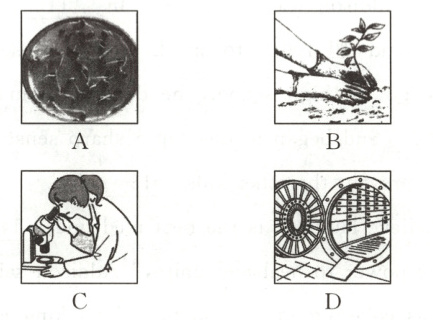
28. Which of the following pictures can be used to show Step 4?
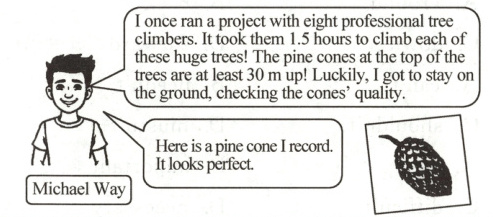
29. Michael Way's job is to
A. collect the seeds
B. dry out the seeds
C. clean up the seeds
D. germinate the seeds
30. We can read the passage from
A. a notice
B. a magazine
C. a diary
D. an advertisement
阅读下列材料,根据材料内容选择最佳答案。
A
How to Bank a Seed!
Scientists are working to save world's plants from dying out. Storing a seed correctly can make its life longer by hundreds of years. Just like a regular bank, a seed bank is a safe place to save for the future. But this special vault contains seeds, not money!
Find out how the scientists do it...
1. Collection
Successful seed banking starts with collecting! Along with the seeds, scientists must gather essential information about the plants' location and time of year they were gathered.
2. Drying out
The drying room is a lot less humid(湿热的) than a regular room. Depending on a seed's size, it'll stay there for between two weeks and six months, slowly drying out.
3. Clean up & X - rays
They are either cleaned by hand or with a machine that removes dirt and damaged seeds. Then, an X - ray machine examines a sample of the seeds to check what percentage of them are damaged, empty or have bugs inside!
4. Into the vault
It's now time for most of the seeds to go into the vault! They're stored in air - tight containers at - 20°C in underground rooms. If all goes to plan, they should survive for hundreds of years.
5. Testing time
After a few months, a sample will be tested to see if they've survived. Scientists take a careful note of the best ways to germinate(发芽) each seed so that they can be grown successfully by scientists of the future.
6. The nursery
Once the sample seeds have germinated and flowered, it will be used to confirm whether the seed was labelled correctly in step one. If it is right, the seeds can be used for important scientific projects.
26. The purpose of storing the seeds is to
B
.A. study their growth
B. help them survive
C. grow them better
D. increase their number
27. Which of the following orders is CORRECT?
①collect seeds
②dry out seeds
③store seeds
④clean seeds
A. ①②④③
B. ④②③①
C. ②④①③
D. ③②④①
28. Which of the following pictures can be used to show Step 4?
29. Michael Way's job is to
A
.A. collect the seeds
B. dry out the seeds
C. clean up the seeds
D. germinate the seeds
30. We can read the passage from
B
.A. a notice
B. a magazine
C. a diary
D. an advertisement
答案:
A
文体:说明文
文章大意:文章介绍了科学家为了防止植物灭绝而通过种子银行保存植物种子的过程。
26. B 细节理解。根据第一段第二句可知,正确储存种子可以使其寿命延长数百年。
27. A 细节排序。根据文章小标题部分可知,1/2/3分别对应选项①②④,小标题4部分中“They’re stored in ...”对应选项③。
28. D 图像理解。根据步骤四第二句可知,将种子存储在地下室里零下20℃的密封容器中,图D符合题意。
29. A 细节理解。根据 Michael Way 的描述(对话框内)可知,他负责核实松果的质量,这与种子的收集工作相关。
30. B 文章出处。本文主要介绍了科学家为了防止植物灭绝而通过种子银行保存植物种子的过程。因此,我们可以在相关杂志中读到这篇科普文章。
文体:说明文
文章大意:文章介绍了科学家为了防止植物灭绝而通过种子银行保存植物种子的过程。
26. B 细节理解。根据第一段第二句可知,正确储存种子可以使其寿命延长数百年。
27. A 细节排序。根据文章小标题部分可知,1/2/3分别对应选项①②④,小标题4部分中“They’re stored in ...”对应选项③。
28. D 图像理解。根据步骤四第二句可知,将种子存储在地下室里零下20℃的密封容器中,图D符合题意。
29. A 细节理解。根据 Michael Way 的描述(对话框内)可知,他负责核实松果的质量,这与种子的收集工作相关。
30. B 文章出处。本文主要介绍了科学家为了防止植物灭绝而通过种子银行保存植物种子的过程。因此,我们可以在相关杂志中读到这篇科普文章。
B
The Chinese language differs from Western languages in that, instead of an alphabet(字母表), it uses characters(文字) which stand for ideas, objects or deeds. Chinese words are formed by putting together different characters. In many cases, a single character can also make up a word. As one kind of the most ancient characters, Chinese characters have played an important role in the development of Chinese culture.
Chinese writing began thousands of years ago. According to an ancient story, a man named Cang Jie invented Chinese writing. One winter day while he was hunting, he saw the footprints of animals in the snow and noticed that the appearance of each one was different. Then he had the idea that he could use different shapes to represent different objects. The first Chinese characters were drawings of physical objects. Some characters have been simplified(简化) and others have been made more difficult over time.
Not all characters were developed from drawings of objects. However, as a whole, the characters have developed from drawings into standard forms. The character for a mountain was at first three mountaintops together. This became one mountaintop and three lines, and over time turned into the character used nowadays.
Sometimes to express ideas, some characters were made by combining two or more characters together. For example, “休” was made up of the characters for a man and a tree. The character “囚” was formed with a “man” inside a square. Other characters were developed for directions and numbers. It is easy to distinguish(区别) their meanings by looking at them, for example, the characters for “up” and “down”, which are opposites of each other.
Though these kinds of characters indicate(表明) meanings, one of their shortcomings is that they do not show how they should be pronounced. Therefore,a method was developed to have one part of a character represent the meaning and the other suggest the pronunciation. Many Chinese characters used today were made this way.
In the 1950s, the Chinese government introduced simplified Chinese characters in the hope to make learning to read and write more understandable to the general population, which would increase literacy (读写能力) across the country. And now they have widespread use in China.
31. The earliest Chinese characters were mainly based on
A. animal sounds
B. simplified shapes
C. drawings of objects
D. Maths symbols
32. The writer introduces the Chinese characters by
A. giving examples
B. providing causes
C. expressing opinions
D. comparing facts
33. Which Chinese character used the method of the underlined sentence?
A. 亦
B. 竹
C. 明
D. 桐
34. What can we learn from the passage?
A. Chinese characters have turned into standard forms, all of which are easier than before.
B. Chinese characters we use today have been accepted by large numbers of people.
C. Chinese characters existed at the very beginning and remain today like other ancient symbols.
D. Chinese words and English words are both formed by putting alphabets and characters together.
35. In which part of a newspaper can we probably find the passage?
A. Entertainment.
B. Culture.
C. Nature.
D. Review.
The Chinese language differs from Western languages in that, instead of an alphabet(字母表), it uses characters(文字) which stand for ideas, objects or deeds. Chinese words are formed by putting together different characters. In many cases, a single character can also make up a word. As one kind of the most ancient characters, Chinese characters have played an important role in the development of Chinese culture.
Chinese writing began thousands of years ago. According to an ancient story, a man named Cang Jie invented Chinese writing. One winter day while he was hunting, he saw the footprints of animals in the snow and noticed that the appearance of each one was different. Then he had the idea that he could use different shapes to represent different objects. The first Chinese characters were drawings of physical objects. Some characters have been simplified(简化) and others have been made more difficult over time.
Not all characters were developed from drawings of objects. However, as a whole, the characters have developed from drawings into standard forms. The character for a mountain was at first three mountaintops together. This became one mountaintop and three lines, and over time turned into the character used nowadays.
Sometimes to express ideas, some characters were made by combining two or more characters together. For example, “休” was made up of the characters for a man and a tree. The character “囚” was formed with a “man” inside a square. Other characters were developed for directions and numbers. It is easy to distinguish(区别) their meanings by looking at them, for example, the characters for “up” and “down”, which are opposites of each other.
Though these kinds of characters indicate(表明) meanings, one of their shortcomings is that they do not show how they should be pronounced. Therefore,a method was developed to have one part of a character represent the meaning and the other suggest the pronunciation. Many Chinese characters used today were made this way.
In the 1950s, the Chinese government introduced simplified Chinese characters in the hope to make learning to read and write more understandable to the general population, which would increase literacy (读写能力) across the country. And now they have widespread use in China.
31. The earliest Chinese characters were mainly based on
C
.A. animal sounds
B. simplified shapes
C. drawings of objects
D. Maths symbols
32. The writer introduces the Chinese characters by
A
in Paragraph 4.A. giving examples
B. providing causes
C. expressing opinions
D. comparing facts
33. Which Chinese character used the method of the underlined sentence?
A. 亦
B. 竹
C. 明
D. 桐
34. What can we learn from the passage?
A. Chinese characters have turned into standard forms, all of which are easier than before.
B. Chinese characters we use today have been accepted by large numbers of people.
C. Chinese characters existed at the very beginning and remain today like other ancient symbols.
D. Chinese words and English words are both formed by putting alphabets and characters together.
35. In which part of a newspaper can we probably find the passage?
A. Entertainment.
B. Culture.
C. Nature.
D. Review.
答案:
B
文体:说明文
文章大意:文章介绍了汉字的相关知识,包括汉字与西方语言的不同、汉字的起源、发展过程、造字方法以及20世纪50年代中国政府推行简体字以提高全民读写能力等内容。
31. C 细节理解。根据第二段倒数第二句可知,最初的汉字是实物的图画。
32. A 细节理解。第四段中作者通过“休”、“囚”等汉字,用举例的方式来介绍汉字。
33. D 句意理解。画线句子说的是形声字造字法,一部分表意,一部分表音,“桐”字,“木”字旁表意,与树木有关,“同”表音。
34. B 推理判断。根据最后一段最后一句可知,在汉字在广泛使用,也就是已经被大量的人接受。
35. B 文章出处。通读全文可知,文章主要介绍汉字,汉字属于文化范畴,所以最有可能在报纸的文化版块看到这篇文章。
Plus课外延伸
汉字的构字智慧
汉字是世界上最古老的文字体系之一,其独特的构字方式蕴含着先民的智慧。传统上,汉字的构造可分为“六书”:象形(如“日”、“月”)、指事(如“上”、“下”)、会意(如“休”:人靠木休息)、形声(如“河”:水表意,可表音)、转注和假借。其中形声字占比最大,约80%,通过形旁表义、声旁表音的方式,既保留了表意功能,又提高了造字效率。这种构字体系使汉字成为兼具形象美与逻辑性的文字。
每个汉字都是一幅微缩的文化图景。如“家”字(+豕),屋顶下有猪,反映了古代农耕社会的家庭经济;“男”字(田+力),田间劳作之力,彰显传统社会性别分工。现代简化字虽改变了部分字形,但仍保留着核心构字逻辑。这种构字方式不仅承载着中华文明数千年的历史记忆,其形音义结合的特点也造就了书法、对联等独特艺术形式,成为中华文化的重要标识。
文体:说明文
文章大意:文章介绍了汉字的相关知识,包括汉字与西方语言的不同、汉字的起源、发展过程、造字方法以及20世纪50年代中国政府推行简体字以提高全民读写能力等内容。
31. C 细节理解。根据第二段倒数第二句可知,最初的汉字是实物的图画。
32. A 细节理解。第四段中作者通过“休”、“囚”等汉字,用举例的方式来介绍汉字。
33. D 句意理解。画线句子说的是形声字造字法,一部分表意,一部分表音,“桐”字,“木”字旁表意,与树木有关,“同”表音。
34. B 推理判断。根据最后一段最后一句可知,在汉字在广泛使用,也就是已经被大量的人接受。
35. B 文章出处。通读全文可知,文章主要介绍汉字,汉字属于文化范畴,所以最有可能在报纸的文化版块看到这篇文章。
Plus课外延伸
汉字的构字智慧
汉字是世界上最古老的文字体系之一,其独特的构字方式蕴含着先民的智慧。传统上,汉字的构造可分为“六书”:象形(如“日”、“月”)、指事(如“上”、“下”)、会意(如“休”:人靠木休息)、形声(如“河”:水表意,可表音)、转注和假借。其中形声字占比最大,约80%,通过形旁表义、声旁表音的方式,既保留了表意功能,又提高了造字效率。这种构字体系使汉字成为兼具形象美与逻辑性的文字。
每个汉字都是一幅微缩的文化图景。如“家”字(+豕),屋顶下有猪,反映了古代农耕社会的家庭经济;“男”字(田+力),田间劳作之力,彰显传统社会性别分工。现代简化字虽改变了部分字形,但仍保留着核心构字逻辑。这种构字方式不仅承载着中华文明数千年的历史记忆,其形音义结合的特点也造就了书法、对联等独特艺术形式,成为中华文化的重要标识。
查看更多完整答案,请扫码查看

