

 搜索
搜索
第57页
- 第1页
- 第2页
- 第3页
- 第4页
- 第5页
- 第6页
- 第7页
- 第8页
- 第9页
- 第10页
- 第11页
- 第12页
- 第13页
- 第14页
- 第15页
- 第16页
- 第17页
- 第18页
- 第19页
- 第20页
- 第21页
- 第22页
- 第23页
- 第24页
- 第25页
- 第26页
- 第27页
- 第28页
- 第29页
- 第30页
- 第31页
- 第32页
- 第33页
- 第34页
- 第35页
- 第36页
- 第37页
- 第38页
- 第39页
- 第40页
- 第41页
- 第42页
- 第43页
- 第44页
- 第45页
- 第46页
- 第47页
- 第48页
- 第49页
- 第50页
- 第51页
- 第52页
- 第53页
- 第54页
- 第55页
- 第56页
- 第57页
- 第58页
- 第59页
- 第60页
- 第61页
- 第62页
- 第63页
- 第64页
- 第65页
- 第66页
- 第67页
- 第68页
- 第69页
- 第70页
- 第71页
- 第72页
- 第73页
- 第74页
- 第75页
- 第76页
- 第77页
- 第78页
- 第79页
- 第80页
- 第81页
- 第82页
- 第83页
- 第84页
- 第85页
- 第86页
- 第87页
- 第88页
- 第89页
- 第90页
- 第91页
- 第92页
- 第93页
- 第94页
- 第95页
- 第96页
- 第97页
- 第98页
- 第99页
- 第100页
- 第101页
- 第102页
- 第103页
- 第104页
- 第105页
- 第106页
- 第107页
- 第108页
- 第109页
- 第110页
- 第111页
- 第112页
- 第113页
- 第114页
- 第115页
- 第116页
- 第117页
- 第118页
- 第119页
- 第120页
- 第121页
- 第122页
- 第123页
- 第124页
- 第125页
- 第126页
- 第127页
- 第128页
- 第129页
- 第130页
- 第131页
- 第132页
- 第133页
- 第134页
- 第135页
- 第136页
- 第137页
- 第138页
- 第139页
- 第140页
- 第141页
- 第142页
- 第143页
- 第144页
- 第145页
- 第146页
- 第147页
- 第148页
- 第149页
- 第150页
- 第151页
- 第152页
- 第153页
- 第154页
- 第155页
- 第156页
- 第157页
- 第158页
- 第159页
- 第160页
- 第161页
- 第162页
- 第163页
- 第164页
- 第165页
- 第166页
- 第167页
- 第168页
- 第169页
- 第170页
- 第171页
- 第172页
- 第173页
- 第174页
- 第175页
- 第176页
- 第177页
- 第178页
- 第179页
- 第180页
- 第181页
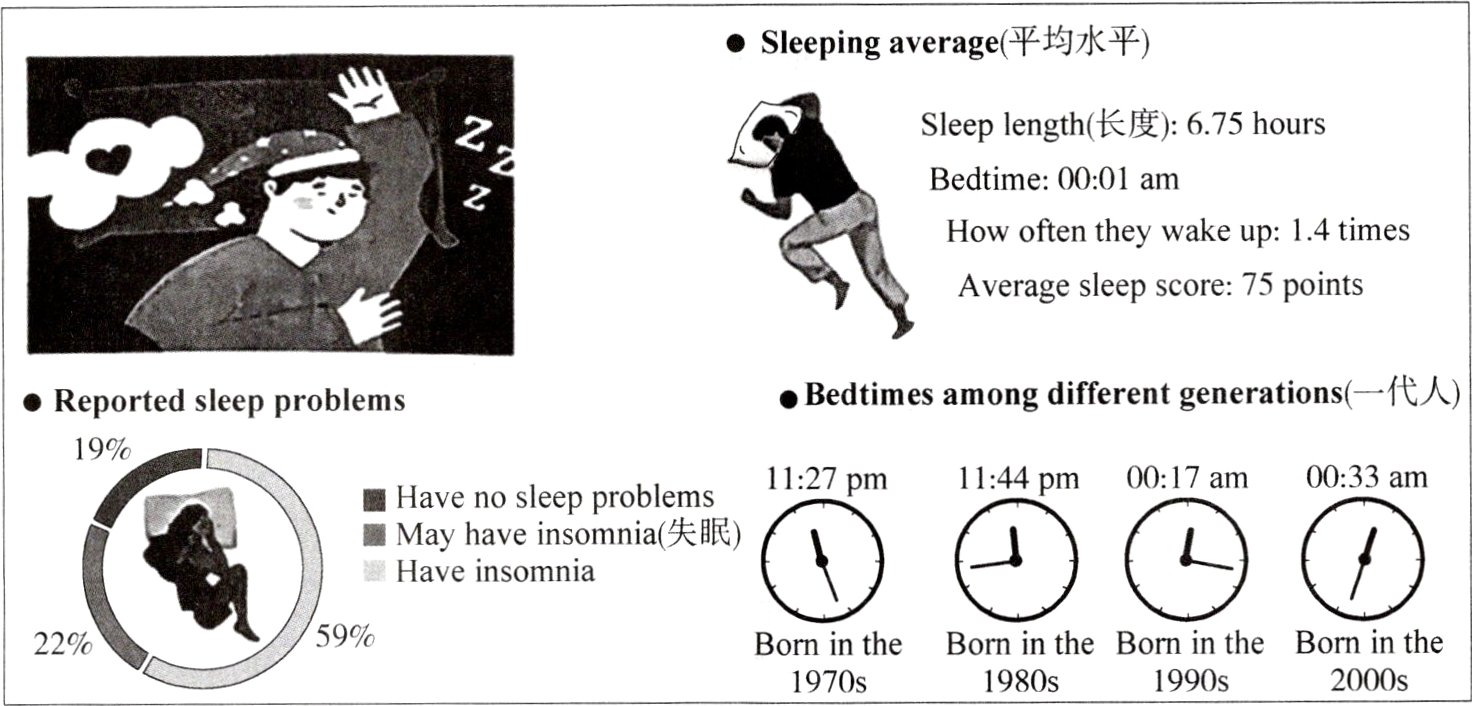
1.Mr. Yang was born in the 1980s. He probably goes to bed at ______.
A.11:27 pm
B.11:44 pm
C.00:33 am
2.According to the chart, which of the following is TRUE?
A.59% of people have insomnia.
B.22% of people sleep well.
C.19% of people may have insomnia.
3.In which part of a newspaper can you read this passage?
A.Sports.
B.Music.
C.Life.
答案:
Passage 1
语篇解读 本文介绍了睡眠平均水平、睡眠问题统计以及不同年代的人上床睡觉的时间。
1.B 细节理解题。根据图表可知,二十世纪八十年代出生的人平均晚上11:44上床睡觉,故选B。
2.A 细节理解题。根据图表可知,59%的人失眠,故选A。
3.C 文章出处题。本文介绍了睡眠平均水平、睡眠问题统计以及不同年代的人睡觉的时间等,与生活相关,故选C。
语篇解读 本文介绍了睡眠平均水平、睡眠问题统计以及不同年代的人上床睡觉的时间。
1.B 细节理解题。根据图表可知,二十世纪八十年代出生的人平均晚上11:44上床睡觉,故选B。
2.A 细节理解题。根据图表可知,59%的人失眠,故选A。
3.C 文章出处题。本文介绍了睡眠平均水平、睡眠问题统计以及不同年代的人睡觉的时间等,与生活相关,故选C。
Passage 2(2024湘潭一模)
Tai chi is an ancient practice that mixes gentle movements with focus, breathing, and relaxation. And it is well - known that practicing tai chi can not only help people enjoy better health but also teach people to relax their minds and stay cool in bad conditions. But recently scientists have made new findings—they have found that practicing tai chi might help make Parkinson’s disease (帕金森病) progress more slowly.
Doctors from Shanghai Jiao Tong University School of Medicine carried out a five - year study on people with Parkinson’s. They did the experiment on two different groups of people with Parkinson’s. One group of 147 people usually practiced tai chi while the other group of 187 did not. The researchers discovered that the disease went at a slower speed in the tai chi group. This group also saw fewer falls, and less dizziness(头晕) and back pain. This means they can enjoy a better life, need less help from caregivers, and use fewer medicines.
Parkinson’s disease is a serious brain illness. It slowly causes people unable to control their movements. It will cause problems such as shaking and stiffness(僵硬) and make it hard to keep balance and move smoothly. People with Parkinson’s may in the end have difficulties walking and talking. One of the most famous people with Parkinson’s was the heavyweight boxing champion(拳击冠军), Muhammad Ali.
So the research is of great importance, and hopefully more people will enjoy the advantages of regular(有规律的) practice of tai chi.
4. How long did the scientists’ study last?
A. For two years.
B. For five years.
C. For ten years.
5. What have the doctors in Shanghai Jiao Tong University School of Medicine discovered?
A. Parkinson’s disease is a serious brain illness.
B. Doing tai chi can help slow down Parkinson’s disease.
C. People who don’t do tai chi could sleep better.
6. Why was Muhammad Ali mentioned in Paragraph 3?
A. To show how successful a sportsman he was.
B. To give an example of people with Parkinson’s.
C. To explain the correct way of practicing tai chi.
7. What is the best title for the passage?
A. The Many Health Advantages of Tai Chi
B. A Deep Understanding of Parkinson’s Disease
C. Slowing Down Parkinson’s Disease with Tai Chi
Tai chi is an ancient practice that mixes gentle movements with focus, breathing, and relaxation. And it is well - known that practicing tai chi can not only help people enjoy better health but also teach people to relax their minds and stay cool in bad conditions. But recently scientists have made new findings—they have found that practicing tai chi might help make Parkinson’s disease (帕金森病) progress more slowly.
Doctors from Shanghai Jiao Tong University School of Medicine carried out a five - year study on people with Parkinson’s. They did the experiment on two different groups of people with Parkinson’s. One group of 147 people usually practiced tai chi while the other group of 187 did not. The researchers discovered that the disease went at a slower speed in the tai chi group. This group also saw fewer falls, and less dizziness(头晕) and back pain. This means they can enjoy a better life, need less help from caregivers, and use fewer medicines.
Parkinson’s disease is a serious brain illness. It slowly causes people unable to control their movements. It will cause problems such as shaking and stiffness(僵硬) and make it hard to keep balance and move smoothly. People with Parkinson’s may in the end have difficulties walking and talking. One of the most famous people with Parkinson’s was the heavyweight boxing champion(拳击冠军), Muhammad Ali.
So the research is of great importance, and hopefully more people will enjoy the advantages of regular(有规律的) practice of tai chi.
4. How long did the scientists’ study last?
A. For two years.
B. For five years.
C. For ten years.
5. What have the doctors in Shanghai Jiao Tong University School of Medicine discovered?
A. Parkinson’s disease is a serious brain illness.
B. Doing tai chi can help slow down Parkinson’s disease.
C. People who don’t do tai chi could sleep better.
6. Why was Muhammad Ali mentioned in Paragraph 3?
A. To show how successful a sportsman he was.
B. To give an example of people with Parkinson’s.
C. To explain the correct way of practicing tai chi.
7. What is the best title for the passage?
A. The Many Health Advantages of Tai Chi
B. A Deep Understanding of Parkinson’s Disease
C. Slowing Down Parkinson’s Disease with Tai Chi
答案:
语篇解读 本文是一篇说明文。研究发现练习太极拳可能有助于减缓帕金森病的发展。
4.B 细节理解题。根据第二段中“...carried out a five - year study on people with Parkinson’s.”可知,上海交通大学医学院的研究者对患有帕金森病的人进行了五年的研究。故选B。
5.B 细节理解题。根据第二段中的“The researchers discovered that the disease went at a slower speed in the tai chi group. This group also saw fewer falls, and less dizziness and back pain.”可知,研究者发现打太极拳的帕金森病人的病情发展速度更慢。故选B。
6.B 推理判断题。文章第三段主要介绍帕金森病的症状,这里拳王阿里为举例。故选B。
7.C 最佳标题题。通读全文可知,研究人员发现练习太极拳可能有助于减缓帕金森病的发展,文章的最后一段还鼓励人们练习太极拳,所以“用太极拳来减缓帕金森患病发展”符合文意。故选C。
4.B 细节理解题。根据第二段中“...carried out a five - year study on people with Parkinson’s.”可知,上海交通大学医学院的研究者对患有帕金森病的人进行了五年的研究。故选B。
5.B 细节理解题。根据第二段中的“The researchers discovered that the disease went at a slower speed in the tai chi group. This group also saw fewer falls, and less dizziness and back pain.”可知,研究者发现打太极拳的帕金森病人的病情发展速度更慢。故选B。
6.B 推理判断题。文章第三段主要介绍帕金森病的症状,这里拳王阿里为举例。故选B。
7.C 最佳标题题。通读全文可知,研究人员发现练习太极拳可能有助于减缓帕金森病的发展,文章的最后一段还鼓励人们练习太极拳,所以“用太极拳来减缓帕金森患病发展”符合文意。故选C。
查看更多完整答案,请扫码查看

