

 搜索
搜索
第55页
- 第1页
- 第2页
- 第3页
- 第4页
- 第5页
- 第6页
- 第7页
- 第8页
- 第9页
- 第10页
- 第11页
- 第12页
- 第13页
- 第14页
- 第15页
- 第16页
- 第17页
- 第18页
- 第19页
- 第20页
- 第21页
- 第22页
- 第23页
- 第24页
- 第25页
- 第26页
- 第27页
- 第28页
- 第29页
- 第30页
- 第31页
- 第32页
- 第33页
- 第34页
- 第35页
- 第36页
- 第37页
- 第38页
- 第39页
- 第40页
- 第41页
- 第42页
- 第43页
- 第44页
- 第45页
- 第46页
- 第47页
- 第48页
- 第49页
- 第50页
- 第51页
- 第52页
- 第53页
- 第54页
- 第55页
- 第56页
- 第57页
- 第58页
- 第59页
- 第60页
- 第61页
- 第62页
- 第63页
- 第64页
- 第65页
- 第66页
- 第67页
- 第68页
- 第69页
- 第70页
- 第71页
- 第72页
- 第73页
- 第74页
- 第75页
- 第76页
- 第77页
- 第78页
- 第79页
- 第80页
- 第81页
- 第82页
- 第83页
- 第84页
- 第85页
- 第86页
- 第87页
- 第88页
- 第89页
- 第90页
- 第91页
- 第92页
- 第93页
- 第94页
- 第95页
- 第96页
- 第97页
- 第98页
- 第99页
- 第100页
- 第101页
- 第102页
- 第103页
- 第104页
- 第105页
- 第106页
- 第107页
- 第108页
- 第109页
- 第110页
- 第111页
- 第112页
- 第113页
- 第114页
- 第115页
- 第116页
- 第117页
- 第118页
- 第119页
- 第120页
- 第121页
- 第122页
- 第123页
- 第124页
- 第125页
- 第126页
- 第127页
- 第128页
- 第129页
- 第130页
- 第131页
- 第132页
- 第133页
- 第134页
- 第135页
- 第136页
- 第137页
- 第138页
- 第139页
- 第140页
- 第141页
- 第142页
- 第143页
- 第144页
- 第145页
- 第146页
- 第147页
- 第148页
- 第149页
- 第150页
- 第151页
- 第152页
- 第153页
- 第154页
- 第155页
- 第156页
- 第157页
- 第158页
- 第159页
- 第160页
- 第161页
- 第162页
- 第163页
- 第164页
- 第165页
- 第166页
- 第167页
- 第168页
- 第169页
- 第170页
- 第171页
- 第172页
- 第173页
- 第174页
- 第175页
- 第176页
- 第177页
- 第178页
- 第179页
- 第180页
- 第181页
Passage 2(2024娄底二模)
①Dreams may make you smart. This was discovered by scientists who do research on dreams.
②What is a dream exactly? Scientists explain that during sleep time your brain reviews your experiences in the day. It tries to connect your new experiences with the old memories. As your brain connect these things, it turns them into a story, and then you get a dream.
③Dreams may help you deal with worries and fears. What has happened during the day may be painful. While you are sleeping, however, the brain will replay the painful memories in a safe dream space. There the bad memories become less painful. And you will feel better after waking up.
④Dreams also seem to be able to help you learn. This idea is supported by a study. So scientists advise you not to stay up all night studying, especially when an exam is coming. They say a sweet dream might help you get higher marks.
⑤Dreams may make you more creative, too. It was reported that a famous songwriter came up with his best song in a dream, and wrote it down as soon as he woke up. However, dreams alone can’t bring about creativity. In fact, the songwriter spent a lot of time thinking about the song before the dream. In a word, hard work matters more for creativity, though dreams may also play a role.
4.What is the right order for the brain to develop a dream?
a.Make you get a dream.
b.Turn things into a story.
c.Review your experiences in the day.
d.Connect new experiences with old memories.
A.c→d→b→a
B.c→d→a→b
C.c→b→d→a
5.What can we infer(推断) from the passage?
A.Hard work has nothing to do with creativity.
B.Dreams may have some influence on people’s creativity.
C.Songwriters all came up with their best songs in their dreams.
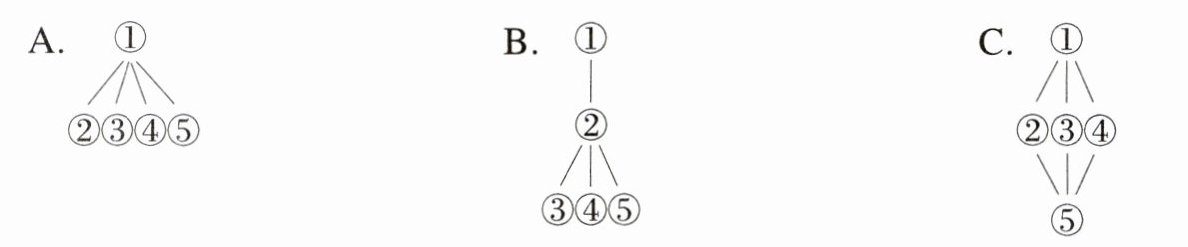
6.Which is the right structure(结构) of the passage?
7.We can probably read this passage in a ______.
A.science fiction novel
B.sports newspaper
C.health magazine
①Dreams may make you smart. This was discovered by scientists who do research on dreams.
②What is a dream exactly? Scientists explain that during sleep time your brain reviews your experiences in the day. It tries to connect your new experiences with the old memories. As your brain connect these things, it turns them into a story, and then you get a dream.
③Dreams may help you deal with worries and fears. What has happened during the day may be painful. While you are sleeping, however, the brain will replay the painful memories in a safe dream space. There the bad memories become less painful. And you will feel better after waking up.
④Dreams also seem to be able to help you learn. This idea is supported by a study. So scientists advise you not to stay up all night studying, especially when an exam is coming. They say a sweet dream might help you get higher marks.
⑤Dreams may make you more creative, too. It was reported that a famous songwriter came up with his best song in a dream, and wrote it down as soon as he woke up. However, dreams alone can’t bring about creativity. In fact, the songwriter spent a lot of time thinking about the song before the dream. In a word, hard work matters more for creativity, though dreams may also play a role.
4.What is the right order for the brain to develop a dream?
a.Make you get a dream.
b.Turn things into a story.
c.Review your experiences in the day.
d.Connect new experiences with old memories.
A.c→d→b→a
B.c→d→a→b
C.c→b→d→a
5.What can we infer(推断) from the passage?
A.Hard work has nothing to do with creativity.
B.Dreams may have some influence on people’s creativity.
C.Songwriters all came up with their best songs in their dreams.
6.Which is the right structure(结构) of the passage?
7.We can probably read this passage in a ______.
A.science fiction novel
B.sports newspaper
C.health magazine
答案:
语篇解读 本文为说明文,文章介绍了人为什么做梦,以及梦对人的一些积极作用。
4.A 细节理解题。根据第二段可知,梦的形成顺序是:回顾当天的经历→把新的经历和旧的记忆联系起来→把这些事情变成故事→做梦。故选A。
5.B 推理判断题。根据第五段首句“Dreams may make you more creative, too.”可知,梦可能让你更有创造力。故选B。
6.B 篇章结构题。本文第一段概括全文,介绍梦可能使人聪明;第二段介绍梦的产生过程;第三、四、五段分别介绍了梦对人的积极作用。故选B。
7.C 文章出处题。本文主要介绍了人为什么做梦,以及梦对人的一些积极作用。因此有可能出现在健康杂志上。故选C。
4.A 细节理解题。根据第二段可知,梦的形成顺序是:回顾当天的经历→把新的经历和旧的记忆联系起来→把这些事情变成故事→做梦。故选A。
5.B 推理判断题。根据第五段首句“Dreams may make you more creative, too.”可知,梦可能让你更有创造力。故选B。
6.B 篇章结构题。本文第一段概括全文,介绍梦可能使人聪明;第二段介绍梦的产生过程;第三、四、五段分别介绍了梦对人的积极作用。故选B。
7.C 文章出处题。本文主要介绍了人为什么做梦,以及梦对人的一些积极作用。因此有可能出现在健康杂志上。故选C。
查看更多完整答案,请扫码查看

