

 搜索
搜索
第39页
- 第1页
- 第2页
- 第3页
- 第4页
- 第5页
- 第6页
- 第7页
- 第8页
- 第9页
- 第10页
- 第11页
- 第12页
- 第13页
- 第14页
- 第15页
- 第16页
- 第17页
- 第18页
- 第19页
- 第20页
- 第21页
- 第22页
- 第23页
- 第24页
- 第25页
- 第26页
- 第27页
- 第28页
- 第29页
- 第30页
- 第31页
- 第32页
- 第33页
- 第34页
- 第35页
- 第36页
- 第37页
- 第38页
- 第39页
- 第40页
- 第41页
- 第42页
- 第43页
- 第44页
- 第45页
- 第46页
- 第47页
- 第48页
- 第49页
- 第50页
- 第51页
- 第52页
- 第53页
- 第54页
- 第55页
- 第56页
- 第57页
- 第58页
- 第59页
- 第60页
- 第61页
- 第62页
- 第63页
- 第64页
- 第65页
- 第66页
- 第67页
- 第68页
- 第69页
- 第70页
- 第71页
- 第72页
- 第73页
- 第74页
- 第75页
- 第76页
- 第77页
- 第78页
- 第79页
- 第80页
- 第81页
- 第82页
- 第83页
- 第84页
- 第85页
- 第86页
- 第87页
- 第88页
- 第89页
- 第90页
- 第91页
- 第92页
- 第93页
- 第94页
- 第95页
- 第96页
- 第97页
- 第98页
- 第99页
- 第100页
- 第101页
- 第102页
- 第103页
- 第104页
- 第105页
- 第106页
- 第107页
- 第108页
- 第109页
- 第110页
- 第111页
- 第112页
- 第113页
- 第114页
- 第115页
- 第116页
- 第117页
- 第118页
- 第119页
- 第120页
- 第121页
- 第122页
- 第123页
- 第124页
- 第125页
- 第126页
- 第127页
- 第128页
- 第129页
- 第130页
- 第131页
- 第132页
- 第133页
- 第134页
- 第135页
- 第136页
- 第137页
- 第138页
- 第139页
- 第140页
- 第141页
- 第142页
- 第143页
- 第144页
- 第145页
- 第146页
- 第147页
- 第148页
- 第149页
- 第150页
- 第151页
- 第152页
- 第153页
- 第154页
- 第155页
- 第156页
- 第157页
- 第158页
- 第159页
- 第160页
- 第161页
- 第162页
- 第163页
- 第164页
- 第165页
- 第166页
- 第167页
- 第168页
- 第169页
- 第170页
- 第171页
- 第172页
- 第173页
- 第174页
- 第175页
- 第176页
- 第177页
- 第178页
- 第179页
- 第180页
- 第181页
- 第182页
- 第183页
- 第184页
- 第185页
- 第186页
- 第187页
- 第188页
Ⅰ. 根据英文释义、汉语或首字母提示写出单词
1. The fish on the plate was quite ________ (having a good taste), so I ate much of it.
2. —When shall we go to see the sea and eat some ________ (海鲜)?
—How about this summer vacation?
3. I will take a direct flight to Shanghai and my uncle will pick me up at the ________ (机场).
4. It's traditional for us Chinese to visit friends and r________ during the Spring Festival.
5. —Dad, when will you l________ for Guangzhou? —Next week.
1. The fish on the plate was quite ________ (having a good taste), so I ate much of it.
2. —When shall we go to see the sea and eat some ________ (海鲜)?
—How about this summer vacation?
3. I will take a direct flight to Shanghai and my uncle will pick me up at the ________ (机场).
4. It's traditional for us Chinese to visit friends and r________ during the Spring Festival.
5. —Dad, when will you l________ for Guangzhou? —Next week.
答案:
1. delicious 2. seafood 3. airport 4. relatives 5. leave
Ⅱ. 用方框中所给单词的正确形式填空

1. I like visiting ________ of interest during my holidays.
2. We had great fun ________ our bicycles to the countryside.
3. ________, Jack found the small village without any help.
4. Tom went to one of the ________ mountains in the world.
5. On the ________ day in Yangzhou, we visited the Slender West Lake(瘦西湖).
1. I like visiting ________ of interest during my holidays.
2. We had great fun ________ our bicycles to the countryside.
3. ________, Jack found the small village without any help.
4. Tom went to one of the ________ mountains in the world.
5. On the ________ day in Yangzhou, we visited the Slender West Lake(瘦西湖).
答案:
1. places 2. riding 3. Finally 4. most famous 5. third
1. It's about ________ since the meeting began and it will end soon.
A. two hours and a half
B. two hours and half
C. two and a half hour
D. two and half an hour
A. two hours and a half
B. two hours and half
C. two and a half hour
D. two and half an hour
答案:
A
2. —Have you been in Zhenjiang for a long time? —Yes, ________ the end of 2007.
A. at B. since C. for D. in
A. at B. since C. for D. in
答案:
B
3. —Can we meet at 9 o'clock tomorrow morning?
—Sorry. Let's make it ________ time.
A. other's B. the other
C. another D. other
—Sorry. Let's make it ________ time.
A. other's B. the other
C. another D. other
答案:
C
4. —There is a telephone call for Tom. Isn't he at home?
—No. He ________ the supermarket.
A. went to B. has been to
C. has gone to D. is going to
—No. He ________ the supermarket.
A. went to B. has been to
C. has gone to D. is going to
答案:
C
5. —Have you ever read books by Jin Yong?
—Yes. But I can't remember when I ________ them.
A. read B. was reading
C. have read D. will read
—Yes. But I can't remember when I ________ them.
A. read B. was reading
C. have read D. will read
答案:
A
Ⅳ. 句子翻译
1. 南京是我曾去过的最美丽的城市。
Nanjing is ________________________.
2. 我爸爸已经回南京了。他已经回来一个星期了。
My father ____________________ Nanjing. He ____________________ for a week.
3. 暑假第三天,我们就离开南京前往三亚了。
____________________ summer holiday.
4. 我希望有一天我可以和亲戚们一起游北京。
I hope ________________________.
5. 我们的旅行真是太棒了!
What ________________________!
1. 南京是我曾去过的最美丽的城市。
Nanjing is ________________________.
2. 我爸爸已经回南京了。他已经回来一个星期了。
My father ____________________ Nanjing. He ____________________ for a week.
3. 暑假第三天,我们就离开南京前往三亚了。
____________________ summer holiday.
4. 我希望有一天我可以和亲戚们一起游北京。
I hope ________________________.
5. 我们的旅行真是太棒了!
What ________________________!
答案:
1. the most beautiful city that I have ever been to
2. has (already) returned to/come back to; has been back
3. We left Nanjing for Sanya on the third day of
4. I can visit Beijing with my relatives together some day
5. a fantastic/wonderful trip we had
2. has (already) returned to/come back to; has been back
3. We left Nanjing for Sanya on the third day of
4. I can visit Beijing with my relatives together some day
5. a fantastic/wonderful trip we had
Ⅴ. (2023·温州中考改编)阅读理解
Taihu Tunnel, 10.79 kilometres long and 43.6 metres wide, has been the longest underwater tunnel(隧道) in China. It stands out as one of the "2022 China's Top 100 Buildings in the New Era".
When building Taihu Tunnel, the project team faced many challenges, such as high safety risks and time limit. To deal with them, they made workable plans. They divided the tunnel construction (建造) into 19 parts. The construction of each part mainly took four steps.
Step 1 Remove. The team built a cofferdam to remove water from the area, so the workers could go inside and do their work in dry conditions.
Step 2 Clear. The team dug(挖) deep into the lake bed, and cleared the soil and stones out in order to make space for the next step.
Step 3 Build. The team built the floor, walls and roof of the tunnel in this step. They used high - quality building materials to waterproof the tunnel.
Step 4 Backfill. The team put the soil and stones back. Then this part of the tunnel was buried deep down the lake bed.
The construction of the 19 parts was streamlined (流线型的). The project team used a new method. The work group of each step moved to the next part and repeated their work after they finished the work in the previous part. Different work groups cooperated well with each other. From part to part, the construction started from the opposite ends, and got connected somewhere in the middle. The construction took about four years to complete, shorter than people had expected.
The drivers' safety is fully considered in Taihu Tunnel. There are 200,000 LED lights on the ceiling of the tunnel. They show vivid pictures of blue sky, starry night and so on. The pictures can help drivers fight tiredness and travel through the tunnel safely. Besides, there are two systems in the tunnel. The police can check the traffic situation through a monitoring (监控) system. If traffic accidents happen, the police can give instructions and warn drivers in the tunnel over an audio system to prevent further accidents.
新趋势 图示理解
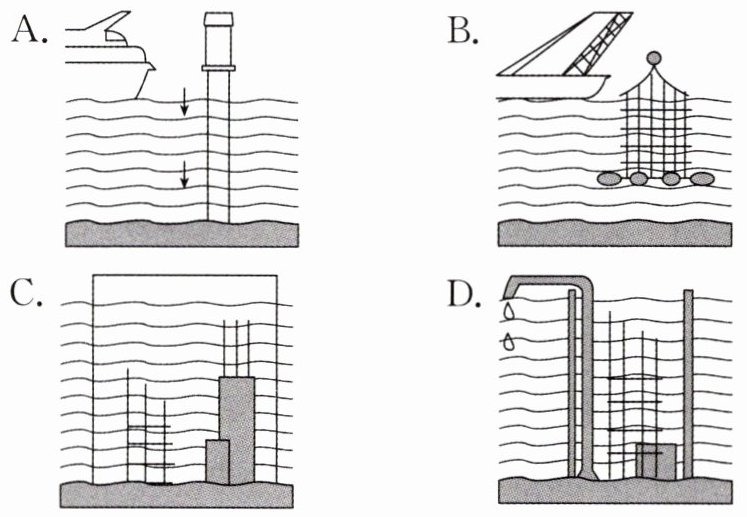
1. Which picture shows how a "cofferdam" works?
2. The construction of Taihu Tunnel ________.
A. was divided into four parts
B. took more time than people had expected
C. started from the middle of the lake
D. was finished by using a streamlined method
3. What can we learn from Paragraph 8?
A. Pictures in the tunnel can help keep drivers safe.
B. Drivers can control the LED lights in the tunnel.
C. The police can warn drivers through a monitoring system.
D. An audio system can help drivers check the traffic situation.
语言能力 推断能力4. What is the main purpose of the passage?
A. To advise people to protect Taihu Tunnel.
B. To introduce the construction of Taihu Tunnel.
C. To share the advantages brought by Taihu Tunnel.
D. To tell the difficulties of constructing Taihu Tunnel.
Taihu Tunnel, 10.79 kilometres long and 43.6 metres wide, has been the longest underwater tunnel(隧道) in China. It stands out as one of the "2022 China's Top 100 Buildings in the New Era".
When building Taihu Tunnel, the project team faced many challenges, such as high safety risks and time limit. To deal with them, they made workable plans. They divided the tunnel construction (建造) into 19 parts. The construction of each part mainly took four steps.
Step 1 Remove. The team built a cofferdam to remove water from the area, so the workers could go inside and do their work in dry conditions.
Step 2 Clear. The team dug(挖) deep into the lake bed, and cleared the soil and stones out in order to make space for the next step.
Step 3 Build. The team built the floor, walls and roof of the tunnel in this step. They used high - quality building materials to waterproof the tunnel.
Step 4 Backfill. The team put the soil and stones back. Then this part of the tunnel was buried deep down the lake bed.
The construction of the 19 parts was streamlined (流线型的). The project team used a new method. The work group of each step moved to the next part and repeated their work after they finished the work in the previous part. Different work groups cooperated well with each other. From part to part, the construction started from the opposite ends, and got connected somewhere in the middle. The construction took about four years to complete, shorter than people had expected.
The drivers' safety is fully considered in Taihu Tunnel. There are 200,000 LED lights on the ceiling of the tunnel. They show vivid pictures of blue sky, starry night and so on. The pictures can help drivers fight tiredness and travel through the tunnel safely. Besides, there are two systems in the tunnel. The police can check the traffic situation through a monitoring (监控) system. If traffic accidents happen, the police can give instructions and warn drivers in the tunnel over an audio system to prevent further accidents.
新趋势 图示理解
1. Which picture shows how a "cofferdam" works?
2. The construction of Taihu Tunnel ________.
A. was divided into four parts
B. took more time than people had expected
C. started from the middle of the lake
D. was finished by using a streamlined method
3. What can we learn from Paragraph 8?
A. Pictures in the tunnel can help keep drivers safe.
B. Drivers can control the LED lights in the tunnel.
C. The police can warn drivers through a monitoring system.
D. An audio system can help drivers check the traffic situation.
语言能力 推断能力4. What is the main purpose of the passage?
A. To advise people to protect Taihu Tunnel.
B. To introduce the construction of Taihu Tunnel.
C. To share the advantages brought by Taihu Tunnel.
D. To tell the difficulties of constructing Taihu Tunnel.
答案:
1~4 DDAB
【文章大意】本文是一篇说明文,主要介绍了太湖隧道的建造。
1. D 图示理解题。根据“The team built a cofferdam to remove water from the area, so the workers could go inside and do their work in dry conditions.”可知该团队建造了一个围堰来清除该部分的水,所以它是用来清除水的,选项 D 符合。故选 D。
2. D 细节理解题。根据“The construction of the 19 parts was streamlined ... The construction took about four years to complete, shorter than people had expected.”可知太湖隧道采用流线法完成施工。故选 D。
3. A 细节理解题。根据“The pictures can help drivers fight tiredness and travel through the tunnel safely.”可知隧道里的图片可以帮助司机克服疲劳,安全地通过隧道。故选 A。
4. B 写作意图题。通读全文可知本文主要介绍了太湖隧道的建造,包括建造的过程以及隧道中相关的安全细节。故选 B。
【文章大意】本文是一篇说明文,主要介绍了太湖隧道的建造。
1. D 图示理解题。根据“The team built a cofferdam to remove water from the area, so the workers could go inside and do their work in dry conditions.”可知该团队建造了一个围堰来清除该部分的水,所以它是用来清除水的,选项 D 符合。故选 D。
2. D 细节理解题。根据“The construction of the 19 parts was streamlined ... The construction took about four years to complete, shorter than people had expected.”可知太湖隧道采用流线法完成施工。故选 D。
3. A 细节理解题。根据“The pictures can help drivers fight tiredness and travel through the tunnel safely.”可知隧道里的图片可以帮助司机克服疲劳,安全地通过隧道。故选 A。
4. B 写作意图题。通读全文可知本文主要介绍了太湖隧道的建造,包括建造的过程以及隧道中相关的安全细节。故选 B。
查看更多完整答案,请扫码查看

