

 搜索
搜索
第132页
- 第1页
- 第2页
- 第3页
- 第4页
- 第5页
- 第6页
- 第7页
- 第8页
- 第9页
- 第10页
- 第11页
- 第12页
- 第13页
- 第14页
- 第15页
- 第16页
- 第17页
- 第18页
- 第19页
- 第20页
- 第21页
- 第22页
- 第23页
- 第24页
- 第25页
- 第26页
- 第27页
- 第28页
- 第29页
- 第30页
- 第31页
- 第32页
- 第33页
- 第34页
- 第35页
- 第36页
- 第37页
- 第38页
- 第39页
- 第40页
- 第41页
- 第42页
- 第43页
- 第44页
- 第45页
- 第46页
- 第47页
- 第48页
- 第49页
- 第50页
- 第51页
- 第52页
- 第53页
- 第54页
- 第55页
- 第56页
- 第57页
- 第58页
- 第59页
- 第60页
- 第61页
- 第62页
- 第63页
- 第64页
- 第65页
- 第66页
- 第67页
- 第68页
- 第69页
- 第70页
- 第71页
- 第72页
- 第73页
- 第74页
- 第75页
- 第76页
- 第77页
- 第78页
- 第79页
- 第80页
- 第81页
- 第82页
- 第83页
- 第84页
- 第85页
- 第86页
- 第87页
- 第88页
- 第89页
- 第90页
- 第91页
- 第92页
- 第93页
- 第94页
- 第95页
- 第96页
- 第97页
- 第98页
- 第99页
- 第100页
- 第101页
- 第102页
- 第103页
- 第104页
- 第105页
- 第106页
- 第107页
- 第108页
- 第109页
- 第110页
- 第111页
- 第112页
- 第113页
- 第114页
- 第115页
- 第116页
- 第117页
- 第118页
- 第119页
- 第120页
- 第121页
- 第122页
- 第123页
- 第124页
- 第125页
- 第126页
- 第127页
- 第128页
- 第129页
- 第130页
- 第131页
- 第132页
- 第133页
- 第134页
- 第135页
- 第136页
- 第137页
- 第138页
- 第139页
- 第140页
- 第141页
- 第142页
- 第143页
- 第144页
- 第145页
- 第146页
- 第147页
- 第148页
- 第149页
- 第150页
- 第151页
- 第152页
- 第153页
- 第154页
- 第155页
- 第156页
- 第157页
- 第158页
- 第159页
- 第160页
- 第161页
- 第162页
- 第163页
- 第164页
- 第165页
- 第166页
- 第167页
- 第168页
- 第169页
- 第170页
- 第171页
- 第172页
- 第173页
- 第174页
- 第175页
- 第176页
- 第177页
- 第178页
- 第179页
- 第180页
- 第181页
- 第182页
- 第183页
- 第184页
- 第185页
- 第186页
- 第187页
- 第188页
Ⅰ. 常规礼仪 Millie告诉Edward中国有很多礼仪文化,而且中国地域辽阔,人口众多,不同地区还有当地特色的礼仪文化。于是Edward决定先了解一些必须要知道的礼仪文化。
It is impossible to name all Chinese customs in a single article. Even so, in this passage we bring you several Chinese customs and traditions that you should know. Here we go!
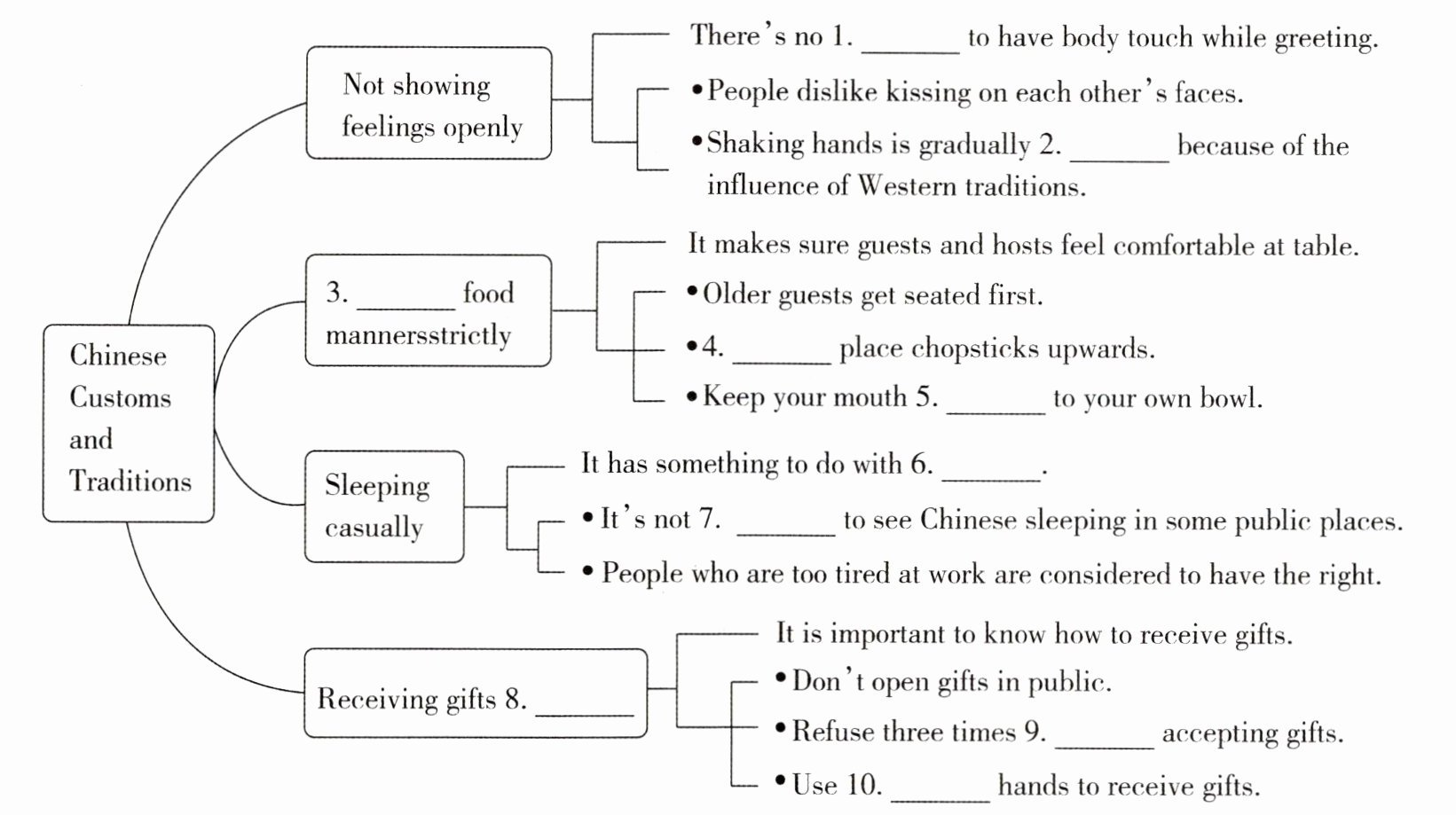
Chinese usually do not show their feelings openly, also avoiding any unnecessary body touch. The Chinese see badly that people kiss each other on the face. In fact, shaking hands was also not so acceptable in the past. For them it is enough to make a small nod or bow when greeting. As the country gradually lets Western traditions in, people are used to shaking hands to greet.
Many food manners must be followed strictly at meals. Some details should be paid much attention to by both guests and hosts. In China, the older guests are always seated first, and then others can take their seats. Food manners are also very important. Chopsticks should never be placed upwards in food. And to eat you must put your mouth close to your own bowl.
The Chinese have the habit and skill of being able to sleep anywhere at any time. It doesn't matter if it's on the break from work, beside the street or waiting in a supermarket. This Chinese custom has nothing to do with laziness, quite the opposite. In China, sleeping for a short time in public places is considered a symbol of effort. For example, a photo of a sleeping doctor in the corner of the operating room spread quickly and wildly online. Thousands of netizens(网民) gave the photo a “like” to show their respect to the doctor. So, this person has been putting a lot of effort into his work and it is right that he should sleep as he likes.
Many of you have already known it's polite not to open gifts in public. But that's not the only important thing to know when receiving gifts in China. For example, the Chinese will usually refuse your gift up to three times to show they are well educated. But in the end, they're willing to accept it. And remember not to receive the gift with only one hand.
Question:Why did the writer choose to introduce these customs and traditions in this passage?
______________________________
新趋势 思维导图 Edward将自己需要注意的礼仪制成了思维导图,我们帮他补充完整吧!(每空一词)
It is impossible to name all Chinese customs in a single article. Even so, in this passage we bring you several Chinese customs and traditions that you should know. Here we go!
Chinese usually do not show their feelings openly, also avoiding any unnecessary body touch. The Chinese see badly that people kiss each other on the face. In fact, shaking hands was also not so acceptable in the past. For them it is enough to make a small nod or bow when greeting. As the country gradually lets Western traditions in, people are used to shaking hands to greet.
Many food manners must be followed strictly at meals. Some details should be paid much attention to by both guests and hosts. In China, the older guests are always seated first, and then others can take their seats. Food manners are also very important. Chopsticks should never be placed upwards in food. And to eat you must put your mouth close to your own bowl.
The Chinese have the habit and skill of being able to sleep anywhere at any time. It doesn't matter if it's on the break from work, beside the street or waiting in a supermarket. This Chinese custom has nothing to do with laziness, quite the opposite. In China, sleeping for a short time in public places is considered a symbol of effort. For example, a photo of a sleeping doctor in the corner of the operating room spread quickly and wildly online. Thousands of netizens(网民) gave the photo a “like” to show their respect to the doctor. So, this person has been putting a lot of effort into his work and it is right that he should sleep as he likes.
Many of you have already known it's polite not to open gifts in public. But that's not the only important thing to know when receiving gifts in China. For example, the Chinese will usually refuse your gift up to three times to show they are well educated. But in the end, they're willing to accept it. And remember not to receive the gift with only one hand.
Question:Why did the writer choose to introduce these customs and traditions in this passage?
______________________________
新趋势 思维导图 Edward将自己需要注意的礼仪制成了思维导图,我们帮他补充完整吧!(每空一词)
答案:
Ⅰ.【文章大意】本文是一篇说明文,主要介绍了中国的一些习俗及传统。
Question:Because they are something that we/you should know.
【思维导图】
1. need 2. accepted/welcome/welcomed/acceptable
3. Following 4. Never/Don't 5. close 6. effort/efforts
7. surprising/strange/unusual 8. politely/properly 9. before
10. both/two
Question:Because they are something that we/you should know.
【思维导图】
1. need 2. accepted/welcome/welcomed/acceptable
3. Following 4. Never/Don't 5. close 6. effort/efforts
7. surprising/strange/unusual 8. politely/properly 9. before
10. both/two
查看更多完整答案,请扫码查看

