

 搜索
搜索
第90页
- 第1页
- 第2页
- 第3页
- 第4页
- 第5页
- 第6页
- 第7页
- 第8页
- 第9页
- 第10页
- 第11页
- 第12页
- 第13页
- 第14页
- 第15页
- 第16页
- 第17页
- 第18页
- 第19页
- 第20页
- 第21页
- 第22页
- 第23页
- 第24页
- 第25页
- 第26页
- 第27页
- 第28页
- 第29页
- 第30页
- 第31页
- 第32页
- 第33页
- 第34页
- 第35页
- 第36页
- 第37页
- 第38页
- 第39页
- 第40页
- 第41页
- 第42页
- 第43页
- 第44页
- 第45页
- 第46页
- 第47页
- 第48页
- 第49页
- 第50页
- 第51页
- 第52页
- 第53页
- 第54页
- 第55页
- 第56页
- 第57页
- 第58页
- 第59页
- 第60页
- 第61页
- 第62页
- 第63页
- 第64页
- 第65页
- 第66页
- 第67页
- 第68页
- 第69页
- 第70页
- 第71页
- 第72页
- 第73页
- 第74页
- 第75页
- 第76页
- 第77页
- 第78页
- 第79页
- 第80页
- 第81页
- 第82页
- 第83页
- 第84页
- 第85页
- 第86页
- 第87页
- 第88页
- 第89页
- 第90页
- 第91页
- 第92页
- 第93页
- 第94页
- 第95页
- 第96页
- 第97页
- 第98页
- 第99页
- 第100页
- 第101页
- 第102页
- 第103页
- 第104页
- 第105页
- 第106页
- 第107页
- 第108页
- 第109页
- 第110页
- 第111页
- 第112页
- 第113页
- 第114页
- 第115页
- 第116页
- 第117页
- 第118页
- 第119页
- 第120页
- 第121页
- 第122页
- 第123页
- 第124页
- 第125页
- 第126页
- 第127页
- 第128页
- 第129页
- 第130页
- 第131页
- 第132页
- 第133页
- 第134页
- 第135页
- 第136页
- 第137页
- 第138页
- 第139页
- 第140页
- 第141页
- 第142页
- 第143页
- 第144页
- 第145页
- 第146页
- 第147页
- 第148页
- 第149页
- 第150页
- 第151页
- 第152页
- 第153页
- 第154页
- 第155页
- 第156页
- 第157页
- 第158页
- 第159页
- 第160页
- 第161页
- 第162页
- 第163页
- 第164页
- 第165页
- 第166页
- 第167页
- 第168页
- 第169页
- 第170页
- 第171页
- 第172页
- 第173页
- 第174页
- 第175页
- 第176页
- 第177页
- 第178页
- 第179页
- 第180页
- 第181页
- 第182页
- 第183页
- 第184页
- 第185页
- 第186页
- 第187页
- 第188页
- 第189页
- 第190页
- 第191页
- 第192页
- 第193页
- 第194页
Ⅵ. 首字母填空
根据短文内容及首字母提示,在空格处填入一个适当的词使短文完整。
Think of a time when you felt thankful. Maybe a teacher helped you with a hard problem. Or a friend gave you a hug when you were sad. When you are thankful for someone, t 1 writing a thank you note. A note is a nice way to show you are thankful. The person who you write to will be h 2. They will know that their actions made a difference.
Do you have s 3 to thank? Here are a few useful tips for writing them a thank you note. Even if you're typing your thank you note, it's a good idea to write a draft(草稿) first, so that your note won't make m 4. A simple draft helps you get your thoughts and feelings down. Then you can go back to make them better. S 5, begin your letter with “Thank you so much for ...” Next, use details(细节) and e 6 to explain why you're grateful. Share h 7 the person's action made you feel. D 8 forget to end with one last thank you. You might write, “Thank you again for your k 9.” Or you could write, “I am very grateful to you.”
If you have written a note by hand, put it in an envelope and drop it in the mail. If you've written a text or an e 10, you can send it with a click. Enjoy sharing.
1. ____ 2. ____ 3. ____
4. ____ 5. ____ 6. ____
7. ____ 8. ____ 9. ____
10. ____
根据短文内容及首字母提示,在空格处填入一个适当的词使短文完整。
Think of a time when you felt thankful. Maybe a teacher helped you with a hard problem. Or a friend gave you a hug when you were sad. When you are thankful for someone, t 1 writing a thank you note. A note is a nice way to show you are thankful. The person who you write to will be h 2. They will know that their actions made a difference.
Do you have s 3 to thank? Here are a few useful tips for writing them a thank you note. Even if you're typing your thank you note, it's a good idea to write a draft(草稿) first, so that your note won't make m 4. A simple draft helps you get your thoughts and feelings down. Then you can go back to make them better. S 5, begin your letter with “Thank you so much for ...” Next, use details(细节) and e 6 to explain why you're grateful. Share h 7 the person's action made you feel. D 8 forget to end with one last thank you. You might write, “Thank you again for your k 9.” Or you could write, “I am very grateful to you.”
If you have written a note by hand, put it in an envelope and drop it in the mail. If you've written a text or an e 10, you can send it with a click. Enjoy sharing.
1. ____ 2. ____ 3. ____
4. ____ 5. ____ 6. ____
7. ____ 8. ____ 9. ____
10. ____
答案:
1. try 2. happy 3. someone/ somebody 4. mistakes 5. Second 6. examples 7. how 8. Don't 9. kindness 10. email
Ⅶ. 任务型阅读
阅读并根据下面的短文,在表格中的空格里填入一个最恰当的单词。
思维品质 辩证思维 We often hear a parent shout, “Tidy your room!” It's thought that an unmade bed and a messy floor can make other family members stressed.
A study found that mess and managing it are “central and important to happiness”, while a messy living space makes people more stressed, especially for women. On the other hand, some untidiness may be the sign of creativity. So what do you think—is it OK to have a messy bedroom? Recently, this topic has caused hot discussion online.
Yes—it's not a big deal
It is important for children to have their own space where they can be themselves. By allowing children to keep their room as they want, parents are helping children prepare for later life. Also, clearing up your room costs a lot of time and there are more important things to focus on, like work and hobbies. Anyway, there is a great chance of getting the room messy again.
No—messiness leads to bad feelings
Research shows that in a messy room, you may feel worried and can't focus on tasks like homework. A tidy room can improve clear thinking and calmness. It also means you have more space for activities and won't lose things. What's more, mess might be dangerous—you can fall down or knock something onto the floor and break it.
In my opinion, we can live according to our own willingness if we live alone. However, keeping our space clean and tidy is an important life skill. It is unfair to other family members if our room is messy as it is part of their home too, and we should respect that.
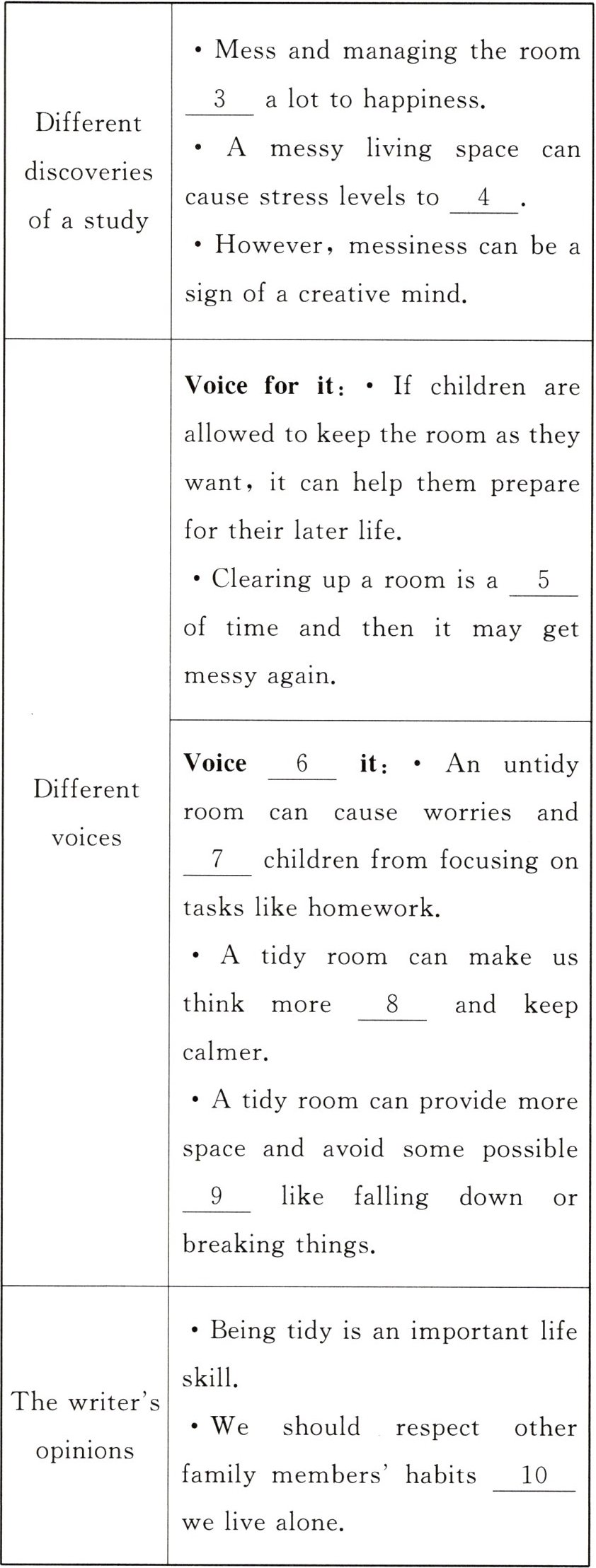
1. ____ 2. ____ 3. ____
4. ____ 5. ____ 6. ____
7. ____ 8. ____ 9. ____
10. ____
阅读并根据下面的短文,在表格中的空格里填入一个最恰当的单词。
思维品质 辩证思维 We often hear a parent shout, “Tidy your room!” It's thought that an unmade bed and a messy floor can make other family members stressed.
A study found that mess and managing it are “central and important to happiness”, while a messy living space makes people more stressed, especially for women. On the other hand, some untidiness may be the sign of creativity. So what do you think—is it OK to have a messy bedroom? Recently, this topic has caused hot discussion online.
Yes—it's not a big deal
It is important for children to have their own space where they can be themselves. By allowing children to keep their room as they want, parents are helping children prepare for later life. Also, clearing up your room costs a lot of time and there are more important things to focus on, like work and hobbies. Anyway, there is a great chance of getting the room messy again.
No—messiness leads to bad feelings
Research shows that in a messy room, you may feel worried and can't focus on tasks like homework. A tidy room can improve clear thinking and calmness. It also means you have more space for activities and won't lose things. What's more, mess might be dangerous—you can fall down or knock something onto the floor and break it.
In my opinion, we can live according to our own willingness if we live alone. However, keeping our space clean and tidy is an important life skill. It is unfair to other family members if our room is messy as it is part of their home too, and we should respect that.
1. ____ 2. ____ 3. ____
4. ____ 5. ____ 6. ____
7. ____ 8. ____ 9. ____
10. ____
答案:
1. common/ usual 2. rest 3. matter 4. rise 5. waste 6. against 7. stop/ keep/ prevent 8. clearly 9. dangers 10. unless
查看更多完整答案,请扫码查看

