

 搜索
搜索
第136页
- 第1页
- 第2页
- 第3页
- 第4页
- 第5页
- 第6页
- 第7页
- 第8页
- 第9页
- 第10页
- 第11页
- 第12页
- 第13页
- 第14页
- 第15页
- 第16页
- 第17页
- 第18页
- 第19页
- 第20页
- 第21页
- 第22页
- 第23页
- 第24页
- 第25页
- 第26页
- 第27页
- 第28页
- 第29页
- 第30页
- 第31页
- 第32页
- 第33页
- 第34页
- 第35页
- 第36页
- 第37页
- 第38页
- 第39页
- 第40页
- 第41页
- 第42页
- 第43页
- 第44页
- 第45页
- 第46页
- 第47页
- 第48页
- 第49页
- 第50页
- 第51页
- 第52页
- 第53页
- 第54页
- 第55页
- 第56页
- 第57页
- 第58页
- 第59页
- 第60页
- 第61页
- 第62页
- 第63页
- 第64页
- 第65页
- 第66页
- 第67页
- 第68页
- 第69页
- 第70页
- 第71页
- 第72页
- 第73页
- 第74页
- 第75页
- 第76页
- 第77页
- 第78页
- 第79页
- 第80页
- 第81页
- 第82页
- 第83页
- 第84页
- 第85页
- 第86页
- 第87页
- 第88页
- 第89页
- 第90页
- 第91页
- 第92页
- 第93页
- 第94页
- 第95页
- 第96页
- 第97页
- 第98页
- 第99页
- 第100页
- 第101页
- 第102页
- 第103页
- 第104页
- 第105页
- 第106页
- 第107页
- 第108页
- 第109页
- 第110页
- 第111页
- 第112页
- 第113页
- 第114页
- 第115页
- 第116页
- 第117页
- 第118页
- 第119页
- 第120页
- 第121页
- 第122页
- 第123页
- 第124页
- 第125页
- 第126页
- 第127页
- 第128页
- 第129页
- 第130页
- 第131页
- 第132页
- 第133页
- 第134页
- 第135页
- 第136页
- 第137页
- 第138页
- 第139页
- 第140页
- 第141页
- 第142页
- 第143页
- 第144页
- 第145页
- 第146页
- 第147页
- 第148页
- 第149页
- 第150页
- 第151页
- 第152页
- 第153页
- 第154页
- 第155页
- 第156页
- 第157页
- 第158页
- 第159页
- 第160页
- 第161页
- 第162页
- 第163页
- 第164页
- 第165页
- 第166页
- 第167页
- 第168页
- 第169页
- 第170页
- 第171页
- 第172页
- 第173页
- 第174页
- 第175页
- 第176页
- 第177页
- 第178页
- 第179页
- 第180页
- 第181页
- 第182页
- 第183页
- 第184页
- 第185页
- 第186页
- 第187页
- 第188页
- 第189页
- 第190页
- 第191页
- 第192页
- 第193页
- 第194页
Ⅰ. 动物趣闻 班会开始前,老师播放了关于动物的纪录片,同学们从中感受到了自然界的生存智慧和脆弱,开始走进野生动物的世界。
It is like a scene from a horror film: a spider web is several metres wide, which is home to thousands of spiders. And that was what Jason G. Goldman, an animal behaviour researcher, found along a muddy path in the Peruvian Amazon jungle—the web arched from tree to tree, a structure containing too many spiders to count. They appeared to act as a society, just like ants or bees.
Anelosimus eximius, the species Goldman met in the rainforest, is not the only kind of social spiders in the world, but it does construct the biggest webs. Some can reach more than 7.6 m long and 1.5 m wide. A web of that size could contain as many as 50,000 individual spiders.
An Anelosimus eximius colony(群体) contains adult males and females as well as youngsters, but the majority of spiders on the web are females. Males account for only between 5% and 22% of any colony's population. Social spiders work together to build, maintain and clean their webs. They work together to catch prey(猎物), and dine together when they trap a large feast. The females work together to care for the young in the colony. They feed their youngsters by vomiting(吐出) up food for them, just like mother birds.
Why did these spiders become social? Researchers have discovered three ecological elements that often lead to cooperative(合作的) living among spiders.
Social spiders tend to feed on bigger prey, for one thing. Spiders living in places where it is difficult to hunt large or more profitable prey alone may eventually figure out that it is in their interest to work together.
1. Which of the following correctly shows the parts of an Anelosimus eximius colony?

2. The following paragraph would discuss ______.
A. new threats to spiders' colonies
B. new research on spiders' colonies
C. more reasons for spiders' cooperative living
D. more species of social spiders in the world
3. 新考法 思维导图 阅读短文,补全下方思维导图,每空不限一词。
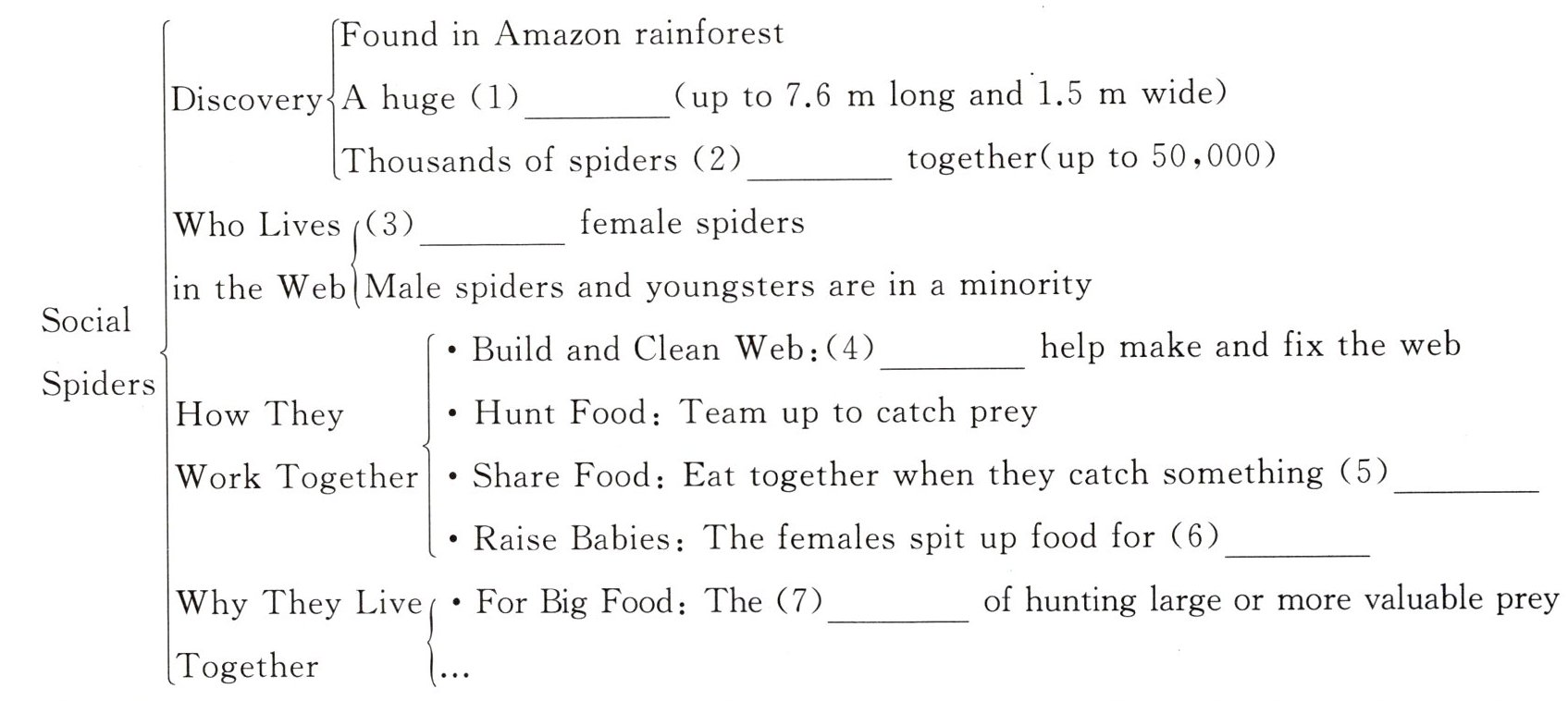
Social Spiders
Discovery
Found in Amazon rainforest
A huge (1) ______ (up to 7.6 m long and 1.5 m wide)
Thousands of spiders (2) ______ together (up to 50,000)
Who Lives in the Web
(3) ______ female spiders
Male spiders and youngsters are in a minority
How They Work Together
• Build and Clean Web: (4) ______ help make and fix the web
• Hunt Food: Team up to catch prey
• Share Food: Eat together when they catch something (5) ______
• Raise Babies: The females spit up food for (6) ______
Why They Live Together
• For Big Food: The (7) ______ of hunting large or more valuable prey
It is like a scene from a horror film: a spider web is several metres wide, which is home to thousands of spiders. And that was what Jason G. Goldman, an animal behaviour researcher, found along a muddy path in the Peruvian Amazon jungle—the web arched from tree to tree, a structure containing too many spiders to count. They appeared to act as a society, just like ants or bees.
Anelosimus eximius, the species Goldman met in the rainforest, is not the only kind of social spiders in the world, but it does construct the biggest webs. Some can reach more than 7.6 m long and 1.5 m wide. A web of that size could contain as many as 50,000 individual spiders.
An Anelosimus eximius colony(群体) contains adult males and females as well as youngsters, but the majority of spiders on the web are females. Males account for only between 5% and 22% of any colony's population. Social spiders work together to build, maintain and clean their webs. They work together to catch prey(猎物), and dine together when they trap a large feast. The females work together to care for the young in the colony. They feed their youngsters by vomiting(吐出) up food for them, just like mother birds.
Why did these spiders become social? Researchers have discovered three ecological elements that often lead to cooperative(合作的) living among spiders.
Social spiders tend to feed on bigger prey, for one thing. Spiders living in places where it is difficult to hunt large or more profitable prey alone may eventually figure out that it is in their interest to work together.
1. Which of the following correctly shows the parts of an Anelosimus eximius colony?
2. The following paragraph would discuss ______.
A. new threats to spiders' colonies
B. new research on spiders' colonies
C. more reasons for spiders' cooperative living
D. more species of social spiders in the world
3. 新考法 思维导图 阅读短文,补全下方思维导图,每空不限一词。
Social Spiders
Discovery
Found in Amazon rainforest
A huge (1) ______ (up to 7.6 m long and 1.5 m wide)
Thousands of spiders (2) ______ together (up to 50,000)
Who Lives in the Web
(3) ______ female spiders
Male spiders and youngsters are in a minority
How They Work Together
• Build and Clean Web: (4) ______ help make and fix the web
• Hunt Food: Team up to catch prey
• Share Food: Eat together when they catch something (5) ______
• Raise Babies: The females spit up food for (6) ______
Why They Live Together
• For Big Food: The (7) ______ of hunting large or more valuable prey
答案:
1 - 2 AC
【语篇解读】本文是一篇说明文,介绍了研究人员对群居蜘蛛的研究发现。
1. A 图示理解题。根据“An Anelosimus eximius colony contains adult males and females as well as youngsters, but the majority of spiders on the web are females. Males account for only between 5% and 22% of any colony's population.”可知,在 Anelosimus eximius 这种蜘蛛群体中,大多数是雌蛛,雄蛛只占 5% 到 22%。故选 A。
2. C 推理判断题。倒数第二段提出问题:为什么 Anelosimus eximius 这种蜘蛛会有群居性?研究人员发现有三个生态因素,最后一段介绍了第一个原因,由此可推知文章接下来会介绍另外两。故选 C。
3.
(1)web
(2)living/live
(3)Mostly/Mainly
(4)All the spiders
(5)big/large
(6)the young/youngsters
(7)need/interest
【语篇解读】本文是一篇说明文,介绍了研究人员对群居蜘蛛的研究发现。
1. A 图示理解题。根据“An Anelosimus eximius colony contains adult males and females as well as youngsters, but the majority of spiders on the web are females. Males account for only between 5% and 22% of any colony's population.”可知,在 Anelosimus eximius 这种蜘蛛群体中,大多数是雌蛛,雄蛛只占 5% 到 22%。故选 A。
2. C 推理判断题。倒数第二段提出问题:为什么 Anelosimus eximius 这种蜘蛛会有群居性?研究人员发现有三个生态因素,最后一段介绍了第一个原因,由此可推知文章接下来会介绍另外两。故选 C。
3.
(1)web
(2)living/live
(3)Mostly/Mainly
(4)All the spiders
(5)big/large
(6)the young/youngsters
(7)need/interest
查看更多完整答案,请扫码查看

