

 搜索
搜索
第144页
- 第1页
- 第2页
- 第3页
- 第4页
- 第5页
- 第6页
- 第7页
- 第8页
- 第9页
- 第10页
- 第11页
- 第12页
- 第13页
- 第14页
- 第15页
- 第16页
- 第17页
- 第18页
- 第19页
- 第20页
- 第21页
- 第22页
- 第23页
- 第24页
- 第25页
- 第26页
- 第27页
- 第28页
- 第29页
- 第30页
- 第31页
- 第32页
- 第33页
- 第34页
- 第35页
- 第36页
- 第37页
- 第38页
- 第39页
- 第40页
- 第41页
- 第42页
- 第43页
- 第44页
- 第45页
- 第46页
- 第47页
- 第48页
- 第49页
- 第50页
- 第51页
- 第52页
- 第53页
- 第54页
- 第55页
- 第56页
- 第57页
- 第58页
- 第59页
- 第60页
- 第61页
- 第62页
- 第63页
- 第64页
- 第65页
- 第66页
- 第67页
- 第68页
- 第69页
- 第70页
- 第71页
- 第72页
- 第73页
- 第74页
- 第75页
- 第76页
- 第77页
- 第78页
- 第79页
- 第80页
- 第81页
- 第82页
- 第83页
- 第84页
- 第85页
- 第86页
- 第87页
- 第88页
- 第89页
- 第90页
- 第91页
- 第92页
- 第93页
- 第94页
- 第95页
- 第96页
- 第97页
- 第98页
- 第99页
- 第100页
- 第101页
- 第102页
- 第103页
- 第104页
- 第105页
- 第106页
- 第107页
- 第108页
- 第109页
- 第110页
- 第111页
- 第112页
- 第113页
- 第114页
- 第115页
- 第116页
- 第117页
- 第118页
- 第119页
- 第120页
- 第121页
- 第122页
- 第123页
- 第124页
- 第125页
- 第126页
- 第127页
- 第128页
- 第129页
- 第130页
- 第131页
- 第132页
- 第133页
- 第134页
- 第135页
- 第136页
- 第137页
- 第138页
- 第139页
- 第140页
- 第141页
- 第142页
- 第143页
- 第144页
- 第145页
- 第146页
- 第147页
- 第148页
- 第149页
- 第150页
- 第151页
- 第152页
- 第153页
- 第154页
- 第155页
- 第156页
- 第157页
- 第158页
- 第159页
- 第160页
- 第161页
- 第162页
- 第163页
- 第164页
- 第165页
- 第166页
- 第167页
- 第168页
- 第169页
- 第170页
- 第171页
- 第172页
- 第173页
- 第174页
- 第175页
- 第176页
- 第177页
- 第178页
- 第179页
- 第180页
- 第181页
- 第182页
- 第183页
- 第184页
- 第185页
- 第186页
- 第187页
- 第188页
- 第189页
- 第190页
- 第191页
- 第192页
- 第193页
- 第194页
B
跨学科 物理 ①Do you like blueberries? If so, the next time you’re about to eat these delicious berries, take a good look at them. ______.
②For the most part, blueberries aren’t blue. If you carefully take off the skin of one blueberry, you’ll see that the fruit inside is white. If you rub(摩擦) the inside of the skin on a white piece of paper, you’ll see a reddish-purple colour. And if you gently rub the outside of a blueberry, the blue colour disappears and the berry looks almost black. But the moment you pick one, it does look blue. What’s going on?
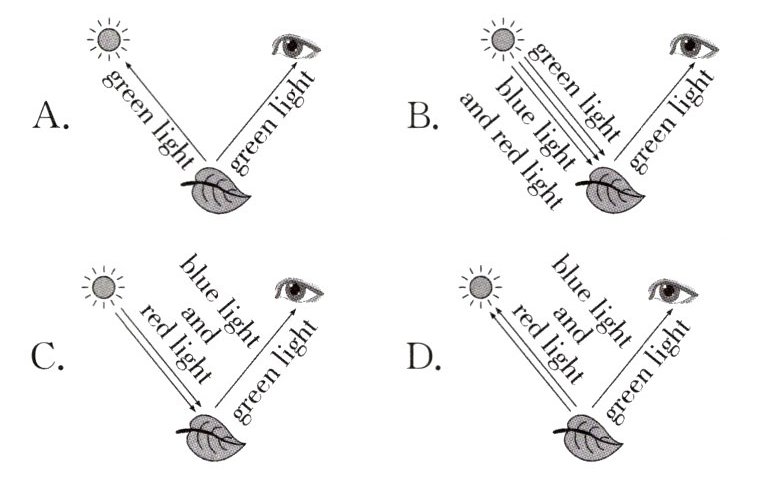
③Well, there are two ways to create colours. The first is through pigments(色素). Pigments show the colour of the light they don’t take in. The most common pigment in plants is chlorophyll(叶绿素), a green pigment. Plant leaves appear green because chlorophyll doesn’t take in green light. It sends it out instead while taking in blue and red light. Plants prefer to take in blue light because it has more energy than any other light. In fact, there aren’t any “true blue” pigments in the plant world. ______.
④The second way to make colour is through “structural colour(结构色)”. This happens when the surface makes some colours of light look different. Have you ever seen the rainbow colours on a CD? These colours show up because of the tiny spaces between the CD’s thin layers(层). These spaces only allow certain colours to reach our eyes.
⑤Blueberries also create “structural colour” in their own way. The berries look black when they’re ripe(成熟的), but the plants build a thin layer of wax(蜡) on their outside. This layer is only 0.4% of a centimetre thick, but it gives the berries their blue look. The blue colour helps the plants because birds are attracted to the rare colour. They eat the berries and spread the seeds(种子) far and wide.
⑥Now your bowl of blueberries suddenly looks a lot more interesting. The fruit is beautiful, but its beauty is only skin deep!
5. 新考法 创新设问 Which of the following pictures correctly shows why a leaf looks green to us?
A. B.
C. D.
6. Blueberries appear blue in the same way that ______.
A. a CD appears colourful
B. a tree leaf appears green
C. they appear black when ripe
D. a fallen leaf appears yellow
7. The sentence “Then ask yourself: Are blueberries really blue?” should be put ______.
A. at the end of Paragraph 1
B. at the end of Paragraph 2
C. at the end of Paragraph 3
D. at the end of Paragraph 4
8. 新考法 篇章结构 Which of the following shows the structure of this passage?
A. ①/②③/④⑤⑥ B. ①/②/③④/⑤⑥
C. ①②/③④/⑤⑥ D. ①/②/③④⑤/⑥
跨学科 物理 ①Do you like blueberries? If so, the next time you’re about to eat these delicious berries, take a good look at them. ______.
②For the most part, blueberries aren’t blue. If you carefully take off the skin of one blueberry, you’ll see that the fruit inside is white. If you rub(摩擦) the inside of the skin on a white piece of paper, you’ll see a reddish-purple colour. And if you gently rub the outside of a blueberry, the blue colour disappears and the berry looks almost black. But the moment you pick one, it does look blue. What’s going on?
③Well, there are two ways to create colours. The first is through pigments(色素). Pigments show the colour of the light they don’t take in. The most common pigment in plants is chlorophyll(叶绿素), a green pigment. Plant leaves appear green because chlorophyll doesn’t take in green light. It sends it out instead while taking in blue and red light. Plants prefer to take in blue light because it has more energy than any other light. In fact, there aren’t any “true blue” pigments in the plant world. ______.
④The second way to make colour is through “structural colour(结构色)”. This happens when the surface makes some colours of light look different. Have you ever seen the rainbow colours on a CD? These colours show up because of the tiny spaces between the CD’s thin layers(层). These spaces only allow certain colours to reach our eyes.
⑤Blueberries also create “structural colour” in their own way. The berries look black when they’re ripe(成熟的), but the plants build a thin layer of wax(蜡) on their outside. This layer is only 0.4% of a centimetre thick, but it gives the berries their blue look. The blue colour helps the plants because birds are attracted to the rare colour. They eat the berries and spread the seeds(种子) far and wide.
⑥Now your bowl of blueberries suddenly looks a lot more interesting. The fruit is beautiful, but its beauty is only skin deep!
5. 新考法 创新设问 Which of the following pictures correctly shows why a leaf looks green to us?
A. B.
C. D.
6. Blueberries appear blue in the same way that ______.
A. a CD appears colourful
B. a tree leaf appears green
C. they appear black when ripe
D. a fallen leaf appears yellow
7. The sentence “Then ask yourself: Are blueberries really blue?” should be put ______.
A. at the end of Paragraph 1
B. at the end of Paragraph 2
C. at the end of Paragraph 3
D. at the end of Paragraph 4
8. 新考法 篇章结构 Which of the following shows the structure of this passage?
A. ①/②③/④⑤⑥ B. ①/②/③④/⑤⑥
C. ①②/③④/⑤⑥ D. ①/②/③④⑤/⑥
答案:
5 - 8 BAAD
B
【语篇解读】本文是一篇说明文,主要介绍了蓝莓呈蓝色的原因。
5. B 图示理解题。根据“Plant leaves appear green because chlorophyll doesn't take in green light. It sends it out instead while taking in blue and red light.”可知,植物叶子呈绿色是因为叶片中含有叶绿素,而叶绿素主要吸收红光和蓝光,不吸收绿光,故而绿光被反射回来,使得叶片呈绿色,B 项符合。故选 B。
6. A 细节理解题。根据“The second way to make colour is through'structural colour'... Have you ever seen the rainbow colours on a CD? These colours show up because of the tiny spaces between the CD's thin layers.”以及“Blueberries also create'structural colour' in their own way.”可知,蓝莓呈现蓝色,就像 CD 呈现彩色一样,两者都是通过“结构色”制造颜色。故选 A。
7. A 补全文章题。根据第一段“Do you like blueberries? If so, the next time you're about to eat these delicious berries, take a good look at them.”及下文“For the most part, blueberries aren't blue.”可知,此处承上启下,引出蓝色这一话题。故选 A。
8. D 篇章结构题。通读全文可知,第一段主要讲述吃蓝莓时,看到蓝莓的颜色是蓝色;第二段主要讲述剥开蓝莓或者轻轻擦拭蓝莓的外部,这时看到的颜色都不是蓝色的;第三段到第五段讲述创造颜色的两种方法和蓝莓创造颜色的方法;最后一段总结全文。故选 D。
B
【语篇解读】本文是一篇说明文,主要介绍了蓝莓呈蓝色的原因。
5. B 图示理解题。根据“Plant leaves appear green because chlorophyll doesn't take in green light. It sends it out instead while taking in blue and red light.”可知,植物叶子呈绿色是因为叶片中含有叶绿素,而叶绿素主要吸收红光和蓝光,不吸收绿光,故而绿光被反射回来,使得叶片呈绿色,B 项符合。故选 B。
6. A 细节理解题。根据“The second way to make colour is through'structural colour'... Have you ever seen the rainbow colours on a CD? These colours show up because of the tiny spaces between the CD's thin layers.”以及“Blueberries also create'structural colour' in their own way.”可知,蓝莓呈现蓝色,就像 CD 呈现彩色一样,两者都是通过“结构色”制造颜色。故选 A。
7. A 补全文章题。根据第一段“Do you like blueberries? If so, the next time you're about to eat these delicious berries, take a good look at them.”及下文“For the most part, blueberries aren't blue.”可知,此处承上启下,引出蓝色这一话题。故选 A。
8. D 篇章结构题。通读全文可知,第一段主要讲述吃蓝莓时,看到蓝莓的颜色是蓝色;第二段主要讲述剥开蓝莓或者轻轻擦拭蓝莓的外部,这时看到的颜色都不是蓝色的;第三段到第五段讲述创造颜色的两种方法和蓝莓创造颜色的方法;最后一段总结全文。故选 D。
查看更多完整答案,请扫码查看

