

 搜索
搜索
第170页
- 第1页
- 第2页
- 第3页
- 第4页
- 第5页
- 第6页
- 第7页
- 第8页
- 第9页
- 第10页
- 第11页
- 第12页
- 第13页
- 第14页
- 第15页
- 第16页
- 第17页
- 第18页
- 第19页
- 第20页
- 第21页
- 第22页
- 第23页
- 第24页
- 第25页
- 第26页
- 第27页
- 第28页
- 第29页
- 第30页
- 第31页
- 第32页
- 第33页
- 第34页
- 第35页
- 第36页
- 第37页
- 第38页
- 第39页
- 第40页
- 第41页
- 第42页
- 第43页
- 第44页
- 第45页
- 第46页
- 第47页
- 第48页
- 第49页
- 第50页
- 第51页
- 第52页
- 第53页
- 第54页
- 第55页
- 第56页
- 第57页
- 第58页
- 第59页
- 第60页
- 第61页
- 第62页
- 第63页
- 第64页
- 第65页
- 第66页
- 第67页
- 第68页
- 第69页
- 第70页
- 第71页
- 第72页
- 第73页
- 第74页
- 第75页
- 第76页
- 第77页
- 第78页
- 第79页
- 第80页
- 第81页
- 第82页
- 第83页
- 第84页
- 第85页
- 第86页
- 第87页
- 第88页
- 第89页
- 第90页
- 第91页
- 第92页
- 第93页
- 第94页
- 第95页
- 第96页
- 第97页
- 第98页
- 第99页
- 第100页
- 第101页
- 第102页
- 第103页
- 第104页
- 第105页
- 第106页
- 第107页
- 第108页
- 第109页
- 第110页
- 第111页
- 第112页
- 第113页
- 第114页
- 第115页
- 第116页
- 第117页
- 第118页
- 第119页
- 第120页
- 第121页
- 第122页
- 第123页
- 第124页
- 第125页
- 第126页
- 第127页
- 第128页
- 第129页
- 第130页
- 第131页
- 第132页
- 第133页
- 第134页
- 第135页
- 第136页
- 第137页
- 第138页
- 第139页
- 第140页
- 第141页
- 第142页
- 第143页
- 第144页
- 第145页
- 第146页
- 第147页
- 第148页
- 第149页
- 第150页
- 第151页
- 第152页
- 第153页
- 第154页
- 第155页
- 第156页
- 第157页
- 第158页
- 第159页
- 第160页
- 第161页
- 第162页
- 第163页
- 第164页
- 第165页
- 第166页
- 第167页
- 第168页
- 第169页
- 第170页
- 第171页
- 第172页
- 第173页
- 第174页
- 第175页
- 第176页
- 第177页
- 第178页
- 第179页
- 第180页
- 第181页
- 第182页
- 第183页
- 第184页
- 第185页
- 第186页
- 第187页
- 第188页
- 第189页
- 第190页
- 第191页
- 第192页
- 第193页
- 第194页
A
What can trees tell us about climate change? Quite a lot, actually! But to understand what the trees tell us, we first have to understand the difference between weather and climate.
Weather is a specific (具体的) event—like a rainstorm or hot day—that happens over a short period of time. Weather can be tracked (追踪) within hours or days. Climate is the weather conditions in a place over a long period of time (30 years or more).
Scientists at the National Weather Service have been keeping track of weather in the United States since 1891. But trees can keep a much longer record of the earth's climate. In fact, trees can live for hundreds—and sometimes even thousands of years.
One way that scientists use trees to learn about past climate is by studying a tree's rings. If you've ever seen a tree stump (树桩), you probably noticed that the top of the stump had some rings.
These rings can tell us how old the tree is, and what the weather was like during each year of the tree's life. The light-coloured rings represent wood that grew in spring and early summer, while the dark rings represent wood that grew in late summer and autumn. One light ring and one dark ring represent one year of the tree's life.
Because trees can be easily influenced by local climate conditions, such as rain and temperature, they give scientists some information about that area's local climate in the past. For example, tree rings usually grow wider in warm, wet years and they are thinner in years when it is cold and dry. If the tree has experienced difficult conditions, such as a drought (干旱), the tree might hardly grow at all in those years.
1. 新考法 写作手法 Paragraph 2 is developed mainly by ______.
A. making comparisons
B. telling stories
C. showing causes
D. following the time order
2. Dark rings would appear when the tree grew in ______.
A. spring
B. early summer
C. autumn
D. late winter
3. The underlined word “influenced” in the last paragraph means “______”.
A. used
B. changed
C. polluted
D. protected
4. 新考法 图示理解 Which picture shows the rings in dry seasons?
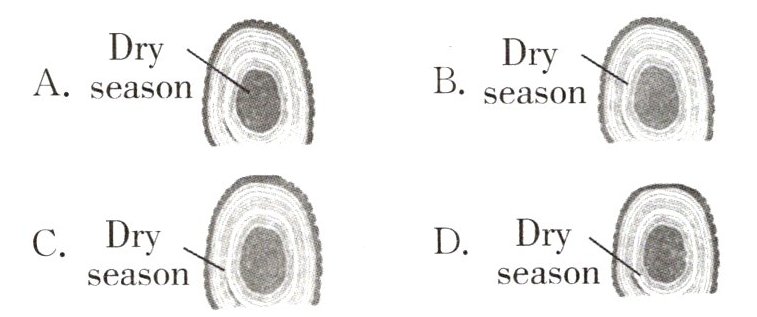
A.
B.
C.
D.
5. 语言能力 归纳能力 What is the text mainly about?
A. The life of a tree.
B. Tree rings and seasons.
C. The need to plant trees.
D. Trees and climate change.
What can trees tell us about climate change? Quite a lot, actually! But to understand what the trees tell us, we first have to understand the difference between weather and climate.
Weather is a specific (具体的) event—like a rainstorm or hot day—that happens over a short period of time. Weather can be tracked (追踪) within hours or days. Climate is the weather conditions in a place over a long period of time (30 years or more).
Scientists at the National Weather Service have been keeping track of weather in the United States since 1891. But trees can keep a much longer record of the earth's climate. In fact, trees can live for hundreds—and sometimes even thousands of years.
One way that scientists use trees to learn about past climate is by studying a tree's rings. If you've ever seen a tree stump (树桩), you probably noticed that the top of the stump had some rings.
These rings can tell us how old the tree is, and what the weather was like during each year of the tree's life. The light-coloured rings represent wood that grew in spring and early summer, while the dark rings represent wood that grew in late summer and autumn. One light ring and one dark ring represent one year of the tree's life.
Because trees can be easily influenced by local climate conditions, such as rain and temperature, they give scientists some information about that area's local climate in the past. For example, tree rings usually grow wider in warm, wet years and they are thinner in years when it is cold and dry. If the tree has experienced difficult conditions, such as a drought (干旱), the tree might hardly grow at all in those years.
1. 新考法 写作手法 Paragraph 2 is developed mainly by ______.
A. making comparisons
B. telling stories
C. showing causes
D. following the time order
2. Dark rings would appear when the tree grew in ______.
A. spring
B. early summer
C. autumn
D. late winter
3. The underlined word “influenced” in the last paragraph means “______”.
A. used
B. changed
C. polluted
D. protected
4. 新考法 图示理解 Which picture shows the rings in dry seasons?
A.
B.
C.
D.
5. 语言能力 归纳能力 What is the text mainly about?
A. The life of a tree.
B. Tree rings and seasons.
C. The need to plant trees.
D. Trees and climate change.
答案:
1 - 5 ACBCD
A
【语篇解读】本文是一篇说明文,主要介绍了天气和气候的不同,以及树木的年轮所反映的生长环境的气候变化。
1. A 写作手法题。根据“Weather is a specific event”及“Climate is the weather conditions in a place over a long period of time”可知,第二段比较了 weather 和 climate 这两个概念的差异,故选 A。
2. C 细节理解题。根据“while the dark rings represent wood that grew in late summer and autumn”可知,深色的年轮代表了夏末和秋天生长的树木,故选 C。
3. B 词义猜测题。根据“Because trees can be easily influenced by local climate conditions, such as rain and temperature”及“For example, tree rings usually grow wider in warm, wet years and they are thinner in years when it is cold and dry.”可知,正因为树木易受周围环境影响,所以才能给人们了解气候变化提供信息,所以画线单词与“changed”词义相近,故选 B。
4. C 图示理解题。根据“... and they are thinner in years when it is cold and dry.”可知,在干燥的年份,年轮会变薄,C 图片符合,故选 C。
5. D 主旨大意题。通读全文可知,本文主要介绍了天气和气候的不同,以及树木的年轮所反映的生长环境的气候变化,故选 D。
A
【语篇解读】本文是一篇说明文,主要介绍了天气和气候的不同,以及树木的年轮所反映的生长环境的气候变化。
1. A 写作手法题。根据“Weather is a specific event”及“Climate is the weather conditions in a place over a long period of time”可知,第二段比较了 weather 和 climate 这两个概念的差异,故选 A。
2. C 细节理解题。根据“while the dark rings represent wood that grew in late summer and autumn”可知,深色的年轮代表了夏末和秋天生长的树木,故选 C。
3. B 词义猜测题。根据“Because trees can be easily influenced by local climate conditions, such as rain and temperature”及“For example, tree rings usually grow wider in warm, wet years and they are thinner in years when it is cold and dry.”可知,正因为树木易受周围环境影响,所以才能给人们了解气候变化提供信息,所以画线单词与“changed”词义相近,故选 B。
4. C 图示理解题。根据“... and they are thinner in years when it is cold and dry.”可知,在干燥的年份,年轮会变薄,C 图片符合,故选 C。
5. D 主旨大意题。通读全文可知,本文主要介绍了天气和气候的不同,以及树木的年轮所反映的生长环境的气候变化,故选 D。
查看更多完整答案,请扫码查看

