

 搜索
搜索
第98页
- 第1页
- 第2页
- 第3页
- 第4页
- 第5页
- 第6页
- 第7页
- 第8页
- 第9页
- 第10页
- 第11页
- 第12页
- 第13页
- 第14页
- 第15页
- 第16页
- 第17页
- 第18页
- 第19页
- 第20页
- 第21页
- 第22页
- 第23页
- 第24页
- 第25页
- 第26页
- 第27页
- 第28页
- 第29页
- 第30页
- 第31页
- 第32页
- 第33页
- 第34页
- 第35页
- 第36页
- 第37页
- 第38页
- 第39页
- 第40页
- 第41页
- 第42页
- 第43页
- 第44页
- 第45页
- 第46页
- 第47页
- 第48页
- 第49页
- 第50页
- 第51页
- 第52页
- 第53页
- 第54页
- 第55页
- 第56页
- 第57页
- 第58页
- 第59页
- 第60页
- 第61页
- 第62页
- 第63页
- 第64页
- 第65页
- 第66页
- 第67页
- 第68页
- 第69页
- 第70页
- 第71页
- 第72页
- 第73页
- 第74页
- 第75页
- 第76页
- 第77页
- 第78页
- 第79页
- 第80页
- 第81页
- 第82页
- 第83页
- 第84页
- 第85页
- 第86页
- 第87页
- 第88页
- 第89页
- 第90页
- 第91页
- 第92页
- 第93页
- 第94页
- 第95页
- 第96页
- 第97页
- 第98页
- 第99页
- 第100页
- 第101页
- 第102页
- 第103页
- 第104页
- 第105页
- 第106页
- 第107页
- 第108页
- 第109页
- 第110页
- 第111页
- 第112页
- 第113页
- 第114页
- 第115页
- 第116页
- 第117页
- 第118页
- 第119页
- 第120页
- 第121页
- 第122页
- 第123页
- 第124页
- 第125页
- 第126页
- 第127页
- 第128页
- 第129页
- 第130页
- 第131页
- 第132页
- 第133页
- 第134页
- 第135页
- 第136页
- 第137页
- 第138页
- 第139页
- 第140页
- 第141页
- 第142页
- 第143页
- 第144页
- 第145页
- 第146页
- 第147页
- 第148页
- 第149页
- 第150页
- 第151页
- 第152页
- 第153页
- 第154页
- 第155页
- 第156页
- 第157页
- 第158页
- 第159页
- 第160页
- 第161页
- 第162页
- 第163页
- 第164页
- 第165页
- 第166页
- 第167页
- 第168页
- 第169页
- 第170页
- 第171页
- 第172页
- 第173页
- 第174页
- 第175页
- 第176页
- 第177页
- 第178页
- 第179页
- 第180页
- 第181页
- 第182页
- 第183页
- 第184页
- 第185页
- 第186页
- 第187页
- 第188页
- 第189页
13—year—old Sarah sits in her yard, laying out her handmade crafts (手工制品) on the table. There are baskets, flowerpots, and cloth bags—all made of recycled materials. They are not just creative objects; they’re part of Sarah’s project to make a greener community.
Two years ago, Sarah would pass by a park near her house every day after school. Plastic bottles, empty cans, and broken toys littered the roadside. Seeing this, Sarah felt sad.
One afternoon, Sarah noticed some kids selling orange juice at the park. People stopped to buy it. That was when Sarah got an idea.
“Mom, what if we sell handmade crafts?” she asked excitedly that evening. “Then we can buy trees for our neighborhood with the money!”
With her mom’s help, Sarah started making crafts with great interest, using old boxes, plastic bottles and empty cans. Every day after school, she sat in her yard, waiting for customers. At first, no one came. Sarah felt down, but she didn’t give up.
Later, people began to stop by. A kind woman bought a cloth bag, saying it was perfect for shopping. Kids liked the flowerpots, and one boy even asked Sarah to make him a special basket for his toys. By the end of the first month, Sarah had made 150! She bought 30 small trees. Sarah and her parents planted the trees around the park and along the sidewalks.
Now, the neighborhood looks nicer, and the birds have more places to rest. Sarah even teaches her friends how to make eco—friendly (环保的) crafts after school. They organize sales every month to raise money for new projects like bird feeders.
This year, Sarah shared her story at a local community event. “Making a greener community is important,” she said proudly. “If everyone helps a little, we can make our life better.” She believes that no effort is too small when it comes to caring for the environment.
1. What did Sarah sell to make money?
A. Small trees.
B. Orange juice.
C. Plastic bottles.
D. Handmade crafts.
2. Look at the mind map. Which of the following can be put in “▲”?
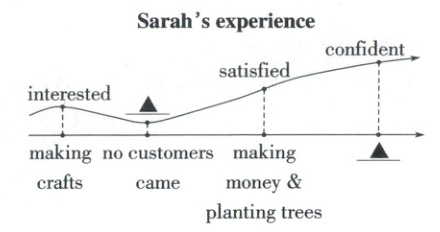
A. sad; sharing her story
B. afraid; feeding birds
C. bored; caring for nature
D. nervous; recycling old boxes
3. What can you learn from Sarah’s words in the last paragraph?
A. Doing is better than saying.
B. Great hopes make a great man.
C. The first step is the only difficulty.
D. Small actions can make a difference.
4. Which of the following can best describe Sarah?
A. Kind and honest.
B. Creative and helpful.
C. Strict and friendly.
D. Quiet and hard—working.
Two years ago, Sarah would pass by a park near her house every day after school. Plastic bottles, empty cans, and broken toys littered the roadside. Seeing this, Sarah felt sad.
One afternoon, Sarah noticed some kids selling orange juice at the park. People stopped to buy it. That was when Sarah got an idea.
“Mom, what if we sell handmade crafts?” she asked excitedly that evening. “Then we can buy trees for our neighborhood with the money!”
With her mom’s help, Sarah started making crafts with great interest, using old boxes, plastic bottles and empty cans. Every day after school, she sat in her yard, waiting for customers. At first, no one came. Sarah felt down, but she didn’t give up.
Later, people began to stop by. A kind woman bought a cloth bag, saying it was perfect for shopping. Kids liked the flowerpots, and one boy even asked Sarah to make him a special basket for his toys. By the end of the first month, Sarah had made 150! She bought 30 small trees. Sarah and her parents planted the trees around the park and along the sidewalks.
Now, the neighborhood looks nicer, and the birds have more places to rest. Sarah even teaches her friends how to make eco—friendly (环保的) crafts after school. They organize sales every month to raise money for new projects like bird feeders.
This year, Sarah shared her story at a local community event. “Making a greener community is important,” she said proudly. “If everyone helps a little, we can make our life better.” She believes that no effort is too small when it comes to caring for the environment.
1. What did Sarah sell to make money?
A. Small trees.
B. Orange juice.
C. Plastic bottles.
D. Handmade crafts.
2. Look at the mind map. Which of the following can be put in “▲”?
A. sad; sharing her story
B. afraid; feeding birds
C. bored; caring for nature
D. nervous; recycling old boxes
3. What can you learn from Sarah’s words in the last paragraph?
A. Doing is better than saying.
B. Great hopes make a great man.
C. The first step is the only difficulty.
D. Small actions can make a difference.
4. Which of the following can best describe Sarah?
A. Kind and honest.
B. Creative and helpful.
C. Strict and friendly.
D. Quiet and hard—working.
答案:
1.D 解析:细节理解题。根据“Mom,what if we sell handmade crafts?”可知,萨拉卖手工艺品来赚钱。
2.A 解析:细节理解题。根据“At first,no one came. Sarah felt down,but she didn’t give up. ”和“This year,Sarah shared her story at a local community event. ‘Making a greener community is important,’she said proudly.”可知,起初没有人来,萨拉感到很沮丧;后来骄傲地分享自己的故事。
[易错分析]
本题若对“情感与行动的对应性”把握不严,可能误选看似相关的 D(提到 recycling),但忽略了 nervous 与原文情感不符,且“分享故事”才是更贴合的后续行动。
3.D 解析:推理判断题。根据“If everyone helps a little,we can make our life better. ”可知,如果每个人都尽自己的一份力,我们就能让生活变得更美好。选项D“小小的行动能产生影响。”与题意相符。
4.B 解析:推理判断题。根据文章内容可知,萨拉想到用废旧品制作手工艺品卖钱,说明她很有创意;她投身环保工作,说明她乐于助人。
5.C 解析:标题概括题。萨拉通过卖手工艺品来为社区购买小树苗,为鸟类提供更多的休息场所。选项C“一个女孩的绿色计划”是最佳标题。
2.A 解析:细节理解题。根据“At first,no one came. Sarah felt down,but she didn’t give up. ”和“This year,Sarah shared her story at a local community event. ‘Making a greener community is important,’she said proudly.”可知,起初没有人来,萨拉感到很沮丧;后来骄傲地分享自己的故事。
[易错分析]
本题若对“情感与行动的对应性”把握不严,可能误选看似相关的 D(提到 recycling),但忽略了 nervous 与原文情感不符,且“分享故事”才是更贴合的后续行动。
3.D 解析:推理判断题。根据“If everyone helps a little,we can make our life better. ”可知,如果每个人都尽自己的一份力,我们就能让生活变得更美好。选项D“小小的行动能产生影响。”与题意相符。
4.B 解析:推理判断题。根据文章内容可知,萨拉想到用废旧品制作手工艺品卖钱,说明她很有创意;她投身环保工作,说明她乐于助人。
5.C 解析:标题概括题。萨拉通过卖手工艺品来为社区购买小树苗,为鸟类提供更多的休息场所。选项C“一个女孩的绿色计划”是最佳标题。
查看更多完整答案,请扫码查看

