

 搜索
搜索
第143页
- 第1页
- 第2页
- 第3页
- 第4页
- 第5页
- 第6页
- 第7页
- 第8页
- 第9页
- 第10页
- 第11页
- 第12页
- 第13页
- 第14页
- 第15页
- 第16页
- 第17页
- 第18页
- 第19页
- 第20页
- 第21页
- 第22页
- 第23页
- 第24页
- 第25页
- 第26页
- 第27页
- 第28页
- 第29页
- 第30页
- 第31页
- 第32页
- 第33页
- 第34页
- 第35页
- 第36页
- 第37页
- 第38页
- 第39页
- 第40页
- 第41页
- 第42页
- 第43页
- 第44页
- 第45页
- 第46页
- 第47页
- 第48页
- 第49页
- 第50页
- 第51页
- 第52页
- 第53页
- 第54页
- 第55页
- 第56页
- 第57页
- 第58页
- 第59页
- 第60页
- 第61页
- 第62页
- 第63页
- 第64页
- 第65页
- 第66页
- 第67页
- 第68页
- 第69页
- 第70页
- 第71页
- 第72页
- 第73页
- 第74页
- 第75页
- 第76页
- 第77页
- 第78页
- 第79页
- 第80页
- 第81页
- 第82页
- 第83页
- 第84页
- 第85页
- 第86页
- 第87页
- 第88页
- 第89页
- 第90页
- 第91页
- 第92页
- 第93页
- 第94页
- 第95页
- 第96页
- 第97页
- 第98页
- 第99页
- 第100页
- 第101页
- 第102页
- 第103页
- 第104页
- 第105页
- 第106页
- 第107页
- 第108页
- 第109页
- 第110页
- 第111页
- 第112页
- 第113页
- 第114页
- 第115页
- 第116页
- 第117页
- 第118页
- 第119页
- 第120页
- 第121页
- 第122页
- 第123页
- 第124页
- 第125页
- 第126页
- 第127页
- 第128页
- 第129页
- 第130页
- 第131页
- 第132页
- 第133页
- 第134页
- 第135页
- 第136页
- 第137页
- 第138页
- 第139页
- 第140页
- 第141页
- 第142页
- 第143页
- 第144页
- 第145页
- 第146页
- 第147页
- 第148页
- 第149页
- 第150页
- 第151页
- 第152页
- 第153页
- 第154页
- 第155页
- 第156页
- 第157页
- 第158页
- 第159页
- 第160页
- 第161页
- 第162页
- 第163页
- 第164页
- 第165页
- 第166页
- 第167页
- 第168页
- 第169页
- 第170页
- 第171页
- 第172页
- 第173页
- 第174页
- 第175页
- 第176页
- 第177页
- 第178页
- 第179页
- 第180页
- 第181页
- 第182页
- 第183页
- 第184页
- 第185页
- 第186页
- 第187页
- 第188页
- 第189页
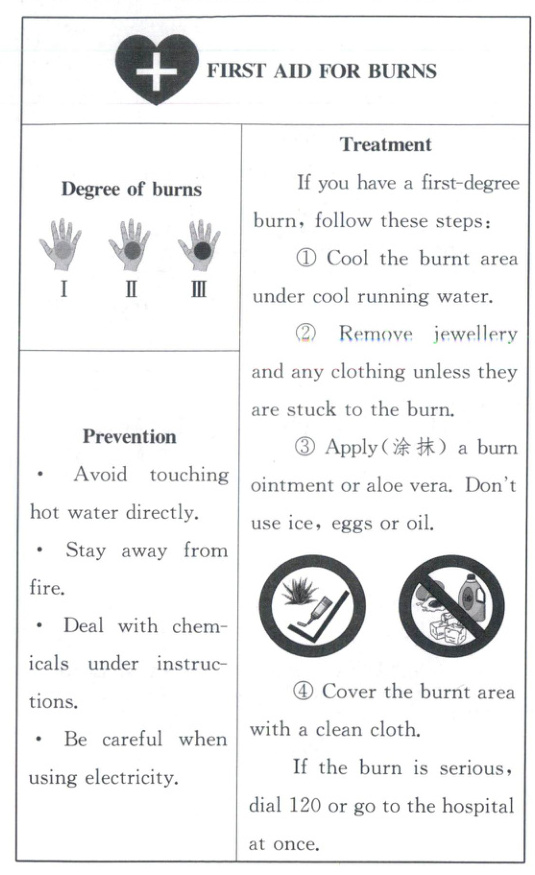
1. How many degrees of burns are shown in the material?
A. One.
B. Two.
C. Three.
D. Four.
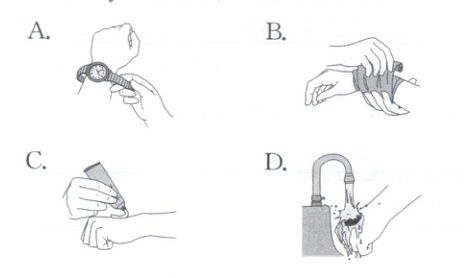
2. (创新考法·图片理解题)If we touch boiling water by accident, what should we do first?
3. Which of the following can be used in the treatment of burns?
A. Oil.
B. Aloe vera.
C. Eggs.
D. Ice.
4. (创新考法·组合式选择题)What can we do to prevent ourselves getting burnt according to the material?
① Keep away from fire.
② Don't use electricity alone.
③ Follow instructions when using chemicals.
④ Don't touch hot water directly.
A. ①②③
B. ①②④
C. ①③④
D. ②③④
5. In which part of a newspaper can we probably read the material?
A. Health care.
B. Science study.
C. Sports news.
D. Travel life.
答案:
(六) [主旨大意] 本材料介绍了烧伤急救小知识。
1. C 解析:细节理解题。根据表格中Degree of burns部分可知,材料中展示了三种程度的烧伤。
2. D 解析:推理判断题。根据“① Cool the burnt area under cool running water.”可知,如果我们不小心接触到开水,我们首先应该用流动的冷水冷却烧伤部位。
3. B 解析:细节理解题。根据“Apply a burn ointment or aloe vera. Don’t use ice, eggs or oil.”可知答案。
4. C 解析:细节理解题。根据Prevention部分可知,我们要避免直接接触热水、远离火、在指导下处理化学品、用电时要小心。
5. A 解析:推理判断题。材料介绍了烧伤急救小知识,可能出现在“医疗保健”部分。
1. C 解析:细节理解题。根据表格中Degree of burns部分可知,材料中展示了三种程度的烧伤。
2. D 解析:推理判断题。根据“① Cool the burnt area under cool running water.”可知,如果我们不小心接触到开水,我们首先应该用流动的冷水冷却烧伤部位。
3. B 解析:细节理解题。根据“Apply a burn ointment or aloe vera. Don’t use ice, eggs or oil.”可知答案。
4. C 解析:细节理解题。根据Prevention部分可知,我们要避免直接接触热水、远离火、在指导下处理化学品、用电时要小心。
5. A 解析:推理判断题。材料介绍了烧伤急救小知识,可能出现在“医疗保健”部分。
查看更多完整答案,请扫码查看

