

 搜索
搜索
第145页
- 第1页
- 第2页
- 第3页
- 第4页
- 第5页
- 第6页
- 第7页
- 第8页
- 第9页
- 第10页
- 第11页
- 第12页
- 第13页
- 第14页
- 第15页
- 第16页
- 第17页
- 第18页
- 第19页
- 第20页
- 第21页
- 第22页
- 第23页
- 第24页
- 第25页
- 第26页
- 第27页
- 第28页
- 第29页
- 第30页
- 第31页
- 第32页
- 第33页
- 第34页
- 第35页
- 第36页
- 第37页
- 第38页
- 第39页
- 第40页
- 第41页
- 第42页
- 第43页
- 第44页
- 第45页
- 第46页
- 第47页
- 第48页
- 第49页
- 第50页
- 第51页
- 第52页
- 第53页
- 第54页
- 第55页
- 第56页
- 第57页
- 第58页
- 第59页
- 第60页
- 第61页
- 第62页
- 第63页
- 第64页
- 第65页
- 第66页
- 第67页
- 第68页
- 第69页
- 第70页
- 第71页
- 第72页
- 第73页
- 第74页
- 第75页
- 第76页
- 第77页
- 第78页
- 第79页
- 第80页
- 第81页
- 第82页
- 第83页
- 第84页
- 第85页
- 第86页
- 第87页
- 第88页
- 第89页
- 第90页
- 第91页
- 第92页
- 第93页
- 第94页
- 第95页
- 第96页
- 第97页
- 第98页
- 第99页
- 第100页
- 第101页
- 第102页
- 第103页
- 第104页
- 第105页
- 第106页
- 第107页
- 第108页
- 第109页
- 第110页
- 第111页
- 第112页
- 第113页
- 第114页
- 第115页
- 第116页
- 第117页
- 第118页
- 第119页
- 第120页
- 第121页
- 第122页
- 第123页
- 第124页
- 第125页
- 第126页
- 第127页
- 第128页
- 第129页
- 第130页
- 第131页
- 第132页
- 第133页
- 第134页
- 第135页
- 第136页
- 第137页
- 第138页
- 第139页
- 第140页
- 第141页
- 第142页
- 第143页
- 第144页
- 第145页
- 第146页
- 第147页
- 第148页
- 第149页
- 第150页
- 第151页
- 第152页
- 第153页
- 第154页
- 第155页
- 第156页
- 第157页
- 第158页
- 第159页
- 第160页
- 第161页
- 第162页
- 第163页
- 第164页
- 第165页
- 第166页
- 第167页
- 第168页
- 第169页
- 第170页
- 第171页
- 第172页
- 第173页
- 第174页
- 第175页
- 第176页
- 第177页
- 第178页
- 第179页
- 第180页
- 第181页
- 第182页
- 第183页
- 第184页
- 第185页
- 第186页
- 第187页
- 第188页
- 第189页
Hello from nature's foodies
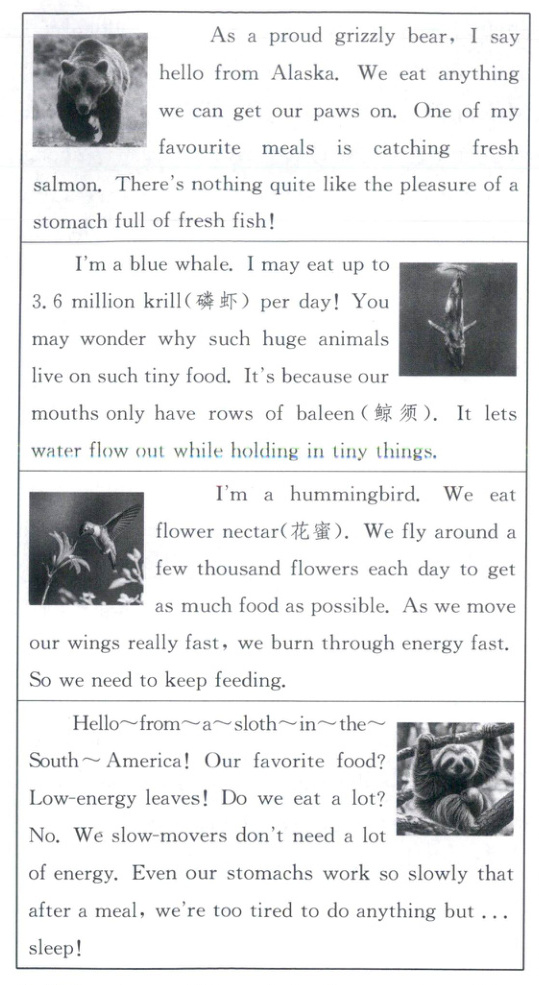
1. Why does a blue whale live on tiny living things?
A. It is the largest sea animal.
B. It is too slow to catch large fish.
C. It only has baleen instead of teeth.
D. It likes a stomach full of tiny food.
2. What decides how much hummingbirds and sloths eat?
A. Living places.
B. Diet lists.
C. Daily activities.
D. Body sizes.
3. Which part of a magazine is the text probably from?
A. Wildlife.
B. Landscapes.
C. Travelling.
D. Photography.
1. Why does a blue whale live on tiny living things?
A. It is the largest sea animal.
B. It is too slow to catch large fish.
C. It only has baleen instead of teeth.
D. It likes a stomach full of tiny food.
2. What decides how much hummingbirds and sloths eat?
A. Living places.
B. Diet lists.
C. Daily activities.
D. Body sizes.
3. Which part of a magazine is the text probably from?
A. Wildlife.
B. Landscapes.
C. Travelling.
D. Photography.
答案:
1.C 解析:细节理解题。根据“You may wonder why such huge animals live on such tiny food. It’s because our mouths only have rows of baleen. It lets water flow out while holding in tiny things.”可知,是因为它们的嘴里只有鲸须,这种结构可以让水流出,同时保留微小的食物。
2.C 解析:推理判断题。根据“As we move our wings really fast, we burn through energy fast. So we need to keep feeding.”以及“No. We slow-movers don’t need a lot of energy.”可知,蜂鸟需要大量进食是因为它们的翅膀快速振动,消耗能量极快,需要不断补充能量,而树懒则因为活动缓慢,能量消耗低,所以不需要大量进食,这都与它们的日常活动密切相关。
3.A 解析:推理判断题。本文介绍了不同动物的饮食习性,故文章可能来自杂志的“野生动物”部分。
2.C 解析:推理判断题。根据“As we move our wings really fast, we burn through energy fast. So we need to keep feeding.”以及“No. We slow-movers don’t need a lot of energy.”可知,蜂鸟需要大量进食是因为它们的翅膀快速振动,消耗能量极快,需要不断补充能量,而树懒则因为活动缓慢,能量消耗低,所以不需要大量进食,这都与它们的日常活动密切相关。
3.A 解析:推理判断题。本文介绍了不同动物的饮食习性,故文章可能来自杂志的“野生动物”部分。
Lanternfish(灯笼鱼) are fish that carry their own lights. Most lanternfish are brown on top and silver underneath(在下面). They have very large eyes. They eat small sea animals.
If you want to find them, you must go deep into the sea. As you go deeper and deeper, the daylight(日光) becomes dimmer and dimmer. At over 152 metres below the surface of the water, the daylight is almost gone. The water is dark blue. There you will find lanternfish.
There are over 230 different kinds of lanternfish in the world. Most lanternfish are just as long as your fingers. Even the biggest lanternfish are only about 15 centimetres(厘米) long. They are not large in size.
However, each lanternfish has about 100 small round lights on the lower part of its body. The fish use their lights to help them catch food. They also use their lights to send information so that they can recognise(认出) each other. At night, they may swim up near the surface of the sea. Their lights shine like stars under the water.
Lanternfish are one of the wonders of the sea.
1. What is the colour of most lanternfish on top?
A. Brown.
B. Green.
C. Red.
D. Silver.
(
2. What does the word “dimmer” mean in Paragraph 2?
A. Quicker.
B. Easier.
C. Richer.
D. Darker.
(
3. How many kinds of lanternfish are there in the world?
A. Over 152.
B. Over 230.
C. About 15.
D. About 100.
(
4. In order to recognise each other, lanternfish also use lights to ______.
A. drink water
B. cook food
C. send information
D. fall asleep
(
5. In which part of a magazine can we find the passage?
A. Art.
B. Space.
C. Health.
D. Nature.
(
If you want to find them, you must go deep into the sea. As you go deeper and deeper, the daylight(日光) becomes dimmer and dimmer. At over 152 metres below the surface of the water, the daylight is almost gone. The water is dark blue. There you will find lanternfish.
There are over 230 different kinds of lanternfish in the world. Most lanternfish are just as long as your fingers. Even the biggest lanternfish are only about 15 centimetres(厘米) long. They are not large in size.
However, each lanternfish has about 100 small round lights on the lower part of its body. The fish use their lights to help them catch food. They also use their lights to send information so that they can recognise(认出) each other. At night, they may swim up near the surface of the sea. Their lights shine like stars under the water.
Lanternfish are one of the wonders of the sea.
1. What is the colour of most lanternfish on top?
A. Brown.
B. Green.
C. Red.
D. Silver.
(
A
)2. What does the word “dimmer” mean in Paragraph 2?
A. Quicker.
B. Easier.
C. Richer.
D. Darker.
(
D
)3. How many kinds of lanternfish are there in the world?
A. Over 152.
B. Over 230.
C. About 15.
D. About 100.
(
B
)4. In order to recognise each other, lanternfish also use lights to ______.
A. drink water
B. cook food
C. send information
D. fall asleep
(
C
)5. In which part of a magazine can we find the passage?
A. Art.
B. Space.
C. Health.
D. Nature.
(
D
)
答案:
1.A 解析:细节理解题。根据“Most lanternfish are brown on top and silver underneath.”可知答案。
2.D 解析:词义猜测题。根据“the daylight becomes dimmer and dimmer ... the daylight is almost gone”可知,随着深度增加,日光逐渐变弱直至几乎消失,因此dimmer意为“更暗的”。
3.B 解析:细节理解题。根据“There are over 230 different kinds of lanternfish in the world.”可知,全球有超过230种灯笼鱼。
4.C 解析:细节理解题。根据“They also use their lights to send information so that they can recognise each other.”可知,灯笼鱼通过发光传递信息以互相识别。
5.D 解析:推理判断题。通读全文可知,全文围绕海洋生物灯笼鱼展开,介绍其自然特征,因此最可能出现在杂志的“自然”板块。
2.D 解析:词义猜测题。根据“the daylight becomes dimmer and dimmer ... the daylight is almost gone”可知,随着深度增加,日光逐渐变弱直至几乎消失,因此dimmer意为“更暗的”。
3.B 解析:细节理解题。根据“There are over 230 different kinds of lanternfish in the world.”可知,全球有超过230种灯笼鱼。
4.C 解析:细节理解题。根据“They also use their lights to send information so that they can recognise each other.”可知,灯笼鱼通过发光传递信息以互相识别。
5.D 解析:推理判断题。通读全文可知,全文围绕海洋生物灯笼鱼展开,介绍其自然特征,因此最可能出现在杂志的“自然”板块。
查看更多完整答案,请扫码查看

