

 搜索
搜索
第122页
- 第1页
- 第2页
- 第3页
- 第4页
- 第5页
- 第6页
- 第7页
- 第8页
- 第9页
- 第10页
- 第11页
- 第12页
- 第13页
- 第14页
- 第15页
- 第16页
- 第17页
- 第18页
- 第19页
- 第20页
- 第21页
- 第22页
- 第23页
- 第24页
- 第25页
- 第26页
- 第27页
- 第28页
- 第29页
- 第30页
- 第31页
- 第32页
- 第33页
- 第34页
- 第35页
- 第36页
- 第37页
- 第38页
- 第39页
- 第40页
- 第41页
- 第42页
- 第43页
- 第44页
- 第45页
- 第46页
- 第47页
- 第48页
- 第49页
- 第50页
- 第51页
- 第52页
- 第53页
- 第54页
- 第55页
- 第56页
- 第57页
- 第58页
- 第59页
- 第60页
- 第61页
- 第62页
- 第63页
- 第64页
- 第65页
- 第66页
- 第67页
- 第68页
- 第69页
- 第70页
- 第71页
- 第72页
- 第73页
- 第74页
- 第75页
- 第76页
- 第77页
- 第78页
- 第79页
- 第80页
- 第81页
- 第82页
- 第83页
- 第84页
- 第85页
- 第86页
- 第87页
- 第88页
- 第89页
- 第90页
- 第91页
- 第92页
- 第93页
- 第94页
- 第95页
- 第96页
- 第97页
- 第98页
- 第99页
- 第100页
- 第101页
- 第102页
- 第103页
- 第104页
- 第105页
- 第106页
- 第107页
- 第108页
- 第109页
- 第110页
- 第111页
- 第112页
- 第113页
- 第114页
- 第115页
- 第116页
- 第117页
- 第118页
- 第119页
- 第120页
- 第121页
- 第122页
- 第123页
- 第124页
- 第125页
- 第126页
- 第127页
- 第128页
- 第129页
- 第130页
- 第131页
- 第132页
- 第133页
- 第134页
- 第135页
- 第136页
- 第137页
- 第138页
- 第139页
- 第140页
- 第141页
- 第142页
- 第143页
- 第144页
- 第145页
- 第146页
- 第147页
- 第148页
- 第149页
- 第150页
- 第151页
- 第152页
- 第153页
- 第154页
- 第155页
- 第156页
- 第157页
- 第158页
- 第159页
- 第160页
- 第161页
- 第162页
- 第163页
- 第164页
- 第165页
- 第166页
- 第167页
- 第168页
- 第169页
- 第170页
- 第171页
- 第172页
- 第173页
- 第174页
- 第175页
- 第176页
- 第177页
- 第178页
- 第179页
- 第180页
- 第181页
- 第182页
- 第183页
- 第184页
- 第185页
- 第186页
- 第187页
- 第188页
- 第189页
(三)(2024·凉山)〔核心素养—语言能力〕
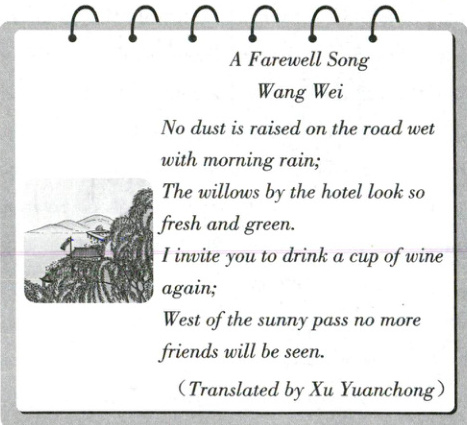
Friends are important in our lives,but we sometimes have to separate from our friends. “A Farewell(告别)Song” is about saying goodbye to a friend. It is a famous poem by Wang Wei,a great poet,who lived in the Tang Dynasty. He was good at writing poems and drawing. When talking about Wang Wei,people often say there are pictures in his poems and that there are poems in his pictures. His poems are full of beauty and imagination.
“No dust is raised on the road wet with morning rain;The willows by the hotel look so fresh and green”,a picture of silence and peace gets into our eyes. After the morning rain in spring,the road,the willows and the hotel are completely different. Everything is nice,gentle and silent. Willow branches are considered as a typical symbol of farewell in China. In ancient times,Chinese people often used them as gifts when they said goodbye to their friends.
“I invite you to drink a cup of wine again” is the poet’s warm and real way of not wanting to say goodbye to his friend. Having another drink together is like a symbol of their goodbye. Lastly,“West of the sunny pass no more friends will be seen” shows the feeling of being alone and missing someone. It also shows his sincere love and care for his friend.
“A Farewell Song” creates a feeling of quiet sadness. It mixes beautiful pictures and human feelings to deeply express the common experience of saying goodbye.
1. Who is the writer of this poem?
A. 李白
B. 王维
C. 杜甫
2. When did Wang Wei’s friend leave in the poem?
A. In spring.
B. In summer.
C. In autumn.
3. What is considered as a typical symbol of farewell in China?
A. A morning rain.
B. A hotel.
C. A willow branch.
4.(创新考法·跨学科题)Which of the following rhymes are right for this poem?
A. aa - bb.
B. ab - ab.
C. ab - cd.
5. What did Wang Wei want to show in this poem?
A. His excitement after seeing his old friend.
B. His joy before separating from his friend.
C. A feeling of quiet sadness before farewell.
Friends are important in our lives,but we sometimes have to separate from our friends. “A Farewell(告别)Song” is about saying goodbye to a friend. It is a famous poem by Wang Wei,a great poet,who lived in the Tang Dynasty. He was good at writing poems and drawing. When talking about Wang Wei,people often say there are pictures in his poems and that there are poems in his pictures. His poems are full of beauty and imagination.
“No dust is raised on the road wet with morning rain;The willows by the hotel look so fresh and green”,a picture of silence and peace gets into our eyes. After the morning rain in spring,the road,the willows and the hotel are completely different. Everything is nice,gentle and silent. Willow branches are considered as a typical symbol of farewell in China. In ancient times,Chinese people often used them as gifts when they said goodbye to their friends.
“I invite you to drink a cup of wine again” is the poet’s warm and real way of not wanting to say goodbye to his friend. Having another drink together is like a symbol of their goodbye. Lastly,“West of the sunny pass no more friends will be seen” shows the feeling of being alone and missing someone. It also shows his sincere love and care for his friend.
“A Farewell Song” creates a feeling of quiet sadness. It mixes beautiful pictures and human feelings to deeply express the common experience of saying goodbye.
1. Who is the writer of this poem?
A. 李白
B. 王维
C. 杜甫
2. When did Wang Wei’s friend leave in the poem?
A. In spring.
B. In summer.
C. In autumn.
3. What is considered as a typical symbol of farewell in China?
A. A morning rain.
B. A hotel.
C. A willow branch.
4.(创新考法·跨学科题)Which of the following rhymes are right for this poem?
A. aa - bb.
B. ab - ab.
C. ab - cd.
5. What did Wang Wei want to show in this poem?
A. His excitement after seeing his old friend.
B. His joy before separating from his friend.
C. A feeling of quiet sadness before farewell.
答案:
1.B解析:细节理解题。根据It is a famous poem by Wang Wei可知,这是王维写的诗。2.A解析:细节理解题。根据After the morning rain in spring...可知,王维的朋友在春天离开。3.C解析:细节理解题。根据Willow branches are considered as a typical symbol of farewell in China,可知,柳枝在中国被认为是告别的典型象征。4.B解析:推理判断题。根据整首诗的特点可知,这是ab-ab韵。5.C解析:推理判断题。根据the poets warm and real way of not wanting to say goodbye to his friend以及creates a feeling of quiet sadness可知,王维想表达的是在告别前的一种悲伤的情绪。
查看更多完整答案,请扫码查看

