

 搜索
搜索
第156页
- 第1页
- 第2页
- 第3页
- 第4页
- 第5页
- 第6页
- 第7页
- 第8页
- 第9页
- 第10页
- 第11页
- 第12页
- 第13页
- 第14页
- 第15页
- 第16页
- 第17页
- 第18页
- 第19页
- 第20页
- 第21页
- 第22页
- 第23页
- 第24页
- 第25页
- 第26页
- 第27页
- 第28页
- 第29页
- 第30页
- 第31页
- 第32页
- 第33页
- 第34页
- 第35页
- 第36页
- 第37页
- 第38页
- 第39页
- 第40页
- 第41页
- 第42页
- 第43页
- 第44页
- 第45页
- 第46页
- 第47页
- 第48页
- 第49页
- 第50页
- 第51页
- 第52页
- 第53页
- 第54页
- 第55页
- 第56页
- 第57页
- 第58页
- 第59页
- 第60页
- 第61页
- 第62页
- 第63页
- 第64页
- 第65页
- 第66页
- 第67页
- 第68页
- 第69页
- 第70页
- 第71页
- 第72页
- 第73页
- 第74页
- 第75页
- 第76页
- 第77页
- 第78页
- 第79页
- 第80页
- 第81页
- 第82页
- 第83页
- 第84页
- 第85页
- 第86页
- 第87页
- 第88页
- 第89页
- 第90页
- 第91页
- 第92页
- 第93页
- 第94页
- 第95页
- 第96页
- 第97页
- 第98页
- 第99页
- 第100页
- 第101页
- 第102页
- 第103页
- 第104页
- 第105页
- 第106页
- 第107页
- 第108页
- 第109页
- 第110页
- 第111页
- 第112页
- 第113页
- 第114页
- 第115页
- 第116页
- 第117页
- 第118页
- 第119页
- 第120页
- 第121页
- 第122页
- 第123页
- 第124页
- 第125页
- 第126页
- 第127页
- 第128页
- 第129页
- 第130页
- 第131页
- 第132页
- 第133页
- 第134页
- 第135页
- 第136页
- 第137页
- 第138页
- 第139页
- 第140页
- 第141页
- 第142页
- 第143页
- 第144页
- 第145页
- 第146页
- 第147页
- 第148页
- 第149页
- 第150页
- 第151页
- 第152页
- 第153页
- 第154页
- 第155页
- 第156页
- 第157页
- 第158页
- 第159页
- 第160页
- 第161页
- 第162页
- 第163页
- 第164页
- 第165页
- 第166页
- 第167页
- 第168页
- 第169页
- 第170页
- 第171页
- 第172页
- 第173页
- 第174页
- 第175页
- 第176页
- 第177页
- 第178页
- 第179页
- 第180页
- 第181页
- 第182页
- 第183页
三、阅读填表。
Lhasa, the capital of Tibet, is one of the highest cities in the world. It is also one of the most attractive cities in the world, not only because Lhasa is too high for people to arrive, but also because of its beautiful heritages with a history of over a thousand years.
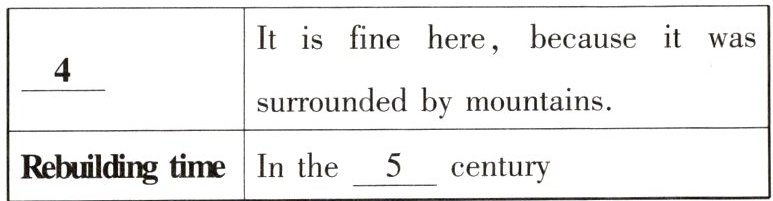
Lhasa lies in the center of the Tibetan Plateau (青藏高原) with the surrounding mountains. The mountains protect the city from the cold, heat and the strong wind, so Lhasa is a city which is neither too hot nor too cold. The coldest month is January with an average temperature of -1.6 ℃ and the warmest month is June with an average temperature of 16 ℃, though nights have generally been warmer in July. Lhasa can receive nearly 3,000 hours of sunlight a year, so it is also called the “Sunlit city” by Tibetans.
The most world-famous attraction in Lhasa is the magnificent Potala Palace(布达拉宫). The Potala Palace on the Red Hill is considered to be a model of Tibetan architecture. It covers more than 360,000 square meters with 13 storeys. The palace was first built by Tibetan King Songtsan Gampo in the year of 641, in order to welcome his bride(新娘), Princess Wencheng of the Tang Dynasty. Then it was later burned to the ground during a war and rebuilt in the 17th century.
根据短文内容, 完成表格信息。
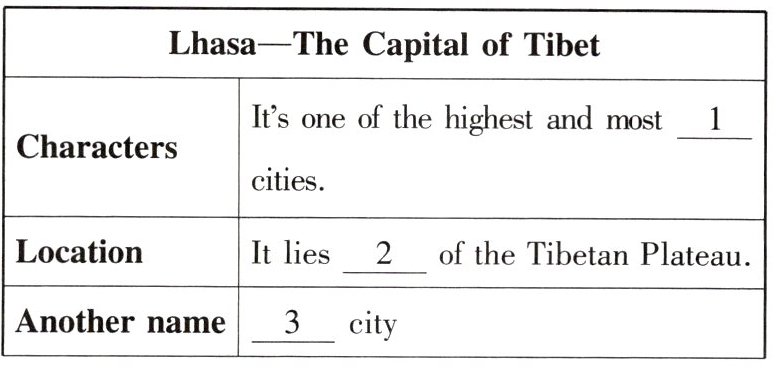
Lhasa, the capital of Tibet, is one of the highest cities in the world. It is also one of the most attractive cities in the world, not only because Lhasa is too high for people to arrive, but also because of its beautiful heritages with a history of over a thousand years.
Lhasa lies in the center of the Tibetan Plateau (青藏高原) with the surrounding mountains. The mountains protect the city from the cold, heat and the strong wind, so Lhasa is a city which is neither too hot nor too cold. The coldest month is January with an average temperature of -1.6 ℃ and the warmest month is June with an average temperature of 16 ℃, though nights have generally been warmer in July. Lhasa can receive nearly 3,000 hours of sunlight a year, so it is also called the “Sunlit city” by Tibetans.
The most world-famous attraction in Lhasa is the magnificent Potala Palace(布达拉宫). The Potala Palace on the Red Hill is considered to be a model of Tibetan architecture. It covers more than 360,000 square meters with 13 storeys. The palace was first built by Tibetan King Songtsan Gampo in the year of 641, in order to welcome his bride(新娘), Princess Wencheng of the Tang Dynasty. Then it was later burned to the ground during a war and rebuilt in the 17th century.
根据短文内容, 完成表格信息。
答案:
1. attractive 2. in the centre 3. Sunlit 4. Weather 5. 17th
查看更多完整答案,请扫码查看

