

 搜索
搜索
2025年学典四川九年级英语全一册人教版A版
注:目前有些书本章节名称可能整理的还不是很完善,但都是按照顺序排列的,请同学们按照顺序仔细查找。练习册 2025年学典四川九年级英语全一册人教版A版 答案主要是用来给同学们做完题方便对答案用的,请勿直接抄袭。
第79页
- 第2页
- 第3页
- 第4页
- 第5页
- 第6页
- 第7页
- 第8页
- 第9页
- 第10页
- 第11页
- 第12页
- 第13页
- 第14页
- 第15页
- 第16页
- 第17页
- 第18页
- 第19页
- 第20页
- 第21页
- 第22页
- 第23页
- 第24页
- 第25页
- 第26页
- 第27页
- 第28页
- 第29页
- 第30页
- 第31页
- 第32页
- 第33页
- 第34页
- 第35页
- 第36页
- 第37页
- 第38页
- 第39页
- 第40页
- 第41页
- 第42页
- 第43页
- 第44页
- 第45页
- 第46页
- 第47页
- 第48页
- 第49页
- 第50页
- 第51页
- 第52页
- 第53页
- 第54页
- 第55页
- 第56页
- 第57页
- 第58页
- 第59页
- 第60页
- 第61页
- 第62页
- 第63页
- 第64页
- 第65页
- 第66页
- 第67页
- 第68页
- 第69页
- 第70页
- 第71页
- 第72页
- 第73页
- 第74页
- 第75页
- 第76页
- 第77页
- 第78页
- 第79页
- 第80页
- 第81页
- 第82页
- 第83页
- 第84页
- 第85页
- 第86页
- 第87页
- 第88页
- 第89页
- 第90页
- 第91页
- 第92页
- 第93页
- 第94页
- 第95页
- 第96页
- 第97页
- 第98页
- 第99页
- 第100页
- 第101页
- 第102页
- 第103页
- 第104页
- 第105页
- 第106页
- 第107页
- 第108页
- 第109页
- 第110页
- 第111页
- 第112页
- 第113页
- 第114页
- 第115页
- 第116页
- 第117页
- 第118页
- 第119页
- 第120页
- 第121页
- 第122页
- 第123页
- 第124页
- 第125页
- 第126页
- 第127页
- 第128页
- 第129页
- 第130页
- 第131页
- 第132页
- 第133页
- 第134页
- 第135页
- 第136页
- 第137页
- 第138页
- 第139页
- 第140页
- 第141页
- 第142页
- 第143页
- 第144页
- 第145页
- 第146页
- 第147页
- 第148页
- 第149页
- 第150页
- 第151页
- 第152页
- 第153页
- 第154页
- 第155页
- 第156页
- 第157页
- 第158页
- 第159页
- 第160页
- 第161页
- 第162页
- 第163页
- 第164页
- 第165页
- 第166页
- 第167页
- 第168页
- 第169页
- 第170页
- 第171页
- 第172页
- 第173页
- 第174页
- 第175页
- 第176页
- 第177页
- 第178页
- 第179页
- 第180页
六、完成图表。根据短文内容,完成图表中所缺信息。
The folk art form, kuaiban, which has a long history, can be performed by a group or a single person. With one or two pairs of bamboo clappers (响板) — a kind of traditional Chinese musical instrument in their hands, the performers tell stories in the local dialect (方言). These stories are usually folk tales or about social life.
Recently, Liu Jiming and Wan Yifu made and shared three short videos by using kuaiban which were viewed about 4 million times. As a result, Liu and Wan have got more than 1 million followers on the Internet. They've created many new works to raise people's awareness (意识). Some of their works are about the danger of drunken driving and food safety. They also write stories to show respect (尊重) to people who make contributions (贡献), such as traffic policemen.
According to Liu and Wan, people can understand kuaiban pieces without difficulty. The stories told in kuaiban pieces are close to people's daily lives. Thus, they consider that it is a fun way to introduce the Chinese folk culture through kuaiban. And what matters to them is that both young people and old people begin to know the charm of the art form, kuaiban, which may not be paid much attention to, compared to other traditional art forms.
Folk art forms, like xiangsheng, pingshu and kuaiban, share something in common. These traditional art forms show the beauty and value of traditional Chinese culture, so they should be known by more people and get to more areas. Luckily, through the Internet, new performers who go on sharing kuaiban pieces, like Liu and Wan, are playing an active role. Hopefully, these Chinese folk art forms will never die with the times.
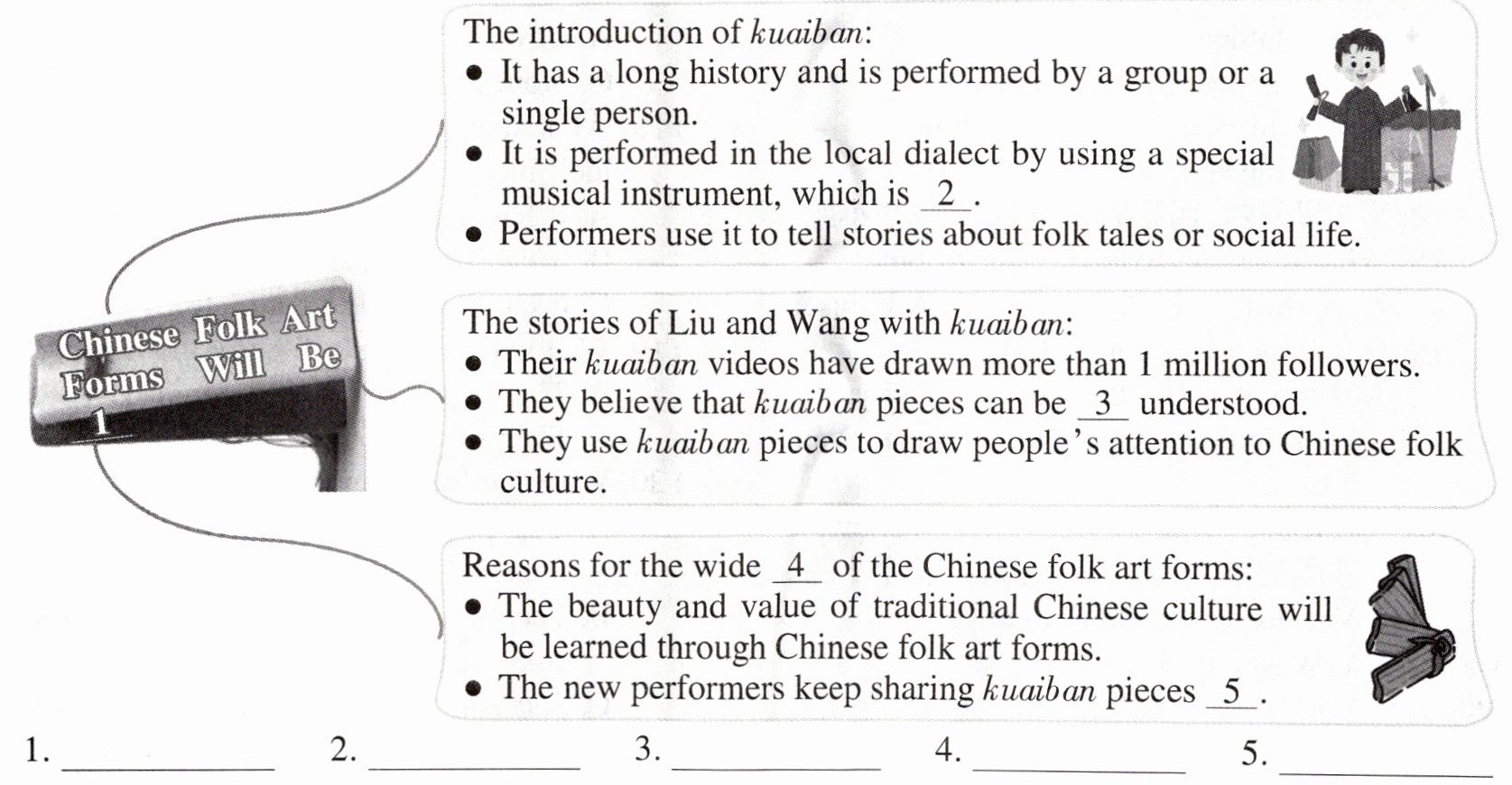
1.
2.
3.
4.
5.
The folk art form, kuaiban, which has a long history, can be performed by a group or a single person. With one or two pairs of bamboo clappers (响板) — a kind of traditional Chinese musical instrument in their hands, the performers tell stories in the local dialect (方言). These stories are usually folk tales or about social life.
Recently, Liu Jiming and Wan Yifu made and shared three short videos by using kuaiban which were viewed about 4 million times. As a result, Liu and Wan have got more than 1 million followers on the Internet. They've created many new works to raise people's awareness (意识). Some of their works are about the danger of drunken driving and food safety. They also write stories to show respect (尊重) to people who make contributions (贡献), such as traffic policemen.
According to Liu and Wan, people can understand kuaiban pieces without difficulty. The stories told in kuaiban pieces are close to people's daily lives. Thus, they consider that it is a fun way to introduce the Chinese folk culture through kuaiban. And what matters to them is that both young people and old people begin to know the charm of the art form, kuaiban, which may not be paid much attention to, compared to other traditional art forms.
Folk art forms, like xiangsheng, pingshu and kuaiban, share something in common. These traditional art forms show the beauty and value of traditional Chinese culture, so they should be known by more people and get to more areas. Luckily, through the Internet, new performers who go on sharing kuaiban pieces, like Liu and Wan, are playing an active role. Hopefully, these Chinese folk art forms will never die with the times.
1.
passed down
2.
bamboo clappers
3.
easily
4.
spread
5.
actively
答案:
【解析】:本题主要考查对阅读文段的细节理解。第一空根据标题可知,中国民间艺术形式将会一直流传,需要用一个单词来表示“流传”,又因为要和be动词构成被动语态,故填“passed down”。第二空根据第一段可以得知,快板使用的特殊乐器是响板,故填“bamboo clappers”。第三空根据第三段可以得知,人们可以毫不费力地理解快板,也就是快板很容易被理解,空格处要填写副词修饰动词understood,故填“easily”。第四空根据第四段可以得知,这些传统艺术形式应该被更多人知道,被传播到更多地方,也就是它们广泛传播的原因,空格处需要填写名词“传播”,故填“spread”。第五空根据第四段可以得知,幸运的是,通过互联网,新的表演者继续积极分享快板作品,空格处需要填写表示方式的副词来修饰动词短语“keep sharing”,故填“actively”。
【答案】:1. passed down;2. bamboo clappers;3. easily;4. spread;5. actively
【答案】:1. passed down;2. bamboo clappers;3. easily;4. spread;5. actively
查看更多完整答案,请扫码查看

