

 搜索
搜索
2025年学典四川九年级英语全一册人教版A版
注:目前有些书本章节名称可能整理的还不是很完善,但都是按照顺序排列的,请同学们按照顺序仔细查找。练习册 2025年学典四川九年级英语全一册人教版A版 答案主要是用来给同学们做完题方便对答案用的,请勿直接抄袭。
第154页
- 第2页
- 第3页
- 第4页
- 第5页
- 第6页
- 第7页
- 第8页
- 第9页
- 第10页
- 第11页
- 第12页
- 第13页
- 第14页
- 第15页
- 第16页
- 第17页
- 第18页
- 第19页
- 第20页
- 第21页
- 第22页
- 第23页
- 第24页
- 第25页
- 第26页
- 第27页
- 第28页
- 第29页
- 第30页
- 第31页
- 第32页
- 第33页
- 第34页
- 第35页
- 第36页
- 第37页
- 第38页
- 第39页
- 第40页
- 第41页
- 第42页
- 第43页
- 第44页
- 第45页
- 第46页
- 第47页
- 第48页
- 第49页
- 第50页
- 第51页
- 第52页
- 第53页
- 第54页
- 第55页
- 第56页
- 第57页
- 第58页
- 第59页
- 第60页
- 第61页
- 第62页
- 第63页
- 第64页
- 第65页
- 第66页
- 第67页
- 第68页
- 第69页
- 第70页
- 第71页
- 第72页
- 第73页
- 第74页
- 第75页
- 第76页
- 第77页
- 第78页
- 第79页
- 第80页
- 第81页
- 第82页
- 第83页
- 第84页
- 第85页
- 第86页
- 第87页
- 第88页
- 第89页
- 第90页
- 第91页
- 第92页
- 第93页
- 第94页
- 第95页
- 第96页
- 第97页
- 第98页
- 第99页
- 第100页
- 第101页
- 第102页
- 第103页
- 第104页
- 第105页
- 第106页
- 第107页
- 第108页
- 第109页
- 第110页
- 第111页
- 第112页
- 第113页
- 第114页
- 第115页
- 第116页
- 第117页
- 第118页
- 第119页
- 第120页
- 第121页
- 第122页
- 第123页
- 第124页
- 第125页
- 第126页
- 第127页
- 第128页
- 第129页
- 第130页
- 第131页
- 第132页
- 第133页
- 第134页
- 第135页
- 第136页
- 第137页
- 第138页
- 第139页
- 第140页
- 第141页
- 第142页
- 第143页
- 第144页
- 第145页
- 第146页
- 第147页
- 第148页
- 第149页
- 第150页
- 第151页
- 第152页
- 第153页
- 第154页
- 第155页
- 第156页
- 第157页
- 第158页
- 第159页
- 第160页
- 第161页
- 第162页
- 第163页
- 第164页
- 第165页
- 第166页
- 第167页
- 第168页
- 第169页
- 第170页
- 第171页
- 第172页
- 第173页
- 第174页
- 第175页
- 第176页
- 第177页
- 第178页
- 第179页
- 第180页
(
A.supposed
B.required
C.not supposed
D.not required
C
) 1.You are ______ to start eating first when there are older people at the table, because it's impolite.A.supposed
B.required
C.not supposed
D.not required
答案:
【解析】:这是一道英语选择题,考查的是动词短语和语境理解。题目描述了一个餐桌礼仪的情境,即当桌上有老人时,年轻人是否应该先开始吃饭。根据题目中的“because it's impolite”可知,先吃饭是不礼貌的,因此应该选择表示“不应该”的选项。A选项“supposed”表示“应该”,B选项“required”表示“要求”,均不符合语境。而C选项“not supposed”表示“不应该”,D选项“not required”表示“不被要求”,虽然两者都表示否定,但根据英语习惯用法,“be supposed to do sth.”表示“应该做某事”,其否定形式“be not supposed to do sth.”则表示“不应该做某事”,更符合题目要求的语境。
【答案】:C
【答案】:C
(
A.takes off
B.puts off
C.cuts off
D.shows off
A
) 2.The plane ______ at 6:30 p.m. There are still 45 minutes left.A.takes off
B.puts off
C.cuts off
D.shows off
答案:
【解析】:这是一道英语词汇辨析题,主要考查不同短语的含义及用法。需要准确理解每个选项中短语的意思,并结合句子语境来判断正确答案。选项A“takes off”有“起飞”的意思;选项B“puts off”表示“推迟”;选项C“cuts off”意为“切断”;选项D“shows off”是“炫耀”的意思。根据句子“The plane ______ at 6:30 p.m. There are still 45 minutes left.”可知,这里说的是飞机在下午6:30怎么样,结合语境应该是飞机起飞,所以应该选择“takes off”。
【答案】:A
【答案】:A
(
A.wide
B.empty
C.huge
D.comfortable
B
) 3.The bus wasn't crowded. There were many ______ seats in it.A.wide
B.empty
C.huge
D.comfortable
答案:
【解析】:这是一道英语词汇辨析题,主要考查对形容词词义的理解以及在语境中的运用。题目描述了公交车不拥挤这一情境,需要从四个选项中选择一个最符合语境的形容词来修饰“seats”。
* A选项“wide”意为“宽的”,虽然可以描述座位,但在此语境中并不直接反映座位是否被占用。
* B选项“empty”意为“空的”,符合公交车不拥挤,因此有很多空座位的情境。
* C选项“huge”意为“巨大的”,与座位是否被占用无关。
* D选项“comfortable”意为“舒适的”,同样不直接反映座位是否被占用。
根据题目描述的“公交车不拥挤”,可以推断出车内有很多空座位,因此B选项“empty”最符合语境。
【答案】:B
* A选项“wide”意为“宽的”,虽然可以描述座位,但在此语境中并不直接反映座位是否被占用。
* B选项“empty”意为“空的”,符合公交车不拥挤,因此有很多空座位的情境。
* C选项“huge”意为“巨大的”,与座位是否被占用无关。
* D选项“comfortable”意为“舒适的”,同样不直接反映座位是否被占用。
根据题目描述的“公交车不拥挤”,可以推断出车内有很多空座位,因此B选项“empty”最符合语境。
【答案】:B
( ) 4.— Could you please tell me ______ to use chopsticks?
— Sorry. I have never eaten with chopsticks.
A.when
B.where
C.why
D.how
— Sorry. I have never eaten with chopsticks.
D
A.when
B.where
C.why
D.how
答案:
【解析】:本题考查疑问词的用法。题干的意思是:“——你能告诉我_____使用筷子吗?——对不起,我从来没有用筷子吃过东西。”
选项A,when的意思是“什么时候”,通常用于询问时间。在此上下文中,如果选用when,则对话的意思将是如何询问使用筷子的时间,但根据对话内容,这并不是询问的重点,因此when不适合。
选项B,where的意思是“在哪里”,通常用于询问地点。如果选用where,对话将变成询问在哪里使用筷子,但对话中并未提及地点,因此where不适合。
选项C,why的意思是“为什么”,通常用于询问原因。如果选用why,对话将变成询问为什么使用筷子,但对话中并未涉及使用筷子的原因,因此why不适合。
选项D,how的意思是“如何”,通常用于询问方式或方法。在此上下文中,选用how将使对话的意思变为询问如何使用筷子,这与对话内容相符,因为回答者提到“我从来没有用筷子吃过东西”,说明询问的是使用筷子的方法。因此,how是合适的。
【答案】:D
选项A,when的意思是“什么时候”,通常用于询问时间。在此上下文中,如果选用when,则对话的意思将是如何询问使用筷子的时间,但根据对话内容,这并不是询问的重点,因此when不适合。
选项B,where的意思是“在哪里”,通常用于询问地点。如果选用where,对话将变成询问在哪里使用筷子,但对话中并未提及地点,因此where不适合。
选项C,why的意思是“为什么”,通常用于询问原因。如果选用why,对话将变成询问为什么使用筷子,但对话中并未涉及使用筷子的原因,因此why不适合。
选项D,how的意思是“如何”,通常用于询问方式或方法。在此上下文中,选用how将使对话的意思变为询问如何使用筷子,这与对话内容相符,因为回答者提到“我从来没有用筷子吃过东西”,说明询问的是使用筷子的方法。因此,how是合适的。
【答案】:D
( ) 5.— You said you went to France last weekend?
—
A.It's a piece of cake
B.It doesn't matter
C.I'm just kidding
D.I don't think so
—
C
. It's a waste of time and money to fly there and back.A.It's a piece of cake
B.It doesn't matter
C.I'm just kidding
D.I don't think so
答案:
【解析】:
这是一道英语选择题,考查的是对对话内容的理解和应答。题目中的对话是关于某人上周是否去过法国,以及对此的评价。我们需要从四个选项中选择一个最符合对话语境和逻辑的答案。
A选项“It's a piece of cake”意为“小菜一碟”,通常用来形容某事非常容易,与对话内容不符。
B选项“It doesn't matter”意为“没关系”,通常用于回应别人的道歉或表示某事不重要,与对话内容不符。
C选项“I'm just kidding”意为“我只是开玩笑”,用于表示之前所说的话并非真实,与对话中的“你说你上周去了法国?”以及后面的“飞来飞去是浪费时间和金钱”相呼应,表明说话者其实并没有去法国,只是在开玩笑。
D选项“I don't think so”意为“我不这么认为”,通常用于表达不同意见,与对话内容不符。
根据对话内容和选项含义,C选项最符合对话的逻辑和语境。
【答案】:
C
这是一道英语选择题,考查的是对对话内容的理解和应答。题目中的对话是关于某人上周是否去过法国,以及对此的评价。我们需要从四个选项中选择一个最符合对话语境和逻辑的答案。
A选项“It's a piece of cake”意为“小菜一碟”,通常用来形容某事非常容易,与对话内容不符。
B选项“It doesn't matter”意为“没关系”,通常用于回应别人的道歉或表示某事不重要,与对话内容不符。
C选项“I'm just kidding”意为“我只是开玩笑”,用于表示之前所说的话并非真实,与对话中的“你说你上周去了法国?”以及后面的“飞来飞去是浪费时间和金钱”相呼应,表明说话者其实并没有去法国,只是在开玩笑。
D选项“I don't think so”意为“我不这么认为”,通常用于表达不同意见,与对话内容不符。
根据对话内容和选项含义,C选项最符合对话的逻辑和语境。
【答案】:
C
二、从方框中选出适当的短语,用其正确的形式填空。
be allowed to, be excited about, leave for, point at, stick sth. into
1. He
2. When you eat with chopsticks, you can't
3. Remember that it is impolite to use your chopsticks
4. Amy
5. He
be allowed to, be excited about, leave for, point at, stick sth. into
1. He
left for
the airport early, but he was still late for the plane.2. When you eat with chopsticks, you can't
stick your chopsticks into
your food.3. Remember that it is impolite to use your chopsticks
to point at
others.4. Amy
is excited about
the trip tomorrow so she can't fall asleep.5. He
isn't allowed to
play the drums at night because it's too noisy.
答案:
【解析】:
这是一道英语短语填空题,考查的是对短语的理解以及其在句子中的正确运用。我们需要先理解每个短语的含义,然后根据句子的语境选择合适的短语,并注意其正确的形式。
1. “leave for”表示“动身去某地”,根据句意“他早早地动身去机场,但还是误了飞机”,可知应选“leave for”,且根据后一句的时态,此处应用一般过去时,即“left for”。
2. “stick sth. into”表示“把某物插入某物中”,根据句意“当你用筷子吃饭时,你不能把筷子插入食物中”,可知应选“stick sth. into”,且情态动词can't后应接动词原形,所以填“stick...into”。但此处为填空形式,应简化为“stick your chopsticks into”。
3. “point at”表示“指着”,根据句意“记住,用筷子指着别人是不礼貌的”,可知应选“point at”,且此处用动词不定式作后置定语修饰chopsticks,所以填“to point at”。
4. “be excited about”表示“对……感到兴奋”,根据句意“艾米对明天的旅行感到兴奋,所以她睡不着”,可知应选“be excited about”,且根据后一句的时态,此处应用一般现在时,主语是Amy,所以填“is excited about”。
5. “be allowed to”表示“被允许做某事”,根据句意“他晚上不被允许打鼓,因为太吵了”,可知应选“be allowed to”,且根据后一句的时态,此处应用一般现在时的被动语态,主语是He,所以填“isn't allowed to”。
【答案】:
1. left for
2. stick your chopsticks into
3. to point at
4. is excited about
5. isn't allowed to
这是一道英语短语填空题,考查的是对短语的理解以及其在句子中的正确运用。我们需要先理解每个短语的含义,然后根据句子的语境选择合适的短语,并注意其正确的形式。
1. “leave for”表示“动身去某地”,根据句意“他早早地动身去机场,但还是误了飞机”,可知应选“leave for”,且根据后一句的时态,此处应用一般过去时,即“left for”。
2. “stick sth. into”表示“把某物插入某物中”,根据句意“当你用筷子吃饭时,你不能把筷子插入食物中”,可知应选“stick sth. into”,且情态动词can't后应接动词原形,所以填“stick...into”。但此处为填空形式,应简化为“stick your chopsticks into”。
3. “point at”表示“指着”,根据句意“记住,用筷子指着别人是不礼貌的”,可知应选“point at”,且此处用动词不定式作后置定语修饰chopsticks,所以填“to point at”。
4. “be excited about”表示“对……感到兴奋”,根据句意“艾米对明天的旅行感到兴奋,所以她睡不着”,可知应选“be excited about”,且根据后一句的时态,此处应用一般现在时,主语是Amy,所以填“is excited about”。
5. “be allowed to”表示“被允许做某事”,根据句意“他晚上不被允许打鼓,因为太吵了”,可知应选“be allowed to”,且根据后一句的时态,此处应用一般现在时的被动语态,主语是He,所以填“isn't allowed to”。
【答案】:
1. left for
2. stick your chopsticks into
3. to point at
4. is excited about
5. isn't allowed to
三、完形填空。先通读下列短文,弄懂大意,然后从各题所给的A、B、C、D四个选项中,选出可以填入空白处的最佳选项。
Manners are very important for a person. When I traveled to Japan, I came across a 1 who influenced me much.
It was a sunny noon. I had just come back from a beautiful park. I was walking across the street when the traffic light turned red. When I was in the center of the crosswalk, a taxi drove 2 me!
After seeing me, the driver stopped the car at once. It was 3 for him to do that, but still, he did it for me. I felt very sorry and thought he would get mad, but he 4 at me, asking me not to run a red light next time. After all these years, I never 5 the driver. He showed me how to treat others with kindness and taught me a memorable lesson.
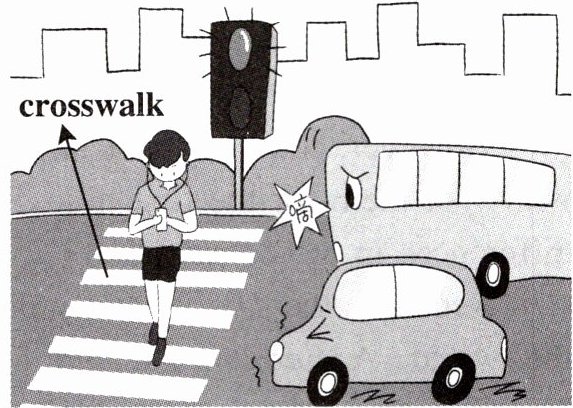
(
B. teacher
C. driver
D. seller
(
B. for
C. opposite
D. towards
(
B. necessary
C. relaxing
D. dangerous
(
B. laughed
C. smiled
D. pointed
(
B. forget
C. visit
D. believe
Manners are very important for a person. When I traveled to Japan, I came across a 1 who influenced me much.
It was a sunny noon. I had just come back from a beautiful park. I was walking across the street when the traffic light turned red. When I was in the center of the crosswalk, a taxi drove 2 me!
After seeing me, the driver stopped the car at once. It was 3 for him to do that, but still, he did it for me. I felt very sorry and thought he would get mad, but he 4 at me, asking me not to run a red light next time. After all these years, I never 5 the driver. He showed me how to treat others with kindness and taught me a memorable lesson.
(
C
) 1. A. guideB. teacher
C. driver
D. seller
(
D
) 2. A. pastB. for
C. opposite
D. towards
(
D
) 3. A. hardB. necessary
C. relaxing
D. dangerous
(
C
) 4. A. shoutedB. laughed
C. smiled
D. pointed
(
B
) 5. A. greetB. forget
C. visit
D. believe
答案:
1. C
2. D
3. D
4. C
5. B
2. D
3. D
4. C
5. B
( ) 1. Which picture shows a polite way in England?
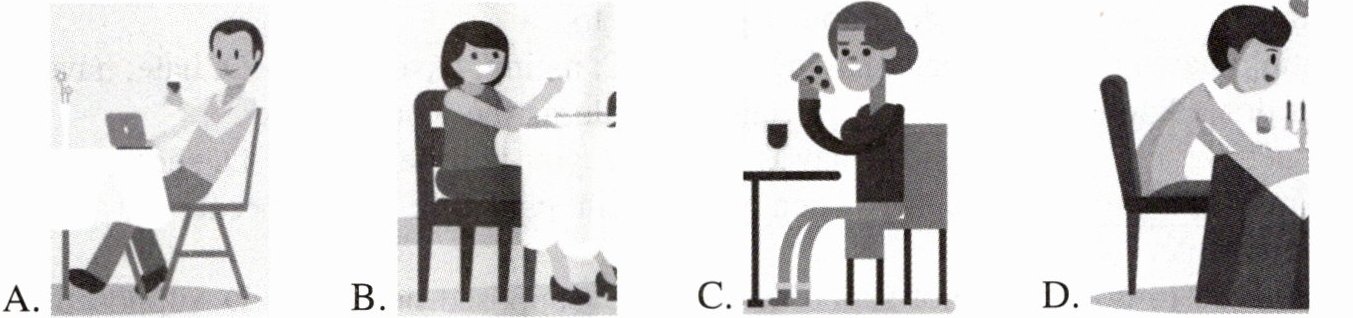
A. Making noises when eating.
B. Eating an orange with fingers.
C. Licking your plate after eating.
D. Reaching over someone's plate for something.
A. Saying sorry in England means we are full.
B. In England, the more you eat, the politer you are.
C. Eating with the mouth closed is good manners in England.
D. We mustn't leave anything on the plate at any time in England.
A. Good table manners in England.
B. The importance of table manners.
C. The best way to eat food in England.
D. The development of British table manners.
C
( ) 2. Which of the following is polite in England?A. Making noises when eating.
B. Eating an orange with fingers.
C. Licking your plate after eating.
D. Reaching over someone's plate for something.
B
( ) 3. What can we learn from the passage?A. Saying sorry in England means we are full.
B. In England, the more you eat, the politer you are.
C. Eating with the mouth closed is good manners in England.
D. We mustn't leave anything on the plate at any time in England.
C
( ) 4. What does the passage mainly talk about?A. Good table manners in England.
B. The importance of table manners.
C. The best way to eat food in England.
D. The development of British table manners.
A
答案:
1. C
2. B
3. C
4. A
2. B
3. C
4. A
查看更多完整答案,请扫码查看

