

 搜索
搜索
2025年学典四川九年级英语全一册人教版A版
注:目前有些书本章节名称可能整理的还不是很完善,但都是按照顺序排列的,请同学们按照顺序仔细查找。练习册 2025年学典四川九年级英语全一册人教版A版 答案主要是用来给同学们做完题方便对答案用的,请勿直接抄袭。
第38页
- 第2页
- 第3页
- 第4页
- 第5页
- 第6页
- 第7页
- 第8页
- 第9页
- 第10页
- 第11页
- 第12页
- 第13页
- 第14页
- 第15页
- 第16页
- 第17页
- 第18页
- 第19页
- 第20页
- 第21页
- 第22页
- 第23页
- 第24页
- 第25页
- 第26页
- 第27页
- 第28页
- 第29页
- 第30页
- 第31页
- 第32页
- 第33页
- 第34页
- 第35页
- 第36页
- 第37页
- 第38页
- 第39页
- 第40页
- 第41页
- 第42页
- 第43页
- 第44页
- 第45页
- 第46页
- 第47页
- 第48页
- 第49页
- 第50页
- 第51页
- 第52页
- 第53页
- 第54页
- 第55页
- 第56页
- 第57页
- 第58页
- 第59页
- 第60页
- 第61页
- 第62页
- 第63页
- 第64页
- 第65页
- 第66页
- 第67页
- 第68页
- 第69页
- 第70页
- 第71页
- 第72页
- 第73页
- 第74页
- 第75页
- 第76页
- 第77页
- 第78页
- 第79页
- 第80页
- 第81页
- 第82页
- 第83页
- 第84页
- 第85页
- 第86页
- 第87页
- 第88页
- 第89页
- 第90页
- 第91页
- 第92页
- 第93页
- 第94页
- 第95页
- 第96页
- 第97页
- 第98页
- 第99页
- 第100页
- 第101页
- 第102页
- 第103页
- 第104页
- 第105页
- 第106页
- 第107页
- 第108页
- 第109页
- 第110页
- 第111页
- 第112页
- 第113页
- 第114页
- 第115页
- 第116页
- 第117页
- 第118页
- 第119页
- 第120页
- 第121页
- 第122页
- 第123页
- 第124页
- 第125页
- 第126页
- 第127页
- 第128页
- 第129页
- 第130页
- 第131页
- 第132页
- 第133页
- 第134页
- 第135页
- 第136页
- 第137页
- 第138页
- 第139页
- 第140页
- 第141页
- 第142页
- 第143页
- 第144页
- 第145页
- 第146页
- 第147页
- 第148页
- 第149页
- 第150页
- 第151页
- 第152页
- 第153页
- 第154页
- 第155页
- 第156页
- 第157页
- 第158页
- 第159页
- 第160页
- 第161页
- 第162页
- 第163页
- 第164页
- 第165页
- 第166页
- 第167页
- 第168页
- 第169页
- 第170页
- 第171页
- 第172页
- 第173页
- 第174页
- 第175页
- 第176页
- 第177页
- 第178页
- 第179页
- 第180页
(
— I suggest ______ Fun Times Park.
A.visit
B.visiting
C.to visit
D.visited
B
) 1.— Let's do something interesting.— I suggest ______ Fun Times Park.
A.visit
B.visiting
C.to visit
D.visited
答案:
【解析】:
这是一道英语语法题,主要考查动词的用法,特别是“suggest”这个词的用法。在英语中,“suggest”后面通常接动词的-ing形式作为宾语,表示“建议做某事”。题目中的句子“I suggest ______ Fun Times Park.”需要一个动词形式来填充空白,使其语法正确。根据英语语法规则,“suggest”后应接动词的-ing形式。
【答案】:
B.visiting
这是一道英语语法题,主要考查动词的用法,特别是“suggest”这个词的用法。在英语中,“suggest”后面通常接动词的-ing形式作为宾语,表示“建议做某事”。题目中的句子“I suggest ______ Fun Times Park.”需要一个动词形式来填充空白,使其语法正确。根据英语语法规则,“suggest”后应接动词的-ing形式。
【答案】:
B.visiting
(
A.weak
B.clear
C.scary
D.beautiful
C
) 2.The sound of the wind was ______ so I felt very nervous.A.weak
B.clear
C.scary
D.beautiful
答案:
【解析】:这是一道英语选择题,考查的是对形容词词义的理解以及上下文语境的把握。题目描述了风的声音给说话者带来的感受是紧张,因此需要选择一个与“紧张”情感相符合的形容词来描述风的声音。
A选项“weak”意为“微弱的”,不符合紧张的氛围;
B选项“clear”意为“清晰的”,也不符合紧张的描述;
C选项“scary”意为“可怕的”,与紧张的氛围相符;
D选项“beautiful”意为“美丽的”,与紧张完全不符。
根据题目中的“I felt very nervous”可以确定答案。
【答案】:C
A选项“weak”意为“微弱的”,不符合紧张的氛围;
B选项“clear”意为“清晰的”,也不符合紧张的描述;
C选项“scary”意为“可怕的”,与紧张的氛围相符;
D选项“beautiful”意为“美丽的”,与紧张完全不符。
根据题目中的“I felt very nervous”可以确定答案。
【答案】:C
(
A.until
B.if
C.unless
D.because
A
) 3.She didn't leave the bookstore ______ the rain stopped.A.until
B.if
C.unless
D.because
答案:
【解析】:这是一道英语选择题,考查的是连词的用法。题干的意思是“她没有离开书店______雨停了”。我们需要找到一个连词,使得句子意思完整且符合逻辑。
A选项“until”表示“直到……才……”,常用于否定句中,构成“not...until...”结构,表示“直到……才……”;
B选项“if”表示“如果”,引导条件状语从句;
C选项“unless”表示“除非”,也引导条件状语从句,但语气比“if”更强;
D选项“because”表示“因为”,引导原因状语从句。
根据句意和语法结构,我们可以确定应该使用“until”,构成“not...until...”结构,表示“直到雨停了她才离开书店”。
【答案】:A
A选项“until”表示“直到……才……”,常用于否定句中,构成“not...until...”结构,表示“直到……才……”;
B选项“if”表示“如果”,引导条件状语从句;
C选项“unless”表示“除非”,也引导条件状语从句,但语气比“if”更强;
D选项“because”表示“因为”,引导原因状语从句。
根据句意和语法结构,我们可以确定应该使用“until”,构成“not...until...”结构,表示“直到雨停了她才离开书店”。
【答案】:A
( ) 4.— I wonder
— There's no need to rush. We have enough time to get there.
A.where the train station is
B.how we can get to the train station
C.when we can get to the train station
D.why we have to go to the train station
C
.— There's no need to rush. We have enough time to get there.
A.where the train station is
B.how we can get to the train station
C.when we can get to the train station
D.why we have to go to the train station
答案:
【解析】:
这是一道英语九年级的完形填空题,考查的是宾语从句的用法。根据对话内容,我们需要选择一个符合语境的宾语从句。
首先,我们分析对话内容:
* 第一句:“I wonder ______.” 表示说话者在询问某个信息。
* 第二句:“There's no need to rush. We have enough time to get there.” 表示没有必要着急,有足够的时间到达那里。
接下来,我们逐一分析选项:
A. where the train station is:询问火车站的位置。但根据回答,并没有提及位置信息,所以A选项不符合语境。
B. how we can get to the train station:询问如何到达火车站。但回答中并未提及如何到达,只提到了时间足够,所以B选项不符合语境。
C. when we can get to the train station:询问何时能到达火车站。回答中提到了“有足够的时间”,这与询问时间相关,所以C选项符合语境。但更准确地说,回答是在宽慰对方不必着急,而不是直接回答具体时间。然而,在四个选项中,只有C选项与“时间”这一概念相关,且其他选项更不符合语境。
D. why we have to go to the train station:询问为什么要去火车站。回答中并未提及原因,所以D选项不符合语境。
综合以上分析,虽然C选项的“when”并未直接得到回答中的具体时间,但在四个选项中,它是最符合语境的。因为回答是在宽慰对方关于时间的问题,即不必着急,有足够的时间。
【答案】:
C. when we can get to the train station
这是一道英语九年级的完形填空题,考查的是宾语从句的用法。根据对话内容,我们需要选择一个符合语境的宾语从句。
首先,我们分析对话内容:
* 第一句:“I wonder ______.” 表示说话者在询问某个信息。
* 第二句:“There's no need to rush. We have enough time to get there.” 表示没有必要着急,有足够的时间到达那里。
接下来,我们逐一分析选项:
A. where the train station is:询问火车站的位置。但根据回答,并没有提及位置信息,所以A选项不符合语境。
B. how we can get to the train station:询问如何到达火车站。但回答中并未提及如何到达,只提到了时间足够,所以B选项不符合语境。
C. when we can get to the train station:询问何时能到达火车站。回答中提到了“有足够的时间”,这与询问时间相关,所以C选项符合语境。但更准确地说,回答是在宽慰对方不必着急,而不是直接回答具体时间。然而,在四个选项中,只有C选项与“时间”这一概念相关,且其他选项更不符合语境。
D. why we have to go to the train station:询问为什么要去火车站。回答中并未提及原因,所以D选项不符合语境。
综合以上分析,虽然C选项的“when”并未直接得到回答中的具体时间,但在四个选项中,它是最符合语境的。因为回答是在宽慰对方关于时间的问题,即不必着急,有足够的时间。
【答案】:
C. when we can get to the train station
( ) 5.— Could you please tell me ______?
— At 3:45 p.m. next Friday.
A.when you came here
B.who you are coming with
C.how you are coming here
D.what time you are arriving
— At 3:45 p.m. next Friday.
D
A.when you came here
B.who you are coming with
C.how you are coming here
D.what time you are arriving
答案:
【解析】:
本题考查宾语从句的用法以及语境理解。题目给出了一个对话情境,其中一方询问另一方某个时间相关的信息,另一方回答了具体的时间点。根据回答“At 3:45 p.m. next Friday.”可知,问题是在询问一个具体的时间点。
A选项“when you came here”询问的是过去的时间,而回答中给出的是将来的时间,所以A选项不符合语境。
B选项“who you are coming with”询问的是和谁一起来,与回答中的时间信息不符,所以B选项不正确。
C选项“how you are coming here”询问的是如何来这里,同样与回答中的时间信息不符,所以C选项不正确。
D选项“what time you are arriving”询问的是到达的具体时间,与回答中的时间信息相符,所以D选项是正确的。
【答案】:
D
本题考查宾语从句的用法以及语境理解。题目给出了一个对话情境,其中一方询问另一方某个时间相关的信息,另一方回答了具体的时间点。根据回答“At 3:45 p.m. next Friday.”可知,问题是在询问一个具体的时间点。
A选项“when you came here”询问的是过去的时间,而回答中给出的是将来的时间,所以A选项不符合语境。
B选项“who you are coming with”询问的是和谁一起来,与回答中的时间信息不符,所以B选项不正确。
C选项“how you are coming here”询问的是如何来这里,同样与回答中的时间信息不符,所以C选项不正确。
D选项“what time you are arriving”询问的是到达的具体时间,与回答中的时间信息相符,所以D选项是正确的。
【答案】:
D
1. All the teaching
2. The restaurant bought a robot
3. — I don't know what to do next.— How about
4. The movie starts
staff
must take part in the Sports Day.2. The restaurant bought a robot
to serve
the guests.3. — I don't know what to do next.— How about
going
to the movies?4. The movie starts
playing
at 6:00 p.m.
答案:
【解析】:
这道题目是英语填空题,考查的是对词汇的理解和语法结构的掌握。需要根据句子的语境,从给定的单词中选择合适的词,并用其正确的形式填空。
1. 第一空需要填入一个与“teaching”相关的名词,表示“教学人员”或“教职员工”。从给定的单词中,“staff”符合语境,表示“员工”,且在此处应用复数形式,但“staff”本身即可表示复数,所以直接填入“staff”。
2. 第二空需要填入一个动词,与“the guests”搭配,表示餐馆购买机器人的目的。从给定的单词中,“serve”表示“服务”,符合语境。由于此处需要用动词不定式表示目的,所以应填入“to serve”。
3. 第三空是一个建议,提出去看电影作为下一步的行动。从给定的单词中,“go”表示“去”,符合语境。由于“how about”后接动词-ing形式,所以应填入“going”。
4. 第四空需要描述电影开始的时间,并与“at 6:00 p.m.”搭配。从给定的单词中,“play”可以与“starts”搭配,表示电影开始播放。由于此处表示电影开始播放的动作,所以应使用“playing”作为“starts”的宾语补足语,表示“电影开始放映”。但更常见的表达是“电影6点开始放映”,直接使用“starts”后接时间状语即可,不过根据题目要求和给定词汇,应理解为电影开始播放的动作,因此填入“playing”作为此处的正确形式,表示电影的播放动作。
【答案】:
1. All the teaching staff must take part in the Sports Day.
2. The restaurant bought a robot to serve the guests.
3. — I don't know what to do next. — How about going to the movies?
4. The movie starts playing at 6:00 p.m.
这道题目是英语填空题,考查的是对词汇的理解和语法结构的掌握。需要根据句子的语境,从给定的单词中选择合适的词,并用其正确的形式填空。
1. 第一空需要填入一个与“teaching”相关的名词,表示“教学人员”或“教职员工”。从给定的单词中,“staff”符合语境,表示“员工”,且在此处应用复数形式,但“staff”本身即可表示复数,所以直接填入“staff”。
2. 第二空需要填入一个动词,与“the guests”搭配,表示餐馆购买机器人的目的。从给定的单词中,“serve”表示“服务”,符合语境。由于此处需要用动词不定式表示目的,所以应填入“to serve”。
3. 第三空是一个建议,提出去看电影作为下一步的行动。从给定的单词中,“go”表示“去”,符合语境。由于“how about”后接动词-ing形式,所以应填入“going”。
4. 第四空需要描述电影开始的时间,并与“at 6:00 p.m.”搭配。从给定的单词中,“play”可以与“starts”搭配,表示电影开始播放。由于此处表示电影开始播放的动作,所以应使用“playing”作为“starts”的宾语补足语,表示“电影开始放映”。但更常见的表达是“电影6点开始放映”,直接使用“starts”后接时间状语即可,不过根据题目要求和给定词汇,应理解为电影开始播放的动作,因此填入“playing”作为此处的正确形式,表示电影的播放动作。
【答案】:
1. All the teaching staff must take part in the Sports Day.
2. The restaurant bought a robot to serve the guests.
3. — I don't know what to do next. — How about going to the movies?
4. The movie starts playing at 6:00 p.m.
1. My father went outside and
2. When I was walking to the hospital, I
3. We were worried that we were lost.
4. The girl
didn't come back
till 11:30 p.m. yesterday.2. When I was walking to the hospital, I
passed by
a flower shop and bought some flowers there.3. We were worried that we were lost.
At that time
, a policeman came and helped us.4. The girl
walked up to
the house and opened the door, but she found no one in it.
答案:
1. didn't come back
2. passed by
3. At that time
4. walked up to
2. passed by
3. At that time
4. walked up to
四、阅读填空。根据短文内容,从短文后的选项中选出能填入空白处的最佳选项,选项中有一项为多余选项。
Mobile phones have changed our lives a lot. 1 The following advice may help you.
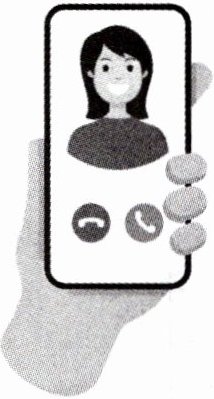
2 When answering a mobile phone, Caller ID will normally show who is calling you. Say something like, "Hi, Steve, how are you?" If the number is strange or hidden, you may say, "Hello, may I ask who's calling?" And you don't need to say your name when answering the call.
3 If you don't know the person, be polite by saying, "How can I help you today?" or "What can I do for you?" If you know the person, you can say something like "What's up?" Remember even if you know the caller, don't say, "What?" or "What do you want this time?"
Don't answer the phone while chewing gum (嚼口香糖) or food. 4 Even if you're talking to friends, they may have a hard time understanding you if you have a mouth full of food.
5 During the phone call, don't talk to or joke with other people, and don't try to communicate silently. Even if the caller can't hear the words you're saying to someone, he'll be able to tell that you're not focusing on the phone conversation.
A. Ask why the person is calling.
B. Greet the caller in a friendly way.
C. They make our life more convenient (方便的).
D. Don't talk to people around you until the call is over.
E. It's important to be polite when answering a mobile phone.
F. Before answering, make sure there is nothing in your mouth.

Mobile phones have changed our lives a lot. 1 The following advice may help you.
2 When answering a mobile phone, Caller ID will normally show who is calling you. Say something like, "Hi, Steve, how are you?" If the number is strange or hidden, you may say, "Hello, may I ask who's calling?" And you don't need to say your name when answering the call.
3 If you don't know the person, be polite by saying, "How can I help you today?" or "What can I do for you?" If you know the person, you can say something like "What's up?" Remember even if you know the caller, don't say, "What?" or "What do you want this time?"
Don't answer the phone while chewing gum (嚼口香糖) or food. 4 Even if you're talking to friends, they may have a hard time understanding you if you have a mouth full of food.
5 During the phone call, don't talk to or joke with other people, and don't try to communicate silently. Even if the caller can't hear the words you're saying to someone, he'll be able to tell that you're not focusing on the phone conversation.
A. Ask why the person is calling.
B. Greet the caller in a friendly way.
C. They make our life more convenient (方便的).
D. Don't talk to people around you until the call is over.
E. It's important to be polite when answering a mobile phone.
F. Before answering, make sure there is nothing in your mouth.
答案:
【解析】:
这是一道英语阅读填空题,考查学生对短文内容的理解以及根据上下文选择合适选项的能力。解题的关键在于仔细阅读短文,理解每个空白处前后的语境,然后从所给选项中找出最符合语境的内容。
【答案】:
1. C:前文提到“Mobile phones have changed our lives a lot.”(手机极大地改变了我们的生活),C选项“They make our life more convenient (方便的).”(它们使我们的生活更方便),进一步阐述了手机对生活的影响,符合语境。
2. B:后文“When answering a mobile phone, Caller ID will normally show who is calling you. Say something like, ‘Hi, Steve, how are you?’”(接电话时,来电显示通常会显示谁在打电话。你可以说‘嗨,史蒂夫,你好吗?’),这是在介绍如何友好地问候来电者,B选项“Greet the caller in a friendly way.”(以友好的方式问候来电者)符合语境。
3. E:后文“If you don't know the person, be polite by saying... If you know the person, you can say something like...”(如果你不认识对方,礼貌地说……如果你认识对方,你可以说……),强调了接电话时礼貌的重要性,E选项“It's important to be polite when answering a mobile phone.”(接电话时礼貌很重要)符合语境。
4. F:前文“Don't answer the phone while chewing gum (嚼口香糖) or food.”(嚼口香糖或吃东西时不要接电话),F选项“Before answering, make sure there is nothing in your mouth.”(接电话前,确保嘴里没有东西)是对前文的进一步说明,符合语境。
5. D:后文“During the phone call, don't talk to or joke with other people, and don't try to communicate silently.”(在通话过程中,不要与其他人交谈或开玩笑,也不要试图默默交流),D选项“Don't talk to people around you until the call is over.”(在通话结束前不要和周围的人交谈)符合语境。
故答案依次为:C、B、E、F、D。
这是一道英语阅读填空题,考查学生对短文内容的理解以及根据上下文选择合适选项的能力。解题的关键在于仔细阅读短文,理解每个空白处前后的语境,然后从所给选项中找出最符合语境的内容。
【答案】:
1. C:前文提到“Mobile phones have changed our lives a lot.”(手机极大地改变了我们的生活),C选项“They make our life more convenient (方便的).”(它们使我们的生活更方便),进一步阐述了手机对生活的影响,符合语境。
2. B:后文“When answering a mobile phone, Caller ID will normally show who is calling you. Say something like, ‘Hi, Steve, how are you?’”(接电话时,来电显示通常会显示谁在打电话。你可以说‘嗨,史蒂夫,你好吗?’),这是在介绍如何友好地问候来电者,B选项“Greet the caller in a friendly way.”(以友好的方式问候来电者)符合语境。
3. E:后文“If you don't know the person, be polite by saying... If you know the person, you can say something like...”(如果你不认识对方,礼貌地说……如果你认识对方,你可以说……),强调了接电话时礼貌的重要性,E选项“It's important to be polite when answering a mobile phone.”(接电话时礼貌很重要)符合语境。
4. F:前文“Don't answer the phone while chewing gum (嚼口香糖) or food.”(嚼口香糖或吃东西时不要接电话),F选项“Before answering, make sure there is nothing in your mouth.”(接电话前,确保嘴里没有东西)是对前文的进一步说明,符合语境。
5. D:后文“During the phone call, don't talk to or joke with other people, and don't try to communicate silently.”(在通话过程中,不要与其他人交谈或开玩笑,也不要试图默默交流),D选项“Don't talk to people around you until the call is over.”(在通话结束前不要和周围的人交谈)符合语境。
故答案依次为:C、B、E、F、D。
查看更多完整答案,请扫码查看

