

 搜索
搜索
第74页
- 第1页
- 第2页
- 第3页
- 第4页
- 第5页
- 第6页
- 第7页
- 第8页
- 第9页
- 第10页
- 第11页
- 第12页
- 第13页
- 第14页
- 第15页
- 第16页
- 第17页
- 第18页
- 第19页
- 第20页
- 第21页
- 第22页
- 第23页
- 第24页
- 第25页
- 第26页
- 第27页
- 第28页
- 第29页
- 第30页
- 第31页
- 第32页
- 第33页
- 第34页
- 第35页
- 第36页
- 第37页
- 第38页
- 第39页
- 第40页
- 第41页
- 第42页
- 第43页
- 第44页
- 第45页
- 第46页
- 第47页
- 第48页
- 第49页
- 第50页
- 第51页
- 第52页
- 第53页
- 第54页
- 第55页
- 第56页
- 第57页
- 第58页
- 第59页
- 第60页
- 第61页
- 第62页
- 第63页
- 第64页
- 第65页
- 第66页
- 第67页
- 第68页
- 第69页
- 第70页
- 第71页
- 第72页
- 第73页
- 第74页
- 第75页
- 第76页
- 第77页
- 第78页
- 第79页
- 第80页
- 第81页
- 第82页
- 第83页
- 第84页
- 第85页
- 第86页
- 第87页
- 第88页
- 第89页
- 第90页
- 第91页
- 第92页
- 第93页
- 第94页
- 第95页
- 第96页
- 第97页
- 第98页
- 第99页
- 第100页
- 第101页
- 第102页
- 第103页
- 第104页
- 第105页
- 第106页
- 第107页
- 第108页
- 第109页
- 第110页
- 第111页
- 第112页
- 第113页
- 第114页
- 第115页
- 第116页
- 第117页
- 第118页
- 第119页
- 第120页
- 第121页
- 第122页
- 第123页
- 第124页
- 第125页
- 第126页
- 第127页
- 第128页
- 第129页
- 第130页
- 第131页
- 第132页
- 第133页
- 第134页
- 第135页
- 第136页
- 第137页
- 第138页
- 第139页
- 第140页
- 第141页
- 第142页
- 第143页
- 第144页
- 第145页
- 第146页
- 第147页
- 第148页
- 第149页
- 第150页
- 第151页
- 第152页
- 第153页
- 第154页
- 第155页
- 第156页
- 第157页
- 第158页
- 第159页
- 第160页
- 第161页
- 第162页
- 第163页
- 第164页
- 第165页
- 第166页
- 第167页
- 第168页
- 第169页
- 第170页
- 第171页
- 第172页
- 第173页
- 第174页
- 第175页
- 第176页
( )10. Which is TRUE about the picture on the right?
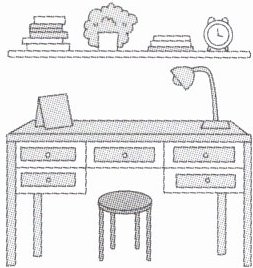
A.The photo is hung on the wall.
B.There are some books under the desk.
C.The photo lies beside the alarm clock.
D.There is a lamp on the desk.
D
A.The photo is hung on the wall.
B.There are some books under the desk.
C.The photo lies beside the alarm clock.
D.There is a lamp on the desk.
答案:
【解析】:本题需要根据给定的图片来判断四个选项中哪个描述是正确的。
A选项:需要观察图片中是否有照片挂在墙上,从图片中可以看到墙上并没有挂照片,而是放了几本书和一个装饰物,因此A选项错误。
B选项:需要查看桌子下面是否有书,从图片中可以看到桌子下面并没有书,因此B选项错误。
C选项:需要观察照片是否位于闹钟旁边,从图片中可以看出照片是放在桌子上的,而闹钟在桌子的右上角,它们并不相邻,因此C选项错误。
D选项:需要查看桌子上是否有一盏灯,从图片中可以清晰地看到桌子上有一盏台灯,因此D选项正确。
【答案】:D
A选项:需要观察图片中是否有照片挂在墙上,从图片中可以看到墙上并没有挂照片,而是放了几本书和一个装饰物,因此A选项错误。
B选项:需要查看桌子下面是否有书,从图片中可以看到桌子下面并没有书,因此B选项错误。
C选项:需要观察照片是否位于闹钟旁边,从图片中可以看出照片是放在桌子上的,而闹钟在桌子的右上角,它们并不相邻,因此C选项错误。
D选项:需要查看桌子上是否有一盏灯,从图片中可以清晰地看到桌子上有一盏台灯,因此D选项正确。
【答案】:D
(
Don't help her with the cleaning. Because when you say "Can I help you?", you are saying that it is a woman's duty.
A.Both women and men should do the cleaning.
B.Do not help the woman with the cleaning.
C.We should always say "Can I help you?".
D.It is only a woman's duty to do the cleaning.
A
)11. What can we learn from the poster?Don't help her with the cleaning. Because when you say "Can I help you?", you are saying that it is a woman's duty.
A.Both women and men should do the cleaning.
B.Do not help the woman with the cleaning.
C.We should always say "Can I help you?".
D.It is only a woman's duty to do the cleaning.
答案:
【解析】:这是一道阅读理解选择题,考查的是对英文海报内容的理解和推理能力。我们需要先理解海报中的信息,再逐一对比选项,找出最符合海报主旨的答案。海报中提到“Don't help her with the cleaning. Because when you say 'Can I help you?', you are saying that it is a woman's duty.”这句话是在批评一种观念,即认为清洁是女性的责任。接下来,我们逐一分析选项:
A选项表示“女性和男性都应该做清洁”,这与海报批评观念的目的相符,即强调清洁不是仅是女性的责任,男性也应参与。
B选项表示“不要帮助女性做清洁”,这是对海报中字面意思的误解,海报的真正意图是反对将清洁视为女性的专属责任。
C选项表示“我们应该总是说‘Can I help you?’”,这与海报的主旨相悖,因为海报正是在批评这种说法背后的性别观念。
D选项表示“做清洁只是女性的责任”,这完全与海报的主旨相反。
因此,A选项最符合海报的主旨。
【答案】:A
A选项表示“女性和男性都应该做清洁”,这与海报批评观念的目的相符,即强调清洁不是仅是女性的责任,男性也应参与。
B选项表示“不要帮助女性做清洁”,这是对海报中字面意思的误解,海报的真正意图是反对将清洁视为女性的专属责任。
C选项表示“我们应该总是说‘Can I help you?’”,这与海报的主旨相悖,因为海报正是在批评这种说法背后的性别观念。
D选项表示“做清洁只是女性的责任”,这完全与海报的主旨相反。
因此,A选项最符合海报的主旨。
【答案】:A
1. —Mum,it's my turn to make a speech about landscapes. I'm a little afraid.
—Oh,my honey! Not everybody is a
2. The school offers many special
3. While walking past the bookstore,a colourful science magazine
4. With developments in AI,robots can perform tasks that were once thought to be
5. —It's
—Better late than never. Hurry up!
6. —What's Lucy doing over there? She looks so focused!
—She
7. The little boy succeeded reaching the top of Mount Tai,even though he
—Oh,my honey! Not everybody is a
born
speaker. Practice makes perfect.2. The school offers many special
courses
. Students must make a choice within this week.3. While walking past the bookstore,a colourful science magazine
caught
my eyes,so I bought it and learned some amazing facts about space.4. With developments in AI,robots can perform tasks that were once thought to be
impossible
.5. —It's
nearly
the end of the month and I haven't started my report!—Better late than never. Hurry up!
6. —What's Lucy doing over there? She looks so focused!
—She
is taping
colourful paper stars onto the classroom wall for our party.7. The little boy succeeded reaching the top of Mount Tai,even though he
fell over
several times all the way.
答案:
1. born
2. courses
3. caught
4. impossible
5. nearly
6. is taping
7. fell over
2. courses
3. caught
4. impossible
5. nearly
6. is taping
7. fell over
1. —Mum,where should I put these clothes?
—You had better
2. I was
3. My classmates
4. After the picnic,we collected all the empty
5. There are not enough
—You had better
fold
(fold) them first to keep your room tidy.2. I was
unlucky
to lose my wallet,but luckily
,someone found it,and I'm so lucky
to get it back.(luck)3. My classmates
surprised
me with a handmade card. I felt really surprised
by their thoughtfulness. It was a surprising
gift! (surprise)4. After the picnic,we collected all the empty
cans
(can),recycled them,and felt proud to help the environment!5. There are not enough
shelves
(shelf) for the new books I bought yesterday.
答案:
【解析】:本题主要考查了词汇的不同形式的运用,包括动词原形、形容词、副词以及名词的单复数形式等。
1. 第一题考查的是had better后接动词原形的知识点。
2. 第二题考查了形容词变副词以及形容词的用法,需要根据句意和语法来确定正确的形式。
3. 第三题考查了动词和形容词的用法,需要根据主语和语境来确定正确的形式。
4. 第四题考查了名词的单复数形式,需要根据语境来判断应该用单数还是复数。
5. 第五题同样考查了名词的单复数形式,要注意enough后接名词复数的情况。
【答案】:
1. fold。句意:--妈妈,我把这些衣服放哪里?--你最好先把它们叠起来,以保持房间整洁。had better后接动词原形,表示“最好做某事”,故填fold。
2. unlucky; luckily; lucky。句意:我很不幸丢了钱包,但幸运的是,有人找到了它,我很幸运能找回它。根据句意,第一个空应该填unlucky(不幸的);第二个空填luckily(幸运地),作为状语;第三个空填lucky(幸运的),作为表语。
3. surprised; surprised; surprising。句意:我的同学给了我一张手工制作的卡片。我对他们的体贴感到非常惊讶。这是一份令人惊讶的礼物!根据句意,第一个空填surprised(感到惊讶的),作为谓语;第二个空也填surprised(感到惊讶的),作为表语;第三个空填surprising(令人惊讶的),作为定语修饰gift。
4. cans。句意:野餐后,我们收集了所有的空罐子,回收了它们,并为帮助环境感到自豪!根据语境,can在这里表示“罐子”,是可数名词,需要用复数形式,故填cans。
5. shelves。句意:没有足够的架子放我昨天买的新书。shelf是可数名词,表示“架子”,根据语境需要用复数形式,故填shelves。
1. 第一题考查的是had better后接动词原形的知识点。
2. 第二题考查了形容词变副词以及形容词的用法,需要根据句意和语法来确定正确的形式。
3. 第三题考查了动词和形容词的用法,需要根据主语和语境来确定正确的形式。
4. 第四题考查了名词的单复数形式,需要根据语境来判断应该用单数还是复数。
5. 第五题同样考查了名词的单复数形式,要注意enough后接名词复数的情况。
【答案】:
1. fold。句意:--妈妈,我把这些衣服放哪里?--你最好先把它们叠起来,以保持房间整洁。had better后接动词原形,表示“最好做某事”,故填fold。
2. unlucky; luckily; lucky。句意:我很不幸丢了钱包,但幸运的是,有人找到了它,我很幸运能找回它。根据句意,第一个空应该填unlucky(不幸的);第二个空填luckily(幸运地),作为状语;第三个空填lucky(幸运的),作为表语。
3. surprised; surprised; surprising。句意:我的同学给了我一张手工制作的卡片。我对他们的体贴感到非常惊讶。这是一份令人惊讶的礼物!根据句意,第一个空填surprised(感到惊讶的),作为谓语;第二个空也填surprised(感到惊讶的),作为表语;第三个空填surprising(令人惊讶的),作为定语修饰gift。
4. cans。句意:野餐后,我们收集了所有的空罐子,回收了它们,并为帮助环境感到自豪!根据语境,can在这里表示“罐子”,是可数名词,需要用复数形式,故填cans。
5. shelves。句意:没有足够的架子放我昨天买的新书。shelf是可数名词,表示“架子”,根据语境需要用复数形式,故填shelves。
查看更多完整答案,请扫码查看

