

 搜索
搜索
第22页
- 第1页
- 第2页
- 第3页
- 第4页
- 第5页
- 第6页
- 第7页
- 第8页
- 第9页
- 第10页
- 第11页
- 第12页
- 第13页
- 第14页
- 第15页
- 第16页
- 第17页
- 第18页
- 第19页
- 第20页
- 第21页
- 第22页
- 第23页
- 第24页
- 第25页
- 第26页
- 第27页
- 第28页
- 第29页
- 第30页
- 第31页
- 第32页
- 第33页
- 第34页
- 第35页
- 第36页
- 第37页
- 第38页
- 第39页
- 第40页
- 第41页
- 第42页
- 第43页
- 第44页
- 第45页
- 第46页
- 第47页
- 第48页
- 第49页
- 第50页
- 第51页
- 第52页
- 第53页
- 第54页
- 第55页
- 第56页
- 第57页
- 第58页
- 第59页
- 第60页
- 第61页
- 第62页
- 第63页
- 第64页
- 第65页
- 第66页
- 第67页
- 第68页
- 第69页
- 第70页
- 第71页
- 第72页
- 第73页
- 第74页
- 第75页
- 第76页
- 第77页
- 第78页
- 第79页
- 第80页
- 第81页
- 第82页
- 第83页
- 第84页
- 第85页
- 第86页
- 第87页
- 第88页
- 第89页
- 第90页
- 第91页
- 第92页
- 第93页
- 第94页
- 第95页
- 第96页
- 第97页
- 第98页
- 第99页
- 第100页
- 第101页
- 第102页
- 第103页
- 第104页
- 第105页
- 第106页
- 第107页
- 第108页
- 第109页
- 第110页
- 第111页
- 第112页
- 第113页
- 第114页
- 第115页
- 第116页
- 第117页
- 第118页
- 第119页
- 第120页
- 第121页
- 第122页
- 第123页
- 第124页
- 第125页
- 第126页
- 第127页
- 第128页
- 第129页
- 第130页
- 第131页
- 第132页
- 第133页
- 第134页
- 第135页
- 第136页
- 第137页
- 第138页
- 第139页
- 第140页
- 第141页
- 第142页
- 第143页
- 第144页
- 第145页
- 第146页
- 第147页
- 第148页
- 第149页
- 第150页
- 第151页
- 第152页
- 第153页
- 第154页
- 第155页
- 第156页
- 第157页
- 第158页
- 第159页
- 第160页
- 第161页
- 第162页
- 第163页
- 第164页
- 第165页
- 第166页
- 第167页
- 第168页
- 第169页
- 第170页
- 第171页
- 第172页
- 第173页
- 第174页
- 第175页
- 第176页
- 第177页
- 第178页
- 第179页
- 第180页
- 第181页
- 第182页
- 第183页
- 第184页
- 第185页
- 第186页
- 第187页
- 第188页
- 第189页
- 第190页
- 第191页
- 第192页
- 第193页
- 第194页
- 第195页
- 第196页
- 第197页
- 第198页
- 第199页
- 第200页
- 第201页
- 第202页
- 第203页
- 第204页
- 第205页
- 第206页
- 第207页
- 第208页
- 第209页
- 第210页
- 第211页
- 第212页
- 第213页
- 第214页
- 第215页
- 第216页
- 第217页
- 第218页
- 第219页
- 第220页
- 第221页
- 第222页
- 第223页
- 第224页
- 第225页
- 第226页
- 第227页
- 第228页
- 第229页
- 第230页
- 第231页
- 第232页
- 第233页
- 第234页
- 第235页
- 第236页
- 第237页
- 第238页
- 第239页
- 第240页
- 第241页
- 第242页
- 第243页
- 第244页
- 第245页
四、阅读理解(15分)
颜色与文化、性格息息相关,但人们看到的颜色是否相同呢?眼睛中的感受器是如何工作让我们感受到颜色的呢?快来了解一下吧!
Have you ever wondered if you see the same colours as other people? Most people know what blue is when they see it. It's the colour of the sea and the sky. They see the colour and call it "blue" because they were taught the word and connected it with what they saw. But how do you know what you see as "blue" isn't someone else's "red"?
The ability to notice different colours is due to receptors(感受器) in our eyes which are also called cones(视锥细胞). Light waves hit these receptors and they react depending on which colour the light is, sending signals to the brain. The brain then translates these signals to tell which colour light the eyes are receiving.
Some people's receptors are more developed than others. People with weaker receptors usually have colour blindness. Those with more developed receptors can see more shades of one colour, which is the first way in which people may see colours differently from each other. We sometimes hear people having an argument(争论) about whether something is dark blue or black. It might be because one person has stronger receptors to translate the light than another.
In the past, most scientists would think that everyone saw colours in the same way. However, later scientists carried out a research on monkeys, in which they were injected(注射) with a virus affecting their receptors. They found that monkeys could see one more colour—red, compared(比较) with the usual two colours—blue and green. This is because the neurons(神经元) in their brains automatically(自动地) adapted(适应) to be able to understand a new colour. This also might mean the neurons in human brains are not hardwired(与生俱来的) to understand which colour is which. Our brains and neurons may adapt to tell colours depending on stimulus(刺激物).
Colour could be a very personal experience, unique(独一无二的) to everyone. So next time when you and your friend talk about your favourite colour, if yours is blue and your friend says red, you might actually be thinking about the same colour.
(
A. By doing a survey.
B. By listing some numbers.
C. By giving an example.
D. By using famous people's words.
(
A. cones send signals to the brain→the brain translates the signals→light waves hit cones→cones react to the light
B. light waves hit cones→cones react to the light→cones send signals to the brain→the brain translates the signals
C. light waves hit cones→cones send signals to the brain→the brain translates the signals→cones react to the light
D. cones react to the light→cones send signals to the brain→light waves hit cones→the brain translates the signals
(
颜色与文化、性格息息相关,但人们看到的颜色是否相同呢?眼睛中的感受器是如何工作让我们感受到颜色的呢?快来了解一下吧!
Have you ever wondered if you see the same colours as other people? Most people know what blue is when they see it. It's the colour of the sea and the sky. They see the colour and call it "blue" because they were taught the word and connected it with what they saw. But how do you know what you see as "blue" isn't someone else's "red"?
The ability to notice different colours is due to receptors(感受器) in our eyes which are also called cones(视锥细胞). Light waves hit these receptors and they react depending on which colour the light is, sending signals to the brain. The brain then translates these signals to tell which colour light the eyes are receiving.
Some people's receptors are more developed than others. People with weaker receptors usually have colour blindness. Those with more developed receptors can see more shades of one colour, which is the first way in which people may see colours differently from each other. We sometimes hear people having an argument(争论) about whether something is dark blue or black. It might be because one person has stronger receptors to translate the light than another.
In the past, most scientists would think that everyone saw colours in the same way. However, later scientists carried out a research on monkeys, in which they were injected(注射) with a virus affecting their receptors. They found that monkeys could see one more colour—red, compared(比较) with the usual two colours—blue and green. This is because the neurons(神经元) in their brains automatically(自动地) adapted(适应) to be able to understand a new colour. This also might mean the neurons in human brains are not hardwired(与生俱来的) to understand which colour is which. Our brains and neurons may adapt to tell colours depending on stimulus(刺激物).
Colour could be a very personal experience, unique(独一无二的) to everyone. So next time when you and your friend talk about your favourite colour, if yours is blue and your friend says red, you might actually be thinking about the same colour.
(
C
)1. 中考新考法 推断文章开篇方式 How does the author introduce his topic in Paragraph 1?A. By doing a survey.
B. By listing some numbers.
C. By giving an example.
D. By using famous people's words.
(
B
)2. What's the correct process(过程) of seeing colours?A. cones send signals to the brain→the brain translates the signals→light waves hit cones→cones react to the light
B. light waves hit cones→cones react to the light→cones send signals to the brain→the brain translates the signals
C. light waves hit cones→cones send signals to the brain→the brain translates the signals→cones react to the light
D. cones react to the light→cones send signals to the brain→light waves hit cones→the brain translates the signals
(
D
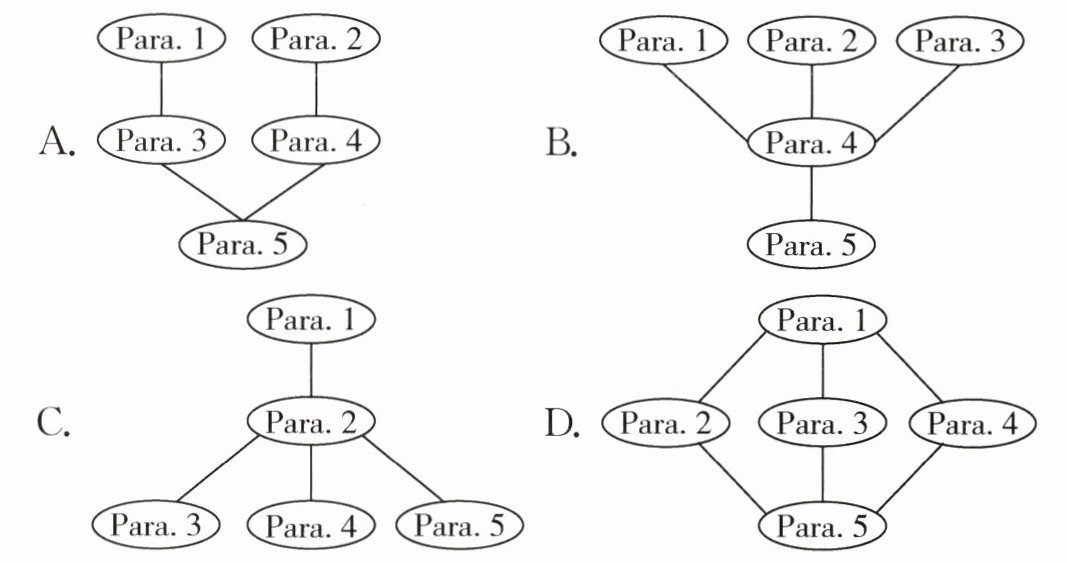
)3. 中考新考法 推断文章结构 Which graph(图表) shows how the author organizes his ideas?
答案:
【文章大意】本文主要介绍了人们对颜色感知的差异及其原因,解释了眼睛中的感受器的作用,以及为什么有些人看到的颜色有所不同。
1.C [解析]细节理解题。根据第一段中的“Most people know what blue is when they see it.”可知,作者在第一段通过举例介绍他的主题。故选C。
2.B [解析]细节理解题。根据第二段“The ability to notice different colours is due to receptors(感受器) in our eyes which are also called cones(视锥细胞). Light waves hit these receptors and they react depending on which colour light the eyes are receiving.”可知,看颜色的正确过程应为:光波撞击视锥细胞→视锥细胞对光做出反应→视锥细胞向大脑发送信号→大脑翻译信号。故选B。
3.D [解析]篇章结构题。通读全文可知,第一段介绍了人们是否看到的颜色相同,引出主题;第二、三、四段具体介绍了眼睛中的感受器如何工作,以及为什么有些人可能看到的颜色不同;最后一段总结指出颜色可能是一种非常个人化的体验,对每个人来说都是独特的。因此文章的结构为总——分——总。故选D。
1.C [解析]细节理解题。根据第一段中的“Most people know what blue is when they see it.”可知,作者在第一段通过举例介绍他的主题。故选C。
2.B [解析]细节理解题。根据第二段“The ability to notice different colours is due to receptors(感受器) in our eyes which are also called cones(视锥细胞). Light waves hit these receptors and they react depending on which colour light the eyes are receiving.”可知,看颜色的正确过程应为:光波撞击视锥细胞→视锥细胞对光做出反应→视锥细胞向大脑发送信号→大脑翻译信号。故选B。
3.D [解析]篇章结构题。通读全文可知,第一段介绍了人们是否看到的颜色相同,引出主题;第二、三、四段具体介绍了眼睛中的感受器如何工作,以及为什么有些人可能看到的颜色不同;最后一段总结指出颜色可能是一种非常个人化的体验,对每个人来说都是独特的。因此文章的结构为总——分——总。故选D。
查看更多完整答案,请扫码查看

