

 搜索
搜索
2026年高中必刷题高二下英语人教版
注:目前有些书本章节名称可能整理的还不是很完善,但都是按照顺序排列的,请同学们按照顺序仔细查找。练习册 2026年高中必刷题高二下英语人教版 答案主要是用来给同学们做完题方便对答案用的,请勿直接抄袭。
第23页
- 第1页
- 第2页
- 第3页
- 第4页
- 第5页
- 第6页
- 第7页
- 第8页
- 第9页
- 第10页
- 第11页
- 第12页
- 第13页
- 第14页
- 第15页
- 第16页
- 第17页
- 第18页
- 第19页
- 第20页
- 第21页
- 第22页
- 第23页
- 第24页
- 第25页
- 第26页
- 第27页
- 第28页
- 第29页
- 第30页
- 第31页
- 第32页
- 第33页
- 第34页
- 第35页
- 第36页
- 第37页
- 第38页
- 第39页
- 第40页
- 第41页
- 第42页
- 第43页
- 第44页
- 第45页
- 第46页
- 第47页
- 第48页
- 第49页
- 第50页
- 第51页
- 第52页
- 第53页
- 第54页
- 第55页
- 第56页
- 第57页
- 第58页
- 第59页
- 第60页
- 第61页
- 第62页
- 第63页
- 第64页
- 第65页
- 第66页
- 第67页
- 第68页
- 第69页
- 第70页
- 第71页
- 第72页
- 第73页
- 第74页
- 第75页
- 第76页
- 第77页
- 第78页
- 第79页
- 第80页
- 第81页
- 第82页
- 第83页
- 第84页
- 第85页
- 第86页
- 第87页
- 第88页
- 第89页
- 第90页
- 第91页
- 第92页
- 第93页
- 第94页
- 第95页
- 第96页
- 第97页
- 第98页
- 第99页
- 第100页
- 第101页
- 第102页
- 第103页
- 第104页
- 第105页
- 第106页
- 第107页
- 第108页
- 第109页
- 第110页
- 第111页
- 第112页
- 第113页
- 第114页
- 第115页
- 第116页
- 第117页
B
语篇类型:说明文 主题:能量管理 词数:340 难度:偏难 建议用时:8分钟
[河南南阳六校2025高二联考]You got a full eight hours of sleep last night. Maybe even nine. You've reduced coffee intake after 2 pm, and tried magnesium (镁) supplements to improve your sleep quality. And yet, by mid-afternoon, you still feel exhausted. So, what is happening?
If exhaustion were purely about sleep, many of us would be bouncing out of bed refreshed, rather than waking up feeling like we fought a small war in our dreams. Tiredness isn't always about how much rest you get—it's about what's exhausting you when you're awake. If you're constantly feeling exhausted, the cause might not be your bedtime; it might be the large number of decisions, emotional labour, and self-imposed pressure you bear every day.
Every day, you make thousands of micro-decisions. Some are small (Should I wear the black sweater or the grey one?), while others are more significant (Should I finally sign up for that certification programme?). But here's the problem: Your brain has a limited capacity for decision-making each day. Once you hit that limit, your cognitive energy starts running low. Researchers call this “decision fatigue”, and it's why by the end of the day, seemingly simple choices—like picking a dinner recipe—can feel impossible.
Even if you're not consciously aware of it, you likely spend a significant part of your day managing not just your emotions, but everyone else's. Emotional labour is the invisible work of anticipating needs, facilitating social interactions, and managing the emotional climate around you. It's keeping track of birthdays, remembering to text back that friend who's going through a rough time, and ensuring that a work meeting doesn't get off the track. And here's the frustrating part: Because emotional labour is invisible, it often goes unacknowledged.
You can't exactly quit making decisions or caring about people, but you can start protecting your energy by setting limits on where your mental and emotional bandwidth goes. Reducing decision overload, setting emotional boundaries, and prioritising true rest (Not Just Sleep) are key to protecting your energy and maintaining balance.
1. Why do many people still feel tired even after a long sleep?
A. They sleep in an uncomfortable environment.
B. Their brains are overloaded with too much stress.
C. They have too many social responsibilities.
D. They don't take cold showers in the morning.
2. What does the underlined phrase “decision fatigue” in paragraph 3 refer to?
A. The habit of delaying important decisions.
B. The inability to make any decisions after a long day.
C. The exhaustion caused by making too many choices.
D. The preference for simple decisions over complex ones.
3. Which of the following is an example of “emotional labour”?
A. Preparing a presentation for a meeting.
B. Managing to meet a project deadline.
C. Filing and organising office documents.
D. Supporting a friend who's suffering hardships.
4. What suggestion does the author give to reduce exhaustion?
A. Quitting making decisions.
B. Focusing on physical rest like sleep.
C. Avoiding social interactions.
D. Restricting mental and emotional efforts.
语篇类型:说明文 主题:能量管理 词数:340 难度:偏难 建议用时:8分钟
[河南南阳六校2025高二联考]You got a full eight hours of sleep last night. Maybe even nine. You've reduced coffee intake after 2 pm, and tried magnesium (镁) supplements to improve your sleep quality. And yet, by mid-afternoon, you still feel exhausted. So, what is happening?
If exhaustion were purely about sleep, many of us would be bouncing out of bed refreshed, rather than waking up feeling like we fought a small war in our dreams. Tiredness isn't always about how much rest you get—it's about what's exhausting you when you're awake. If you're constantly feeling exhausted, the cause might not be your bedtime; it might be the large number of decisions, emotional labour, and self-imposed pressure you bear every day.
Every day, you make thousands of micro-decisions. Some are small (Should I wear the black sweater or the grey one?), while others are more significant (Should I finally sign up for that certification programme?). But here's the problem: Your brain has a limited capacity for decision-making each day. Once you hit that limit, your cognitive energy starts running low. Researchers call this “decision fatigue”, and it's why by the end of the day, seemingly simple choices—like picking a dinner recipe—can feel impossible.
Even if you're not consciously aware of it, you likely spend a significant part of your day managing not just your emotions, but everyone else's. Emotional labour is the invisible work of anticipating needs, facilitating social interactions, and managing the emotional climate around you. It's keeping track of birthdays, remembering to text back that friend who's going through a rough time, and ensuring that a work meeting doesn't get off the track. And here's the frustrating part: Because emotional labour is invisible, it often goes unacknowledged.
You can't exactly quit making decisions or caring about people, but you can start protecting your energy by setting limits on where your mental and emotional bandwidth goes. Reducing decision overload, setting emotional boundaries, and prioritising true rest (Not Just Sleep) are key to protecting your energy and maintaining balance.
1. Why do many people still feel tired even after a long sleep?
A. They sleep in an uncomfortable environment.
B. Their brains are overloaded with too much stress.
C. They have too many social responsibilities.
D. They don't take cold showers in the morning.
2. What does the underlined phrase “decision fatigue” in paragraph 3 refer to?
A. The habit of delaying important decisions.
B. The inability to make any decisions after a long day.
C. The exhaustion caused by making too many choices.
D. The preference for simple decisions over complex ones.
3. Which of the following is an example of “emotional labour”?
A. Preparing a presentation for a meeting.
B. Managing to meet a project deadline.
C. Filing and organising office documents.
D. Supporting a friend who's suffering hardships.
4. What suggestion does the author give to reduce exhaustion?
A. Quitting making decisions.
B. Focusing on physical rest like sleep.
C. Avoiding social interactions.
D. Restricting mental and emotional efforts.
答案:
B
[语篇导读]本文是一篇说明文,主要阐述了人们即使睡眠充足仍感疲惫的原因,包括决策疲劳和情感劳动等,并给出了相关建议。
1.B 细节理解题。根据第二段中的“If you're constantly feeling exhausted, the cause might not be your bedtime; it might be the large number of decisions, emotional labour, and self-imposed pressure you bear every day.”可知,人们即使睡了很久仍然感到疲惫,可能是由决策数量、情感劳动和自我施加的压力等引起的,即过多压力导致大脑超负荷。故选B项。
2.C 词义猜测题。根据第三段中的“But here's the problem: Your brain has a limited capacity for decision-making each day. Once you hit that limit, your cognitive energy starts running low.”可知,大脑每天的决策能力有限,一旦突破该极限,认知能量就会开始不足,从而感到疲惫。由此可知,画线短语decision fatigue指的是因作太多选择而导致的疲惫。故选C项。
3.D 推理判断题。根据第四段中的“managing not just your emotions, but everyone else's”和“Emotional labour is the invisible work of anticipating needs, facilitating social interactions, and managing the emotional climate around you. It's keeping track of birthdays, remembering to text back that friend...”可知,情感劳动包括关注他人需求、促进社交互动和调控周围情绪氛围等无形的工作。“支持正在经历苦难的一位朋友”是情感劳动的例子。故选D项。
4.D 细节理解题。根据最后一段中的“You can't exactly quit making decisions or caring about people, but you can start protecting your energy by setting limits on where your mental and”和“D项中的Restrict... efforts与此处的setting limits是同义转换。”可知,作者建议通过设置心理与情感界限来减少精力消耗并维持平衡。故选D项。
答案及解析文本解构 答案及解析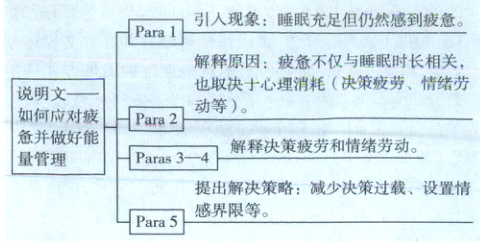
B
[语篇导读]本文是一篇说明文,主要阐述了人们即使睡眠充足仍感疲惫的原因,包括决策疲劳和情感劳动等,并给出了相关建议。
1.B 细节理解题。根据第二段中的“If you're constantly feeling exhausted, the cause might not be your bedtime; it might be the large number of decisions, emotional labour, and self-imposed pressure you bear every day.”可知,人们即使睡了很久仍然感到疲惫,可能是由决策数量、情感劳动和自我施加的压力等引起的,即过多压力导致大脑超负荷。故选B项。
2.C 词义猜测题。根据第三段中的“But here's the problem: Your brain has a limited capacity for decision-making each day. Once you hit that limit, your cognitive energy starts running low.”可知,大脑每天的决策能力有限,一旦突破该极限,认知能量就会开始不足,从而感到疲惫。由此可知,画线短语decision fatigue指的是因作太多选择而导致的疲惫。故选C项。
3.D 推理判断题。根据第四段中的“managing not just your emotions, but everyone else's”和“Emotional labour is the invisible work of anticipating needs, facilitating social interactions, and managing the emotional climate around you. It's keeping track of birthdays, remembering to text back that friend...”可知,情感劳动包括关注他人需求、促进社交互动和调控周围情绪氛围等无形的工作。“支持正在经历苦难的一位朋友”是情感劳动的例子。故选D项。
4.D 细节理解题。根据最后一段中的“You can't exactly quit making decisions or caring about people, but you can start protecting your energy by setting limits on where your mental and”和“D项中的Restrict... efforts与此处的setting limits是同义转换。”可知,作者建议通过设置心理与情感界限来减少精力消耗并维持平衡。故选D项。
答案及解析文本解构 答案及解析
查看更多完整答案,请扫码查看

