

 搜索
搜索
第38页
- 第1页
- 第2页
- 第3页
- 第4页
- 第5页
- 第6页
- 第7页
- 第8页
- 第9页
- 第10页
- 第11页
- 第12页
- 第13页
- 第14页
- 第15页
- 第16页
- 第17页
- 第18页
- 第19页
- 第20页
- 第21页
- 第22页
- 第23页
- 第24页
- 第25页
- 第26页
- 第27页
- 第28页
- 第29页
- 第30页
- 第31页
- 第32页
- 第33页
- 第34页
- 第35页
- 第36页
- 第37页
- 第38页
- 第39页
- 第40页
- 第41页
- 第42页
- 第43页
- 第44页
- 第45页
- 第46页
- 第47页
- 第48页
- 第49页
- 第50页
- 第51页
- 第52页
- 第53页
- 第54页
- 第55页
- 第56页
- 第57页
- 第58页
- 第59页
- 第60页
- 第61页
- 第62页
- 第63页
- 第64页
- 第65页
- 第66页
- 第67页
- 第68页
- 第69页
- 第70页
- 第71页
- 第72页
- 第73页
- 第74页
- 第75页
- 第76页
- 第77页
- 第78页
- 第79页
- 第80页
- 第81页
- 第82页
- 第83页
- 第84页
C
With their cute “smiles” and photo-ready poses, quokkas (短尾矮袋鼠) are often called the “world's happiest animals”. But are they really as happy as they seem?
Found in Western Australia, quokkas are about the size of a small cat and look like a smaller, rounder type of their cousin, the kangaroo. They have small faces with large eyes and round ears, and they are famous for looking like they're always smiling.
While the quokkas' “smile” is just a result of the shape of their mouths, they do have a friendly nature. They are not afraid of people, making it easy for visitors to take pictures with them.
Taking quokka selfies (自拍照) has become a popular tourist activity on Rottnest Island, home to the world's largest quokka population.
Hundreds of thousands of quokka selfies have been shared on the Internet. Although these animals are doing well online, it's a different story in the wild. Quokkas are listed as vulnerable (易危的) by the Western Australian Threatened Species Scientific Committee (委员会).
Today, there are thought to be around 10,000 quokkas living on Rottnest Island, with a few smaller populations living on mainland Western Australia. Reports show that quokka populations have been going down because of predators (捕食者) and the reduction of their living places.
For those visiting Rottnest Island, there are rules in place to help protect the quokka population. Visitors can't feed or touch the quokkas, or they may pay fines of up to about 7,000.
()9. Quokkas come from .
A. the US
B. Australia
C. India
D. Africa
()10. What do visitors like doing with quokkas?
A. Keeping them as pets.
B. Writing stories about them.
C. Sharing their photos online.
D. Taking pictures with them.
()11. What is the main problem quokkas are facing now?
A. They haven't enough food to eat.
B. Their populations are getting larger.
C. The number of them is becoming smaller.
D. They can't live in the wild by themselves.
()12. What is the writer's purpose in writing the text?
A. To tell us an animal in danger.
B. To introduce a world's happiest animal.
C. To remind readers to protect quokkas.
D. To help people know more about quokkas.
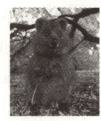
With their cute “smiles” and photo-ready poses, quokkas (短尾矮袋鼠) are often called the “world's happiest animals”. But are they really as happy as they seem?
Found in Western Australia, quokkas are about the size of a small cat and look like a smaller, rounder type of their cousin, the kangaroo. They have small faces with large eyes and round ears, and they are famous for looking like they're always smiling.
While the quokkas' “smile” is just a result of the shape of their mouths, they do have a friendly nature. They are not afraid of people, making it easy for visitors to take pictures with them.
Taking quokka selfies (自拍照) has become a popular tourist activity on Rottnest Island, home to the world's largest quokka population.
Hundreds of thousands of quokka selfies have been shared on the Internet. Although these animals are doing well online, it's a different story in the wild. Quokkas are listed as vulnerable (易危的) by the Western Australian Threatened Species Scientific Committee (委员会).
Today, there are thought to be around 10,000 quokkas living on Rottnest Island, with a few smaller populations living on mainland Western Australia. Reports show that quokka populations have been going down because of predators (捕食者) and the reduction of their living places.
For those visiting Rottnest Island, there are rules in place to help protect the quokka population. Visitors can't feed or touch the quokkas, or they may pay fines of up to about 7,000.
()9. Quokkas come from .
A. the US
B. Australia
C. India
D. Africa
()10. What do visitors like doing with quokkas?
A. Keeping them as pets.
B. Writing stories about them.
C. Sharing their photos online.
D. Taking pictures with them.
()11. What is the main problem quokkas are facing now?
A. They haven't enough food to eat.
B. Their populations are getting larger.
C. The number of them is becoming smaller.
D. They can't live in the wild by themselves.
()12. What is the writer's purpose in writing the text?
A. To tell us an animal in danger.
B. To introduce a world's happiest animal.
C. To remind readers to protect quokkas.
D. To help people know more about quokkas.
答案:
[语篇导读] 本文主要介绍了短尾矮袋鼠生存状况以及保护规则。
9-12 BDCC
9-12 BDCC
D
In 1972, Richard Sears, a young American began learning Chinese because of his interest in traditional Chinese culture. He was drawn to the ancient language so much that he went to China to study Chinese in the 1990s.
In 1994, Richard Sears decided to put the ancient Chinese characters online. Then, in 2002, he did it. That is the beginning of the Chinese Etymology (汉字字源) website. “My website did not get much attention during the first few years. Until one day in 2011, it suddenly got a lot of attention. I got a few thousand emails, and a few million visitors and people started calling me ‘Uncle hanzi’,” Sears said with a smile. Hanzi means Chinese characters. He has put more than 96,000 ancient Chinese characters onto the website. “When I study each character, I wonder what the ancient Chinese thought,” said Sears.
After visiting many Chinese cities, Sears learned more about China and ancient Chinese culture. He said when he came to China in the last century, few Chinese could speak good English. “However, you can hear English in many places in China now. Chinese language and culture were mysterious (神秘的) and not known by people in most countries then, but now, more and more people in the world are learning Chinese, even Chinese history, traditional Chinese medicine and so on,” Sears added.
Now, the 74-year-old American has made his home in China. “I believe my website will live on after I die, and I'm planning to write a book about my research. This will be my gift to China,” he said.
()13. Sears' website became well-known .
A. in 1972
B. in the 1990s
C. in 2002
D. in 2011
()14. For Sears, he spent on his interest in Chinese culture.
A. over 20 years
B. over 50 years
C. over 40 years
D. over 70 years
()15. What can we infer (推断) from Sears' words in Paragraph 3?
A. It is difficult for foreigners to learn Chinese.
B. China has an increasing influence over the world.
C. Traditional Chinese medicine is becoming popular.
D. More and more people in the world are learning Chinese.
()16. What can be the best title (标题) for the text?
A. American “Uncle Hanzi”
B. A Wonderful Trip to China
C. The Power of Ancient Chinese Characters
D. The Start of the Chinese Etymology Website
In 1972, Richard Sears, a young American began learning Chinese because of his interest in traditional Chinese culture. He was drawn to the ancient language so much that he went to China to study Chinese in the 1990s.
In 1994, Richard Sears decided to put the ancient Chinese characters online. Then, in 2002, he did it. That is the beginning of the Chinese Etymology (汉字字源) website. “My website did not get much attention during the first few years. Until one day in 2011, it suddenly got a lot of attention. I got a few thousand emails, and a few million visitors and people started calling me ‘Uncle hanzi’,” Sears said with a smile. Hanzi means Chinese characters. He has put more than 96,000 ancient Chinese characters onto the website. “When I study each character, I wonder what the ancient Chinese thought,” said Sears.
After visiting many Chinese cities, Sears learned more about China and ancient Chinese culture. He said when he came to China in the last century, few Chinese could speak good English. “However, you can hear English in many places in China now. Chinese language and culture were mysterious (神秘的) and not known by people in most countries then, but now, more and more people in the world are learning Chinese, even Chinese history, traditional Chinese medicine and so on,” Sears added.
Now, the 74-year-old American has made his home in China. “I believe my website will live on after I die, and I'm planning to write a book about my research. This will be my gift to China,” he said.
()13. Sears' website became well-known .
A. in 1972
B. in the 1990s
C. in 2002
D. in 2011
()14. For Sears, he spent on his interest in Chinese culture.
A. over 20 years
B. over 50 years
C. over 40 years
D. over 70 years
()15. What can we infer (推断) from Sears' words in Paragraph 3?
A. It is difficult for foreigners to learn Chinese.
B. China has an increasing influence over the world.
C. Traditional Chinese medicine is becoming popular.
D. More and more people in the world are learning Chinese.
()16. What can be the best title (标题) for the text?
A. American “Uncle Hanzi”
B. A Wonderful Trip to China
C. The Power of Ancient Chinese Characters
D. The Start of the Chinese Etymology Website
答案:
[语篇导读] 本文主要介绍了美国人Richard Sears研究汉字并创建网站推广汉字文化的故事。
13.D
14.B [解析]推理判断题。根据第一段“In 1972, Richard Sears, a young American began learning Chinese because of his interest in traditional Chinese culture”可知,到2025年已经超过50了。故选B。
15.B
16.A [解析]标题归纳题。短文主要介绍了美国人Richard Sears研究汉字并创建网站推广汉字文化的故事,所以标题应为American “Uncle Hanzi”。故选A。
13.D
14.B [解析]推理判断题。根据第一段“In 1972, Richard Sears, a young American began learning Chinese because of his interest in traditional Chinese culture”可知,到2025年已经超过50了。故选B。
15.B
16.A [解析]标题归纳题。短文主要介绍了美国人Richard Sears研究汉字并创建网站推广汉字文化的故事,所以标题应为American “Uncle Hanzi”。故选A。
查看更多完整答案,请扫码查看

