

 搜索
搜索
第89页
- 第1页
- 第2页
- 第3页
- 第4页
- 第5页
- 第6页
- 第7页
- 第8页
- 第9页
- 第10页
- 第11页
- 第12页
- 第13页
- 第14页
- 第15页
- 第16页
- 第17页
- 第18页
- 第19页
- 第20页
- 第21页
- 第22页
- 第23页
- 第24页
- 第25页
- 第26页
- 第27页
- 第28页
- 第29页
- 第30页
- 第31页
- 第32页
- 第33页
- 第34页
- 第35页
- 第36页
- 第37页
- 第38页
- 第39页
- 第40页
- 第41页
- 第42页
- 第43页
- 第44页
- 第45页
- 第46页
- 第47页
- 第48页
- 第49页
- 第50页
- 第51页
- 第52页
- 第53页
- 第54页
- 第55页
- 第56页
- 第57页
- 第58页
- 第59页
- 第60页
- 第61页
- 第62页
- 第63页
- 第64页
- 第65页
- 第66页
- 第67页
- 第68页
- 第69页
- 第70页
- 第71页
- 第72页
- 第73页
- 第74页
- 第75页
- 第76页
- 第77页
- 第78页
- 第79页
- 第80页
- 第81页
- 第82页
- 第83页
- 第84页
- 第85页
- 第86页
- 第87页
- 第88页
- 第89页
- 第90页
- 第91页
- 第92页
- 第93页
- 第94页
- 第95页
- 第96页
- 第97页
- 第98页
- 第99页
- 第100页
- 第101页
- 第102页
- 第103页
- 第104页
- 第105页
- 第106页
- 第107页
- 第108页
- 第109页
- 第110页
- 第111页
- 第112页
- 第113页
- 第114页
- 第115页
- 第116页
- 第117页
- 第118页
- 第119页
B. 完成图表 根据短文内容,完成图表中所缺信息。(共5小题;每小题1分,计5分)
Brazilian artist Vik Muniz uses everyday objects in unusual ways. Through his art, Muniz makes people think differently about their everyday lives—even their own garbage(垃圾).
In 2007, Muniz worked on a two - year project at one of the world's largest landfills(垃圾填埋场). Until it closed in 2012, Jardim Gramacho got about 70 percent of the garbage from Rio de Janeiro. About 3 000 garbage pickers, known as catadores, worked there. Their job was to hunt through the garbage for recyclable cans, bottles, and other materials. They then made money by selling the objects to recycling companies.
The catadores' work was dirty and dangerous, and most of them only got between 20 and 25 a day. Although the conditions were hard, many catadores were proud of their work. Valter Dos Santos, a worker at Jardim Gramacho for more than 25 years, told Muniz, "I am proud to be a picker, I try to explain to people that recycling prevents great harm to nature and the environment. People sometimes say, 'But one single(单个的)soda can?' One single can is of great importance! That single can will make the difference."
Muniz became friends with Dos Santos and other catadores. They allowed him to take their photographs at the landfill, where they posed for artistic portraits(肖像). For example, Muniz photographed a landfill worker in the style of a famous French painting, The Death of Marat. The workers then helped Muniz create huge images(图像)of these photos on the floor of his studio. They made the images colorful and deep with materials from the landfill.
Why create such huge images using garbage? Muniz says he wanted to "change the lives of people with the same materials they deal with every day." A photo of his copy of the French painting sold for £28 000 (50 000) at a London art sale. Muniz gave the money to the catadores workers' organization.
In 2010, British - Brazilian director Lucy Walker created a movie about Muniz's project called Waste Land. The film got many awards and helped make people learn about the garbage collectors' lives. The catadores also began to see themselves differently, "Sometimes we see ourselves as so small," says Irma, a cook at Gramacho, "but people out there see us as so big, so beautiful."
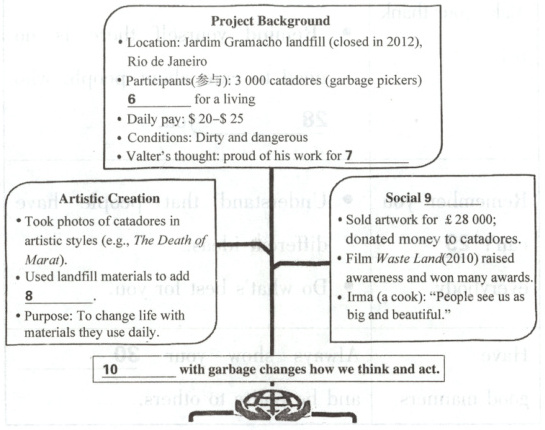
Brazilian artist Vik Muniz uses everyday objects in unusual ways. Through his art, Muniz makes people think differently about their everyday lives—even their own garbage(垃圾).
In 2007, Muniz worked on a two - year project at one of the world's largest landfills(垃圾填埋场). Until it closed in 2012, Jardim Gramacho got about 70 percent of the garbage from Rio de Janeiro. About 3 000 garbage pickers, known as catadores, worked there. Their job was to hunt through the garbage for recyclable cans, bottles, and other materials. They then made money by selling the objects to recycling companies.
The catadores' work was dirty and dangerous, and most of them only got between 20 and 25 a day. Although the conditions were hard, many catadores were proud of their work. Valter Dos Santos, a worker at Jardim Gramacho for more than 25 years, told Muniz, "I am proud to be a picker, I try to explain to people that recycling prevents great harm to nature and the environment. People sometimes say, 'But one single(单个的)soda can?' One single can is of great importance! That single can will make the difference."
Muniz became friends with Dos Santos and other catadores. They allowed him to take their photographs at the landfill, where they posed for artistic portraits(肖像). For example, Muniz photographed a landfill worker in the style of a famous French painting, The Death of Marat. The workers then helped Muniz create huge images(图像)of these photos on the floor of his studio. They made the images colorful and deep with materials from the landfill.
Why create such huge images using garbage? Muniz says he wanted to "change the lives of people with the same materials they deal with every day." A photo of his copy of the French painting sold for £28 000 (50 000) at a London art sale. Muniz gave the money to the catadores workers' organization.
In 2010, British - Brazilian director Lucy Walker created a movie about Muniz's project called Waste Land. The film got many awards and helped make people learn about the garbage collectors' lives. The catadores also began to see themselves differently, "Sometimes we see ourselves as so small," says Irma, a cook at Gramacho, "but people out there see us as so big, so beautiful."
答案:
6.collecting/hunting for/picking and selling recyclable things/materials/objects 7.preventing (great) harm to nature and the environment/doing good to nature and the environment/environmental protection/protecting the environment 8.color(s) and depth 9.Influence/Value 10.Creating art
查看更多完整答案,请扫码查看

