

 搜索
搜索
第21页
- 第1页
- 第2页
- 第3页
- 第4页
- 第5页
- 第6页
- 第7页
- 第8页
- 第9页
- 第10页
- 第11页
- 第12页
- 第13页
- 第14页
- 第15页
- 第16页
- 第17页
- 第18页
- 第19页
- 第20页
- 第21页
- 第22页
- 第23页
- 第24页
- 第25页
- 第26页
- 第27页
- 第28页
- 第29页
- 第30页
- 第31页
- 第32页
- 第33页
- 第34页
- 第35页
- 第36页
- 第37页
- 第38页
- 第39页
- 第40页
- 第41页
- 第42页
- 第43页
- 第44页
- 第45页
- 第46页
- 第47页
- 第48页
- 第49页
- 第50页
- 第51页
- 第52页
- 第53页
- 第54页
- 第55页
- 第56页
- 第57页
- 第58页
- 第59页
- 第60页
- 第61页
- 第62页
- 第63页
- 第64页
- 第65页
- 第66页
- 第67页
- 第68页
- 第69页
- 第70页
- 第71页
- 第72页
- 第73页
- 第74页
- 第75页
- 第76页
- 第77页
- 第78页
- 第79页
- 第80页
- 第81页
- 第82页
- 第83页
- 第84页
- 第85页
- 第86页
- 第87页
- 第88页
- 第89页
- 第90页
- 第91页
- 第92页
- 第93页
- 第94页
- 第95页
- 第96页
- 第97页
- 第98页
- 第99页
- 第100页
- 第101页
- 第102页
- 第103页
- 第104页
- 第105页
- 第106页
- 第107页
- 第108页
- 第109页
- 第110页
- 第111页
- 第112页
- 第113页
- 第114页
- 第115页
- 第116页
- 第117页
- 第118页
- 第119页
B
a Locals Care for Natural World
Grasslands and lakes in Sanjiangyuan have taken on a new look and many wild animals have come back. On January 24, 2003, China set up Sanjiangyuan National Nature Reserve to protect the area and the wildlife. Local people joined in the project, picking up waste and protecting the animals.
b China Successfully Grows Rice in Space
How to grow food in space if humans live there one day? For nearly 40 years, China has developed over 260 new types of seeds (种子) in space. Recently growing rice at Tiangong Space Station makes a big step forward. It can also solve food problems on Earth.
c Doctors Sent to West Africa
Doctors are flying to an island off the coast of West Africa after a new flu broke out. They will test different medicines to find a way to deal with it. To get things better, they will also offer medical care and help train local nurses there.
d ▲
A strong earthquake hit Turkey on February 6. More than 8 000 international rescuers (救援人员) around the world went to help, including the Blue Sky Rescue Team from China. They helped save lives and rebuild homes.
e Scientists Fight against Plastic Pollution
A natural material, fungi (真菌), used to break down a type of plastic called polypropylene turned out to be useful. Scientists at the University of Sydney found that after 90 days, between 25% and 27% of polypropylene broke down and after 140 days, polypropylene became completely safe.
71.Which passages are about environmental protection?
A. a, b B. a, e C. b, e
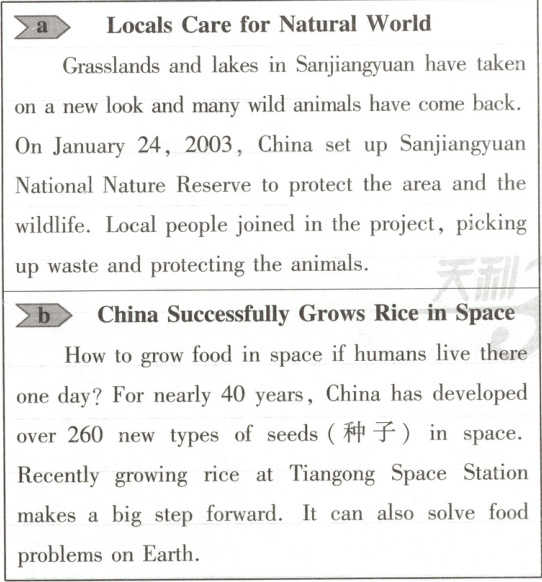
72.When did China probably begin to develop seeds in space?
A. In the 1980s. B. In the 1990s. C. In the 2000s.
73.What does the underlined word “it” in Passage c refer to?
A. An island. B. A new flu. C. Medical care.
74.Which is the best title for “▲”?
A. Turkey Calling for Help B. The World Saving Lives in Quake C. Terrible Situation Faced by Turkey
75.What's the theme shared by all the passages?
A. Challenges and Chances. B. Responsibility and Success. C. Problems and Efforts.
a Locals Care for Natural World
Grasslands and lakes in Sanjiangyuan have taken on a new look and many wild animals have come back. On January 24, 2003, China set up Sanjiangyuan National Nature Reserve to protect the area and the wildlife. Local people joined in the project, picking up waste and protecting the animals.
b China Successfully Grows Rice in Space
How to grow food in space if humans live there one day? For nearly 40 years, China has developed over 260 new types of seeds (种子) in space. Recently growing rice at Tiangong Space Station makes a big step forward. It can also solve food problems on Earth.
c Doctors Sent to West Africa
Doctors are flying to an island off the coast of West Africa after a new flu broke out. They will test different medicines to find a way to deal with it. To get things better, they will also offer medical care and help train local nurses there.
d ▲
A strong earthquake hit Turkey on February 6. More than 8 000 international rescuers (救援人员) around the world went to help, including the Blue Sky Rescue Team from China. They helped save lives and rebuild homes.
e Scientists Fight against Plastic Pollution
A natural material, fungi (真菌), used to break down a type of plastic called polypropylene turned out to be useful. Scientists at the University of Sydney found that after 90 days, between 25% and 27% of polypropylene broke down and after 140 days, polypropylene became completely safe.
71.Which passages are about environmental protection?
A. a, b B. a, e C. b, e
72.When did China probably begin to develop seeds in space?
A. In the 1980s. B. In the 1990s. C. In the 2000s.
73.What does the underlined word “it” in Passage c refer to?
A. An island. B. A new flu. C. Medical care.
74.Which is the best title for “▲”?
A. Turkey Calling for Help B. The World Saving Lives in Quake C. Terrible Situation Faced by Turkey
75.What's the theme shared by all the passages?
A. Challenges and Chances. B. Responsibility and Success. C. Problems and Efforts.
答案:
71—75 BABBC
查看更多完整答案,请扫码查看

