

 搜索
搜索
第55页
- 第1页
- 第2页
- 第3页
- 第4页
- 第5页
- 第6页
- 第7页
- 第8页
- 第9页
- 第10页
- 第11页
- 第12页
- 第13页
- 第14页
- 第15页
- 第16页
- 第17页
- 第18页
- 第19页
- 第20页
- 第21页
- 第22页
- 第23页
- 第24页
- 第25页
- 第26页
- 第27页
- 第28页
- 第29页
- 第30页
- 第31页
- 第32页
- 第33页
- 第34页
- 第35页
- 第36页
- 第37页
- 第38页
- 第39页
- 第40页
- 第41页
- 第42页
- 第43页
- 第44页
- 第45页
- 第46页
- 第47页
- 第48页
- 第49页
- 第50页
- 第51页
- 第52页
- 第53页
- 第54页
- 第55页
- 第56页
- 第57页
- 第58页
- 第59页
- 第60页
- 第61页
- 第62页
- 第63页
- 第64页
- 第65页
- 第66页
- 第67页
- 第68页
- 第69页
- 第70页
- 第71页
- 第72页
- 第73页
- 第74页
- 第75页
- 第76页
- 第77页
- 第78页
- 第79页
- 第80页
- 第81页
- 第82页
- 第83页
- 第84页
- 第85页
- 第86页
- 第87页
- 第88页
- 第89页
- 第90页
- 第91页
- 第92页
- 第93页
- 第94页
- 第95页
- 第96页
- 第97页
- 第98页
- 第99页
- 第100页
- 第101页
- 第102页
- 第103页
- 第104页
- 第105页
- 第106页
- 第107页
- 第108页
- 第109页
- 第110页
- 第111页
- 第112页
- 第113页
- 第114页
- 第115页
- 第116页
- 第117页
- 第118页
- 第119页
四、阅读表达(共10小题;计10分)
A. 补全短文 根据短文内容,从短文后的A—F选项中,选出5个适当的选项补全短文。(共5小题;每小题1分,计5分)
Did you know that humor isn't just fun but a superpower? It builds friendships, improves confidence, and turns embarrassing moments into memorable ones. 1
Share Your Stories. True humor begins with real - life experiences. Think about the time your cat cut off your online class or when you accidentally wore mismatched shoes to school. 2 ______ When you share real stories, you invite others to laugh with you, not at you.
Master Quick Thinking. A well - timed reply can turn a boring conversation into a lively exchange. Consider this: A classmate says, "This project is endless!" You reply, "3 " How to train quick thinking? Play some special games with friends, like creating funny replies in 5 seconds. You can also watch comedians to learn how they pivot (转换) conversations.
4 Here's one example: "Why did the math book look sad?" "Because he had too many problems!" Rewriting song lyrics or poems humorously is a good choice too. For example, we know the lyrics: "Twinkle, twinkle, little star". We can write like "Crinkle, crinkle, homework pile—how I wish you'd shrink (减少) a while!"
Create Surprise. Humor often comes from surprise. People like the unexpected. If your friend asks "Is the school lunch good today?" You pretend (假装) to be serious, "5 " You lead the listener in one direction, then pivot. This pivot makes your listener surprised for a while, then he or she will know humor in it.
A. Play Word Jokes.
B. Learn from Experiences.
C. Relax—it's only three all - nighters!
D. Let's explore how to develop our sense of humor.
E. These moments aren't embarrassing—they're comedy gold!
F. It's amazing... (silent for a second) Just kidding! Same old chicken!
A. 补全短文 根据短文内容,从短文后的A—F选项中,选出5个适当的选项补全短文。(共5小题;每小题1分,计5分)
Did you know that humor isn't just fun but a superpower? It builds friendships, improves confidence, and turns embarrassing moments into memorable ones. 1
Share Your Stories. True humor begins with real - life experiences. Think about the time your cat cut off your online class or when you accidentally wore mismatched shoes to school. 2 ______ When you share real stories, you invite others to laugh with you, not at you.
Master Quick Thinking. A well - timed reply can turn a boring conversation into a lively exchange. Consider this: A classmate says, "This project is endless!" You reply, "3 " How to train quick thinking? Play some special games with friends, like creating funny replies in 5 seconds. You can also watch comedians to learn how they pivot (转换) conversations.
4 Here's one example: "Why did the math book look sad?" "Because he had too many problems!" Rewriting song lyrics or poems humorously is a good choice too. For example, we know the lyrics: "Twinkle, twinkle, little star". We can write like "Crinkle, crinkle, homework pile—how I wish you'd shrink (减少) a while!"
Create Surprise. Humor often comes from surprise. People like the unexpected. If your friend asks "Is the school lunch good today?" You pretend (假装) to be serious, "5 " You lead the listener in one direction, then pivot. This pivot makes your listener surprised for a while, then he or she will know humor in it.
A. Play Word Jokes.
B. Learn from Experiences.
C. Relax—it's only three all - nighters!
D. Let's explore how to develop our sense of humor.
E. These moments aren't embarrassing—they're comedy gold!
F. It's amazing... (silent for a second) Just kidding! Same old chicken!
答案:
1—5 DECAF
6 central 7 from Scotland 8 water 9 (the) lower risk 10 (communication and) teamwork skills
6 central 7 from Scotland 8 water 9 (the) lower risk 10 (communication and) teamwork skills
B. 完成图表 根据短文内容,完成图表中所缺信息。(共5小题;每小题1分,计5分)
For many years, historians thought the Altar Stone at the center of Stonehenge, England's famous historic place, came from Wales. However, new research suggests its journey was much longer. According to a study published recently in Nature, the stone may have traveled all the way from Scotland—meaning that builders transported it across more than 750 kilometers around 5 000 years ago.
The Altar Stone lies partly buried inside Stonehenge. "For many years, the central stone has been a mystery, lying in what should be the most important part of Stonehenge," says Joshua Pollard, a historian.
Stonehenge was built in several steps, beginning around 3000 BC. Researchers believe builders placed the 13 200 - pound Altar Stone there sometime between 2620 and 2480 BC.
No one knows exactly how the builders moved such a heavy stone. Researchers think that people during the Neolithic period (新石器时代) used rivers and waterways to transport heavy objects. For example, a large stone tool was once moved from Normandy to Dorset. So, it's possible that the Altar Stone was also transported in the same way when building Stonehenge.
However, another historian Mike Pitts thinks a land journey is also reasonable. "If you put a stone on a boat out to sea, not only do you risk losing the stone—but also nobody can see it," Pitts says. "On land, many communities would see the journey, and the stone would become more valuable... as it traveled south."
Pitts also adds that the study is so important because it shows that ancient groups of people were good at communicating and working together even though they were very far apart.
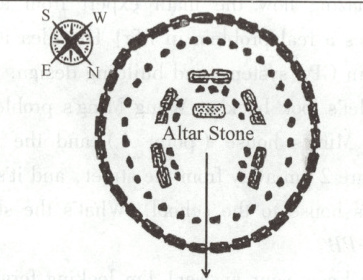
| | Altar Stone |
| --- | --- |
| What it is: | The 13 200 - pound 6 stone lying in the most important part of Stonehenge. |
| When it was placed: | Between 2620 and 2480 BC. |
| Where it came: | It may have traveled much farther than people thought—not 8 from Wales but 7 , covering more than 750 kilometers around 5 000 years ago. |
| How it traveled: | * People might have transported it by * People might have transported it by land for 9 and higher value of the stone. |
| What the study shows: | Ancient groups of people had good 10 although they were far apart. |
For many years, historians thought the Altar Stone at the center of Stonehenge, England's famous historic place, came from Wales. However, new research suggests its journey was much longer. According to a study published recently in Nature, the stone may have traveled all the way from Scotland—meaning that builders transported it across more than 750 kilometers around 5 000 years ago.
The Altar Stone lies partly buried inside Stonehenge. "For many years, the central stone has been a mystery, lying in what should be the most important part of Stonehenge," says Joshua Pollard, a historian.
Stonehenge was built in several steps, beginning around 3000 BC. Researchers believe builders placed the 13 200 - pound Altar Stone there sometime between 2620 and 2480 BC.
No one knows exactly how the builders moved such a heavy stone. Researchers think that people during the Neolithic period (新石器时代) used rivers and waterways to transport heavy objects. For example, a large stone tool was once moved from Normandy to Dorset. So, it's possible that the Altar Stone was also transported in the same way when building Stonehenge.
However, another historian Mike Pitts thinks a land journey is also reasonable. "If you put a stone on a boat out to sea, not only do you risk losing the stone—but also nobody can see it," Pitts says. "On land, many communities would see the journey, and the stone would become more valuable... as it traveled south."
Pitts also adds that the study is so important because it shows that ancient groups of people were good at communicating and working together even though they were very far apart.
| | Altar Stone |
| --- | --- |
| What it is: | The 13 200 - pound 6 stone lying in the most important part of Stonehenge. |
| When it was placed: | Between 2620 and 2480 BC. |
| Where it came: | It may have traveled much farther than people thought—not 8 from Wales but 7 , covering more than 750 kilometers around 5 000 years ago. |
| How it traveled: | * People might have transported it by * People might have transported it by land for 9 and higher value of the stone. |
| What the study shows: | Ancient groups of people had good 10 although they were far apart. |
答案:
6. central; 7. Scotland; 8. just; 9. visibility; 10. communication
查看更多完整答案,请扫码查看

