

 搜索
搜索
2026年天利38套中考试题分类英语
注:目前有些书本章节名称可能整理的还不是很完善,但都是按照顺序排列的,请同学们按照顺序仔细查找。练习册 2026年天利38套中考试题分类英语 答案主要是用来给同学们做完题方便对答案用的,请勿直接抄袭。
第143页
- 第1页
- 第2页
- 第3页
- 第4页
- 第5页
- 第6页
- 第7页
- 第8页
- 第9页
- 第10页
- 第11页
- 第12页
- 第13页
- 第14页
- 第15页
- 第16页
- 第17页
- 第18页
- 第19页
- 第20页
- 第21页
- 第22页
- 第23页
- 第24页
- 第25页
- 第26页
- 第27页
- 第28页
- 第29页
- 第30页
- 第31页
- 第32页
- 第33页
- 第34页
- 第35页
- 第36页
- 第37页
- 第38页
- 第39页
- 第40页
- 第41页
- 第42页
- 第43页
- 第44页
- 第45页
- 第46页
- 第47页
- 第48页
- 第49页
- 第50页
- 第51页
- 第52页
- 第53页
- 第54页
- 第55页
- 第56页
- 第57页
- 第58页
- 第59页
- 第60页
- 第61页
- 第62页
- 第63页
- 第64页
- 第65页
- 第66页
- 第67页
- 第68页
- 第69页
- 第70页
- 第71页
- 第72页
- 第73页
- 第74页
- 第75页
- 第76页
- 第77页
- 第78页
- 第79页
- 第80页
- 第81页
- 第82页
- 第83页
- 第84页
- 第85页
- 第86页
- 第87页
- 第88页
- 第89页
- 第90页
- 第91页
- 第92页
- 第93页
- 第94页
- 第95页
- 第96页
- 第97页
- 第98页
- 第99页
- 第100页
- 第101页
- 第102页
- 第103页
- 第104页
- 第105页
- 第106页
- 第107页
- 第108页
- 第109页
- 第110页
- 第111页
- 第112页
- 第113页
- 第114页
- 第115页
- 第116页
- 第117页
- 第118页
- 第119页
- 第120页
- 第121页
- 第122页
- 第123页
- 第124页
- 第125页
- 第126页
- 第127页
- 第128页
- 第129页
- 第130页
- 第131页
- 第132页
- 第133页
- 第134页
- 第135页
- 第136页
- 第137页
- 第138页
- 第139页
- 第140页
- 第141页
- 第142页
- 第143页
- 第144页
- 第145页
- 第146页
- 第147页
- 第148页
- 第149页
- 第150页
- 第151页
- 第152页
- 第153页
- 第154页
- 第155页
- 第156页
- 第157页
- 第158页
- 第159页
- 第160页
- 第161页
- 第162页
- 第163页
- 第164页
- 第165页
- 第166页
- 第167页
- 第168页
- 第169页
- 第170页
- 第171页
- 第172页
- 第173页
- 第174页
- 第175页
- 第176页
- 第177页
- 第178页
- 第179页
- 第180页
- 第181页
- 第182页
- 第183页
- 第184页
- 第185页
- 第186页
- 第187页
- 第188页
- 第189页
- 第190页
- 第191页
- 第192页
- 第193页
- 第194页
- 第195页
- 第196页
- 第197页
- 第198页
- 第199页
- 第200页
- 第201页
- 第202页
- 第203页
- 第204页
- 第205页
- 第206页
- 第207页
- 第208页
- 第209页
- 第210页
- 第211页
- 第212页
- 第213页
- 第214页
- 第215页
- 第216页
- 第217页
- 第218页
- 第219页
- 第220页
- 第221页
- 第222页
- 第223页
- 第224页
- 第225页
- 第226页
- 第227页
- 第228页
- 第229页
- 第230页
- 第231页
(三)(2025·福建)
根据所给材料,选择最佳选项。
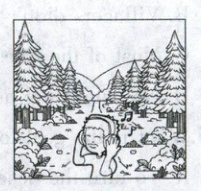
As we often use eyes to touch nature, most of us "lose" the ability to listen to the world.
Peter writes music. He likes sounds and uses natural sounds as part of his music. He often went out to the wild with his microphone and recorded interesting sounds to put in movies or to use in his own songs. Instead of trying to _capture_ just the sound of one animal or bird, he recorded the sound of everything all together—the animals, the trees, the wind and the earth. He called these recordings "soundscapes"—the sound of a certain place. Every soundscape Peter recorded had a lot of information.
Back in his workshop, Peter used a computer to make a picture of all the sounds going on in a place. Each animal, bird and insect had its own place on the picture—its own notes in the music. The busier the picture, the richer the life in that place. "While a picture may be worth 1 000 words, a soundscape is worth 1 000 pictures," Peter said. "Our ears tell us the sound of every leaf and animal and speak to the natural sources (来源) of our lives, which may hold the secrets of love for all things, especially our own humanity."
But not everything is satisfying. When Peter began recording over forty years ago, he could record for ten hours and get one hour of usable material good enough for a movie. Now, because of human activities, it can take up to 1 000 hours or more to get the same thing. Some of the places he has recorded over the years have slowly fallen silent. His sound pictures show that although nature might look the same to humans, it has lost part of its orchestra (管弦乐队).
So next time you are in the forests, try another way to look—shut your eyes, and listen.
1. Why did Peter record natural sounds?
A. To write songs for a music group.
B. To discover rich lives in the forest.
C. To use some of them in his music.
D. To make music about birds singing.
2. What does the underlined word "capture" in Paragraph 2 mean?
A. Shut.
B. Catch.
C. Touch.
D. Check.
3. What is a sound picture in the text?
A. The sound of every leaf and animal in nature.
B. The sound recorded in the natural environment.
C. A picture of music with sounds of 1 000 animals.
D. A picture of music with natural sounds in a place.
4. What can we learn from Paragraph 4?
A. Recording sounds needs less material.
B. Sound pictures are the same as before.
C. Some beautiful sounds in nature are lost.
D. Human activities improve recording results.
5. What does the writer mainly want to tell us?
A. Nature is the source of our future.
B. Nature has wonders to be heard.
C. Making music enriches our lives.
D. Making music needs information.
根据所给材料,选择最佳选项。
As we often use eyes to touch nature, most of us "lose" the ability to listen to the world.
Peter writes music. He likes sounds and uses natural sounds as part of his music. He often went out to the wild with his microphone and recorded interesting sounds to put in movies or to use in his own songs. Instead of trying to _capture_ just the sound of one animal or bird, he recorded the sound of everything all together—the animals, the trees, the wind and the earth. He called these recordings "soundscapes"—the sound of a certain place. Every soundscape Peter recorded had a lot of information.
Back in his workshop, Peter used a computer to make a picture of all the sounds going on in a place. Each animal, bird and insect had its own place on the picture—its own notes in the music. The busier the picture, the richer the life in that place. "While a picture may be worth 1 000 words, a soundscape is worth 1 000 pictures," Peter said. "Our ears tell us the sound of every leaf and animal and speak to the natural sources (来源) of our lives, which may hold the secrets of love for all things, especially our own humanity."
But not everything is satisfying. When Peter began recording over forty years ago, he could record for ten hours and get one hour of usable material good enough for a movie. Now, because of human activities, it can take up to 1 000 hours or more to get the same thing. Some of the places he has recorded over the years have slowly fallen silent. His sound pictures show that although nature might look the same to humans, it has lost part of its orchestra (管弦乐队).
So next time you are in the forests, try another way to look—shut your eyes, and listen.
1. Why did Peter record natural sounds?
A. To write songs for a music group.
B. To discover rich lives in the forest.
C. To use some of them in his music.
D. To make music about birds singing.
2. What does the underlined word "capture" in Paragraph 2 mean?
A. Shut.
B. Catch.
C. Touch.
D. Check.
3. What is a sound picture in the text?
A. The sound of every leaf and animal in nature.
B. The sound recorded in the natural environment.
C. A picture of music with sounds of 1 000 animals.
D. A picture of music with natural sounds in a place.
4. What can we learn from Paragraph 4?
A. Recording sounds needs less material.
B. Sound pictures are the same as before.
C. Some beautiful sounds in nature are lost.
D. Human activities improve recording results.
5. What does the writer mainly want to tell us?
A. Nature is the source of our future.
B. Nature has wonders to be heard.
C. Making music enriches our lives.
D. Making music needs information.
答案:
1.C【解析】细节信息题。根据第二段第二句“Helikessoundsandusesnaturalsoundsaspartofhismusic.”可知,Peter喜欢声音,并将自然的声音用作他音乐的一部分。由此可知,Peter记录自然的声音是为了在他的音乐中使用其中一些声音。
2.B【解析】词义猜测题。根据第二段第四句“Insteadoftryingtocapturejustthesoundofoneanimalorbird,herecordedthesoundofeverythingalltogether...”可知,他没有试图只录制一种动物或鸟的声音,而是把一切声音都记录下来。由此可知,画线词capture应为“录制”,与B项意思相近。
3.D【解析】细节信息题。根据第三段第一句“Backinhisworkshop,Peterusedacomputertomakeapictureofallthesoundsgoingoninaplace.”可知,回到工作室,Peter用电脑将采集自一个地方的所有声音转化为一幅图画。由此可知,声图是指由一个地方的自然的声音转化而成的音乐图画。
4.C【解析】信息推断题。根据第四段第三、四句“Now...itcantakeupto1000hoursormoretogetthesamething.Someoftheplaceshehasrecorded...haveslowlyfallensilent.”可知,如今,要得到同样的素材可能需要花费长达1000个小时甚至更久的时间,Peter多年来记录过的一些地方已渐渐沉寂。由此可推知,自然界中一些美妙的声音消失了。
5.B【解析】写作意图题。
段落段意
Para.1大多数人“失去”了倾听世界的能力
Para.2Peter将自然的声音融入音乐,用麦克风记录自然的声音
Para.3Peter用电脑将声音转化为图画,声景反映出生态的丰富多样性
Para.4人类活动导致自然的声音减少
Para.5呼吁人们闭眼倾听自然的声音
综上可知,作者主要想告诉我们大自然有诸多神奇的声音等待被聆听。
词汇积累
touchv.接触,触摸naturaladj.自然的,天然的
certainadj.(不提及细节时用)某事,某人,某种satisfyingadj.令人满意的insteadof代替becauseof因为
亮点句积累
WhenPeterbeganrecordingoverfortyyearsago,hecouldrecordfortenhoursandgetonehourofusablematerialgoodenoughforamovie.(第四段第二句)
分析When引导时间状语从句
译文Peter四十多年前开始录制声音时,他录制十个小时就能获得一个小时的可用于电影的足够好的素材。
2.B【解析】词义猜测题。根据第二段第四句“Insteadoftryingtocapturejustthesoundofoneanimalorbird,herecordedthesoundofeverythingalltogether...”可知,他没有试图只录制一种动物或鸟的声音,而是把一切声音都记录下来。由此可知,画线词capture应为“录制”,与B项意思相近。
3.D【解析】细节信息题。根据第三段第一句“Backinhisworkshop,Peterusedacomputertomakeapictureofallthesoundsgoingoninaplace.”可知,回到工作室,Peter用电脑将采集自一个地方的所有声音转化为一幅图画。由此可知,声图是指由一个地方的自然的声音转化而成的音乐图画。
4.C【解析】信息推断题。根据第四段第三、四句“Now...itcantakeupto1000hoursormoretogetthesamething.Someoftheplaceshehasrecorded...haveslowlyfallensilent.”可知,如今,要得到同样的素材可能需要花费长达1000个小时甚至更久的时间,Peter多年来记录过的一些地方已渐渐沉寂。由此可推知,自然界中一些美妙的声音消失了。
5.B【解析】写作意图题。
段落段意
Para.1大多数人“失去”了倾听世界的能力
Para.2Peter将自然的声音融入音乐,用麦克风记录自然的声音
Para.3Peter用电脑将声音转化为图画,声景反映出生态的丰富多样性
Para.4人类活动导致自然的声音减少
Para.5呼吁人们闭眼倾听自然的声音
综上可知,作者主要想告诉我们大自然有诸多神奇的声音等待被聆听。
词汇积累
touchv.接触,触摸naturaladj.自然的,天然的
certainadj.(不提及细节时用)某事,某人,某种satisfyingadj.令人满意的insteadof代替becauseof因为
亮点句积累
WhenPeterbeganrecordingoverfortyyearsago,hecouldrecordfortenhoursandgetonehourofusablematerialgoodenoughforamovie.(第四段第二句)
分析When引导时间状语从句
译文Peter四十多年前开始录制声音时,他录制十个小时就能获得一个小时的可用于电影的足够好的素材。
查看更多完整答案,请扫码查看

