

 搜索
搜索
2025年金版新学案高三总复习英语
注:目前有些书本章节名称可能整理的还不是很完善,但都是按照顺序排列的,请同学们按照顺序仔细查找。练习册 2025年金版新学案高三总复习英语 答案主要是用来给同学们做完题方便对答案用的,请勿直接抄袭。
第188页
- 第1页
- 第2页
- 第3页
- 第4页
- 第5页
- 第6页
- 第7页
- 第8页
- 第9页
- 第10页
- 第11页
- 第12页
- 第13页
- 第14页
- 第15页
- 第16页
- 第17页
- 第18页
- 第19页
- 第20页
- 第21页
- 第22页
- 第23页
- 第24页
- 第25页
- 第26页
- 第27页
- 第28页
- 第29页
- 第30页
- 第31页
- 第32页
- 第33页
- 第34页
- 第35页
- 第36页
- 第37页
- 第38页
- 第39页
- 第40页
- 第41页
- 第42页
- 第43页
- 第44页
- 第45页
- 第46页
- 第47页
- 第48页
- 第49页
- 第50页
- 第51页
- 第52页
- 第53页
- 第54页
- 第55页
- 第56页
- 第57页
- 第58页
- 第59页
- 第60页
- 第61页
- 第62页
- 第63页
- 第64页
- 第65页
- 第66页
- 第67页
- 第68页
- 第69页
- 第70页
- 第71页
- 第72页
- 第73页
- 第74页
- 第75页
- 第76页
- 第77页
- 第78页
- 第79页
- 第80页
- 第81页
- 第82页
- 第83页
- 第84页
- 第85页
- 第86页
- 第87页
- 第88页
- 第89页
- 第90页
- 第91页
- 第92页
- 第93页
- 第94页
- 第95页
- 第96页
- 第97页
- 第98页
- 第99页
- 第100页
- 第101页
- 第102页
- 第103页
- 第104页
- 第105页
- 第106页
- 第107页
- 第108页
- 第109页
- 第110页
- 第111页
- 第112页
- 第113页
- 第114页
- 第115页
- 第116页
- 第117页
- 第118页
- 第119页
- 第120页
- 第121页
- 第122页
- 第123页
- 第124页
- 第125页
- 第126页
- 第127页
- 第128页
- 第129页
- 第130页
- 第131页
- 第132页
- 第133页
- 第134页
- 第135页
- 第136页
- 第137页
- 第138页
- 第139页
- 第140页
- 第141页
- 第142页
- 第143页
- 第144页
- 第145页
- 第146页
- 第147页
- 第148页
- 第149页
- 第150页
- 第151页
- 第152页
- 第153页
- 第154页
- 第155页
- 第156页
- 第157页
- 第158页
- 第159页
- 第160页
- 第161页
- 第162页
- 第163页
- 第164页
- 第165页
- 第166页
- 第167页
- 第168页
- 第169页
- 第170页
- 第171页
- 第172页
- 第173页
- 第174页
- 第175页
- 第176页
- 第177页
- 第178页
- 第179页
- 第180页
- 第181页
- 第182页
- 第183页
- 第184页
- 第185页
- 第186页
- 第187页
- 第188页
- 第189页
- 第190页
- 第191页
- 第192页
- 第193页
- 第194页
- 第195页
- 第196页
- 第197页
- 第198页
- 第199页
- 第200页
- 第201页
- 第202页
- 第203页
- 第204页
- 第205页
- 第206页
- 第207页
- 第208页
- 第209页
- 第210页
- 第211页
- 第212页
- 第213页
- 第214页
- 第215页
- 第216页
- 第217页
- 第218页
- 第219页
- 第220页
- 第221页
- 第222页
- 第223页
- 第224页
- 第225页
- 第226页
- 第227页
- 第228页
- 第229页
- 第230页
- 第231页
- 第232页
- 第233页
- 第234页
- 第235页
- 第236页
- 第237页
- 第238页
- 第239页
- 第240页
- 第241页
- 第242页
- 第243页
- 第244页
- 第245页
- 第246页
- 第247页
- 第248页
- 第249页
- 第250页
- 第251页
- 第252页
- 第253页
- 第254页
- 第255页
- 第256页
- 第257页
- 第258页
- 第259页
- 第260页
- 第261页
- 第262页
- 第263页
- 第264页
- 第265页
- 第266页
- 第267页
- 第268页
- 第269页
- 第270页
- 第271页
- 第272页
- 第273页
- 第274页
- 第275页
- 第276页
- 第277页
- 第278页
- 第279页
- 第280页
- 第281页
- 第282页
- 第283页
- 第284页
- 第285页
- 第286页
- 第287页
- 第288页
- 第289页
- 第290页
- 第291页
- 第292页
- 第293页
- 第294页
- 第295页
- 第296页
- 第297页
- 第298页
- 第299页
- 第300页
- 第301页
- 第302页
- 第303页
- 第304页
(二)一词多义——熟义新义无关联
bend
A. vt. 使弯曲B. vi. 弯身;弯腰C. vi. 屈从D. n. (尤指道路或河流的)拐弯,弯道
①Southbank,at an eastern bend in the Thames,is the center of British skateboarding,where the continuous crashing of skateboards left your head ringing. (2021·全国甲卷)
②You have to bend your knees to sit down.
③He went rushing toward the dog and bent down to give her a big hug.
④He tried to force me to bend to his will.
bend
A. vt. 使弯曲B. vi. 弯身;弯腰C. vi. 屈从D. n. (尤指道路或河流的)拐弯,弯道
①Southbank,at an eastern bend in the Thames,is the center of British skateboarding,where the continuous crashing of skateboards left your head ringing. (2021·全国甲卷)
D
②You have to bend your knees to sit down.
A
③He went rushing toward the dog and bent down to give her a big hug.
B
④He tried to force me to bend to his will.
C
答案:
1.①D ②A ③B ④C
(三)合成词汇——巧借词义推新义
All camp sessions are created with age-appropriate activities that are tailored to the multiple ways that kids learn. (2023·浙江1月卷)
All camp sessions are created with age-appropriate activities that are tailored to the multiple ways that kids learn. (2023·浙江1月卷)
适龄的 age年龄+appropriate合适的;相称的→age-appropriate adj.适龄的
答案:
适龄的 age年龄+appropriate合适的;相称的→age-appropriate adj.适龄的
Part 1. 应用文考教衔接提分练—回复信(文化与习俗)
3段式:背景+写信目的→建议→祝愿
假定你是李华,你的美国笔友 Peter 下个月将随父母到中国一段时间。他非常担心因为语言不通而与人交流困难。请你写信建议他借助身体语言沟通。
第一步 斟酌词句 靓化表达(加黑体部分请用本单元所复习的词汇和句式)
1. 得知你要来中国,我很高兴。
_______
2. 在与中国人交流时,你不仅可以使用你知道的汉语词汇,还可以使用肢体语言。(while+doing,not only倒装句)
_______,_______ you know but you can use body language.
3. 至于我们日常生活中的肢体语言,我想告诉你一些,以避免任何尴尬。
As for body language in our daily life,_______.
4. 我们往往以点头、微笑和握手问候对方,而不是亲吻对方的脸颊。
_______
5. 在交谈中,用眼神交流是得体的而不是直盯着对方。
During a conversation,_______.
6. 用“嗯”回应或不时点头表示你正专心倾听。(动词-ing形式作主语)
_______ “um” or_______ indicates that you are focusing on what is being said.
7. 希望你在中国期间万事如意。
_______.
第二步 恰当过渡 完美成文(请利用恰当的过渡衔接词汇,如 moreover,additionally等)
_______
3段式:背景+写信目的→建议→祝愿
假定你是李华,你的美国笔友 Peter 下个月将随父母到中国一段时间。他非常担心因为语言不通而与人交流困难。请你写信建议他借助身体语言沟通。
第一步 斟酌词句 靓化表达(加黑体部分请用本单元所复习的词汇和句式)
1. 得知你要来中国,我很高兴。
_______
2. 在与中国人交流时,你不仅可以使用你知道的汉语词汇,还可以使用肢体语言。(while+doing,not only倒装句)
_______,_______ you know but you can use body language.
3. 至于我们日常生活中的肢体语言,我想告诉你一些,以避免任何尴尬。
As for body language in our daily life,_______.
4. 我们往往以点头、微笑和握手问候对方,而不是亲吻对方的脸颊。
_______
5. 在交谈中,用眼神交流是得体的而不是直盯着对方。
During a conversation,_______.
6. 用“嗯”回应或不时点头表示你正专心倾听。(动词-ing形式作主语)
_______ “um” or_______ indicates that you are focusing on what is being said.
7. 希望你在中国期间万事如意。
_______.
第二步 恰当过渡 完美成文(请利用恰当的过渡衔接词汇,如 moreover,additionally等)
_______
答案:
1.I’m glad to learn you’re visiting China. 2.While interacting with Chinese;not only can you employ the Chinese words you know but you can use body language. 3.I’d like to share some with you to avoid any embarrassment 4.We tend to greet each other with nods, smiles and handshakes rather than kiss each other on the cheek. 5.it’s appropriate to make eye contact instead of staring directly at others 6.Reacting with;nodding occasionally 7.I wish you all the best during your stay in China.
第二步: Dear Peter, I’m glad to learn you’re visiting China. While interacting with Chinese, not only can you employ the Chinese words you know but you can use body language. As for body language in our daily life,I’d like to share some with you to avoid any embarrassment. We tend to greet each other with nods, smiles and handshakes rather than kiss each other on the cheek. Moreover, during a conversation,it’s appropriate to make eye contact instead of staring directly at others. Additionally, reacting with “um” or nodding occasionally indicates that you are focusing on what is being said. I wish you all the best during your stay in China. Yours, Li Hua
第二步: Dear Peter, I’m glad to learn you’re visiting China. While interacting with Chinese, not only can you employ the Chinese words you know but you can use body language. As for body language in our daily life,I’d like to share some with you to avoid any embarrassment. We tend to greet each other with nods, smiles and handshakes rather than kiss each other on the cheek. Moreover, during a conversation,it’s appropriate to make eye contact instead of staring directly at others. Additionally, reacting with “um” or nodding occasionally indicates that you are focusing on what is being said. I wish you all the best during your stay in China. Yours, Li Hua
Part 2. 续写考教衔接提能练
教材语料整合

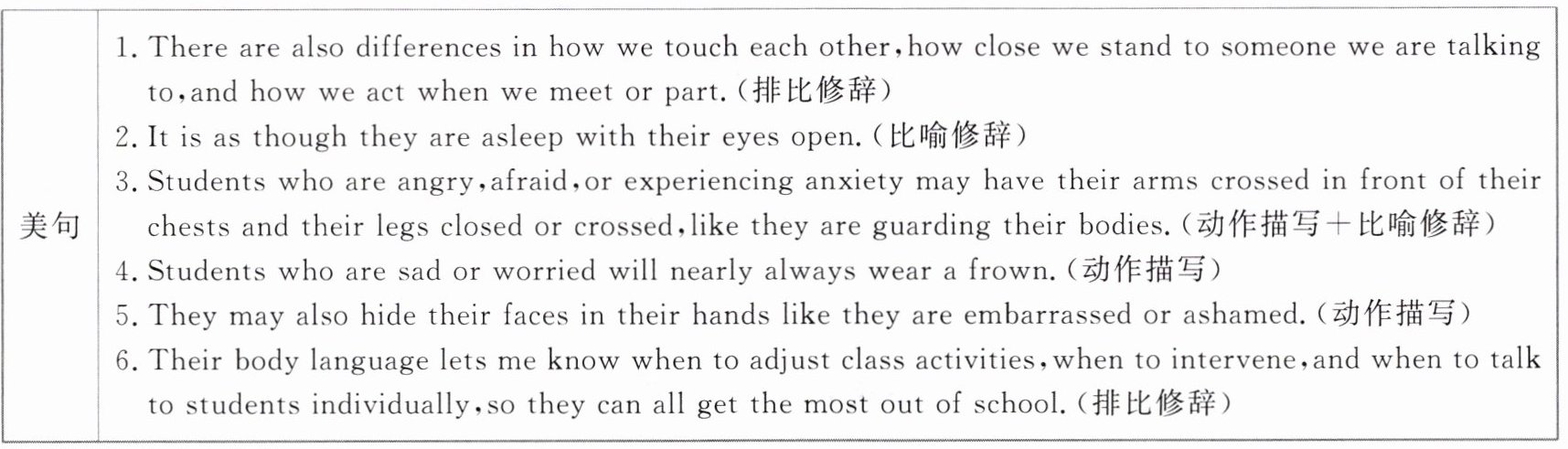
拓展语料积累 [动作细节描写:头部动作]
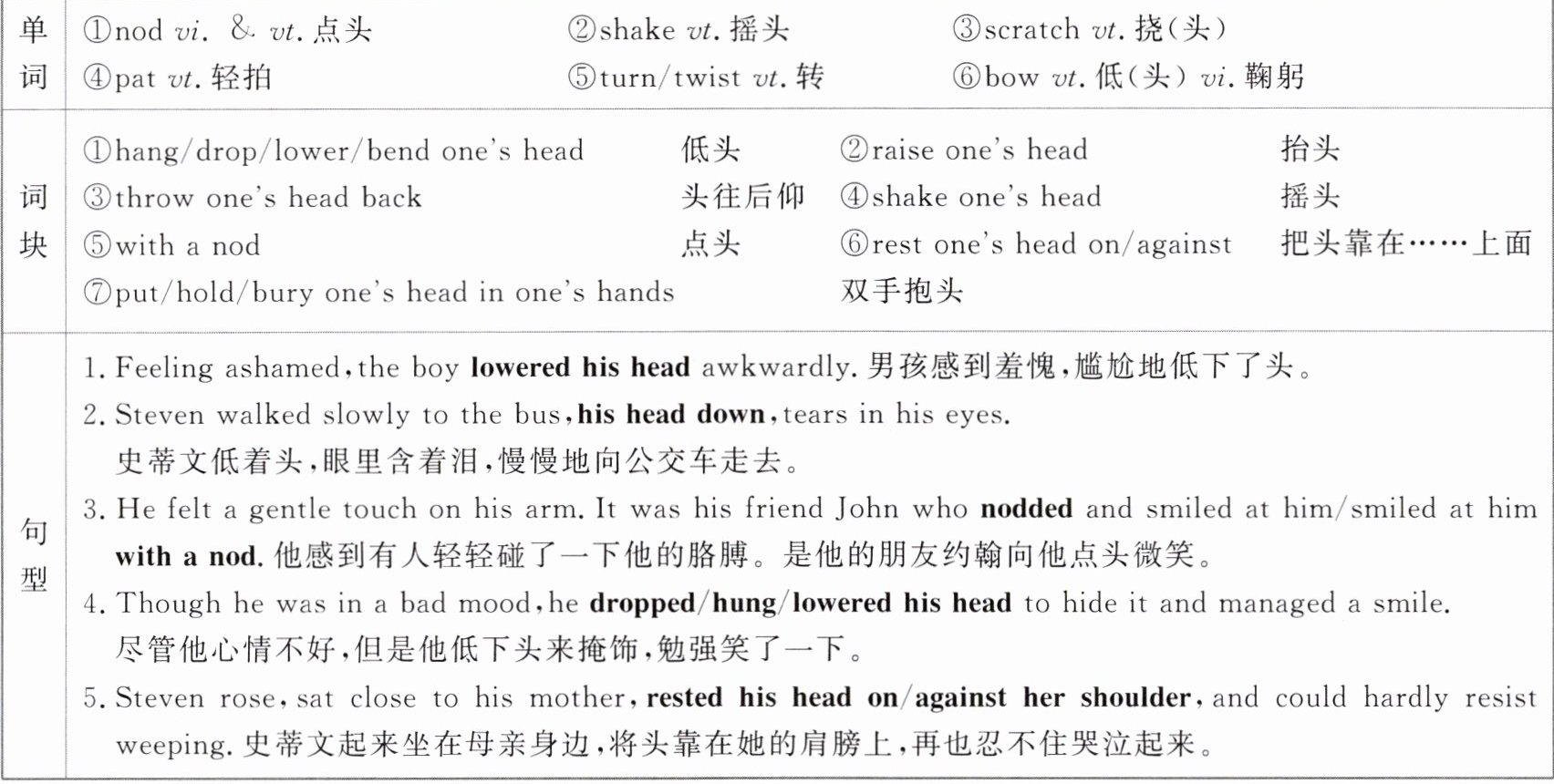
续写语料运用 [用表“头部动作”的表达补全下面的微场景并背诵]
微场景:“乐于助人”主题下的“头部动作”
I was walking in the street when a foreigner stopped us,①_______ (分词作状语). Not knowing what he was saying,I ②_______ and_______. Fortunately,a shop owner ③_______,I immediately headed him for help. The shop owner followed me to the foreigner and saw him sitting on the roadside,④_______. The shop owner interpreted that he must be in need of medical help now and we'd better send him to the nearest hospital. Hearing that,the foreigner ⑤_______ and sighed with relief.
我正走在街上,这时一个外国人拦住了我们,焦急地说着些什么。我不知道他在说什么,尴尬地挠了挠头,扭过头来寻求帮助。幸运的是,一位店主正把头伸出店外,我立即走向他求助。店主跟我走到那个外国人面前,看见他坐在路边,把头靠在他的旅行包上。店主解释说他现在一定需要医疗救助,我们最好把他送到最近的医院。外国人听了,虚弱地点了点头,松了一口气。
请完成单元测评20
教材语料整合
拓展语料积累 [动作细节描写:头部动作]
续写语料运用 [用表“头部动作”的表达补全下面的微场景并背诵]
微场景:“乐于助人”主题下的“头部动作”
I was walking in the street when a foreigner stopped us,①_______ (分词作状语). Not knowing what he was saying,I ②_______ and_______. Fortunately,a shop owner ③_______,I immediately headed him for help. The shop owner followed me to the foreigner and saw him sitting on the roadside,④_______. The shop owner interpreted that he must be in need of medical help now and we'd better send him to the nearest hospital. Hearing that,the foreigner ⑤_______ and sighed with relief.
我正走在街上,这时一个外国人拦住了我们,焦急地说着些什么。我不知道他在说什么,尴尬地挠了挠头,扭过头来寻求帮助。幸运的是,一位店主正把头伸出店外,我立即走向他求助。店主跟我走到那个外国人面前,看见他坐在路边,把头靠在他的旅行包上。店主解释说他现在一定需要医疗救助,我们最好把他送到最近的医院。外国人听了,虚弱地点了点头,松了一口气。
请完成单元测评20
答案:
①saying something with anxiety ②scratched my head with embarrassment;twisted my head for help ③was sticking his head out from his shop ④resting his head against his huge travel pack ⑤nodded his head weakly
查看更多完整答案,请扫码查看

