

 搜索
搜索
第71页
- 第1页
- 第2页
- 第3页
- 第4页
- 第5页
- 第6页
- 第7页
- 第8页
- 第9页
- 第10页
- 第11页
- 第12页
- 第13页
- 第14页
- 第15页
- 第16页
- 第17页
- 第18页
- 第19页
- 第20页
- 第21页
- 第22页
- 第23页
- 第24页
- 第25页
- 第26页
- 第27页
- 第28页
- 第29页
- 第30页
- 第31页
- 第32页
- 第33页
- 第34页
- 第35页
- 第36页
- 第37页
- 第38页
- 第39页
- 第40页
- 第41页
- 第42页
- 第43页
- 第44页
- 第45页
- 第46页
- 第47页
- 第48页
- 第49页
- 第50页
- 第51页
- 第52页
- 第53页
- 第54页
- 第55页
- 第56页
- 第57页
- 第58页
- 第59页
- 第60页
- 第61页
- 第62页
- 第63页
- 第64页
- 第65页
- 第66页
- 第67页
- 第68页
- 第69页
- 第70页
- 第71页
- 第72页
- 第73页
- 第74页
- 第75页
- 第76页
- 第77页
- 第78页
- 第79页
- 第80页
- 第81页
- 第82页
- 第83页
- 第84页
- 第85页
- 第86页
- 第87页
- 第88页
- 第89页
- 第90页
- 第91页
- 第92页
- 第93页
- 第94页
- 第95页
- 第96页
- 第97页
- 第98页
- 第99页
- 第100页
- 第101页
- 第102页
- 第103页
- 第104页
- 第105页
- 第106页
- 第107页
- 第108页
- 第109页
- 第110页
- 第111页
- 第112页
- 第113页
- 第114页
- 第115页
- 第116页
- 第117页
- 第118页
- 第119页
- 第120页
- 第121页
- 第122页
- 第123页
- 第124页
- 第125页
- 第126页
- 第127页
- 第128页
- 第129页
- 第130页
- 第131页
- 第132页
- 第133页
- 第134页
- 第135页
- 第136页
- 第137页
- 第138页
- 第139页
- 第140页
- 第141页
- 第142页
- 第143页
- 第144页
- 第145页
- 第146页
- 第147页
- 第148页
- 第149页
- 第150页
- 第151页
- 第152页
- 第153页
- 第154页
- 第155页
- 第156页
Before Listening
1. 检查课前准备Ⅰ,补全下面的思维导图,写出对应词的最高级。
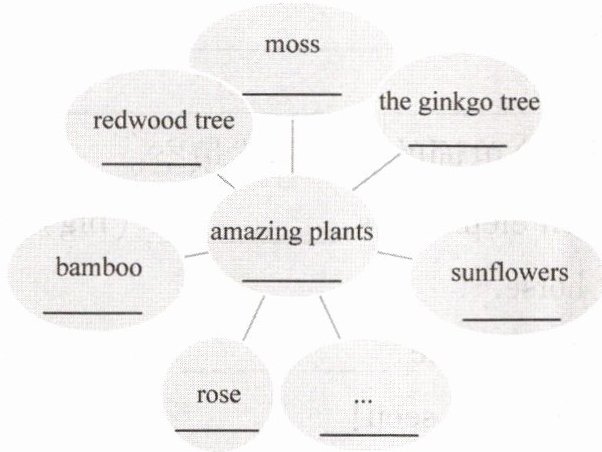
2. 浏览课本1a的词汇,根据小组交流结果,在1a图片的横线上写出描述动植物特点的词汇(注意形容词的最高级形式)。
1. 检查课前准备Ⅰ,补全下面的思维导图,写出对应词的最高级。
2. 浏览课本1a的词汇,根据小组交流结果,在1a图片的横线上写出描述动植物特点的词汇(注意形容词的最高级形式)。
1.
moss: smallest
the ginkgo tree: oldest
redwood tree: tallest
bamboo: longest
sunflowers: most beautiful
rose: most fragrant
... : biggest
moss: smallest
the ginkgo tree: oldest
redwood tree: tallest
bamboo: longest
sunflowers: most beautiful
rose: most fragrant
... : biggest
答案:
1.
moss: smallest
the ginkgo tree: oldest
redwood tree: tallest
bamboo: longest
sunflowers: most beautiful
rose: most fragrant
... : biggest
moss: smallest
the ginkgo tree: oldest
redwood tree: tallest
bamboo: longest
sunflowers: most beautiful
rose: most fragrant
... : biggest
<题目>While Listening
1. 听对话,并按听到的顺序给1a中的植物和动物编号。
2. 再听一遍录音,将下列词语与1a中的植物和动物配对。有些选项有两个答案。
3. 再听一遍录音,补全对话。
Conversation 1
Yaming: What's
Emma: It's the blue whale, right?
Yaming: Right. I think it's also the
Emma: The
Yaming: And I think it's
Emma: I
Conversation 2
Yaming: What is the oldest plant in the world?
Emma: I'm not sure. Do you have any idea?
Yaming: Well, l think moss is one of
Emma: Interesting! Let's go on!
Yaming: Which kind of tree is
Emma: The redwood tree, right?
合作学习:同桌互查答案,纠正错误。
1. What facts about plants do you know? Do you think plants are amazing? Why or why not?
2. 模仿秀:跟读对话,模仿语音语调。
1. 听对话,并按听到的顺序给1a中的植物和动物编号。
2. 再听一遍录音,将下列词语与1a中的植物和动物配对。有些选项有两个答案。
3. 再听一遍录音,补全对话。
Conversation 1
Yaming: What's
the
largest
animal in the world?Emma: It's the blue whale, right?
Yaming: Right. I think it's also the
heaviest
animal on earth. Next question. Which animal runs the fastest
?Emma: The
cheetah
.Yaming: And I think it's
the
most
beautiful
animal in the world.Emma: I
completely
agree with you.Conversation 2
Yaming: What is the oldest plant in the world?
Emma: I'm not sure. Do you have any idea?
Yaming: Well, l think moss is one of
the
oldest
plants
. It appeared
on earth around 470 million years ago...Emma: Interesting! Let's go on!
Yaming: Which kind of tree is
the
tallest
in the world?Emma: The redwood tree, right?
合作学习:同桌互查答案,纠正错误。
1. What facts about plants do you know? Do you think plants are amazing? Why or why not?
2. 模仿秀:跟读对话,模仿语音语调。
答案:
Conversation 1
Yaming: What's $the$ $largest$ animal in the world?
Emma: It's the blue whale, right?
Yaming: Right. I think it's also the $heaviest$ animal on earth. Next question. Which animal runs the $fastest$?
Emma: The $cheetah$.
Yaming: And I think it's $the$ $most$ $beautiful$ animal in the world.
Emma: I $completely$ agree with you.
Conversation 2
Yaming: What is the oldest plant in the world?
Emma: I'm not sure. Do you have any idea?
Yaming: Well, l think moss is one of $the$ $oldest$ $plants$. It $appeared$ on earth around 470 million years ago...
Emma: Interesting! Let's go on!
Yaming: Which kind of tree is $the$ $tallest$ in the world?
Emma: The redwood tree, right?
Yaming: What's $the$ $largest$ animal in the world?
Emma: It's the blue whale, right?
Yaming: Right. I think it's also the $heaviest$ animal on earth. Next question. Which animal runs the $fastest$?
Emma: The $cheetah$.
Yaming: And I think it's $the$ $most$ $beautiful$ animal in the world.
Emma: I $completely$ agree with you.
Conversation 2
Yaming: What is the oldest plant in the world?
Emma: I'm not sure. Do you have any idea?
Yaming: Well, l think moss is one of $the$ $oldest$ $plants$. It $appeared$ on earth around 470 million years ago...
Emma: Interesting! Let's go on!
Yaming: Which kind of tree is $the$ $tallest$ in the world?
Emma: The redwood tree, right?
After Listening
1. 读1c,根据要求完成下面的表格。
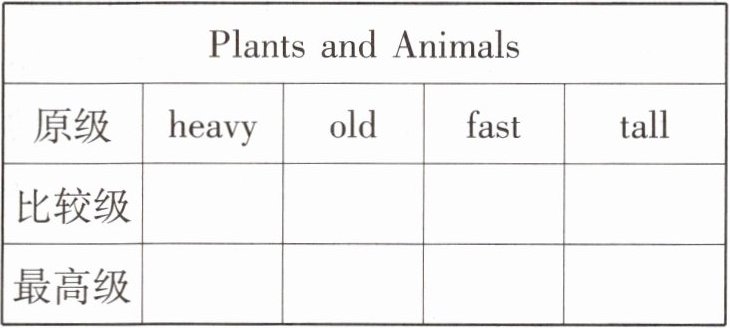
| 原级 | heavy | old | fast | tall |
|------|-------|-----|------|------|
| 比较级 | heavier | older | faster | taller |
| 最高级 | heaviest | oldest | fastest | tallest |
2. 观察1d的对话,完成下面的观察与思考。
观察与思考:
形容词、副词的最高级用于三个或三个以上的人或事物之间的比较,表示其中有一个在某一方面超过其他几个,后面常用of、
写出下列形容词或副词的比较级和最高级形式,并试着读一读。
amazing
boring
busy
carefully
large
popular
interesting
big
thin
useful
3. 两人一组首先根据1d谈论Yaming和Emma了解的动植物特点。再根据下面的思维导图,谈论更多的信息。
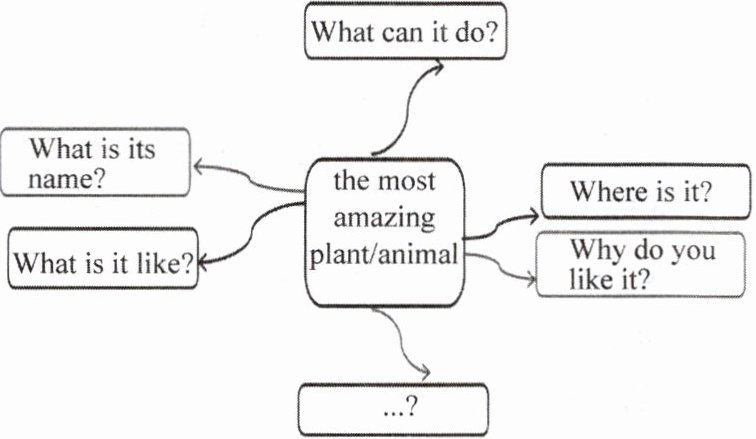
1. 读1c,根据要求完成下面的表格。
| 原级 | heavy | old | fast | tall |
|------|-------|-----|------|------|
| 比较级 | heavier | older | faster | taller |
| 最高级 | heaviest | oldest | fastest | tallest |
2. 观察1d的对话,完成下面的观察与思考。
观察与思考:
形容词、副词的最高级用于三个或三个以上的人或事物之间的比较,表示其中有一个在某一方面超过其他几个,后面常用of、
in
短语等来说明比较的范围。形容词最高级的前面要加定冠词the
,副词最高级前的the有时可省略。写出下列形容词或副词的比较级和最高级形式,并试着读一读。
amazing
more amazing; most amazing
boring
more boring; most boring
busy
busier; busiest
carefully
more carefully; most carefully
large
larger; largest
popular
more popular; most popular
interesting
more interesting; most interesting
big
bigger; biggest
thin
thinner; thinnest
useful
more useful; most useful
3. 两人一组首先根据1d谈论Yaming和Emma了解的动植物特点。再根据下面的思维导图,谈论更多的信息。
(此题为开放性口语练习,无固定书面答案,需两人根据思维导图实际交流)
答案:
1.
| 原级 | heavy | old | fast | tall |
|------|-------|-----|------|------|
| 比较级 | heavier | older | faster | taller |
| 最高级 | heaviest | oldest | fastest | tallest |
2. in; the
amazing: more amazing; most amazing
boring: more boring; most boring
busy: busier; busiest
carefully: more carefully; most carefully
large: larger; largest
popular: more popular; most popular
interesting: more interesting; most interesting
big: bigger; biggest
thin: thinner; thinnest
useful: more useful; most useful
3. (此题为开放性口语练习,无固定书面答案,需两人根据思维导图实际交流)
| 原级 | heavy | old | fast | tall |
|------|-------|-----|------|------|
| 比较级 | heavier | older | faster | taller |
| 最高级 | heaviest | oldest | fastest | tallest |
2. in; the
amazing: more amazing; most amazing
boring: more boring; most boring
busy: busier; busiest
carefully: more carefully; most carefully
large: larger; largest
popular: more popular; most popular
interesting: more interesting; most interesting
big: bigger; biggest
thin: thinner; thinnest
useful: more useful; most useful
3. (此题为开放性口语练习,无固定书面答案,需两人根据思维导图实际交流)
查看更多完整答案,请扫码查看

