

 搜索
搜索
第48页
- 第1页
- 第2页
- 第3页
- 第4页
- 第5页
- 第6页
- 第7页
- 第8页
- 第9页
- 第10页
- 第11页
- 第12页
- 第13页
- 第14页
- 第15页
- 第16页
- 第17页
- 第18页
- 第19页
- 第20页
- 第21页
- 第22页
- 第23页
- 第24页
- 第25页
- 第26页
- 第27页
- 第28页
- 第29页
- 第30页
- 第31页
- 第32页
- 第33页
- 第34页
- 第35页
- 第36页
- 第37页
- 第38页
- 第39页
- 第40页
- 第41页
- 第42页
- 第43页
- 第44页
- 第45页
- 第46页
- 第47页
- 第48页
- 第49页
- 第50页
- 第51页
- 第52页
- 第53页
- 第54页
- 第55页
- 第56页
- 第57页
- 第58页
- 第59页
- 第60页
- 第61页
- 第62页
- 第63页
- 第64页
- 第65页
- 第66页
- 第67页
- 第68页
- 第69页
- 第70页
- 第71页
- 第72页
- 第73页
- 第74页
- 第75页
- 第76页
- 第77页
- 第78页
- 第79页
- 第80页
- 第81页
- 第82页
- 第83页
- 第84页
- 第85页
- 第86页
- 第87页
- 第88页
- 第89页
- 第90页
- 第91页
- 第92页
- 第93页
- 第94页
- 第95页
- 第96页
- 第97页
- 第98页
- 第99页
- 第100页
- 第101页
- 第102页
- 第103页
- 第104页
- 第105页
- 第106页
- 第107页
- 第108页
- 第109页
- 第110页
- 第111页
- 第112页
- 第113页
- 第114页
- 第115页
- 第116页
- 第117页
- 第118页
- 第119页
- 第120页
- 第121页
- 第122页
- 第123页
- 第124页
- 第125页
- 第126页
- 第127页
- 第128页
- 第129页
- 第130页
- 第131页
- 第132页
- 第133页
- 第134页
- 第135页
- 第136页
- 第137页
- 第138页
- 第139页
- 第140页
- 第141页
- 第142页
- 第143页
- 第144页
- 第145页
- 第146页
- 第147页
- 第148页
- 第149页
- 第150页
- 第151页
- 第152页
- 第153页
- 第154页
- 第155页
- 第156页
While listening
1. 听录音中的二段对话,勾选对话发生的地点。
2. 再听录音,完成 1c 中的句子。
3. 听第一段对话,完成 Chen Jie 和 Peter 的对比表格。
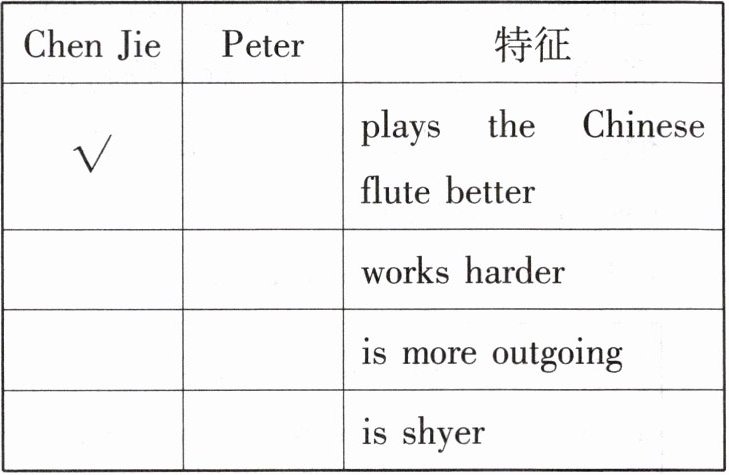
4. 听第二段对话,完成 Emma 和 Ella 的对比表格。
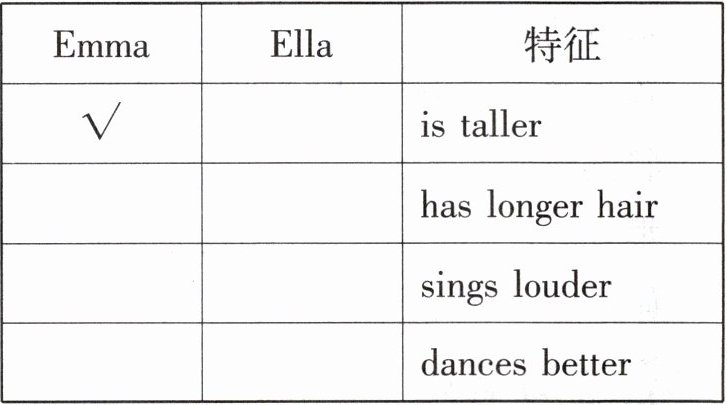
(1)看表格,尝试用完整的句子核对答案。
Chen Jie plays the Chinese flute better.
(2)根据表格,对比 Chen Jie 和 Peter,Emma 和 Ella,运用比较级的句子分别描述他们。
Chen Jie plays the Chinese flute... than Peter, she works... and she is...
than Peter.
观察与思考:
shyer、more outgoing、taller、longer 都是
plays the Chinese flute better、works harder、sings louder、dances better 中画线的这几个词都是
形容词和副词的比较级的构成规则:比较级中单音节词和部分双音节词词尾加
形容词和副词的比较级还有不规则变化。如 good / well 的比较级为
5. 写出课本 1a 中单词的比较级形式。
6. 模仿秀:再听录音,跟读对话,注意句子的语调,体会和理解语调传递的情感与意图。
1. 听录音中的二段对话,勾选对话发生的地点。
2. 再听录音,完成 1c 中的句子。
3. 听第一段对话,完成 Chen Jie 和 Peter 的对比表格。
4. 听第二段对话,完成 Emma 和 Ella 的对比表格。
(1)看表格,尝试用完整的句子核对答案。
Chen Jie plays the Chinese flute better.
(2)根据表格,对比 Chen Jie 和 Peter,Emma 和 Ella,运用比较级的句子分别描述他们。
Chen Jie plays the Chinese flute... than Peter, she works... and she is...
than Peter.
观察与思考:
shyer、more outgoing、taller、longer 都是
形容词(adj.)
(词性)的比较级。plays the Chinese flute better、works harder、sings louder、dances better 中画线的这几个词都是
副词(adv.)
(词性)的比较级。形容词和副词的比较级的构成规则:比较级中单音节词和部分双音节词词尾加
-er
,多音节词和部分双音节词前加more
。形容词和副词的比较级还有不规则变化。如 good / well 的比较级为
better
。5. 写出课本 1a 中单词的比较级形式。
6. 模仿秀:再听录音,跟读对话,注意句子的语调,体会和理解语调传递的情感与意图。
答案:
观察与思考:
第一个空:形容词(adj.)
- 解析:shyer(更害羞的)、more outgoing(更外向的)、taller(更高的)、longer(更长的),均用于修饰名词(如“a shyer girl”“a taller tree”),符合形容词的语法功能,且都是形容词的比较级形式。
第二个空:副词(adv.)
- 解析:better(更好地)、harder(更努力地)、louder(更大声地),均用于修饰动词(如“plays better”“works harder”“sings louder”),符合副词的语法功能,且都是副词的比较级形式。
第三个空:-er;第四个空:more
- 解析:形容词和副词比较级的规则变化中,单音节词(如 tall→taller、hard→harder)和部分双音节词(如 shy→shyer、simple→simpler)通常在词尾加“-er”;多音节词(如 outgoing→more outgoing、carefully→more carefully)和部分双音节词(如 difficult→more difficult、famous→more famous)通常在词前加“more”。
第五个空:better
- 解析:good(形容词,“好的”)和 well(副词,“好地”)的比较级为不规则变化,统一为“better”,不存在“gooder”或“weller”的形式。
<题目>After listening
1. 根据听力内容,完成下面短文。
Emma is singing at the school music festival. Emma is
2. Pair work:用 1d 中的信息仿 1e 中句型进行比较。
3. 角色扮演:学生三人一组,分别扮演记者、Chen Jie 及 Peter,表演录音中的第二段对话。
1. 根据听力内容,完成下面短文。
Emma is singing at the school music festival. Emma is
quieter
than Ella, and she sings more clearly
than Ella. Ella dances at the school music festival. Her hair is longer
than Emma's. They both dance well, but Ella dances better
than her sister.2. Pair work:用 1d 中的信息仿 1e 中句型进行比较。
3. 角色扮演:学生三人一组,分别扮演记者、Chen Jie 及 Peter,表演录音中的第二段对话。
答案:
1. quieter; more clearly; longer; better
Pronunciation
1. 观察 Pronunciation 1 表格中 er、ir、ur、ear 在单词中发长音/3:/,a、e、o、er /or 在单词中发短音/ə/的情况,听录音并跟读,根据字母或字母组合在单词中的发音规律补充更多的词汇。
2. 通过模仿、练习 Pronunciation 2 中的句子,正确读出句子的语调,理解语调传递情感与意图的方式。
1. 观察 Pronunciation 1 表格中 er、ir、ur、ear 在单词中发长音/3:/,a、e、o、er /or 在单词中发短音/ə/的情况,听录音并跟读,根据字母或字母组合在单词中的发音规律补充更多的词汇。
2. 通过模仿、练习 Pronunciation 2 中的句子,正确读出句子的语调,理解语调传递情感与意图的方式。
答案:
1.
Words with /ɜː/ sound:
“er”: her, teacher, driver
“ir”: bird, girl, shirt
“ur”: nurse, turtle, surf
“ear”: earth, learn, early
Words with /ə/ sound:
“a”: about, away, along
“e”: open, taken, broken
“o”: today, tomorrow, together
“or”: doctor, actor, author
2.
After listening and imitating the sentences in Pronunciation 2, the intonation of the sentences can be mastered through repeated practice. For example, in general questions, rising intonation is usually used, and in declarative sentences, falling intonation is often used. Through correct intonation reading, we can better understand how intonation conveys emotions and intentions.
Words with /ɜː/ sound:
“er”: her, teacher, driver
“ir”: bird, girl, shirt
“ur”: nurse, turtle, surf
“ear”: earth, learn, early
Words with /ə/ sound:
“a”: about, away, along
“e”: open, taken, broken
“o”: today, tomorrow, together
“or”: doctor, actor, author
2.
After listening and imitating the sentences in Pronunciation 2, the intonation of the sentences can be mastered through repeated practice. For example, in general questions, rising intonation is usually used, and in declarative sentences, falling intonation is often used. Through correct intonation reading, we can better understand how intonation conveys emotions and intentions.
查看更多完整答案,请扫码查看

