

 搜索
搜索
第20页
- 第1页
- 第2页
- 第3页
- 第4页
- 第5页
- 第6页
- 第7页
- 第8页
- 第9页
- 第10页
- 第11页
- 第12页
- 第13页
- 第14页
- 第15页
- 第16页
- 第17页
- 第18页
- 第19页
- 第20页
- 第21页
- 第22页
- 第23页
- 第24页
- 第25页
- 第26页
- 第27页
- 第28页
- 第29页
- 第30页
- 第31页
- 第32页
- 第33页
- 第34页
- 第35页
- 第36页
- 第37页
- 第38页
- 第39页
- 第40页
- 第41页
- 第42页
- 第43页
- 第44页
- 第45页
- 第46页
- 第47页
- 第48页
- 第49页
- 第50页
- 第51页
- 第52页
- 第53页
- 第54页
- 第55页
- 第56页
- 第57页
- 第58页
- 第59页
- 第60页
- 第61页
- 第62页
- 第63页
- 第64页
- 第65页
- 第66页
- 第67页
- 第68页
- 第69页
- 第70页
- 第71页
- 第72页
- 第73页
- 第74页
- 第75页
- 第76页
- 第77页
- 第78页
- 第79页
- 第80页
- 第81页
- 第82页
- 第83页
- 第84页
- 第85页
- 第86页
- 第87页
- 第88页
- 第89页
- 第90页
- 第91页
- 第92页
- 第93页
- 第94页
- 第95页
- 第96页
- 第97页
- 第98页
- 第99页
- 第100页
- 第101页
- 第102页
- 第103页
- 第104页
- 第105页
- 第106页
- 第107页
- 第108页
- 第109页
- 第110页
- 第111页
- 第112页
- 第113页
- 第114页
- 第115页
- 第116页
- 第117页
- 第118页
- 第119页
- 第120页
- 第121页
- 第122页
- 第123页
- 第124页
- 第125页
- 第126页
- 第127页
- 第128页
- 第129页
- 第130页
- 第131页
- 第132页
- 第133页
- 第134页
- 第135页
- 第136页
- 第137页
- 第138页
- 第139页
- 第140页
- 第141页
- 第142页
- 第143页
- 第144页
- 第145页
- 第146页
- 第147页
- 第148页
- 第149页
- 第150页
- 第151页
- 第152页
- 第153页
- 第154页
- 第155页
- 第156页
(三) 听力填词。
请听一段独白,根据所听内容完成下方的表格,每空限填一词。独白读两遍。
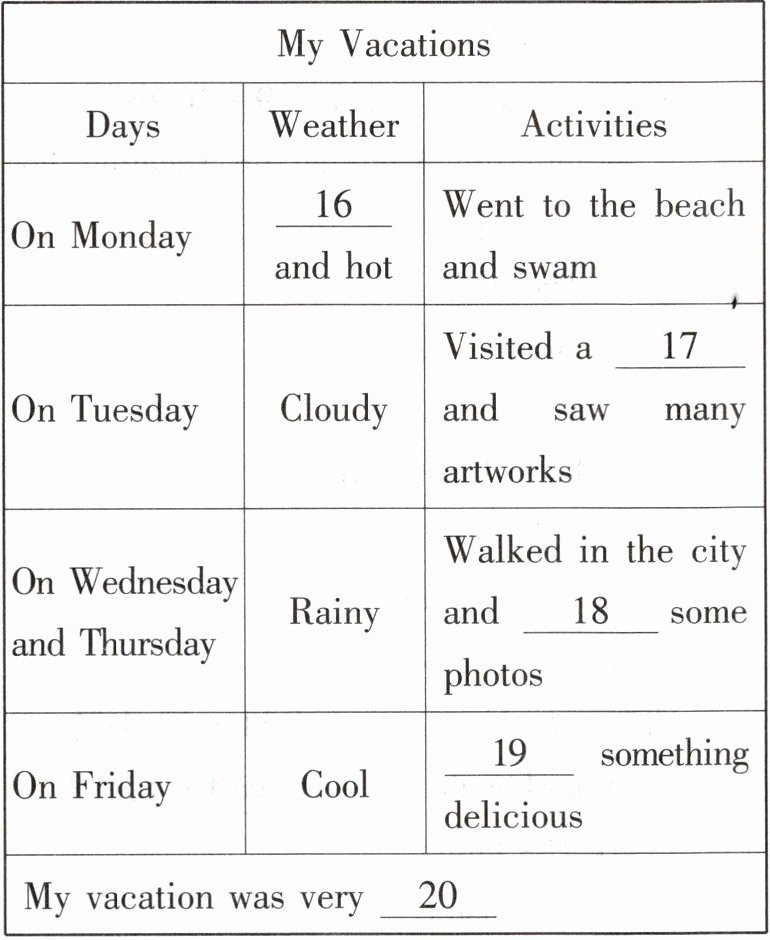
请听一段独白,根据所听内容完成下方的表格,每空限填一词。独白读两遍。
答案:
16. Sunny 17. tower 18. took 19. Ate 20. fantastic
Ⅱ. 阅读短文,从每小题的四个选项中,选出能回答所给问题或完成所给句子的最佳答案。
On a summer day, I visited Khiva in Uzbekistan (乌兹别克斯坦). It is a beautiful city. The city is famous for its history. It is one of the top three Silk Road stops in Uzbekistan.
The most famous place of Khiva is Itchan Kala, an old town. It has a history of about 2,500 years. Many people describe it as a living museum. There are over 50 historical sites. They help visitors learn about the history and culture of Khiva.
I arrived at Khiva in the morning and visited Itchan Kala first. Visiting it made me feel like a small child. The old town was like a labyrinth (迷宫) of streets. It was fun to walk around along the streets. And each time I thought I was on the same road as before, I found myself turning a different corner (拐角). Then I saw a different building. My favorite building was the Tosh Hauli. It had very beautiful rooms. I stopped again and again to see them.
People in Khiva are proud (自豪的) of their history and culture. They do a lot to protect (保护) them. For example, many people move out of Itchan Kala and live in other places to protect the old town. And now there is no car in it.
1. What do we know about Khiva?
A. It was a museum.
B. It looks like a labyrinth.
C. It has a history of about 5,000 years.
D. It is a famous stop on the Silk Road.
(
2. How did the writer feel when he was in Itchan Kala?
A. Warm. B. Proud.
C. Interested. D. Relaxed.
(
3. What is the last paragraph mainly about?
A. New rules in Khiva.
B. People's lives in Khiva.
C. The most famous place of Khiva.
D. People's work in protecting Khiva's history and culture.
(
4. Why did the writer write the passage?
A. To talk about his trip.
B. To show his love for history.
C. To remember his old days.
D. To let more people know his town.
(
On a summer day, I visited Khiva in Uzbekistan (乌兹别克斯坦). It is a beautiful city. The city is famous for its history. It is one of the top three Silk Road stops in Uzbekistan.
The most famous place of Khiva is Itchan Kala, an old town. It has a history of about 2,500 years. Many people describe it as a living museum. There are over 50 historical sites. They help visitors learn about the history and culture of Khiva.
I arrived at Khiva in the morning and visited Itchan Kala first. Visiting it made me feel like a small child. The old town was like a labyrinth (迷宫) of streets. It was fun to walk around along the streets. And each time I thought I was on the same road as before, I found myself turning a different corner (拐角). Then I saw a different building. My favorite building was the Tosh Hauli. It had very beautiful rooms. I stopped again and again to see them.
People in Khiva are proud (自豪的) of their history and culture. They do a lot to protect (保护) them. For example, many people move out of Itchan Kala and live in other places to protect the old town. And now there is no car in it.
1. What do we know about Khiva?
A. It was a museum.
B. It looks like a labyrinth.
C. It has a history of about 5,000 years.
D. It is a famous stop on the Silk Road.
(
D
)2. How did the writer feel when he was in Itchan Kala?
A. Warm. B. Proud.
C. Interested. D. Relaxed.
(
C
)3. What is the last paragraph mainly about?
A. New rules in Khiva.
B. People's lives in Khiva.
C. The most famous place of Khiva.
D. People's work in protecting Khiva's history and culture.
(
D
)4. Why did the writer write the passage?
A. To talk about his trip.
B. To show his love for history.
C. To remember his old days.
D. To let more people know his town.
(
A
)
答案:
1.D 2.C 3.D 4.A
查看更多完整答案,请扫码查看

