

 搜索
搜索
第117页
- 第1页
- 第2页
- 第3页
- 第4页
- 第5页
- 第6页
- 第7页
- 第8页
- 第9页
- 第10页
- 第11页
- 第12页
- 第13页
- 第14页
- 第15页
- 第16页
- 第17页
- 第18页
- 第19页
- 第20页
- 第21页
- 第22页
- 第23页
- 第24页
- 第25页
- 第26页
- 第27页
- 第28页
- 第29页
- 第30页
- 第31页
- 第32页
- 第33页
- 第34页
- 第35页
- 第36页
- 第37页
- 第38页
- 第39页
- 第40页
- 第41页
- 第42页
- 第43页
- 第44页
- 第45页
- 第46页
- 第47页
- 第48页
- 第49页
- 第50页
- 第51页
- 第52页
- 第53页
- 第54页
- 第55页
- 第56页
- 第57页
- 第58页
- 第59页
- 第60页
- 第61页
- 第62页
- 第63页
- 第64页
- 第65页
- 第66页
- 第67页
- 第68页
- 第69页
- 第70页
- 第71页
- 第72页
- 第73页
- 第74页
- 第75页
- 第76页
- 第77页
- 第78页
- 第79页
- 第80页
- 第81页
- 第82页
- 第83页
- 第84页
- 第85页
- 第86页
- 第87页
- 第88页
- 第89页
- 第90页
- 第91页
- 第92页
- 第93页
- 第94页
- 第95页
- 第96页
- 第97页
- 第98页
- 第99页
- 第100页
- 第101页
- 第102页
- 第103页
- 第104页
- 第105页
- 第106页
- 第107页
- 第108页
- 第109页
- 第110页
- 第111页
- 第112页
- 第113页
- 第114页
- 第115页
- 第116页
- 第117页
- 第118页
- 第119页
- 第120页
- 第121页
- 第122页
- 第123页
- 第124页
- 第125页
- 第126页
- 第127页
- 第128页
- 第129页
- 第130页
- 第131页
- 第132页
- 第133页
- 第134页
- 第135页
- 第136页
- 第137页
- 第138页
- 第139页
- 第140页
- 第141页
- 第142页
- 第143页
- 第144页
- 第145页
- 第146页
- 第147页
- 第148页
- 第149页
- 第150页
- 第151页
- 第152页
- 第153页
- 第154页
- 第155页
- 第156页
听第二段对话,回答第12—15小题
12. How many tomatoes do they need?
A. One.
B. Some.
C. Two. (
13. What things do they need to make noodles?
A. Carrots.
B. Potatoes.
C. Onions. (
14. How long do they need to cook?
A. About 3 minutes.
B. About 5 minutes.
C. About 8 minutes. (
15. What do they put in the pot finally?
A. Pepper.
B. Salt.
C. Onions. (
12. How many tomatoes do they need?
A. One.
B. Some.
C. Two. (
C
)13. What things do they need to make noodles?
A. Carrots.
B. Potatoes.
C. Onions. (
C
)14. How long do they need to cook?
A. About 3 minutes.
B. About 5 minutes.
C. About 8 minutes. (
C
)15. What do they put in the pot finally?
A. Pepper.
B. Salt.
C. Onions. (
B
)
答案:
12.C 13.C 14.C 15.B
(三)听力填词。
请听下面一段短文,根据所听内容完成下方的表格,每空限填一词。短文读两遍。
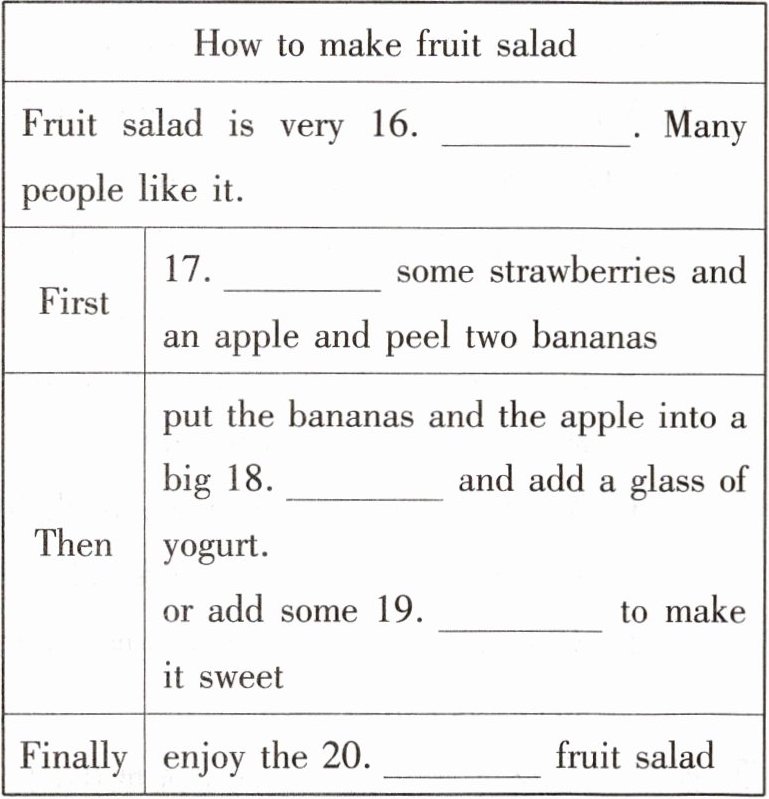
16.
17.
18.
19.
20.
请听下面一段短文,根据所听内容完成下方的表格,每空限填一词。短文读两遍。
16.
healthy
17.
wash
18.
bowl
19.
honey
20.
delicious
答案:
16. healthy 17. wash 18. bowl 19. honey 20. delicious
Ⅱ. 阅读下面短文,从每小题的四个选项中,选出能回答所给问题或完成所给句子的最佳答案。
A
Many people like drinking tea. Some tea can make people healthy and help people become slim. There are all kinds of tea in the world. Of all the kinds, black tea, green tea and oolong tea are the most popular.
Black tea: It’s famous for its taste, and it’s able to go well with many foreign foods, usually sweets and creamy foods.
Green tea: Some people love it because it is good for their health. Green tea is good for digestion, and it can help people make the food into smaller pieces.
Oolong tea: Oolong tea may help people become slim, so many people love it.
In recent years, many people start enjoying white tea and pu’er tea.
1. How many kinds of tea are mentioned in the passage?
A. Three.
B. Four.
C. Five.
D. Six.
(
2. What king of tea is known for its taste?
A. Pu’er tea.
B. Black tea.
C. Green tea.
D. Oolong tea.
(
3. What does the underlined word “digestion” mean in Chinese?
A. 分泌
B. 消化
C. 养生
D. 美容
(
4. What can we learn from the passage?
A. Tea isn’t good for health.
B. Many people don’t like pu’er tea.
C. Green tea isn’t good for digestion.
D. Drinking oolong tea can help people become slim.
(
5. The writer writes the passage to ____.
A. show us how to drink tea
B. tell us to drink some tea every day
C. tell us some popular tea
D. tell us the history of different kinds of tea
(
A
Many people like drinking tea. Some tea can make people healthy and help people become slim. There are all kinds of tea in the world. Of all the kinds, black tea, green tea and oolong tea are the most popular.
Black tea: It’s famous for its taste, and it’s able to go well with many foreign foods, usually sweets and creamy foods.
Green tea: Some people love it because it is good for their health. Green tea is good for digestion, and it can help people make the food into smaller pieces.
Oolong tea: Oolong tea may help people become slim, so many people love it.
In recent years, many people start enjoying white tea and pu’er tea.
1. How many kinds of tea are mentioned in the passage?
A. Three.
B. Four.
C. Five.
D. Six.
(
C
)2. What king of tea is known for its taste?
A. Pu’er tea.
B. Black tea.
C. Green tea.
D. Oolong tea.
(
B
)3. What does the underlined word “digestion” mean in Chinese?
A. 分泌
B. 消化
C. 养生
D. 美容
(
B
)4. What can we learn from the passage?
A. Tea isn’t good for health.
B. Many people don’t like pu’er tea.
C. Green tea isn’t good for digestion.
D. Drinking oolong tea can help people become slim.
(
B
)5. The writer writes the passage to ____.
A. show us how to drink tea
B. tell us to drink some tea every day
C. tell us some popular tea
D. tell us the history of different kinds of tea
(
C
)
答案:
1.C 2.B 3.B 4.B 5.C
查看更多完整答案,请扫码查看

