

 搜索
搜索
第3页
- 第1页
- 第2页
- 第3页
- 第4页
- 第5页
- 第6页
- 第7页
- 第8页
- 第9页
- 第10页
- 第11页
- 第12页
- 第13页
- 第14页
- 第15页
- 第16页
- 第17页
- 第18页
- 第19页
- 第20页
- 第21页
- 第22页
- 第23页
- 第24页
- 第25页
- 第26页
- 第27页
- 第28页
- 第29页
- 第30页
- 第31页
- 第32页
- 第33页
- 第34页
- 第35页
- 第36页
- 第37页
- 第38页
- 第39页
- 第40页
- 第41页
- 第42页
- 第43页
- 第44页
- 第45页
- 第46页
- 第47页
- 第48页
- 第49页
- 第50页
- 第51页
- 第52页
- 第53页
- 第54页
- 第55页
- 第56页
- 第57页
- 第58页
- 第59页
- 第60页
- 第61页
- 第62页
- 第63页
- 第64页
- 第65页
- 第66页
- 第67页
- 第68页
- 第69页
- 第70页
- 第71页
- 第72页
- 第73页
- 第74页
- 第75页
- 第76页
- 第77页
- 第78页
- 第79页
- 第80页
- 第81页
- 第82页
- 第83页
- 第84页
- 第85页
- 第86页
- 第87页
- 第88页
- 第89页
- 第90页
- 第91页
- 第92页
- 第93页
- 第94页
- 第95页
- 第96页
- 第97页
- 第98页
- 第99页
- 第100页
- 第101页
- 第102页
- 第103页
- 第104页
- 第105页
- 第106页
- 第107页
- 第108页
- 第109页
- 第110页
- 第111页
- 第112页
- 第113页
- 第114页
- 第115页
- 第116页
- 第117页
- 第118页
- 第119页
- 第120页
- 第121页
- 第122页
- 第123页
- 第124页
- 第125页
- 第126页
- 第127页
- 第128页
- 第129页
- 第130页
- 第131页
- 第132页
- 第133页
- 第134页
- 第135页
- 第136页
- 第137页
- 第138页
- 第139页
- 第140页
- 第141页
- 第142页
- 第143页
- 第144页
- 第145页
- 第146页
- 第147页
- 第148页
- 第149页
- 第150页
- 第151页
- 第152页
- 第153页
- 第154页
- 第155页
- 第156页
After Listening
1. 读 1c 的两篇总结,完成下面的表格。
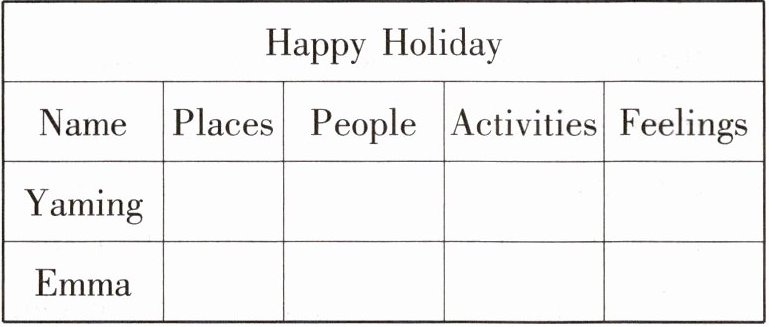
2. 观察 1d 的对话,完成下面的观察与思考。
观察与思考:
谈论过去的活动用
3. 大声朗读课本 1c 和 1d 的内容,进一步梳理、总结 Yaming 和 Emma 假期所做的 something interesting。
4. 角色扮演:两人一组谈论 Yaming 和 Emma 的假期。同学们也可以根据上面的表格,谈论更多的信息。
5. 创编对话:我的奇妙假期。
根据课前准备和前面所学内容,和同伴谈论你的假期经历。
1. 读 1c 的两篇总结,完成下面的表格。
2. 观察 1d 的对话,完成下面的观察与思考。
观察与思考:
谈论过去的活动用
一般过去
时,谓语动词用______过去式
。含实义动词过去时态的句子,变疑问句时,需要添加助动词______did
,动词的过去式变为______原形
。anything interesting 意思是______任何有趣的事
,anything 为______代词
(词性),用于______疑问
句中,肯定句中常用______something
。当它们被形容词修饰时,形容词放在其______后
面。3. 大声朗读课本 1c 和 1d 的内容,进一步梳理、总结 Yaming 和 Emma 假期所做的 something interesting。
4. 角色扮演:两人一组谈论 Yaming 和 Emma 的假期。同学们也可以根据上面的表格,谈论更多的信息。
5. 创编对话:我的奇妙假期。
根据课前准备和前面所学内容,和同伴谈论你的假期经历。
答案:
1.
|Name|Places|People|Activities|Feelings|
| ---- | ---- | ---- | ---- | ---- |
|Yaming|the lake|cousins|boating, swimming, camping, put up tents, make a fire|great|
|Emma|the countryside|grandparents, aunt, uncle, cousins|feed chickens, pick fruits, take walks|wonderful|
2.
观察与思考:谈论过去的活动用一般过去时, 谓语动词用过去式。含实义动词过去时态的句子, 变疑问句时, 需要添加助动词did, 动词的过去式变为原形。anything interesting 意思是任何有趣的事, anything 为代词, 用于疑问句中, 肯定句中常用something。当它们被形容词修饰时, 形容词放在其后面。
|Name|Places|People|Activities|Feelings|
| ---- | ---- | ---- | ---- | ---- |
|Yaming|the lake|cousins|boating, swimming, camping, put up tents, make a fire|great|
|Emma|the countryside|grandparents, aunt, uncle, cousins|feed chickens, pick fruits, take walks|wonderful|
2.
观察与思考:谈论过去的活动用一般过去时, 谓语动词用过去式。含实义动词过去时态的句子, 变疑问句时, 需要添加助动词did, 动词的过去式变为原形。anything interesting 意思是任何有趣的事, anything 为代词, 用于疑问句中, 肯定句中常用something。当它们被形容词修饰时, 形容词放在其后面。
Pronunciation
1. 听录音,跟读课本第 3 页 Pronunciation 1。
2. 小组合作,完成语音知识点拨,并在每组单词后,写出更多字母或字母组合发音相同的单词。
字母 e 通常在
3. 听录音,跟读课本 3 页 Pronunciation 2,注意对话中的节奏。
4. 分组比赛朗读。挑战:用“How was...? What did...?”句式即兴编写两组对话,大声、有节奏地朗读。
1. 听录音,跟读课本第 3 页 Pronunciation 1。
2. 小组合作,完成语音知识点拨,并在每组单词后,写出更多字母或字母组合发音相同的单词。
字母 e 通常在
重读开
音节中发/i:/,在重读闭
音节中发/e/。元音字母组合如 ee、ea,通常发第一
个字母的音,因此 ee、ea 通常发/i:/。某些单词也例外,如:bread、ready 中的 ea 发/e/
。元音字母 i 通常在闭
音节中发/i/。元音字母 a 在闭
音节中发/æ/。字母 y 在词尾,如单词中有辅
音字母,则发/i/。3. 听录音,跟读课本 3 页 Pronunciation 2,注意对话中的节奏。
4. 分组比赛朗读。挑战:用“How was...? What did...?”句式即兴编写两组对话,大声、有节奏地朗读。
答案:
1.
字母 e 通常在重读开音节中发/i:/,在重读闭音节中发/e/。
元音字母组合如 ee、ea,通常发第一个字母的音,因此 ee、ea 通常发/i:/。某些单词也例外,如:bread、ready 中的 ea 发/e/。
元音字母 i 通常在闭音节中发/i/。
元音字母 a 在闭音节中发/æ/。
字母 y 在词尾,如单词中有辅音音字母,则发/i/。
2. 更多发音相同单词示例:
e 发/i:/:he,she,be
e 发/e/:bed,red,get
ea 发/i:/:teach,eat,seat
i 发/i/:big,pig,dig
a 发/æ/:cat,hat,fat
字母 e 通常在重读开音节中发/i:/,在重读闭音节中发/e/。
元音字母组合如 ee、ea,通常发第一个字母的音,因此 ee、ea 通常发/i:/。某些单词也例外,如:bread、ready 中的 ea 发/e/。
元音字母 i 通常在闭音节中发/i/。
元音字母 a 在闭音节中发/æ/。
字母 y 在词尾,如单词中有辅音音字母,则发/i/。
2. 更多发音相同单词示例:
e 发/i:/:he,she,be
e 发/e/:bed,red,get
ea 发/i:/:teach,eat,seat
i 发/i/:big,pig,dig
a 发/æ/:cat,hat,fat
Ⅰ. 根据句意及首字母或音标提示完成单词。
1. The
2. I went to a robot summer
3. The
4. —Did you see anything
—Yes, no one knew it.
5. I want to go to Hainan on
1. The
ancient
/'eɪnʃənt/ buildings in Beijing are over 600 years old.2. I went to a robot summer
camp
/kæmp/ and learned a lot about robots last month.3. The
landscape
of the mountains was so beautiful!4. —Did you see anything
strange
in the forest?—Yes, no one knew it.
5. I want to go to Hainan on
vacation
next winter.
答案:
1. ancient 2. camp 3. landscape 4. strange 5. vacation
Ⅱ. 用所给动词的适当形式填空。
1. Yaming
2. Emma
3. They
4. I
5. My brother
1. Yaming
went
(go) to Mount Huangshan andsaw
(see) the sunrise last summer holiday.2. Emma
stayed
(stay) with her grandparents andtried
(try) strawberry cookies during her summer holiday.3. They
had
(have) a great time when they hiked in the mountains.4. I
ate
(eat) something delicious when I was in Beijing.5. My brother
took
(take) music lessons last summer. Helearned
(learn) to play the piano.
答案:
1. went, saw 2. stayed, tried 3. had 4. ate 5. took, learned
查看更多完整答案,请扫码查看

