

 搜索
搜索
第96页
- 第1页
- 第2页
- 第3页
- 第4页
- 第5页
- 第6页
- 第7页
- 第8页
- 第9页
- 第10页
- 第11页
- 第12页
- 第13页
- 第14页
- 第15页
- 第16页
- 第17页
- 第18页
- 第19页
- 第20页
- 第21页
- 第22页
- 第23页
- 第24页
- 第25页
- 第26页
- 第27页
- 第28页
- 第29页
- 第30页
- 第31页
- 第32页
- 第33页
- 第34页
- 第35页
- 第36页
- 第37页
- 第38页
- 第39页
- 第40页
- 第41页
- 第42页
- 第43页
- 第44页
- 第45页
- 第46页
- 第47页
- 第48页
- 第49页
- 第50页
- 第51页
- 第52页
- 第53页
- 第54页
- 第55页
- 第56页
- 第57页
- 第58页
- 第59页
- 第60页
- 第61页
- 第62页
- 第63页
- 第64页
- 第65页
- 第66页
- 第67页
- 第68页
- 第69页
- 第70页
- 第71页
- 第72页
- 第73页
- 第74页
- 第75页
- 第76页
- 第77页
- 第78页
- 第79页
- 第80页
- 第81页
- 第82页
- 第83页
- 第84页
- 第85页
- 第86页
- 第87页
- 第88页
- 第89页
- 第90页
- 第91页
- 第92页
- 第93页
- 第94页
- 第95页
- 第96页
- 第97页
- 第98页
- 第99页
- 第100页
- 第101页
- 第102页
- 第103页
- 第104页
- 第105页
- 第106页
- 第107页
- 第108页
- 第109页
- 第110页
- 第111页
- 第112页
- 第113页
- 第114页
- 第115页
- 第116页
- 第117页
- 第118页
- 第119页
- 第120页
- 第121页
- 第122页
- 第123页
- 第124页
- 第125页
- 第126页
- 第127页
- 第128页
- 第129页
- 第130页
- 第131页
- 第132页
- 第133页
- 第134页
- 第135页
- 第136页
- 第137页
- 第138页
- 第139页
- 第140页
- 第141页
- 第142页
- 第143页
- 第144页
Ⅳ. (2024·南京鼓楼区期末)阅读理解
你喜欢中国的传统艺术剪纸吗?阅读下面的短文了解一下吧!
Paper-cutting is a Chinese folk art with a long history. The earliest paper cuts date back to the 4th century in China. In 2002, UNESCO listed China's paper-cutting as a world cultural heritage(遗产). In Chinese culture, paper cuts are the symbol of happiness and good luck, and they have been used for decoration and design patterns(图案) throughout history.
Paper cuts used for decoration are often seen on windows and gates. They are usually put up during holidays to bring good luck. The Chinese character Fu means good luck and it is often stuck on front doors upside down. It is believed that when Fu is put upside down, happiness arrives. The image of a fish often appears together with Fu, which shows we will have more than enough money to spend.
Paper cuts are also used on presents. People use Fu to wrap(包装) presents to bring good luck to others. A present for parents with new-born babies might show a paper cut of children. In some designs, we can see a baby on a lotus flower. The name of this design is “lian sheng gui zi”, which means we wish that the parents would have more children.
The image of a baby on an animal is popular as well. This animal is called “qi lin”, which is believed to have the power to bring children to the family. Paper cuts that show the Chinese character of double happiness are often used to celebrate weddings. People use them to decorate such occasions(场合) by putting them on walls, windows, doors and even furniture.
Another kind of paper cuts are those used to make design patterns on clothing, such as the Chinese Fu, the image of loong and flower patterns. They are very popular choices for clothes to wear. They are also sometimes used to decorate jewelry boxes.
In the past, paper-cutting was all done by hand. Even a small mistake during the process can ruin(毁掉) the whole piece of work. Now there are factories for paper-cutting in China and paper-cutting has also changed from decoration to a kind of art.
1. Why do Chinese people stick Fu upside down?
A. Because it helps to drive evil spirits away.
B. Because it represents the coming of happiness.
C. Because it looks more beautiful in such a style.
D. Because it expresses people's hope for a richer life.
2. 中考新考法 图片理解 Which paper cut can be given to parents with a new-born baby?
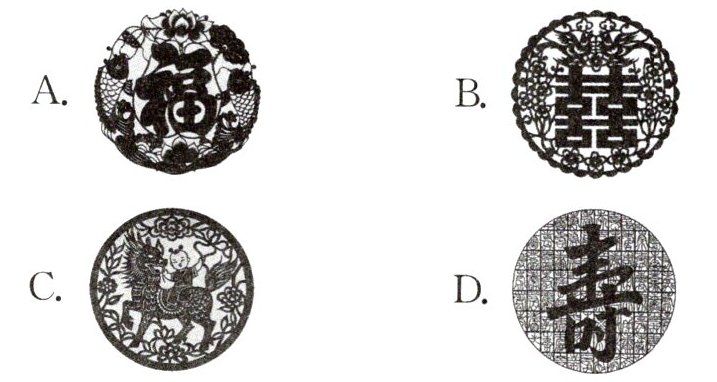
A.
B.
C.
D.
3. Which of the following is TRUE about Chinese paper-cutting?
A. It has a long history of more than 2000 years.
B. It is the symbol of good things only for festivals.
C. It is still all done by hand now because of art value.
D. It is always used for decoration and design patterns.
4. 中考新考法 细节多选 What information is mentioned in the passage?
①The history of paper-cutting.
②The purposes of using paper-cutting.
③The occasions paper-cutting used in.
④The problems modern paper-cutting faces.
⑤The symbols of the images in paper-cutting.
A. ①—②—③
B. ②—③—④—⑤
C. ①—②—③—⑤
D. ①—②—③—④—⑤
5. 中考新考法 标题归纳 What is the best title for the passage?
A. Power of Paper
B. Art of Scissors
C. Changes of Paper-cutting
D. Paper-cutting Back to Life
你喜欢中国的传统艺术剪纸吗?阅读下面的短文了解一下吧!
Paper-cutting is a Chinese folk art with a long history. The earliest paper cuts date back to the 4th century in China. In 2002, UNESCO listed China's paper-cutting as a world cultural heritage(遗产). In Chinese culture, paper cuts are the symbol of happiness and good luck, and they have been used for decoration and design patterns(图案) throughout history.
Paper cuts used for decoration are often seen on windows and gates. They are usually put up during holidays to bring good luck. The Chinese character Fu means good luck and it is often stuck on front doors upside down. It is believed that when Fu is put upside down, happiness arrives. The image of a fish often appears together with Fu, which shows we will have more than enough money to spend.
Paper cuts are also used on presents. People use Fu to wrap(包装) presents to bring good luck to others. A present for parents with new-born babies might show a paper cut of children. In some designs, we can see a baby on a lotus flower. The name of this design is “lian sheng gui zi”, which means we wish that the parents would have more children.
The image of a baby on an animal is popular as well. This animal is called “qi lin”, which is believed to have the power to bring children to the family. Paper cuts that show the Chinese character of double happiness are often used to celebrate weddings. People use them to decorate such occasions(场合) by putting them on walls, windows, doors and even furniture.
Another kind of paper cuts are those used to make design patterns on clothing, such as the Chinese Fu, the image of loong and flower patterns. They are very popular choices for clothes to wear. They are also sometimes used to decorate jewelry boxes.
In the past, paper-cutting was all done by hand. Even a small mistake during the process can ruin(毁掉) the whole piece of work. Now there are factories for paper-cutting in China and paper-cutting has also changed from decoration to a kind of art.
1. Why do Chinese people stick Fu upside down?
A. Because it helps to drive evil spirits away.
B. Because it represents the coming of happiness.
C. Because it looks more beautiful in such a style.
D. Because it expresses people's hope for a richer life.
2. 中考新考法 图片理解 Which paper cut can be given to parents with a new-born baby?
A.
B.
C.
D.
3. Which of the following is TRUE about Chinese paper-cutting?
A. It has a long history of more than 2000 years.
B. It is the symbol of good things only for festivals.
C. It is still all done by hand now because of art value.
D. It is always used for decoration and design patterns.
4. 中考新考法 细节多选 What information is mentioned in the passage?
①The history of paper-cutting.
②The purposes of using paper-cutting.
③The occasions paper-cutting used in.
④The problems modern paper-cutting faces.
⑤The symbols of the images in paper-cutting.
A. ①—②—③
B. ②—③—④—⑤
C. ①—②—③—⑤
D. ①—②—③—④—⑤
5. 中考新考法 标题归纳 What is the best title for the passage?
A. Power of Paper
B. Art of Scissors
C. Changes of Paper-cutting
D. Paper-cutting Back to Life
答案:
1. B [解析]细节理解题。根据“It is believed that when Fu is put upside down, happiness arrives.”可知,倒着贴“福”意味着幸福来到。故选 B。
2. C [解析]图片理解题。根据“A present for parents with new-born babies might show a paper cut of children.”可知,送给新手父母的剪纸上是要剪出婴儿的形状。故选 C。
3. D [解析]细节理解题。根据“and they have been used for decoration and design patterns(图案) throughout history”可知,中国的剪纸一直用于装饰和图案设计。故选 D。
4. C [解析]细节多选题。文章第一段主要讲述了剪纸的历史以及目的;第二段至第五段主要讲述了剪纸的使用场合以及剪出的形象。故选 C。
5. C [解析]标题归纳题。本文主要介绍了中国传统艺术剪纸,讲述了剪纸从过去到现在的变化。故选 C。
素养考向 本题主要考查学生的文化意识素养。
2. C [解析]图片理解题。根据“A present for parents with new-born babies might show a paper cut of children.”可知,送给新手父母的剪纸上是要剪出婴儿的形状。故选 C。
3. D [解析]细节理解题。根据“and they have been used for decoration and design patterns(图案) throughout history”可知,中国的剪纸一直用于装饰和图案设计。故选 D。
4. C [解析]细节多选题。文章第一段主要讲述了剪纸的历史以及目的;第二段至第五段主要讲述了剪纸的使用场合以及剪出的形象。故选 C。
5. C [解析]标题归纳题。本文主要介绍了中国传统艺术剪纸,讲述了剪纸从过去到现在的变化。故选 C。
素养考向 本题主要考查学生的文化意识素养。
查看更多完整答案,请扫码查看

