

 搜索
搜索
第28页
- 第1页
- 第2页
- 第3页
- 第4页
- 第5页
- 第6页
- 第7页
- 第8页
- 第9页
- 第10页
- 第11页
- 第12页
- 第13页
- 第14页
- 第15页
- 第16页
- 第17页
- 第18页
- 第19页
- 第20页
- 第21页
- 第22页
- 第23页
- 第24页
- 第25页
- 第26页
- 第27页
- 第28页
- 第29页
- 第30页
- 第31页
- 第32页
- 第33页
- 第34页
- 第35页
- 第36页
- 第37页
- 第38页
- 第39页
- 第40页
- 第41页
- 第42页
- 第43页
- 第44页
- 第45页
- 第46页
- 第47页
- 第48页
- 第49页
- 第50页
- 第51页
- 第52页
- 第53页
- 第54页
- 第55页
- 第56页
- 第57页
- 第58页
- 第59页
- 第60页
- 第61页
- 第62页
- 第63页
- 第64页
- 第65页
- 第66页
- 第67页
- 第68页
- 第69页
- 第70页
- 第71页
- 第72页
- 第73页
- 第74页
- 第75页
- 第76页
- 第77页
- 第78页
- 第79页
- 第80页
- 第81页
- 第82页
- 第83页
- 第84页
- 第85页
- 第86页
- 第87页
- 第88页
- 第89页
- 第90页
- 第91页
- 第92页
- 第93页
- 第94页
- 第95页
- 第96页
- 第97页
- 第98页
- 第99页
- 第100页
- 第101页
- 第102页
- 第103页
- 第104页
- 第105页
- 第106页
- 第107页
- 第108页
- 第109页
- 第110页
- 第111页
- 第112页
- 第113页
- 第114页
- 第115页
- 第116页
- 第117页
- 第118页
- 第119页
- 第120页
- 第121页
- 第122页
- 第123页
- 第124页
- 第125页
- 第126页
- 第127页
- 第128页
- 第129页
- 第130页
- 第131页
- 第132页
- 第133页
- 第134页
- 第135页
- 第136页
- 第137页
- 第138页
- 第139页
- 第140页
- 第141页
- 第142页
- 第143页
- 第144页
Ⅴ. 新素材 巴黎奥运会跑道是紫色的原因 (2025·扬州江都区期中)阅读理解
你知道巴黎奥运会的跑道选择刷成紫色的原因吗? 阅读下面的短文了解一下吧!
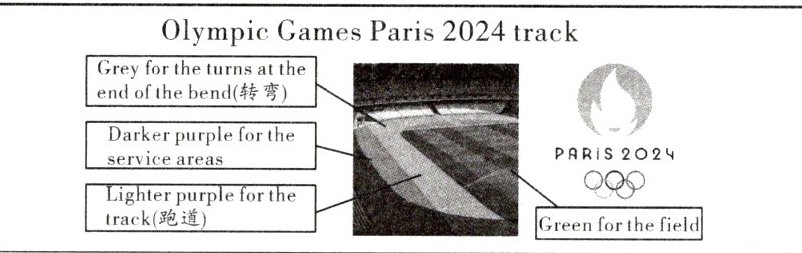
1. What colour did Olympic Games Paris 2024 choose for the service areas?
A. Grey.
B. Green.
C. Darker purple.
D. Lighter purple.
2. Why did Olympic Games Paris 2024 choose the purple track?
A. Because it could help people do their best.
B. Because it could make people feel stressed.
C. Because it could make runners pay more attention to people.
D. Because it could make people think of lavender in Provence of France.
3. Which of the following can we learn from the passage?
A. When the modern Olympics began.
B. Why the first Olympics took place.
C. How many countries held the modern Olympics.
D. How people chose the colours of the Olympic rings.
你知道巴黎奥运会的跑道选择刷成紫色的原因吗? 阅读下面的短文了解一下吧!
1. What colour did Olympic Games Paris 2024 choose for the service areas?
A. Grey.
B. Green.
C. Darker purple.
D. Lighter purple.
2. Why did Olympic Games Paris 2024 choose the purple track?
A. Because it could help people do their best.
B. Because it could make people feel stressed.
C. Because it could make runners pay more attention to people.
D. Because it could make people think of lavender in Provence of France.
3. Which of the following can we learn from the passage?
A. When the modern Olympics began.
B. Why the first Olympics took place.
C. How many countries held the modern Olympics.
D. How people chose the colours of the Olympic rings.
答案:
1. C [解析]细节理解题。根据“Darker purple for the service areas”可知,人们把服务区域刷成了深紫色。故选C。2. D [解析]细节理解题。根据“What's more, purple can make people pay more attention to runners. It can also remind people of lavender (薰衣草) in Provence of France.”可知,紫色让人联想到法国普罗旺斯的薰衣草。故选D。3. A [解析]推理判断题。根据“The modern Olympics started in 1896 with 13 countries attending.”可知,这篇阅读材料告知了读者现代奥运会开始的时间。故选A。
Ⅵ. (2025·南通海安城南实验中学期中)任务型阅读
你知道中国古代各种颜色的名称的由来和寓意吗? 一起来看看吧!
精题详解
Today, if we talk about a colour, we only need to use a simple name. For example, “blue” in Chinese is lan. But in ancient China, there were many beautiful names for blue, such as yuebai, qielan and shiqing.
Similar to the colour wheel developed by Isaac Newton, ancient Chinese people created colours using the idea of pure(纯的) colours and mixed colours. There were five pure colours, including qing (blue), chi (red), yellow, white and black. These basic colours can be put together to produce mixed colours. For example, mixing yellow and blue could make green. Lots of colours came into being thanks to this.
As for naming, ancient Chinese people paid much attention to the imagination that colours bring. For example, dongfang jibai is a light blue colour. The blue colour describes what the sky looks like early in the morning. Similarly, the pink colour taoyao is used to describe blossoming(开花的) peach trees. The purple colour mushanzi describes a sunset covering the mountain.
Meanwhile, a colour was not just a colour, but a symbol of social status(地位) in ancient China. For example, yellow was long seen as the symbol of power. Only the leader of the country and his family could use it. During the Tang Dynasty, officials needed to wear clothes with certain colours. Only officials of the top three grades were allowed to wear purple clothes, while those of the fourth and fifth wore red clothes, the sixth and seventh officials wore green clothes. Blue was for those in the two lowest grades.
The colours that the ancients left us can be seen in society today. Nowadays, some TV programmes present traditional Chinese colours in clothes and buildings, which excite people's interest in ancient colours.
1. What other names did blue have in ancient China besides lan?
______
2. How did people create the colour green by using the pure colours?
______
3. Who could wear the colour purple in ancient China?
______
4. Why do some TV programmes present traditional Chinese colours in clothes and buildings?
______
5. 中考新考法 开放式谈对中国古代颜色名称的看法 What do you think of colours' names in ancient China? (请自拟一句话作答)
______
你知道中国古代各种颜色的名称的由来和寓意吗? 一起来看看吧!
精题详解
Today, if we talk about a colour, we only need to use a simple name. For example, “blue” in Chinese is lan. But in ancient China, there were many beautiful names for blue, such as yuebai, qielan and shiqing.
Similar to the colour wheel developed by Isaac Newton, ancient Chinese people created colours using the idea of pure(纯的) colours and mixed colours. There were five pure colours, including qing (blue), chi (red), yellow, white and black. These basic colours can be put together to produce mixed colours. For example, mixing yellow and blue could make green. Lots of colours came into being thanks to this.
As for naming, ancient Chinese people paid much attention to the imagination that colours bring. For example, dongfang jibai is a light blue colour. The blue colour describes what the sky looks like early in the morning. Similarly, the pink colour taoyao is used to describe blossoming(开花的) peach trees. The purple colour mushanzi describes a sunset covering the mountain.
Meanwhile, a colour was not just a colour, but a symbol of social status(地位) in ancient China. For example, yellow was long seen as the symbol of power. Only the leader of the country and his family could use it. During the Tang Dynasty, officials needed to wear clothes with certain colours. Only officials of the top three grades were allowed to wear purple clothes, while those of the fourth and fifth wore red clothes, the sixth and seventh officials wore green clothes. Blue was for those in the two lowest grades.
The colours that the ancients left us can be seen in society today. Nowadays, some TV programmes present traditional Chinese colours in clothes and buildings, which excite people's interest in ancient colours.
1. What other names did blue have in ancient China besides lan?
______
2. How did people create the colour green by using the pure colours?
______
3. Who could wear the colour purple in ancient China?
______
4. Why do some TV programmes present traditional Chinese colours in clothes and buildings?
______
5. 中考新考法 开放式谈对中国古代颜色名称的看法 What do you think of colours' names in ancient China? (请自拟一句话作答)
______
答案:
1. Yuebai, qielan and shiqing. 2. By mixing yellow and blue. 3. Only officials of the top three grades. 4. To excite people's interest in ancient colours. 5. They are beautiful and carry ancient Chinese people's wonderful imagination. (答案不唯一,言之有理即可)
查看更多完整答案,请扫码查看

