

 搜索
搜索
2025年练就优等生课后提分攻略九年级英语全一册通用版
注:目前有些书本章节名称可能整理的还不是很完善,但都是按照顺序排列的,请同学们按照顺序仔细查找。练习册 2025年练就优等生课后提分攻略九年级英语全一册通用版 答案主要是用来给同学们做完题方便对答案用的,请勿直接抄袭。
第58页
- 第1页
- 第2页
- 第3页
- 第4页
- 第5页
- 第6页
- 第7页
- 第8页
- 第9页
- 第10页
- 第11页
- 第12页
- 第13页
- 第14页
- 第15页
- 第16页
- 第17页
- 第18页
- 第19页
- 第20页
- 第21页
- 第22页
- 第23页
- 第24页
- 第25页
- 第26页
- 第27页
- 第28页
- 第29页
- 第30页
- 第31页
- 第32页
- 第33页
- 第34页
- 第35页
- 第36页
- 第37页
- 第38页
- 第39页
- 第40页
- 第41页
- 第42页
- 第43页
- 第44页
- 第45页
- 第46页
- 第47页
- 第48页
- 第49页
- 第50页
- 第51页
- 第52页
- 第53页
- 第54页
- 第55页
- 第56页
- 第57页
- 第58页
- 第59页
- 第60页
- 第61页
- 第62页
- 第63页
- 第64页
- 第65页
- 第66页
- 第67页
- 第68页
- 第69页
- 第70页
- 第71页
- 第72页
- 第73页
- 第74页
- 第75页
- 第76页
- 第77页
- 第78页
- 第79页
- 第80页
- 第81页
- 第82页
- 第83页
- 第84页
- 第85页
- 第86页
- 第87页
- 第88页
- 第89页
- 第90页
- 第91页
- 第92页
- 第93页
- 第94页
- 第95页
- 第96页
- 第97页
- 第98页
- 第99页
- 第100页
- 第101页
- 第102页
- 第103页
- 第104页
2c 翻译句子
You'll probably never enter a British person's home without the host asking if you want a cup of tea or water.
You'll probably never enter a British person's home without the host asking if you want a cup of tea or water.
如果主人不问你是否想要一杯茶或水,你可能永远不会进入一个英国人的家。
答案:
2c 如果主人不问你是否想要一杯茶或水,你可能永远不会进入一个英国人的家。
3a 速译
1. special
2. practice
3. exactly
4. complete
5. for example
6. be covered with
7. take part in
8. make sure
1. special
特殊的
2. practice
惯例
3. exactly
精确地;确切地
4. complete
完成
5. for example
例如
6. be covered with
被……覆盖
7. take part in
参加
8. make sure
确保
答案:
3a 1. 特殊的 2. 惯例 3. 精确地;确切地
4. 完成 5. 例如 6. 被……覆盖
7. 参加 8. 确保
4. 完成 5. 例如 6. 被……覆盖
7. 参加 8. 确保
3b 阅读理解
Many countries around Asia have their own ways of celebrating Lunar New Year. Some of these are famous, but Singapore has one special way. Each year, cooks across the country prepare yu sheng, a salad made with raw(生的) fish. The salad is placed at the center of a dinner table. Diners will toss(抛) the salad up into the air with their chopsticks. This practice is known as Lo Hei.
People don’t know exactly where yu sheng came from. But stories say that people from China brought this dish to Singapore and Malaysia in the 1930s. Malaysians say that the original style of modern yu sheng was created by a restaurant owner from Malaysia in the 1940s. However, people from Singapore have a different story. They say that in the 1960s, four creative Singaporean cooks created a colorful style of yu sheng only for Singaporean. This is the yu sheng we see today.
While yu sheng is an important part of Lo Hei, a certain ritual(仪式) is also needed to complete the experience. At each step of the ritual, more ingredients, many of which have lucky meanings in Chinese, are added to the salad. People will also say some words to bring good luck for the coming year. For example, when the golden crackers(薄脆饼干) are added, everyone will say “bian di huang jin”. This means “all the floor will be covered with gold”.
The final step of the ritual is the most dramatic. Everyone takes their chopsticks and tosses some of the yu sheng seven times while shouting New Year’s wishes. If you ever take part in Lo Hei, no matter what you do, just remember this: Make sure to toss the yu sheng as high as you can. The higher you toss, the more luck for the coming year you’ll get!
(
A. Singapore
B. China
C. Japan
D. Malaysia
(
A. about 90
B. about 80
C. about 70
D. about 60
(
A. The ritual needs quite a lot of ingredients.
B. The ritual takes place at the end of the dinner.
C. Diners should toss the yu sheng at the start of the ritual.
D. You’d better not toss the yu sheng too high during the ritual.
(
(
A. Customs from Asian Countries
B. Interesting History About Lo Hei
C. The Traditional Custom of Singapore Lunar New Year—Lo Hei
D. Celebrate the Lunar New Year in Different Ways
Many countries around Asia have their own ways of celebrating Lunar New Year. Some of these are famous, but Singapore has one special way. Each year, cooks across the country prepare yu sheng, a salad made with raw(生的) fish. The salad is placed at the center of a dinner table. Diners will toss(抛) the salad up into the air with their chopsticks. This practice is known as Lo Hei.
People don’t know exactly where yu sheng came from. But stories say that people from China brought this dish to Singapore and Malaysia in the 1930s. Malaysians say that the original style of modern yu sheng was created by a restaurant owner from Malaysia in the 1940s. However, people from Singapore have a different story. They say that in the 1960s, four creative Singaporean cooks created a colorful style of yu sheng only for Singaporean. This is the yu sheng we see today.
While yu sheng is an important part of Lo Hei, a certain ritual(仪式) is also needed to complete the experience. At each step of the ritual, more ingredients, many of which have lucky meanings in Chinese, are added to the salad. People will also say some words to bring good luck for the coming year. For example, when the golden crackers(薄脆饼干) are added, everyone will say “bian di huang jin”. This means “all the floor will be covered with gold”.
The final step of the ritual is the most dramatic. Everyone takes their chopsticks and tosses some of the yu sheng seven times while shouting New Year’s wishes. If you ever take part in Lo Hei, no matter what you do, just remember this: Make sure to toss the yu sheng as high as you can. The higher you toss, the more luck for the coming year you’ll get!
(
B
) 1. According to the stories, yu sheng was first from China
.A. Singapore
B. China
C. Japan
D. Malaysia
(
D
) 2. The modern yu sheng has a history of about 60
years in Singapore.A. about 90
B. about 80
C. about 70
D. about 60
(
A
) 3. Which of the following is TRUE about the ritual?A. The ritual needs quite a lot of ingredients.
B. The ritual takes place at the end of the dinner.
C. Diners should toss the yu sheng at the start of the ritual.
D. You’d better not toss the yu sheng too high during the ritual.
(
D
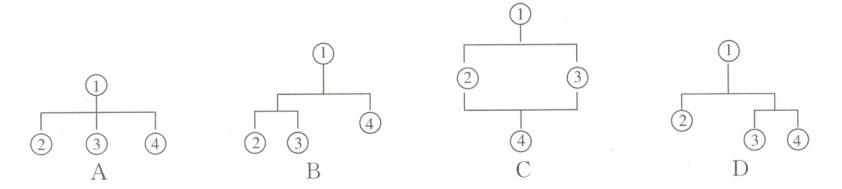
) 4. Which of the following shows the structure of the passage? (① = Paragraph 1, ② = Paragraph 2, …)(
C
) 5. What is the best title of the passage?A. Customs from Asian Countries
B. Interesting History About Lo Hei
C. The Traditional Custom of Singapore Lunar New Year—Lo Hei
D. Celebrate the Lunar New Year in Different Ways
答案:
3b 1. B [解析] 细节理解题。根据第二段“But stories say that people from China brought this dish to Singapore and Malaysia in the 1930s.”可知,很多故事都说鱼生来自中国。
故选 B。
2. D [解析] 推理判断题。根据第二段“They say that in the 1960s,four creative Singaporean cooks created a colorful style of yu sheng only for Singaporean. This is the yu sheng we see today.”可知,新加坡现代鱼生大约有 60 年的历史了。故选 D。
3. A
4. D [解析] 篇章结构题。阅读短文可知,本文第一段总的介绍了捞鱼生这个传统,第二段介绍鱼生的历史,第三、四段介绍这个传统中的一个重要仪式。故选 D。
5. C
故选 B。
2. D [解析] 推理判断题。根据第二段“They say that in the 1960s,four creative Singaporean cooks created a colorful style of yu sheng only for Singaporean. This is the yu sheng we see today.”可知,新加坡现代鱼生大约有 60 年的历史了。故选 D。
3. A
4. D [解析] 篇章结构题。阅读短文可知,本文第一段总的介绍了捞鱼生这个传统,第二段介绍鱼生的历史,第三、四段介绍这个传统中的一个重要仪式。故选 D。
5. C
查看更多完整答案,请扫码查看

