

 搜索
搜索
第40页
- 第1页
- 第2页
- 第3页
- 第4页
- 第5页
- 第6页
- 第7页
- 第8页
- 第9页
- 第10页
- 第11页
- 第12页
- 第13页
- 第14页
- 第15页
- 第16页
- 第17页
- 第18页
- 第19页
- 第20页
- 第21页
- 第22页
- 第23页
- 第24页
- 第25页
- 第26页
- 第27页
- 第28页
- 第29页
- 第30页
- 第31页
- 第32页
- 第33页
- 第34页
- 第35页
- 第36页
- 第37页
- 第38页
- 第39页
- 第40页
- 第41页
- 第42页
- 第43页
- 第44页
- 第45页
- 第46页
- 第47页
- 第48页
- 第49页
- 第50页
- 第51页
- 第52页
- 第53页
- 第54页
- 第55页
- 第56页
- 第57页
- 第58页
- 第59页
- 第60页
- 第61页
- 第62页
- 第63页
- 第64页
- 第65页
- 第66页
- 第67页
- 第68页
- 第69页
- 第70页
- 第71页
- 第72页
- 第73页
- 第74页
- 第75页
- 第76页
- 第77页
- 第78页
- 第79页
- 第80页
- 第81页
- 第82页
- 第83页
- 第84页
- 第85页
- 第86页
- 第87页
- 第88页
- 第89页
- 第90页
- 第91页
- 第92页
- 第93页
- 第94页
- 第95页
- 第96页
- 第97页
- 第98页
- 第99页
- 第100页
典故人物及其事迹
Here are three traditional Chinese stories. They are all interesting and educational.
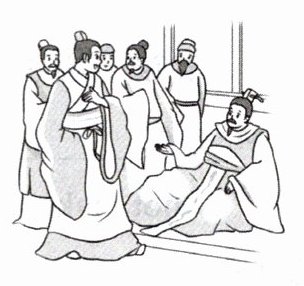
In the Warring States Period, the State of Qin had a fight with the State of Zhao. Some talented people were needed to ask for help from Chu. Then Mao Sui—the man who believed he was the right person for this task came and recommended himself. And he made the king of Chu send the army to help successfully. Zhao was safe. From then on, Mao Sui became a well-known hero of the state. Everyone respected him a lot.
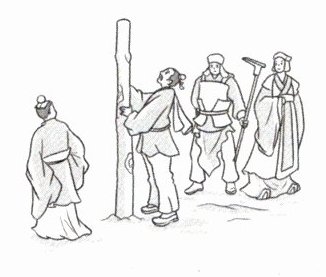
One day, Shang Yang put a thin wooden pole near the south gate of the Qin capital. He promised to pay 10 gold pieces to anyone who could move it to the north gate. It was such a simple job that all the people thought Shang was joking. Then he added 40 more gold pieces. A man moved it and he really got 50 gold pieces. After that, the people of Qin believed Shang was a man of his word. So they all followed Shang’s new laws later.
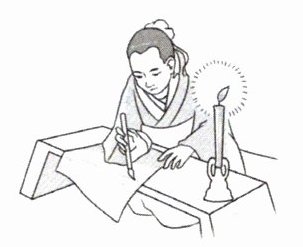
Wang Xizhi was one of the most famous calligraphers (书法家) during the Eastern Jin Dynasty of China. When he was very young, he practised his art every day and never stopped. Because of his achievements, he has been honored as one of China’s sages of calligraphy (书圣).
Once, Wang Xizhi wrote on the wood for an engraver (雕刻师) to cut. Then the engraver found the ink had penetrated (渗透) one centimetre (厘米) into the wood. Now “Ru Mu San Fen” is often used to express sharp ideas or useful views. It is very popular among people.
一、好词句深练
(一)根据语境用所给单词的适当形式填空
1. The girl is ______
2. Chinese is one of the most ______
3. He sat down by the window and ordered ______
(二)用方框中词的正确形式替换下列句子中的黑体部分(有一个词多余) poor famous simple
1. Mary was so nervous that she couldn’t answer the easy question. ______
2. Large numbers of Chinese high-technology products are well-known in the world. ______
(三)根据所给汉语,完成下列句子
1. He is a man ______
2. ______
(四)仿写句子
It was such a simple job that all the people thought Shang was joking. (such...that...)
仿写:Tom 有一副如此好的嗓音以至于他很快就在歌唱方面取得了成功。
______
二、阅读短文,根据短文内容选择正确答案
(
A. protect his state
B. get people’s trust
C. have new friends
D. make more money
(
A. Mao Sui recommending himself
B. building trust by using a wooden pole
C. Ru Mu San Fen
D. Zhuang Zhou dreaming of a butterfly
(
A. an online shopping website
B. a morning news report
C. a Western food magazine
D. a traditional Chinese storybook
三、根据短文内容,结合自己的理解,回答下面问题
新考法·开放题 What can we learn from the story “Mao Sui Zi Jian”?
______
Here are three traditional Chinese stories. They are all interesting and educational.
In the Warring States Period, the State of Qin had a fight with the State of Zhao. Some talented people were needed to ask for help from Chu. Then Mao Sui—the man who believed he was the right person for this task came and recommended himself. And he made the king of Chu send the army to help successfully. Zhao was safe. From then on, Mao Sui became a well-known hero of the state. Everyone respected him a lot.
One day, Shang Yang put a thin wooden pole near the south gate of the Qin capital. He promised to pay 10 gold pieces to anyone who could move it to the north gate. It was such a simple job that all the people thought Shang was joking. Then he added 40 more gold pieces. A man moved it and he really got 50 gold pieces. After that, the people of Qin believed Shang was a man of his word. So they all followed Shang’s new laws later.
Wang Xizhi was one of the most famous calligraphers (书法家) during the Eastern Jin Dynasty of China. When he was very young, he practised his art every day and never stopped. Because of his achievements, he has been honored as one of China’s sages of calligraphy (书圣).
Once, Wang Xizhi wrote on the wood for an engraver (雕刻师) to cut. Then the engraver found the ink had penetrated (渗透) one centimetre (厘米) into the wood. Now “Ru Mu San Fen” is often used to express sharp ideas or useful views. It is very popular among people.
一、好词句深练
(一)根据语境用所给单词的适当形式填空
1. The girl is ______
talented
(talent) in music. She can play the piano well.2. Chinese is one of the most ______
useful
(use) languages in the world now.3. He sat down by the window and ordered ______
himself
(him) a coffee.(二)用方框中词的正确形式替换下列句子中的黑体部分(有一个词多余) poor famous simple
1. Mary was so nervous that she couldn’t answer the easy question. ______
simple
2. Large numbers of Chinese high-technology products are well-known in the world. ______
famous
(三)根据所给汉语,完成下列句子
1. He is a man ______
of his word
(说话算数的). He’s sure to finish the task in time.2. ______
From then on
(从那时起), she became better and better and lived a long time.(四)仿写句子
It was such a simple job that all the people thought Shang was joking. (such...that...)
仿写:Tom 有一副如此好的嗓音以至于他很快就在歌唱方面取得了成功。
______
Tom had such a wonderful voice that he soon succeeded in singing.
二、阅读短文,根据短文内容选择正确答案
(
B
)1. Shang Yang’s story tells us a man of his word can ______.A. protect his state
B. get people’s trust
C. have new friends
D. make more money
(
C
)2. 跨学科 We usually use “______” to express sharp ideas or useful views.A. Mao Sui recommending himself
B. building trust by using a wooden pole
C. Ru Mu San Fen
D. Zhuang Zhou dreaming of a butterfly
(
D
)3. The passage may come from ______.A. an online shopping website
B. a morning news report
C. a Western food magazine
D. a traditional Chinese storybook
三、根据短文内容,结合自己的理解,回答下面问题
新考法·开放题 What can we learn from the story “Mao Sui Zi Jian”?
______
From the story “Mao Sui Zi Jian”, we learn that it’s brave to offer help when needed. It also teaches us to speak up confidently and show others what we’re really good at.
答案:
一、(一)1. talented 2. useful 3. himself
(二)1. simple 2. famous
(三)1. of his word 2. From then on
(四)Tom had such a wonderful voice that he soon succeeded in singing.
二、【主旨大意】本文给我们讲述了毛遂自荐、立木取信以及入木三分这三个成语背后的历史故事。
1. B【点拨】推理判断题。根据“After that, the people of Qin believed Shang was a man of his word. So they all followed Shang’s new laws later.”可知,商鞅的故事告诉我们,一个言行一致的人可以得到人们的信任。故选 B。
2. C【点拨】细节理解题。根据“Now ‘Ru Mu San Fen’ is often used to express sharp ideas or useful views.”可知,现在“入木三分”经常被用来形容尖锐的想法或有用的观点。故选 C。
3. D【点拨】推理判断题。根据“Here are three traditional Chinese stories. They are all interesting and educational.”并结合全文可知,本文给我们讲述了毛遂自荐、立木取信以及入木三分这三个成语背后的历史故事,文章很可能来自中国传统故事书。故选 D。
三、From the story “Mao Sui Zi Jian”, we learn that it’s brave to offer help when needed. It also teaches us to speak up confidently and show others what we’re really good at.(开放题,答案合理即可)
(二)1. simple 2. famous
(三)1. of his word 2. From then on
(四)Tom had such a wonderful voice that he soon succeeded in singing.
二、【主旨大意】本文给我们讲述了毛遂自荐、立木取信以及入木三分这三个成语背后的历史故事。
1. B【点拨】推理判断题。根据“After that, the people of Qin believed Shang was a man of his word. So they all followed Shang’s new laws later.”可知,商鞅的故事告诉我们,一个言行一致的人可以得到人们的信任。故选 B。
2. C【点拨】细节理解题。根据“Now ‘Ru Mu San Fen’ is often used to express sharp ideas or useful views.”可知,现在“入木三分”经常被用来形容尖锐的想法或有用的观点。故选 C。
3. D【点拨】推理判断题。根据“Here are three traditional Chinese stories. They are all interesting and educational.”并结合全文可知,本文给我们讲述了毛遂自荐、立木取信以及入木三分这三个成语背后的历史故事,文章很可能来自中国传统故事书。故选 D。
三、From the story “Mao Sui Zi Jian”, we learn that it’s brave to offer help when needed. It also teaches us to speak up confidently and show others what we’re really good at.(开放题,答案合理即可)
查看更多完整答案,请扫码查看

