

 搜索
搜索
第51页
- 第1页
- 第2页
- 第3页
- 第4页
- 第5页
- 第6页
- 第7页
- 第8页
- 第9页
- 第10页
- 第11页
- 第12页
- 第13页
- 第14页
- 第15页
- 第16页
- 第17页
- 第18页
- 第19页
- 第20页
- 第21页
- 第22页
- 第23页
- 第24页
- 第25页
- 第26页
- 第27页
- 第28页
- 第29页
- 第30页
- 第31页
- 第32页
- 第33页
- 第34页
- 第35页
- 第36页
- 第37页
- 第38页
- 第39页
- 第40页
- 第41页
- 第42页
- 第43页
- 第44页
- 第45页
- 第46页
- 第47页
- 第48页
- 第49页
- 第50页
- 第51页
- 第52页
- 第53页
- 第54页
- 第55页
- 第56页
- 第57页
- 第58页
- 第59页
- 第60页
- 第61页
- 第62页
- 第63页
- 第64页
- 第65页
- 第66页
- 第67页
- 第68页
- 第69页
- 第70页
- 第71页
- 第72页
- 第73页
- 第74页
- 第75页
- 第76页
- 第77页
- 第78页
- 第79页
- 第80页
- 第81页
- 第82页
- 第83页
- 第84页
- 第85页
- 第86页
- 第87页
- 第88页
- 第89页
- 第90页
- 第91页
- 第92页
- 第93页
- 第94页
- 第95页
- 第96页
- 第97页
- 第98页
- 第99页
- 第100页
- 第101页
- 第102页
- 第103页
- 第104页
- 第105页
- 第106页
- 第107页
- 第108页
- 第109页
- 第110页
- 第111页
- 第112页
- 第113页
- 第114页
- 第115页
- 第116页
- 第117页
- 第118页
- 第119页
- 第120页
- 第121页
- 第122页
- 第123页
- 第124页
- 第125页
- 第126页
- 第127页
- 第128页
- 第129页
- 第130页
- 第131页
- 第132页
- 第133页
- 第134页
- 第135页
- 第136页
- 第137页
- 第138页
Before the invention of air conditioning, southern China’s skywells played a key role in keeping people’s homes cool. Could they do it again today?
A skywell, or “tian jing”, is a typical feature(特色) of a traditional home in southern and eastern China, which can date back to the Ming and Qing dynasties. A skywell is almost always in the center of a house. It is enclosed by rooms on four sides or three sides plus a wall. It acts as a transitional(过渡的) space between indoor life and the outdoor environment.
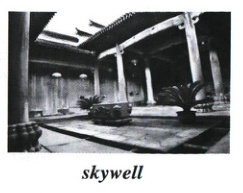
Skywells were designed to cool buildings. When wind blows above a skywell house, it can enter the indoor space through the opening. As the cool outdoor air travels down the walls to the lower storeys, it replaces warmer indoor air, enabling the bottom of the skywell to stay cool. Even when there is no natural wind, air circulation(循环) still takes place, because the temperature is different between the top and bottom of the skywell. Moreover, another part of the cooling effect comes from the evaporation(蒸发) of water. People collect rainwater in their skywells, and when the water evaporates, it cools hot air.
Today, although fewer and fewer people live in skywell houses, some designers take a new interest in the traditional Chinese buildings. They are getting creative ideas from skywells to help keep new buildings cooler. One example is the National Heavy Vehicle Engineering Technology Research Centre in Jinan, which was completed in 2022. The 18 - storey glass - walled tower block has a huge skywell in the middle, from the fifth to the top floor. The lifts, toilets and meeting rooms are all set around the skywell, which helps improve the lighting and air circulation of the building and cut the overall use of energy.
Although ancient “green wisdom” like skywells has caught more attention of modern Chinese people, there are some challenges for bringing skywells into modern designs. For one thing, traditional skywells highly depend on their natural conditions, like how much sunlight or rainfall in the area, so adding skywells into modern buildings requires designers to fully consider their projects’ situations. Meanwhile, lighting, air conditioning and water supply have become so convenient that we depend on them with little care about the environmental cost. So it won’t be easy to be green by learning from the past without considering our present behaviours.
1. What do we know about skywells?
A. Skywells are typical in western China.
B. Skywells are enclosed by glass on four sides.
C. Natural wind is kept out of the house by skywells.
D. Water evaporation in skywells takes the heat away.
2. Why does the writer mention the 18 - storey glass - walled tower block in Paragraph 4?
A. To show that skywell design can be creatively used in modern buildings.
B. To prove that modern skywells are different from the traditional ones.
C. To present how glass walls can improve the lighting of buildings.
D. To explain why fewer and fewer people live in skywell houses.
3. Which of the following would be the best title for the passage?
A. Skywells:A Traditional Design to Be Protected
B. Skywells:Ancient Wisdom for Modern Times
C. Skywells:A Green Structure to Be Improved
D. Skywells:Modern Technology for City Lives
篇章结构助攻
Para. 1 Lead in the topic: Skywells played a key role in keeping people’s homes 1.______.
Para. 2 Basic information about skywells where it can be found when it can 2.________ back to what it looks like
Para. 3 The function of skywells and how they work: to cool buildings by wind, air circulation and the 3.__________ of water
Para. 4 The creative use of skywells in modern buildings: The 18 - storey glass - walled tower block has a huge 4.________ in the middle, from the fifth to the top floor.
Para. 5 5.__________ for bringing skywells into modern designs: Designers need to fully consider their projects’ situations and our present behaviours.
长难句解惑
1. A skywell, or “tian jing”, is a typical feature of a traditional home in southern and eastern China, which can date back to the Ming and Qing dynasties.
(1)圈出连接并列分句的连词/从句引导词,在主语和谓语动词下画线,并用斜线划分并列分句/主从句。
(2)翻译:______________________________
2. For one thing, traditional skywells highly depend on their natural conditions, like how much sunlight or rainfall in the area, so adding skywells into modern buildings requires designers to fully consider their projects’ situations.
(1)圈出连接并列分句的连词/从句引导词,在主语和谓语动词下画线,并用斜线划分并列分句/主从句。
(2)翻译:______________________________
一词多义
根据文章内容,选择下列词(文章中的粗体词)在文中的词义。
1. travel ______ A. (v.) 旅行 B. (v.) (朝某方向)行进,传播
2. cool ______ A. (adj.) 凉爽的 B. (adj.) 镇静的 C. (adj.) 酷的 D. (v.) (使)变凉
3. present ______ A. (n.) 礼物 B. (adj.) 出席的 C. (adj.) 现在的 D. (v.) 颁发
词块积累
· play a key role in... 在……中起关键作用
· cut the overall use of energy 减少总体能源使用
· a typical feature 典型特色
· catch more attention of sb. 引起某人的更多关注
· date back to 追溯到
· depend on 取决于
· be enclosed by rooms 被房间围住
· natural conditions 自然状况
· act as 充当
· add...into... 把……加到……中
· take place 发生
· fully consider 充分考虑
· cooling effect 冷却效果
· so convenient that... 如此方便以至于……
· take a new interest in... 对……有新兴趣
· environmental cost 环境成本
· get creative ideas from... 从……中得到有创意的想法
A skywell, or “tian jing”, is a typical feature(特色) of a traditional home in southern and eastern China, which can date back to the Ming and Qing dynasties. A skywell is almost always in the center of a house. It is enclosed by rooms on four sides or three sides plus a wall. It acts as a transitional(过渡的) space between indoor life and the outdoor environment.
Skywells were designed to cool buildings. When wind blows above a skywell house, it can enter the indoor space through the opening. As the cool outdoor air travels down the walls to the lower storeys, it replaces warmer indoor air, enabling the bottom of the skywell to stay cool. Even when there is no natural wind, air circulation(循环) still takes place, because the temperature is different between the top and bottom of the skywell. Moreover, another part of the cooling effect comes from the evaporation(蒸发) of water. People collect rainwater in their skywells, and when the water evaporates, it cools hot air.
Today, although fewer and fewer people live in skywell houses, some designers take a new interest in the traditional Chinese buildings. They are getting creative ideas from skywells to help keep new buildings cooler. One example is the National Heavy Vehicle Engineering Technology Research Centre in Jinan, which was completed in 2022. The 18 - storey glass - walled tower block has a huge skywell in the middle, from the fifth to the top floor. The lifts, toilets and meeting rooms are all set around the skywell, which helps improve the lighting and air circulation of the building and cut the overall use of energy.
Although ancient “green wisdom” like skywells has caught more attention of modern Chinese people, there are some challenges for bringing skywells into modern designs. For one thing, traditional skywells highly depend on their natural conditions, like how much sunlight or rainfall in the area, so adding skywells into modern buildings requires designers to fully consider their projects’ situations. Meanwhile, lighting, air conditioning and water supply have become so convenient that we depend on them with little care about the environmental cost. So it won’t be easy to be green by learning from the past without considering our present behaviours.
1. What do we know about skywells?
A. Skywells are typical in western China.
B. Skywells are enclosed by glass on four sides.
C. Natural wind is kept out of the house by skywells.
D. Water evaporation in skywells takes the heat away.
2. Why does the writer mention the 18 - storey glass - walled tower block in Paragraph 4?
A. To show that skywell design can be creatively used in modern buildings.
B. To prove that modern skywells are different from the traditional ones.
C. To present how glass walls can improve the lighting of buildings.
D. To explain why fewer and fewer people live in skywell houses.
3. Which of the following would be the best title for the passage?
A. Skywells:A Traditional Design to Be Protected
B. Skywells:Ancient Wisdom for Modern Times
C. Skywells:A Green Structure to Be Improved
D. Skywells:Modern Technology for City Lives
篇章结构助攻
Para. 1 Lead in the topic: Skywells played a key role in keeping people’s homes 1.______.
Para. 2 Basic information about skywells where it can be found when it can 2.________ back to what it looks like
Para. 3 The function of skywells and how they work: to cool buildings by wind, air circulation and the 3.__________ of water
Para. 4 The creative use of skywells in modern buildings: The 18 - storey glass - walled tower block has a huge 4.________ in the middle, from the fifth to the top floor.
Para. 5 5.__________ for bringing skywells into modern designs: Designers need to fully consider their projects’ situations and our present behaviours.
长难句解惑
1. A skywell, or “tian jing”, is a typical feature of a traditional home in southern and eastern China, which can date back to the Ming and Qing dynasties.
(1)圈出连接并列分句的连词/从句引导词,在主语和谓语动词下画线,并用斜线划分并列分句/主从句。
(2)翻译:______________________________
2. For one thing, traditional skywells highly depend on their natural conditions, like how much sunlight or rainfall in the area, so adding skywells into modern buildings requires designers to fully consider their projects’ situations.
(1)圈出连接并列分句的连词/从句引导词,在主语和谓语动词下画线,并用斜线划分并列分句/主从句。
(2)翻译:______________________________
一词多义
根据文章内容,选择下列词(文章中的粗体词)在文中的词义。
1. travel ______ A. (v.) 旅行 B. (v.) (朝某方向)行进,传播
2. cool ______ A. (adj.) 凉爽的 B. (adj.) 镇静的 C. (adj.) 酷的 D. (v.) (使)变凉
3. present ______ A. (n.) 礼物 B. (adj.) 出席的 C. (adj.) 现在的 D. (v.) 颁发
词块积累
· play a key role in... 在……中起关键作用
· cut the overall use of energy 减少总体能源使用
· a typical feature 典型特色
· catch more attention of sb. 引起某人的更多关注
· date back to 追溯到
· depend on 取决于
· be enclosed by rooms 被房间围住
· natural conditions 自然状况
· act as 充当
· add...into... 把……加到……中
· take place 发生
· fully consider 充分考虑
· cooling effect 冷却效果
· so convenient that... 如此方便以至于……
· take a new interest in... 对……有新兴趣
· environmental cost 环境成本
· get creative ideas from... 从……中得到有创意的想法
答案:
1.D 【解析】推理判断题。根据第3段最后一句中“when the water evaporates, it cools hot air”可知,水蒸发使热空气变凉,D项“天井中的水分蒸发带走热量”与原文内容表示一致。故选D。2.A 【解析】写作目的题。根据第4段第2、3句“They are getting...in 2022.”可知,设计师们从天井中得到创新的想法以帮助新建筑保持凉爽,2022年在济南完成的国家重型汽车工程技术研究中心这一项目就是例子。因此作者提及这座建筑是为了表明天井设计能被创新性地运用到现代建筑中。故选A。3.B 【解析】主旨大意题。根据第1段最后一句“Could they do it again today?”以及第4、5段中提到的将天井用于现代建筑的例子及挑战可知,本文主要讲述天井这种古代智慧对于现代建筑的启示。故选B。
@@1.cool 2.date 3.evaporation 4.skywell 5.Challenges
@@1.
(1)A skywell, or “tian jing”, is a typical feature (特色) of a traditional home in southern and eastern China, / which can date back to the Ming and Qing dynasties.
(2)天井是中国南部和东部传统房屋的典型特色,这种特色能够追溯到明清时代。2.
(1)For one thing, traditional skywells highly depend on their natural conditions, like how much sunlight or rainfall in the area, / so adding skywells into modern buildings requires designers to fully consider their projects' situations.
(2)首先,传统的天井高度依赖其自然条件,比如在该地区有多少光照和降水,所以把天井加入现代建筑要求设计者充分考虑他们项目的情况。
@@1.B 2.D 3.C
@@1.cool 2.date 3.evaporation 4.skywell 5.Challenges
@@1.
(1)A skywell, or “tian jing”, is a typical feature (特色) of a traditional home in southern and eastern China, / which can date back to the Ming and Qing dynasties.
(2)天井是中国南部和东部传统房屋的典型特色,这种特色能够追溯到明清时代。2.
(1)For one thing, traditional skywells highly depend on their natural conditions, like how much sunlight or rainfall in the area, / so adding skywells into modern buildings requires designers to fully consider their projects' situations.
(2)首先,传统的天井高度依赖其自然条件,比如在该地区有多少光照和降水,所以把天井加入现代建筑要求设计者充分考虑他们项目的情况。
@@1.B 2.D 3.C
查看更多完整答案,请扫码查看

