

 搜索
搜索
2025年通成学典课时作业本高中英语选择性必修第一册人教版
注:目前有些书本章节名称可能整理的还不是很完善,但都是按照顺序排列的,请同学们按照顺序仔细查找。练习册 2025年通成学典课时作业本高中英语选择性必修第一册人教版 答案主要是用来给同学们做完题方便对答案用的,请勿直接抄袭。
第18页
- 第1页
- 第2页
- 第3页
- 第4页
- 第5页
- 第6页
- 第7页
- 第8页
- 第9页
- 第10页
- 第11页
- 第12页
- 第13页
- 第14页
- 第15页
- 第16页
- 第17页
- 第18页
- 第19页
- 第20页
- 第21页
- 第22页
- 第23页
- 第24页
- 第25页
- 第26页
- 第27页
- 第28页
- 第29页
- 第30页
- 第31页
- 第32页
- 第33页
- 第34页
- 第35页
- 第36页
- 第37页
- 第38页
- 第39页
- 第40页
- 第41页
- 第42页
- 第43页
- 第44页
- 第45页
- 第46页
- 第47页
- 第48页
- 第49页
- 第50页
- 第51页
- 第52页
- 第53页
- 第54页
- 第55页
- 第56页
- 第57页
- 第58页
- 第59页
- 第60页
- 第61页
- 第62页
- 第63页
- 第64页
- 第65页
- 第66页
- 第67页
- 第68页
- 第69页
- 第70页
- 第71页
- 第72页
- 第73页
五、阅读理解
(2024·山东省烟台市期末统考)The 20th century saw the world readapt itself to the introduction of the car. Streets were widened and shops needed mass parking. The modern city is built for cars. But what if it didn't have to be like that? Dr Robert Martin, head of Mobility at JAJA Architects, believes we have to go back to the design of cities. JAJA has worked on several plans to remove cars from cities and redesign city spaces.
Martin advocates the idea of the “15-minute city”. It’s about creating several centres within a city. Removing the primacy ( 首位) of the downtown centre, people go to their own local centre which has all their regular facilities.
Though Copenhagen is known for its lack of cars and bike-friendly infrastructure( 基础设施), Martin notes that the honour is a somewhat unearned one. “Over the last 20 years, Copenhagen has seen an increasing amount of car ownership in the city centre.”
Still, the ideal of Copenhagen is the change JAJA wants to see in more cities. “Put them on a ‘mobility diet’,” Martin advises, “and reprioritize lanes( 重新确定车道优先顺序) for cars and for people to walk and cycle in.”
He points out that it’s about reducing cars, not getting rid of them completely. The need to travel privately around countries and the transport of goods into cities can’t be wished away by the desire for a better city. So, Martin suggests that cars can be shared. Zipcar is a popular car-sharing app in London. Then there’s the way goods are brought into cities.
“Trucks can travel into city centres at night to avoid traffic, and for smaller packages, London is one of the leaders in terms of bike delivery,” he says.
What does the future look like? It might be interesting to question how our cities will continually change.
1. Which is a “15-minute city”?
A. A city with wide streets.
B. A city with enough parking.
C. A city with a downtown centre.
D. A city with easily accessible centres.
2. Why does Martin think Copenhagen has an unearned honour?
A. It doesn’t have enough infrastructure.
B. It has an increasing number of cars.
C. It has a quiet city centre.
D. It is not car-friendly.
3. What suggestion does Martin put forward for reducing car numbers?
A. Night-time private car use.
B. Widespread bike-sharing service.
C. Green small package delivery.
D. Continuous improvement of Zipcar.
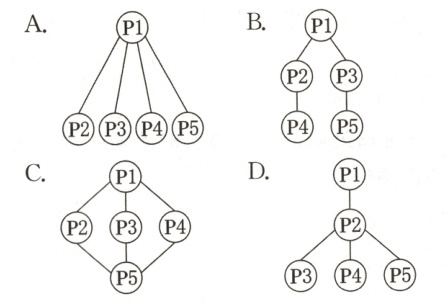
4. What’s the structure of the text?( P = Para. )
(2024·山东省烟台市期末统考)The 20th century saw the world readapt itself to the introduction of the car. Streets were widened and shops needed mass parking. The modern city is built for cars. But what if it didn't have to be like that? Dr Robert Martin, head of Mobility at JAJA Architects, believes we have to go back to the design of cities. JAJA has worked on several plans to remove cars from cities and redesign city spaces.
Martin advocates the idea of the “15-minute city”. It’s about creating several centres within a city. Removing the primacy ( 首位) of the downtown centre, people go to their own local centre which has all their regular facilities.
Though Copenhagen is known for its lack of cars and bike-friendly infrastructure( 基础设施), Martin notes that the honour is a somewhat unearned one. “Over the last 20 years, Copenhagen has seen an increasing amount of car ownership in the city centre.”
Still, the ideal of Copenhagen is the change JAJA wants to see in more cities. “Put them on a ‘mobility diet’,” Martin advises, “and reprioritize lanes( 重新确定车道优先顺序) for cars and for people to walk and cycle in.”
He points out that it’s about reducing cars, not getting rid of them completely. The need to travel privately around countries and the transport of goods into cities can’t be wished away by the desire for a better city. So, Martin suggests that cars can be shared. Zipcar is a popular car-sharing app in London. Then there’s the way goods are brought into cities.
“Trucks can travel into city centres at night to avoid traffic, and for smaller packages, London is one of the leaders in terms of bike delivery,” he says.
What does the future look like? It might be interesting to question how our cities will continually change.
1. Which is a “15-minute city”?
A. A city with wide streets.
B. A city with enough parking.
C. A city with a downtown centre.
D. A city with easily accessible centres.
2. Why does Martin think Copenhagen has an unearned honour?
A. It doesn’t have enough infrastructure.
B. It has an increasing number of cars.
C. It has a quiet city centre.
D. It is not car-friendly.
3. What suggestion does Martin put forward for reducing car numbers?
A. Night-time private car use.
B. Widespread bike-sharing service.
C. Green small package delivery.
D. Continuous improvement of Zipcar.
4. What’s the structure of the text?( P = Para. )
答案:
[语篇解读]本文是一篇说明文。文章介绍了未来城市的发展方向。
1. D 细节理解题。根据第二段中的“It’s about creating several centres ... has all their regular facilities.”可知,Martin规划的“15分钟城市”应该有多个人们易于到达的中心。
2. B 细节理解题。第三段开头提到哥本哈根以车少、自行车基础设施完善而闻名,而下文中的“Over the last 20 years ... in the city centre.”提到哥本哈根的汽车数量在不断增长,因此它的这份荣誉名不副实。
3. C 细节理解题。根据倒数第二段中的“... for smaller packages, London is one of the leaders in terms of bike delivery ...”可知,Martin建议用绿色无污染的自行车来投递小型包裹,从而减少汽车数量。
4. C 篇章结构题。文章第一段提到汽车带来的很多影响,然后引出文章的主题:减少汽车数量和重新设计城市空间;第二、三、四段介绍了具体的办法;最后一段展望未来城市的发展。
1. D 细节理解题。根据第二段中的“It’s about creating several centres ... has all their regular facilities.”可知,Martin规划的“15分钟城市”应该有多个人们易于到达的中心。
2. B 细节理解题。第三段开头提到哥本哈根以车少、自行车基础设施完善而闻名,而下文中的“Over the last 20 years ... in the city centre.”提到哥本哈根的汽车数量在不断增长,因此它的这份荣誉名不副实。
3. C 细节理解题。根据倒数第二段中的“... for smaller packages, London is one of the leaders in terms of bike delivery ...”可知,Martin建议用绿色无污染的自行车来投递小型包裹,从而减少汽车数量。
4. C 篇章结构题。文章第一段提到汽车带来的很多影响,然后引出文章的主题:减少汽车数量和重新设计城市空间;第二、三、四段介绍了具体的办法;最后一段展望未来城市的发展。
查看更多完整答案,请扫码查看

