

 搜索
搜索
第80页
- 第1页
- 第2页
- 第3页
- 第4页
- 第5页
- 第6页
- 第7页
- 第8页
- 第9页
- 第10页
- 第11页
- 第12页
- 第13页
- 第14页
- 第15页
- 第16页
- 第17页
- 第18页
- 第19页
- 第20页
- 第21页
- 第22页
- 第23页
- 第24页
- 第25页
- 第26页
- 第27页
- 第28页
- 第29页
- 第30页
- 第31页
- 第32页
- 第33页
- 第34页
- 第35页
- 第36页
- 第37页
- 第38页
- 第39页
- 第40页
- 第41页
- 第42页
- 第43页
- 第44页
- 第45页
- 第46页
- 第47页
- 第48页
- 第49页
- 第50页
- 第51页
- 第52页
- 第53页
- 第54页
- 第55页
- 第56页
- 第57页
- 第58页
- 第59页
- 第60页
- 第61页
- 第62页
- 第63页
- 第64页
- 第65页
- 第66页
- 第67页
- 第68页
- 第69页
- 第70页
- 第71页
- 第72页
- 第73页
- 第74页
- 第75页
- 第76页
- 第77页
- 第78页
- 第79页
- 第80页
- 第81页
- 第82页
- 第83页
- 第84页
- 第85页
- 第86页
- 第87页
- 第88页
- 第89页
- 第90页
- 第91页
- 第92页
- 第93页
- 第94页
- 第95页
- 第96页
- 第97页
- 第98页
- 第99页
- 第100页
- 第101页
- 第102页
- 第103页
- 第104页
- 第105页
- 第106页
- 第107页
- 第108页
- 第109页
- 第110页
- 第111页
- 第112页
- 第113页
- 第114页
- 第115页
- 第116页
- 第117页
- 第118页
- 第119页
- 第120页
- 第121页
- 第122页
- 第123页
- 第124页
- 第125页
三、阅读表达。
A. 完成图表。
Have you ever read a book and felt like the characters and events were just as real as your own life? Scientists are now using computers to learn more about what’s happening in our brains when we read!
A group of scientists from Carnegie Mellon University did an experiment(实验). Here’s how they did it.
They used a big machine to scan(扫描) eight people’s brains while those people were reading a story. This machine can see what parts of the brain are working. After the people read for 45 minutes, the scientists took the brain pictures and put them into their computer AI program. The program tried to know what part of the story the person was reading just by looking at how his brain was working. It did a pretty good job, getting about 74% of the answers right!
According to the experiment, the scientists found out that different parts of the story made different parts of the brain work more. For example, when people read about someone moving in the story, the parts of the brain that help us see real movements worked more. When they read about different characters, other brain areas worked more.
One of the most interesting findings was that the same area of our brain works no matter when we imagine characters’ thoughts in a book or when we guess other people’s thoughts in real life.
This helps scientists know how we can “become” the main character in a story. They hope to use this knowledge to learn more about reading problems like dyslexia(诵读困难) and find better ways to help these people.
Maybe one day, we’ll have better ways to help everyone enjoy the magic of books!
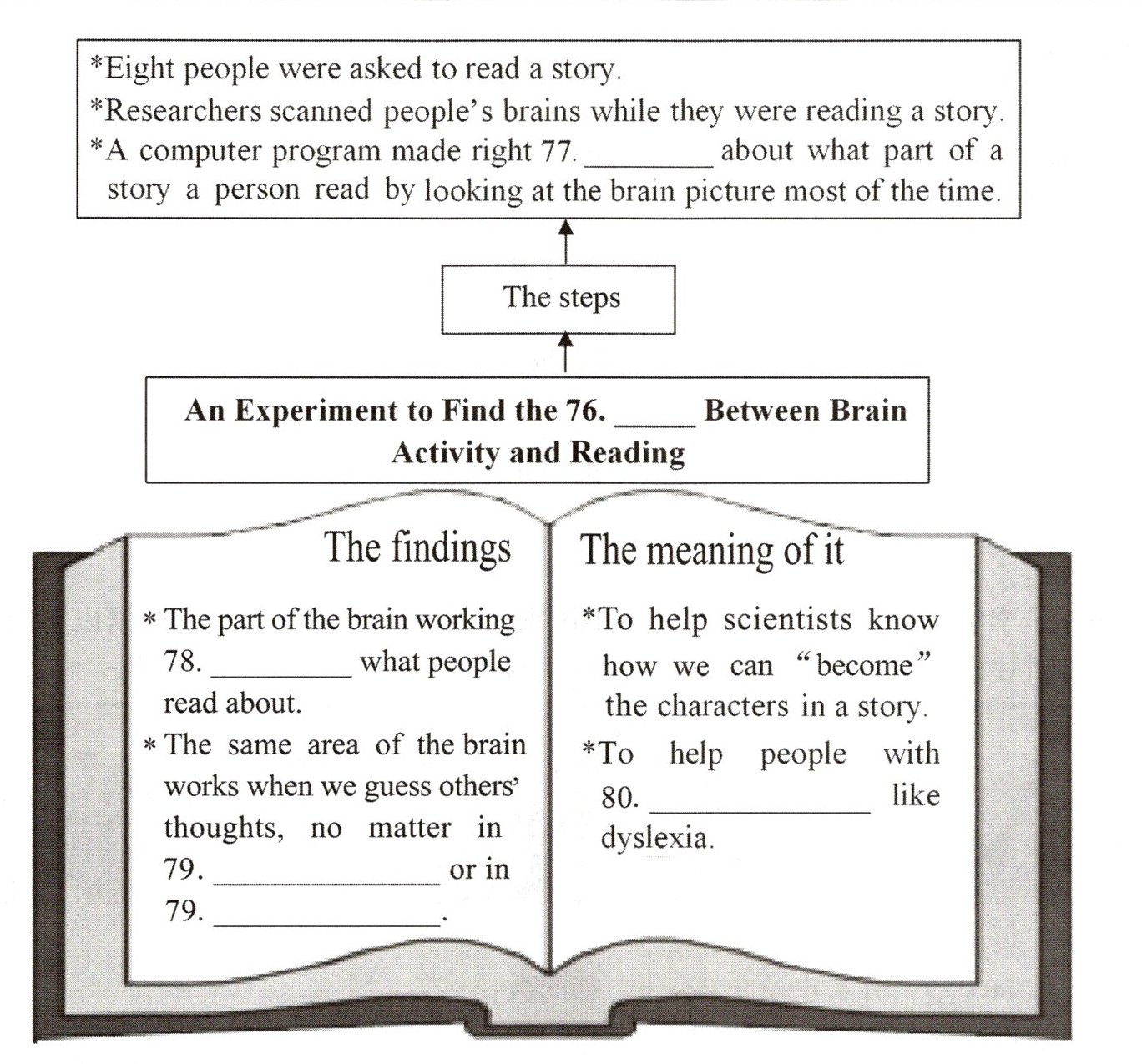
*Eight people were asked to read a story.
*Researchers scanned people’s brains while they were reading a story.
*A computer program made right 77. about what part of a story a person read by looking at the brain picture most of the time.
The steps
An Experiment to Find the 76. Between Brain Activity and Reading
The findings The meaning of it
*The part of the brain working 78. what people read about.
*The same area of the brain works when we guess others’ thoughts, no matter in 79. or in 79. .
*To help scientists know how we can “become” the characters in a story.
*To help people with 80. like dyslexia.
A. 完成图表。
Have you ever read a book and felt like the characters and events were just as real as your own life? Scientists are now using computers to learn more about what’s happening in our brains when we read!
A group of scientists from Carnegie Mellon University did an experiment(实验). Here’s how they did it.
They used a big machine to scan(扫描) eight people’s brains while those people were reading a story. This machine can see what parts of the brain are working. After the people read for 45 minutes, the scientists took the brain pictures and put them into their computer AI program. The program tried to know what part of the story the person was reading just by looking at how his brain was working. It did a pretty good job, getting about 74% of the answers right!
According to the experiment, the scientists found out that different parts of the story made different parts of the brain work more. For example, when people read about someone moving in the story, the parts of the brain that help us see real movements worked more. When they read about different characters, other brain areas worked more.
One of the most interesting findings was that the same area of our brain works no matter when we imagine characters’ thoughts in a book or when we guess other people’s thoughts in real life.
This helps scientists know how we can “become” the main character in a story. They hope to use this knowledge to learn more about reading problems like dyslexia(诵读困难) and find better ways to help these people.
Maybe one day, we’ll have better ways to help everyone enjoy the magic of books!
*Eight people were asked to read a story.
*Researchers scanned people’s brains while they were reading a story.
*A computer program made right 77. about what part of a story a person read by looking at the brain picture most of the time.
The steps
An Experiment to Find the 76. Between Brain Activity and Reading
The findings The meaning of it
*The part of the brain working 78. what people read about.
*The same area of the brain works when we guess others’ thoughts, no matter in 79. or in 79. .
*To help scientists know how we can “become” the characters in a story.
*To help people with 80. like dyslexia.
答案:
76. 文章主要讲述了一个关于大脑活动和阅读之间关系的实验,所以此处应填“Relationship”。
77. 根据文中“It did a pretty good job, getting about 74% of the answers right!”可知,计算机程序做出了正确的“guesses”(猜测)。
78. 从“different parts of the story made different parts of the brain work more”可知,大脑工作的部分“matches”(匹配)人们阅读的内容。
79. 由“no matter when we imagine characters’ thoughts in a book or when we guess other people’s thoughts in real life”可知,此处应填“books”和“real life”。
80. 依据“They hope to use this knowledge to learn more about reading problems like dyslexia”可知,是帮助有“reading problems”(阅读问题)的人。
76. Relationship
77. guesses
78. matches
79. books; real life
80. reading problems
77. 根据文中“It did a pretty good job, getting about 74% of the answers right!”可知,计算机程序做出了正确的“guesses”(猜测)。
78. 从“different parts of the story made different parts of the brain work more”可知,大脑工作的部分“matches”(匹配)人们阅读的内容。
79. 由“no matter when we imagine characters’ thoughts in a book or when we guess other people’s thoughts in real life”可知,此处应填“books”和“real life”。
80. 依据“They hope to use this knowledge to learn more about reading problems like dyslexia”可知,是帮助有“reading problems”(阅读问题)的人。
76. Relationship
77. guesses
78. matches
79. books; real life
80. reading problems
查看更多完整答案,请扫码查看

