

 搜索
搜索
第123页
- 第1页
- 第2页
- 第3页
- 第4页
- 第5页
- 第6页
- 第7页
- 第8页
- 第9页
- 第10页
- 第11页
- 第12页
- 第13页
- 第14页
- 第15页
- 第16页
- 第17页
- 第18页
- 第19页
- 第20页
- 第21页
- 第22页
- 第23页
- 第24页
- 第25页
- 第26页
- 第27页
- 第28页
- 第29页
- 第30页
- 第31页
- 第32页
- 第33页
- 第34页
- 第35页
- 第36页
- 第37页
- 第38页
- 第39页
- 第40页
- 第41页
- 第42页
- 第43页
- 第44页
- 第45页
- 第46页
- 第47页
- 第48页
- 第49页
- 第50页
- 第51页
- 第52页
- 第53页
- 第54页
- 第55页
- 第56页
- 第57页
- 第58页
- 第59页
- 第60页
- 第61页
- 第62页
- 第63页
- 第64页
- 第65页
- 第66页
- 第67页
- 第68页
- 第69页
- 第70页
- 第71页
- 第72页
- 第73页
- 第74页
- 第75页
- 第76页
- 第77页
- 第78页
- 第79页
- 第80页
- 第81页
- 第82页
- 第83页
- 第84页
- 第85页
- 第86页
- 第87页
- 第88页
- 第89页
- 第90页
- 第91页
- 第92页
- 第93页
- 第94页
- 第95页
- 第96页
- 第97页
- 第98页
- 第99页
- 第100页
- 第101页
- 第102页
- 第103页
- 第104页
- 第105页
- 第106页
- 第107页
- 第108页
- 第109页
- 第110页
- 第111页
- 第112页
- 第113页
- 第114页
- 第115页
- 第116页
- 第117页
- 第118页
- 第119页
- 第120页
- 第121页
- 第122页
- 第123页
- 第124页
- 第125页
三、阅读表达。(共10小题;计20分)
A. 完成图表。根据短文内容,完成图表中所缺信息。(共5小题;每小题2分,计10分)
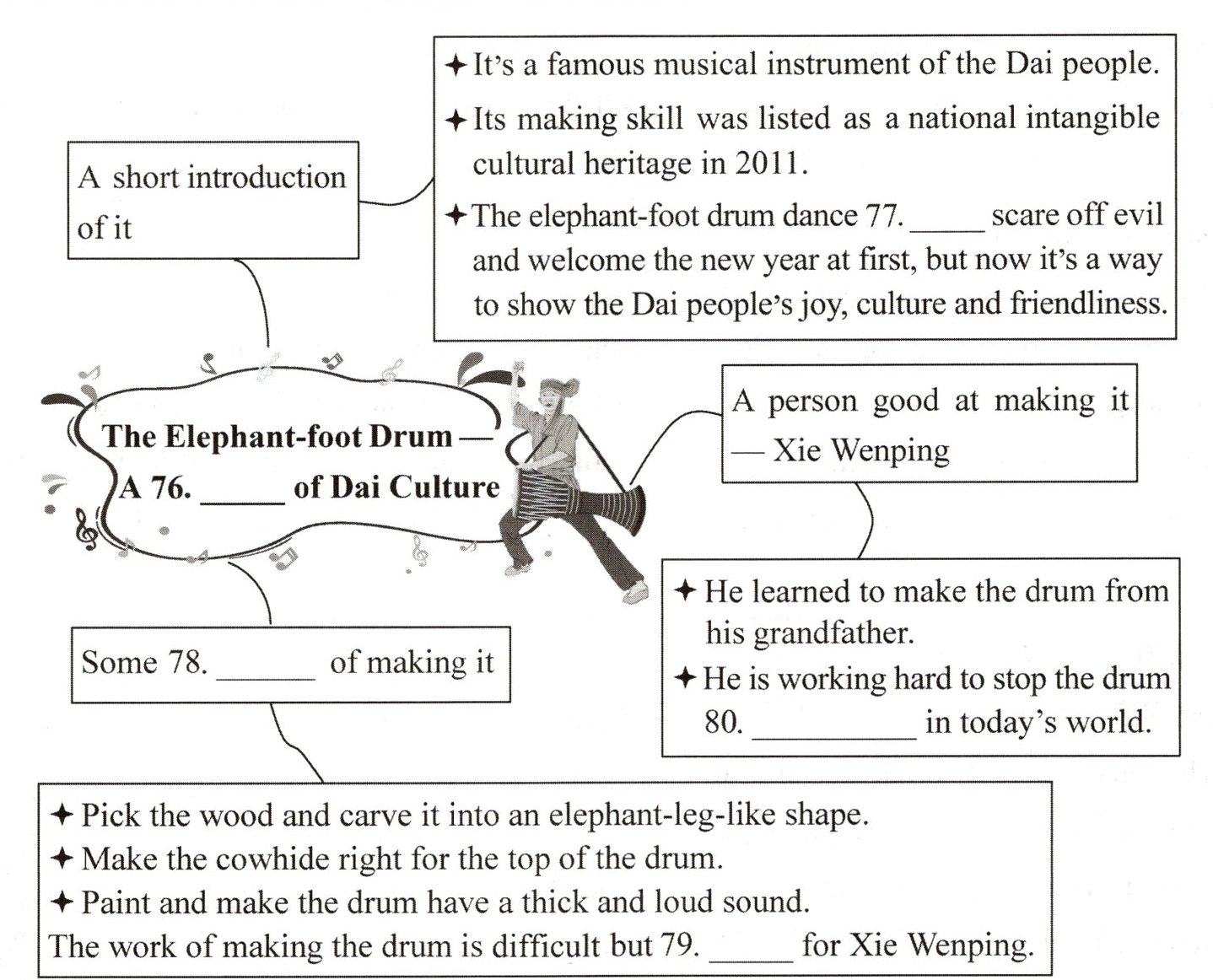
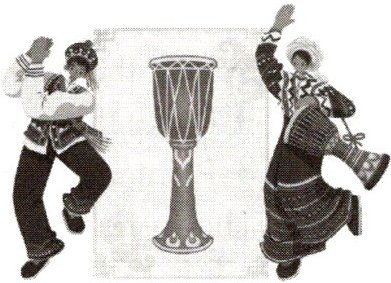
The elephant-foot drum is one of the most famous musical instruments(乐器) of the Dai people. It got its name because it looks like the white elephant's leg. The drum-making skill was listed as a national intangible cultural heritage(非物质文化遗产) in 2011.
The elephant-foot drum dance is very popular among the Dai people. It can be danced by one, two or a group of people. The Dai people often performed it during festivals to scare off evil(邪恶) and welcome the new year in the past. Now it is a way for them to show their joy as well as their culture. It also shows that the Dai people are kind, simple, and friendly.
Elephant-foot drums carry great cultural meaning, but making an elephant-foot drum takes many steps and a long time. Xie Wenping, 32, used to follow his grandfather who made elephant-foot drums for a living to learn how to make a drum. “It usually needs about 30 steps and takes one month,” Xie explained.
After picking the wood, one needs to carve(雕刻) the wood into an elephant-leg-like shape. The top of the drum is made of cowhide(牛皮), which needs to go through several steps such as picking, cleaning, air-drying, and cutting. Then comes the painting. The finishing steps include making the drum have a thick and loud sound.
The work of making the drum is difficult, but whenever Xie sees his grandfather's smile while making the drum, he feels encouraged. “Over the years, the number of people skilled in making elephant-foot drums has become smaller,” Xie said. “I feel like I must carry it on. I am thinking about how I can let more people know about it.”
A. 完成图表。根据短文内容,完成图表中所缺信息。(共5小题;每小题2分,计10分)
The elephant-foot drum is one of the most famous musical instruments(乐器) of the Dai people. It got its name because it looks like the white elephant's leg. The drum-making skill was listed as a national intangible cultural heritage(非物质文化遗产) in 2011.
The elephant-foot drum dance is very popular among the Dai people. It can be danced by one, two or a group of people. The Dai people often performed it during festivals to scare off evil(邪恶) and welcome the new year in the past. Now it is a way for them to show their joy as well as their culture. It also shows that the Dai people are kind, simple, and friendly.
Elephant-foot drums carry great cultural meaning, but making an elephant-foot drum takes many steps and a long time. Xie Wenping, 32, used to follow his grandfather who made elephant-foot drums for a living to learn how to make a drum. “It usually needs about 30 steps and takes one month,” Xie explained.
After picking the wood, one needs to carve(雕刻) the wood into an elephant-leg-like shape. The top of the drum is made of cowhide(牛皮), which needs to go through several steps such as picking, cleaning, air-drying, and cutting. Then comes the painting. The finishing steps include making the drum have a thick and loud sound.
The work of making the drum is difficult, but whenever Xie sees his grandfather's smile while making the drum, he feels encouraged. “Over the years, the number of people skilled in making elephant-foot drums has become smaller,” Xie said. “I feel like I must carry it on. I am thinking about how I can let more people know about it.”
答案:
76. 文章围绕象脚鼓展开,它是傣族文化的一种象征,“symbol”有“象征”之意。
77. 根据“The Dai people often performed it during festivals to scare off evil(邪恶) and welcome the new year in the past.”可知过去象脚鼓舞是用来驱邪和迎接新年的,“used to”表示“过去常常”。
78. 从“After picking the wood...Then comes the painting. The finishing steps...”可知这里说的是制作象脚鼓的一些步骤,“steps”符合语境。
79. 由“The work of making the drum is difficult, but whenever Xie sees his grandfather's smile while making the drum, he feels encouraged.”可知制作鼓的工作对谢文平来说是困难但令人鼓舞的,“encouraging”表示“令人鼓舞的”。
80. 根据“Over the years, the number of people skilled in making elephant-foot drums has become smaller,” Xie said. “I feel like I must carry it on. I am thinking about how I can let more people know about it.”可知他努力不让象脚鼓消失,“disappear”有“消失”之意。
76. symbol
77. used to
78. steps
79. encouraging
80. disappearing
77. 根据“The Dai people often performed it during festivals to scare off evil(邪恶) and welcome the new year in the past.”可知过去象脚鼓舞是用来驱邪和迎接新年的,“used to”表示“过去常常”。
78. 从“After picking the wood...Then comes the painting. The finishing steps...”可知这里说的是制作象脚鼓的一些步骤,“steps”符合语境。
79. 由“The work of making the drum is difficult, but whenever Xie sees his grandfather's smile while making the drum, he feels encouraged.”可知制作鼓的工作对谢文平来说是困难但令人鼓舞的,“encouraging”表示“令人鼓舞的”。
80. 根据“Over the years, the number of people skilled in making elephant-foot drums has become smaller,” Xie said. “I feel like I must carry it on. I am thinking about how I can let more people know about it.”可知他努力不让象脚鼓消失,“disappear”有“消失”之意。
76. symbol
77. used to
78. steps
79. encouraging
80. disappearing
查看更多完整答案,请扫码查看

