

 搜索
搜索
第47页
- 第1页
- 第2页
- 第3页
- 第4页
- 第5页
- 第6页
- 第7页
- 第8页
- 第9页
- 第10页
- 第11页
- 第12页
- 第13页
- 第14页
- 第15页
- 第16页
- 第17页
- 第18页
- 第19页
- 第20页
- 第21页
- 第22页
- 第23页
- 第24页
- 第25页
- 第26页
- 第27页
- 第28页
- 第29页
- 第30页
- 第31页
- 第32页
- 第33页
- 第34页
- 第35页
- 第36页
- 第37页
- 第38页
- 第39页
- 第40页
- 第41页
- 第42页
- 第43页
- 第44页
- 第45页
- 第46页
- 第47页
- 第48页
- 第49页
- 第50页
- 第51页
- 第52页
- 第53页
- 第54页
- 第55页
- 第56页
- 第57页
- 第58页
- 第59页
- 第60页
- 第61页
- 第62页
- 第63页
- 第64页
- 第65页
- 第66页
- 第67页
- 第68页
- 第69页
- 第70页
- 第71页
- 第72页
- 第73页
- 第74页
- 第75页
- 第76页
- 第77页
- 第78页
- 第79页
- 第80页
- 第81页
- 第82页
- 第83页
- 第84页
- 第85页
- 第86页
- 第87页
- 第88页
- 第89页
- 第90页
- 第91页
- 第92页
- 第93页
- 第94页
- 第95页
- 第96页
- 第97页
- 第98页
- 第99页
- 第100页
- 第101页
- 第102页
- 第103页
- 第104页
- 第105页
- 第106页
- 第107页
- 第108页
- 第109页
- 第110页
- 第111页
- 第112页
- 第113页
- 第114页
- 第115页
- 第116页
- 第117页
- 第118页
- 第119页
- 第120页
- 第121页
- 第122页
- 第123页
- 第124页
- 第125页
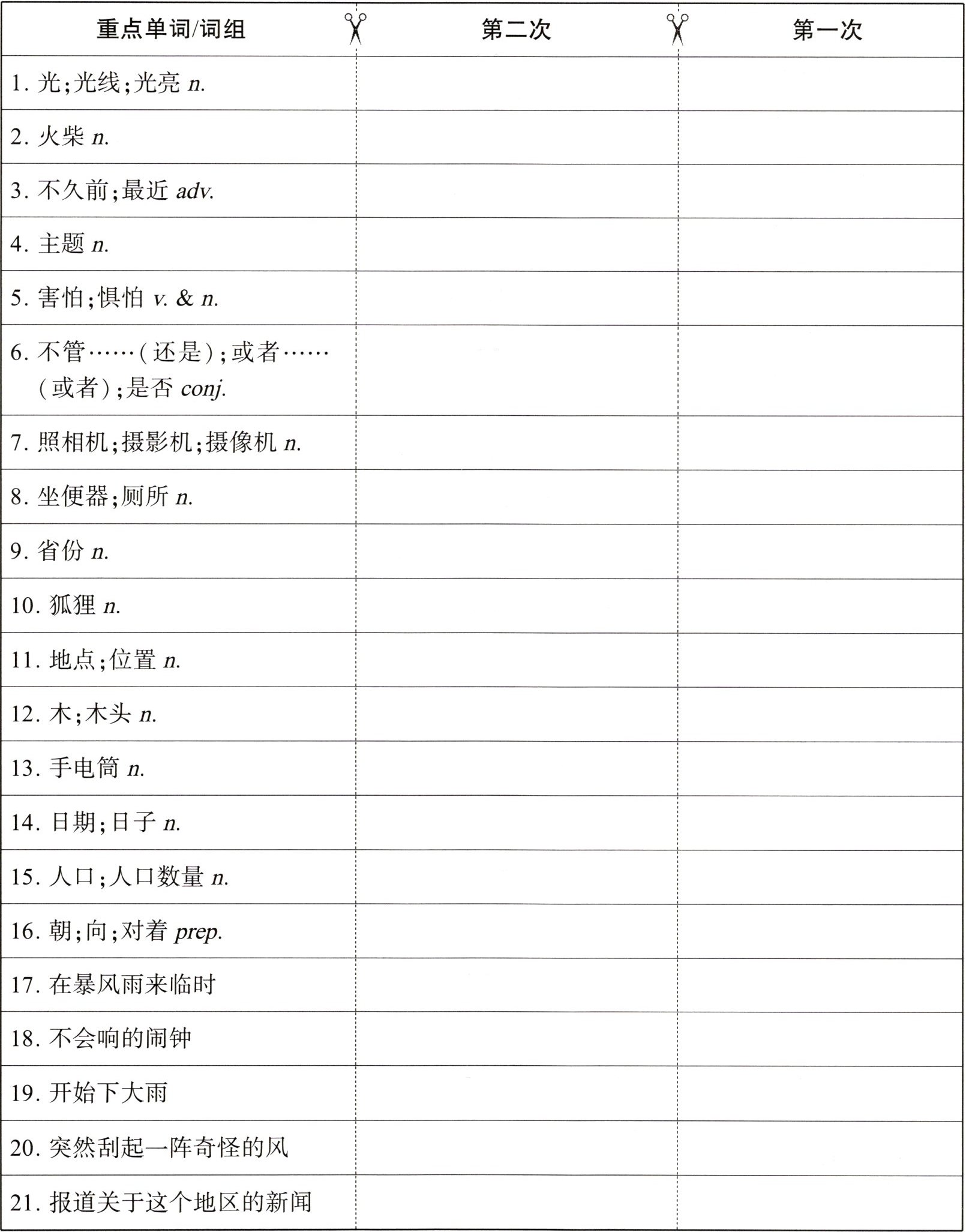
53. 开始 v. begin — 开头;开端 n. beginning — (过去式)began — (过去分词) begun
54. 突然(的) adj. sudden — 突然;忽然 adv. suddenly
55. 奇特的;奇怪的 adj. strange — 奇怪地;不可思议地 adv. strangely — 陌生人 n. stranger
56. 睡觉 v. & n. sleep — 睡着 adj. asleep — 困倦的;瞌睡的 adj. sleepy
57. 完成 v. 彻底的;完全的 adj. complete — 彻底地;完全地 adv. completely
58. 不说话的;沉默的 adj. silent — 沉默;缄默;无声 n. silence — 默默地;静静地 adv. silently
59. 发明;创造 v. invent — 发明;发明物 n. invention — 发明家 n. inventor
60. 相信;认为有可能 v. believe — 可相信的;可信任的 adj. believable — 难以置信的;不真实的 adj. unbelievable
61. 通常的;寻常的 adj. usual — 特别的;不寻常的 adj. unusual — 通常地;一般地 adv. usually
62. 鼓励 v. encourage — 令人鼓舞的 adj. encouraging — 鼓励 n. encouragement
63. 社会的 adj. social — 社会 n. society
64. 和平 n. peace — 和平的;安宁的 adj. peaceful — 平静地 adv. peacefully
65. 完美的;完全的 adj. perfect — 完美地;完全地 adv. perfectly — 完美;完善 n. perfection
66. 它 pron. it — 它自己 pron. itself — 它的 pron. its
67. 收集;采集 v. collect — 收集;收藏品 n. collection
68. 安全的;无危险的 adj. safe — 安全地 adv. safely — 安全;安全性 n. safety
69. 简单的;易做的 adj. simple — 仅仅;只;不过 adv. simply
70. 印度 n. India — 印度的 adj. 印度人 n. Indian
71. 日本 Japan — 日本的;日本人的;日语的 adj. 日本人;日语 n. Japanese
72. 当……的时候 conj. 什么时候 adv. when — 在任何……的时候;无论何时 conj. whenever
基础知识(检测)
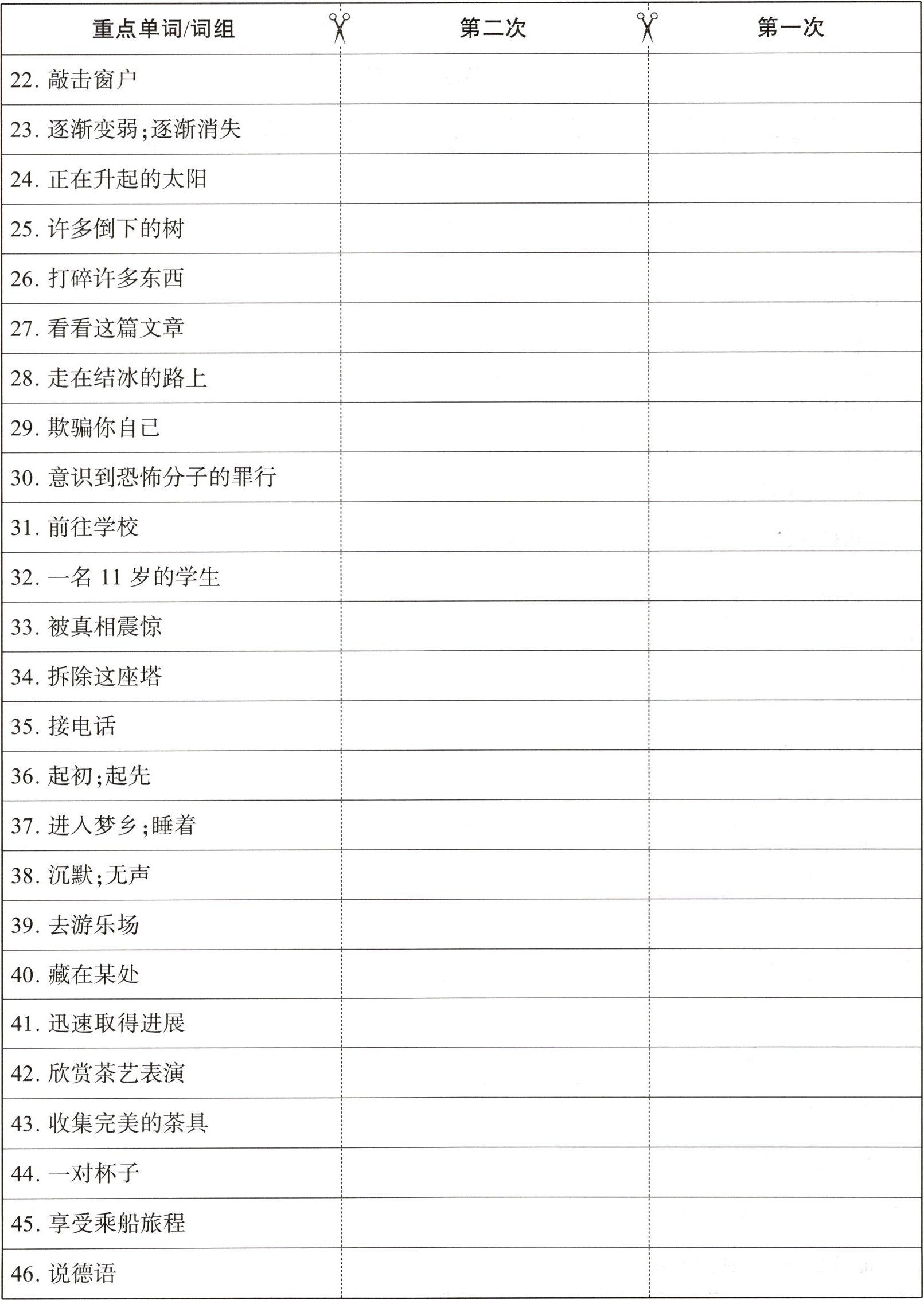
54. 突然(的) adj. sudden — 突然;忽然 adv. suddenly
55. 奇特的;奇怪的 adj. strange — 奇怪地;不可思议地 adv. strangely — 陌生人 n. stranger
56. 睡觉 v. & n. sleep — 睡着 adj. asleep — 困倦的;瞌睡的 adj. sleepy
57. 完成 v. 彻底的;完全的 adj. complete — 彻底地;完全地 adv. completely
58. 不说话的;沉默的 adj. silent — 沉默;缄默;无声 n. silence — 默默地;静静地 adv. silently
59. 发明;创造 v. invent — 发明;发明物 n. invention — 发明家 n. inventor
60. 相信;认为有可能 v. believe — 可相信的;可信任的 adj. believable — 难以置信的;不真实的 adj. unbelievable
61. 通常的;寻常的 adj. usual — 特别的;不寻常的 adj. unusual — 通常地;一般地 adv. usually
62. 鼓励 v. encourage — 令人鼓舞的 adj. encouraging — 鼓励 n. encouragement
63. 社会的 adj. social — 社会 n. society
64. 和平 n. peace — 和平的;安宁的 adj. peaceful — 平静地 adv. peacefully
65. 完美的;完全的 adj. perfect — 完美地;完全地 adv. perfectly — 完美;完善 n. perfection
66. 它 pron. it — 它自己 pron. itself — 它的 pron. its
67. 收集;采集 v. collect — 收集;收藏品 n. collection
68. 安全的;无危险的 adj. safe — 安全地 adv. safely — 安全;安全性 n. safety
69. 简单的;易做的 adj. simple — 仅仅;只;不过 adv. simply
70. 印度 n. India — 印度的 adj. 印度人 n. Indian
71. 日本 Japan — 日本的;日本人的;日语的 adj. 日本人;日语 n. Japanese
72. 当……的时候 conj. 什么时候 adv. when — 在任何……的时候;无论何时 conj. whenever
基础知识(检测)
答案:
无具体题目要求作答内容,主要是词汇知识的呈现。
答案:
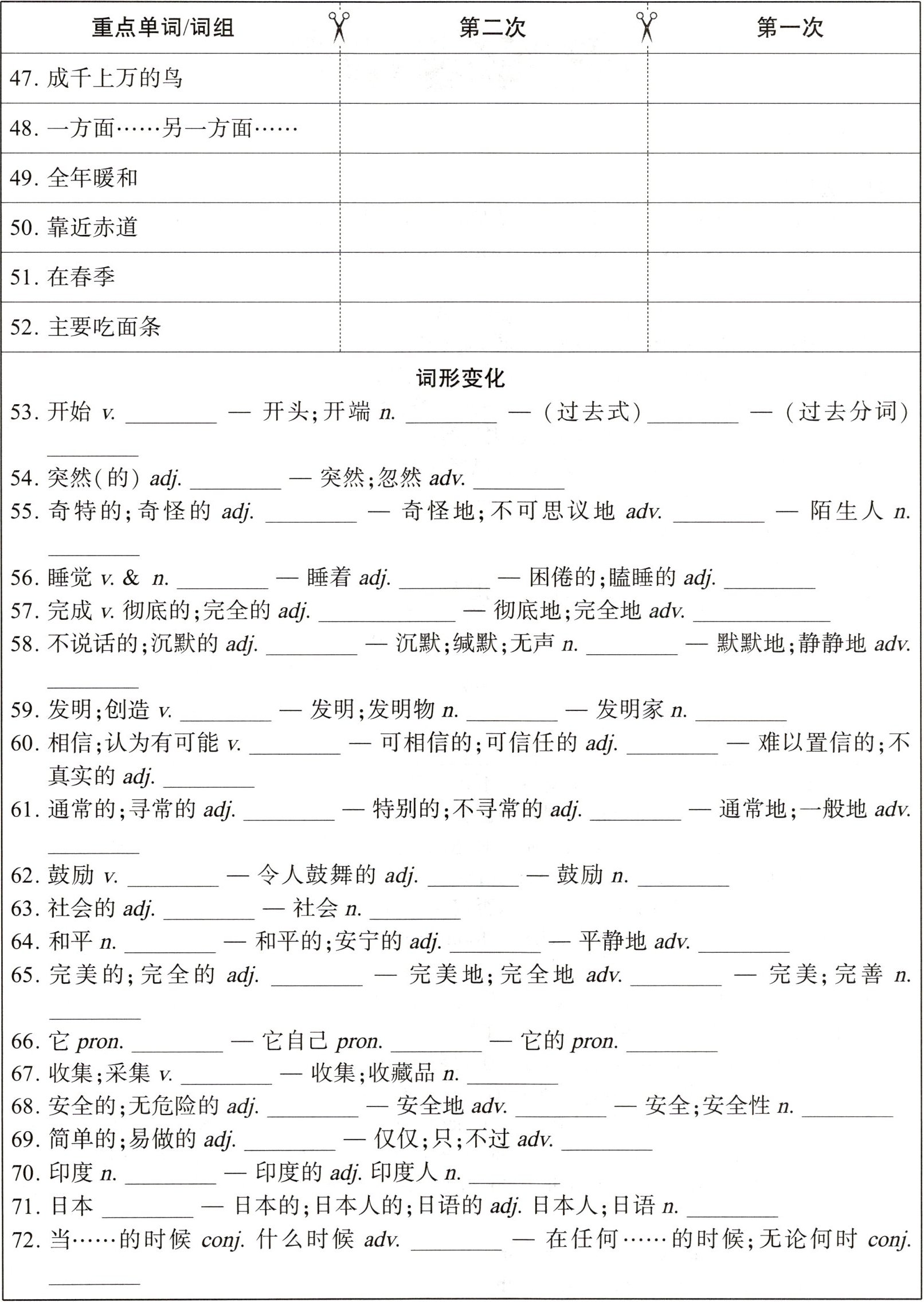
47. “成千上万的”常见表达为“thousands of”,“鸟”是“bird”,复数形式为“birds”,所以“成千上万的鸟”是“thousands of birds”。
48. “一方面……另一方面……”常见表达为“on the one hand...on the other hand...”。
49. “全年”是“all year round”,“暖和”是“warm”,所以“全年暖和”是“warm all year round”。
50. “靠近”可以用“be close to”,“赤道”是“the equator”,所以“靠近赤道”是“be close to the equator”。
51. “在春季”常见表达为“in spring”。
52. “主要”可以用“mainly”,“吃面条”是“eat noodles”,所以“主要吃面条”是“mainly eat noodles”。
53. “开始”动词是“begin”,名词“开头;开端”是“beginning”,过去式是“began”,过去分词是“begun”。
54. “突然(的)”形容词是“sudden”,副词“突然;忽然”是“suddenly”。
55. “奇特的;奇怪的”形容词是“strange”,副词“奇怪地;不可思议地”是“strangely”,“陌生人”名词是“stranger”。
56. “睡觉”动词和名词是“sleep”,“睡着”形容词是“asleep”,“困倦的;瞌睡的”形容词是“sleepy”。
57. “完成”动词是“complete”,“彻底的;完全的”形容词是“complete”,副词“彻底地;完全地”是“completely”。
58. “不说话的;沉默的”形容词是“silent”,名词“沉默;缄默;无声”是“silence”,副词“默默地;静静地”是“silently”。
59. “发明;创造”动词是“invent”,名词“发明;发明物”是“invention”,“发明家”名词是“inventor”。
60. “相信;认为有可能”动词是“believe”,“可相信的;可信任的”形容词是“believable”,“难以置信的;不真实的”形容词是“unbelievable”。
61. “通常的;寻常的”形容词是“usual”,“特别的;不寻常的”形容词是“unusual”,副词“通常地;一般地”是“usually”。
62. “鼓励”动词是“encourage”,“令人鼓舞的”形容词是“encouraging”,名词“鼓励”是“encouragement”。
63. “社会的”形容词是“social”,名词“社会”是“society”。
64. “和平”名词是“peace”,“和平的;安宁的”形容词是“peaceful”,副词“平静地”是“peacefully”。
65. “完美的;完全的”形容词是“perfect”,副词“完美地;完全地”是“perfectly”,名词“完美;完善”是“perfection”。
66. “它”代词是“it”,“它自己”代词是“itself”,“它的”代词是“its”。
67. “收集;采集”动词是“collect”,名词“收集;收藏品”是“collection”。
68. “安全的;无危险的”形容词是“safe”,副词“安全地”是“safely”,名词“安全;安全性”是“safety”。
69. “简单的;易做的”形容词是“simple”,副词“仅仅;只;不过”是“simply”。
70. “印度”名词是“India”,“印度的”形容词和“印度人”名词是“Indian”。
71. “日本”名词是“Japan”,“日本的;日本人的;日语的”形容词和“日本人;日语”名词是“Japanese”。
72. “当……的时候”连词和“什么时候”副词是“when”,“在任何……的时候;无论何时”连词是“whenever”。
47. thousands of birds
48. on the one hand...on the other hand...
49. warm all year round
50. be close to the equator
51. in spring
52. mainly eat noodles
53. begin;beginning;began;begun
54. sudden;suddenly
55. strange;strangely;stranger
56. sleep;asleep;sleepy
57. complete;complete;completely
58. silent;silence;silently
59. invent;invention;inventor
60. believe;believable;unbelievable
61. usual;unusual;usually
62. encourage;encouraging;encouragement
63. social;society
64. peace;peaceful;peacefully
65. perfect;perfectly;perfection
66. it;itself;its
67. collect;collection
68. safe;safely;safety
69. simple;simply
70. India;Indian
71. Japan;Japanese
72. when;whenever
48. “一方面……另一方面……”常见表达为“on the one hand...on the other hand...”。
49. “全年”是“all year round”,“暖和”是“warm”,所以“全年暖和”是“warm all year round”。
50. “靠近”可以用“be close to”,“赤道”是“the equator”,所以“靠近赤道”是“be close to the equator”。
51. “在春季”常见表达为“in spring”。
52. “主要”可以用“mainly”,“吃面条”是“eat noodles”,所以“主要吃面条”是“mainly eat noodles”。
53. “开始”动词是“begin”,名词“开头;开端”是“beginning”,过去式是“began”,过去分词是“begun”。
54. “突然(的)”形容词是“sudden”,副词“突然;忽然”是“suddenly”。
55. “奇特的;奇怪的”形容词是“strange”,副词“奇怪地;不可思议地”是“strangely”,“陌生人”名词是“stranger”。
56. “睡觉”动词和名词是“sleep”,“睡着”形容词是“asleep”,“困倦的;瞌睡的”形容词是“sleepy”。
57. “完成”动词是“complete”,“彻底的;完全的”形容词是“complete”,副词“彻底地;完全地”是“completely”。
58. “不说话的;沉默的”形容词是“silent”,名词“沉默;缄默;无声”是“silence”,副词“默默地;静静地”是“silently”。
59. “发明;创造”动词是“invent”,名词“发明;发明物”是“invention”,“发明家”名词是“inventor”。
60. “相信;认为有可能”动词是“believe”,“可相信的;可信任的”形容词是“believable”,“难以置信的;不真实的”形容词是“unbelievable”。
61. “通常的;寻常的”形容词是“usual”,“特别的;不寻常的”形容词是“unusual”,副词“通常地;一般地”是“usually”。
62. “鼓励”动词是“encourage”,“令人鼓舞的”形容词是“encouraging”,名词“鼓励”是“encouragement”。
63. “社会的”形容词是“social”,名词“社会”是“society”。
64. “和平”名词是“peace”,“和平的;安宁的”形容词是“peaceful”,副词“平静地”是“peacefully”。
65. “完美的;完全的”形容词是“perfect”,副词“完美地;完全地”是“perfectly”,名词“完美;完善”是“perfection”。
66. “它”代词是“it”,“它自己”代词是“itself”,“它的”代词是“its”。
67. “收集;采集”动词是“collect”,名词“收集;收藏品”是“collection”。
68. “安全的;无危险的”形容词是“safe”,副词“安全地”是“safely”,名词“安全;安全性”是“safety”。
69. “简单的;易做的”形容词是“simple”,副词“仅仅;只;不过”是“simply”。
70. “印度”名词是“India”,“印度的”形容词和“印度人”名词是“Indian”。
71. “日本”名词是“Japan”,“日本的;日本人的;日语的”形容词和“日本人;日语”名词是“Japanese”。
72. “当……的时候”连词和“什么时候”副词是“when”,“在任何……的时候;无论何时”连词是“whenever”。
47. thousands of birds
48. on the one hand...on the other hand...
49. warm all year round
50. be close to the equator
51. in spring
52. mainly eat noodles
53. begin;beginning;began;begun
54. sudden;suddenly
55. strange;strangely;stranger
56. sleep;asleep;sleepy
57. complete;complete;completely
58. silent;silence;silently
59. invent;invention;inventor
60. believe;believable;unbelievable
61. usual;unusual;usually
62. encourage;encouraging;encouragement
63. social;society
64. peace;peaceful;peacefully
65. perfect;perfectly;perfection
66. it;itself;its
67. collect;collection
68. safe;safely;safety
69. simple;simply
70. India;Indian
71. Japan;Japanese
72. when;whenever
查看更多完整答案,请扫码查看

