

 搜索
搜索
2025年成才之路高中新课程学习指导高中英语选择性必修第一册人教版
注:目前有些书本章节名称可能整理的还不是很完善,但都是按照顺序排列的,请同学们按照顺序仔细查找。练习册 2025年成才之路高中新课程学习指导高中英语选择性必修第一册人教版 答案主要是用来给同学们做完题方便对答案用的,请勿直接抄袭。
第40页
- 第1页
- 第2页
- 第3页
- 第4页
- 第5页
- 第6页
- 第7页
- 第8页
- 第9页
- 第10页
- 第11页
- 第12页
- 第13页
- 第14页
- 第15页
- 第16页
- 第17页
- 第18页
- 第19页
- 第20页
- 第21页
- 第22页
- 第23页
- 第24页
- 第25页
- 第26页
- 第27页
- 第28页
- 第29页
- 第30页
- 第31页
- 第32页
- 第33页
- 第34页
- 第35页
- 第36页
- 第37页
- 第38页
- 第39页
- 第40页
- 第41页
- 第42页
- 第43页
- 第44页
- 第45页
- 第46页
- 第47页
- 第48页
- 第49页
- 第50页
- 第51页
- 第52页
- 第53页
- 第54页
- 第55页
- 第56页
- 第57页
- 第58页
- 第59页
- 第60页
- 第61页
- 第62页
- 第63页
- 第64页
- 第65页
- 第66页
- 第67页
- 第68页
- 第69页
- 第70页
- 第71页
- 第72页
- 第73页
- 第74页
- 第75页
- 第76页
- 第77页
- 第78页
- 第79页
- 第80页
- 第81页
- 第82页
- 第83页
- 第84页
- 第85页
- 第86页
- 第87页
- 第88页
- 第89页
- 第90页
- 第91页
- 第92页
- 第93页
- 第94页
- 第95页
- 第96页
- 第97页
- 第98页
- 第99页
- 第100页
Ⅰ.词汇记忆
1.
n.克隆动物(或植物)
2.
3.
4.
5.
6.
1.
clone
vt.克隆;以无性繁殖技术复制n.克隆动物(或植物)
2.
forecast
( forecast/forecasted, forecast/forecasted)vt.& n.预测;预报3.
rural
adj.乡村的;农村的4.
advocate
vt.提倡;支持;拥护 n.提倡者;支持者;拥护者5.
career
n.职业;事业6.
essay
n.文章
答案:
1.clone 2.forecast 3.rural 4.advocate 5.career 6.essay
Ⅱ 词汇认知
1.artificial adj.
2.hence adv.
3.cease vi.& vt.
4.prospect n.
5.paragraph n.
6.librarian n.
1.artificial adj.
人工的;人造的;假的
2.hence adv.
因此;由此
3.cease vi.& vt.
(使)停止;终止
4.prospect n.
可能性;前景
5.paragraph n.
段;段落
6.librarian n.
图书管理员;图书馆馆长
答案:
1.人工的;人造的;假的 2.因此;由此 3.(使)停止;终止 4.可能性;前景 5.段;段落 6.图书管理员;图书馆馆长
Ⅲ 词汇拓展
1.predict vt.预测;预言;预料
2.occupy vt.占用;占领;占据
3.oppose vt.反对;抵制;阻挠
4.absence n.不存在;缺乏;缺席
5.emphasize vt.强调;重视;着重
6.luxury n.奢华
7.resist vi.& vt.抵制;反抗;抵挡
8.accurate adj.精确的;准确的
1.predict vt.预测;预言;预料
prediction
n.预测;预言2.occupy vt.占用;占领;占据
occupation
n.职业;占领3.oppose vt.反对;抵制;阻挠
opposed
adj.强烈反对;截然不同4.absence n.不存在;缺乏;缺席
absent
adj.缺席的;缺乏的5.emphasize vt.强调;重视;着重
emphasis
n.强调;重视;重要性6.luxury n.奢华
luxurious
adj.奢侈的;十分舒适的7.resist vi.& vt.抵制;反抗;抵挡
resistance
n.抵制;反对;抗拒resistant
adj.反抗的;抵制的8.accurate adj.精确的;准确的
accurately
adv.精确地;准确地accuracy
n.精确;准确
答案:
1.prediction 2.occupation 3.opposed 4.absent 5.emphasis 6.luxurious 7.resistance resistant 8.accurately accuracy
Ⅳ 词块识记
1.
2.
3.
4.
5.
6.on the one hand
7.on the other hand
8.artificial intelligence
1.
in the absence of
无……时2.
provide... with...
为……提供……3.
keep in touch(with...)
(与……)保持联系;了解(某课题或领域的情况)4.
benefit a lot from...
受益匪浅5.
rather than...
而不是6.on the one hand
7.on the other hand
8.artificial intelligence
答案:
1.in the absence of 2.provide... with... 3.keep in touch(with...) 4.benefit a lot from... 5.rather than... 6.一方面 7.另一方面 8.(AI)人工智能
Ⅵ 课文预读
Choose the best answer
1. Which one shows the structure of the text?
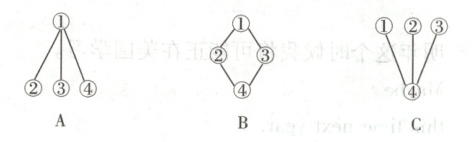
2. Why did many people oppose driverless cars?
A.They think new technology is unnecessary.
B.They think driverless mode is dangerous.
C.They are the families of the deceased.
D.The company didn’t apologise for the accident.
3. What can we learn about the Amish?
A.They live happily in the absence of new technology.
B.They would like to live in large and polluted cities.
C.They are proud of owning cars and using the Internet.
D.They want to follow the lives of the rich and famous.
4. What can we infer about the author from the passage?
A.He feels sorry for the accident.
B.He is opposed to new technology.
C.He cares nothing about new technology.
D.He is in favour of new technology.
5. How does the author support the ideas?
A.By using examples.
B.By doing experiments.
C.By using exact figures.
D.By conducting surveys.
Choose the best answer
1. Which one shows the structure of the text?
2. Why did many people oppose driverless cars?
A.They think new technology is unnecessary.
B.They think driverless mode is dangerous.
C.They are the families of the deceased.
D.The company didn’t apologise for the accident.
3. What can we learn about the Amish?
A.They live happily in the absence of new technology.
B.They would like to live in large and polluted cities.
C.They are proud of owning cars and using the Internet.
D.They want to follow the lives of the rich and famous.
4. What can we infer about the author from the passage?
A.He feels sorry for the accident.
B.He is opposed to new technology.
C.He cares nothing about new technology.
D.He is in favour of new technology.
5. How does the author support the ideas?
A.By using examples.
B.By doing experiments.
C.By using exact figures.
D.By conducting surveys.
答案:
1.B 2.B 3.A 4.D 5.A
查看更多完整答案,请扫码查看

