

 搜索
搜索
2025年刷考点新英语时文话题阅读七年级英语上册人教版安徽专版
注:目前有些书本章节名称可能整理的还不是很完善,但都是按照顺序排列的,请同学们按照顺序仔细查找。练习册 2025年刷考点新英语时文话题阅读七年级英语上册人教版安徽专版 答案主要是用来给同学们做完题方便对答案用的,请勿直接抄袭。
第53页
- 第1页
- 第2页
- 第3页
- 第4页
- 第5页
- 第6页
- 第7页
- 第8页
- 第9页
- 第10页
- 第11页
- 第12页
- 第13页
- 第14页
- 第15页
- 第16页
- 第17页
- 第18页
- 第19页
- 第20页
- 第21页
- 第22页
- 第23页
- 第24页
- 第25页
- 第26页
- 第27页
- 第28页
- 第29页
- 第30页
- 第31页
- 第32页
- 第33页
- 第34页
- 第35页
- 第36页
- 第37页
- 第38页
- 第39页
- 第40页
- 第41页
- 第42页
- 第43页
- 第44页
- 第45页
- 第46页
- 第47页
- 第48页
- 第49页
- 第50页
- 第51页
- 第52页
- 第53页
- 第54页
- 第55页
- 第56页
- 第57页
- 第58页
- 第59页
- 第60页
- 第61页
- 第62页
- 第63页
- 第64页
- 第65页
- 第66页
- 第67页
- 第68页
- 第69页
- 第70页
- 第71页
- 第72页
- 第73页
- 第74页
- 第75页
- 第76页
D 主题:人与社会·降噪耳机 体裁:说明文 词数:272 难度:★★★☆ 建议用时:6 mins
 oise-canceling headphones(
Doctors from the UK's National Health Service(NHS) have seen more young people having ear problems. These problems include trouble understanding speech or needing subtitles(字幕) to watch videos. However, their ears are healthy; it's their brains that are affected(受影响). This problem is known as auditory processing disorder(APD). People with APD can hear sounds but find it hard to understand them.
For our hearing to work well, our brains need to choose which sounds to focus on and which to ignore. We get the skill when we hear different sounds. If we don't hear different kinds of sounds, we can lose this skill, said NHS doctors. Noise-canceling headphones take away these different sounds, which might be part of the problem.
Claire Benton from the British Academy of Audiology said that wearing these headphones creates a "false(虚假的) environment" where you only hear what you want. This makes it easier for your brain, so it doesn't have to work as hard.
Noise travels in waves(波) through air and water. Noise-canceling headphones stop these waves in two ways: One is to use things like special ear cups. The other is to use a microphone(麦克风) to cancel out noise with opposite sound waves.
This technology can be harmful(有害的) if you use it too much. However, it is still helpful for people working in noisy places.
(
A. They are almost deaf.
B. They cannot hear loud sounds.
C. They don't like watching videos.
D. They have trouble understanding sounds.
(
A. Remember quickly.
B. Listen carefully.
C. Pay no attention to.
D. Connect with other facts.
(
A. They make the brain used to a noisy environment.
B. They give out unhealthy waves from the microphone.
C. They stop your brain from hearing different sounds.
D. They change the direction of important sound waves.
(
A. How noise travels through air.
B. Why headphones have ear cups.
C. What waves noise creates in our brains.
D. How noise-canceling headphones work.
oise-canceling headphones(降
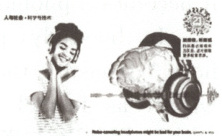
噪耳机) bring you a quiet world, but using them for too long might be bad for your brain(大脑), according to The New York Post.Doctors from the UK's National Health Service(NHS) have seen more young people having ear problems. These problems include trouble understanding speech or needing subtitles(字幕) to watch videos. However, their ears are healthy; it's their brains that are affected(受影响). This problem is known as auditory processing disorder(APD). People with APD can hear sounds but find it hard to understand them.
For our hearing to work well, our brains need to choose which sounds to focus on and which to ignore. We get the skill when we hear different sounds. If we don't hear different kinds of sounds, we can lose this skill, said NHS doctors. Noise-canceling headphones take away these different sounds, which might be part of the problem.
Claire Benton from the British Academy of Audiology said that wearing these headphones creates a "false(虚假的) environment" where you only hear what you want. This makes it easier for your brain, so it doesn't have to work as hard.
Noise travels in waves(波) through air and water. Noise-canceling headphones stop these waves in two ways: One is to use things like special ear cups. The other is to use a microphone(麦克风) to cancel out noise with opposite sound waves.
This technology can be harmful(有害的) if you use it too much. However, it is still helpful for people working in noisy places.
(
D
)21. What problem do people with APD have?A. They are almost deaf.
B. They cannot hear loud sounds.
C. They don't like watching videos.
D. They have trouble understanding sounds.
(
C
)22. What does the underlined word "ignore"in Paragraph 3 mean?A. Remember quickly.
B. Listen carefully.
C. Pay no attention to.
D. Connect with other facts.
(
C
)23. Why can noise-canceling headphones be bad for your brain?A. They make the brain used to a noisy environment.
B. They give out unhealthy waves from the microphone.
C. They stop your brain from hearing different sounds.
D. They change the direction of important sound waves.
(
D
)24. What is Paragraph 5 mainly about?A. How noise travels through air.
B. Why headphones have ear cups.
C. What waves noise creates in our brains.
D. How noise-canceling headphones work.
答案:
D
21.D 【解析】APD患者的问题是理解声音有困难,文中围绕其对声音理解障碍展开,A(几乎聋)、B(听不到大声)、C(不喜欢看视频)均不符合,选D。
22.C 【解析】结合语境,“ignore”是指大脑“不关注、不在意”某些声音,A(快速记)、B(仔细听)、D(与其他事实关联)不符,选C。
23.C 【解析】降噪耳机对大脑不好是因阻止大脑接收不同声音,A(习惯嘈杂环境)、B(麦克风发出不健康波)、D(改变重要声波方向)无依据,选C。
24.D 【解析】第五段围绕降“噪耳机如何工作”展开原理说明,A(噪声如何在空气中传播)、B(耳机为什么有耳罩)、C(噪声在大脑产生的波)均偏离,选D。
21.D 【解析】APD患者的问题是理解声音有困难,文中围绕其对声音理解障碍展开,A(几乎聋)、B(听不到大声)、C(不喜欢看视频)均不符合,选D。
22.C 【解析】结合语境,“ignore”是指大脑“不关注、不在意”某些声音,A(快速记)、B(仔细听)、D(与其他事实关联)不符,选C。
23.C 【解析】降噪耳机对大脑不好是因阻止大脑接收不同声音,A(习惯嘈杂环境)、B(麦克风发出不健康波)、D(改变重要声波方向)无依据,选C。
24.D 【解析】第五段围绕降“噪耳机如何工作”展开原理说明,A(噪声如何在空气中传播)、B(耳机为什么有耳罩)、C(噪声在大脑产生的波)均偏离,选D。
查看更多完整答案,请扫码查看

