

 搜索
搜索
2025年金版教程高中新课程创新导学案高中英语选择性必修第三册人教版
注:目前有些书本章节名称可能整理的还不是很完善,但都是按照顺序排列的,请同学们按照顺序仔细查找。练习册 2025年金版教程高中新课程创新导学案高中英语选择性必修第三册人教版 答案主要是用来给同学们做完题方便对答案用的,请勿直接抄袭。
第99页
- 第1页
- 第2页
- 第3页
- 第4页
- 第5页
- 第6页
- 第7页
- 第8页
- 第9页
- 第10页
- 第11页
- 第12页
- 第13页
- 第14页
- 第15页
- 第16页
- 第17页
- 第18页
- 第19页
- 第20页
- 第21页
- 第22页
- 第23页
- 第24页
- 第25页
- 第26页
- 第27页
- 第28页
- 第29页
- 第30页
- 第31页
- 第32页
- 第33页
- 第34页
- 第35页
- 第36页
- 第37页
- 第38页
- 第39页
- 第40页
- 第41页
- 第42页
- 第43页
- 第44页
- 第45页
- 第46页
- 第47页
- 第48页
- 第49页
- 第50页
- 第51页
- 第52页
- 第53页
- 第54页
- 第55页
- 第56页
- 第57页
- 第58页
- 第59页
- 第60页
- 第61页
- 第62页
- 第63页
- 第64页
- 第65页
- 第66页
- 第67页
- 第68页
- 第69页
- 第70页
- 第71页
- 第72页
- 第73页
- 第74页
- 第75页
- 第76页
- 第77页
- 第78页
- 第79页
- 第80页
- 第81页
- 第82页
- 第83页
- 第84页
- 第85页
- 第86页
- 第87页
- 第88页
- 第89页
- 第90页
- 第91页
- 第92页
- 第93页
- 第94页
- 第95页
- 第96页
- 第97页
- 第98页
- 第99页
- 第100页
- 第101页
- 第102页
- 第103页
- 第104页
- 第105页
- 第106页
二、话题口语表达( 开放型)
Do you have any hobbies or interests?
How long have you been learning/playing ...?
What have you been doing recently?
Do you have any hobbies or interests?
How long have you been learning/playing ...?
What have you been doing recently?
答案:
Yes, I do. I have a hobby of playing the piano. I have been learning to play the piano for five years. Recently, I have been practicing some classical piano pieces and preparing for a small performance at school.
一、阅读单词:写出汉语含义
1. motor n.
adj.
2. episode n.
3. Confucianism n.
1. motor n.
发动机;马达
adj.
有引擎的;机动车的
2. episode n.
(人生的)一段经历;(小说的)片段;插曲
3. Confucianism n.
孔子学说;儒家(学说)
答案:
1.发动机;马达 2.(人生的)一段经历;(小说的)片段;插曲 3.孔子学说;儒家(学说)
二、核心单词:写出英文单词
1. n. 候选人;应试者
2. n. 承诺;保证;奉献
3.
1. n. 候选人;应试者
candidate
2. n. 承诺;保证;奉献
commitment
3.
motive
n. 动机;原因;目的
答案:
1.candidate 2.commitment 3.motive
三、拓展单词:写出下列单词的词性转换( 可查字典)
1. rough adj. 汹涌的;粗糙的;粗略的→
2. navigator n. 领航员;(飞机、船舶等上的)航行者→
3. loyal adj. 忠诚的;忠实的→
1. rough adj. 汹涌的;粗糙的;粗略的→
roughly
roughness
n. 粗糙(度);粗暴2. navigator n. 领航员;(飞机、船舶等上的)航行者→
navigate
v. 导航,引路→navigation
n. 导航;航行;航海3. loyal adj. 忠诚的;忠实的→
loyalty
n. 忠诚,忠实→ adv. 忠诚地,忠实地→disloyal
adj. 不忠诚的,不忠心的
答案:
1.roughly roughness 2.navigate navigation 3.loyalty loyally disloyal
四、核心短语:写出英语表达
1.
2.
1.
make fire
生火2.
give off
放出(热、光、气味或气体)
答案:
1.make fire 2.give off
THE REWARD FOR PERSEVERANCE
锲而不舍的回报
We watched as¹ Shackleton and the boat sailed away from Elephant Island. It was easy to imagine the danger ahead of them. Would they ever return to find us? What might happen to them? What if ² they were delayed? We felt so alone and desperate. But it was not for long. There was nothing like a good dinner and some music to cheer us up.
①引导 ﹍从句,表示从句中的动作与主句中的动作同时发生
②为固定短语,意为“﹍”
我们看着沙克尔顿和小船驶离象岛。不难想象他们要面临的危险。他们会回来找到我们吗?他们会发生什么事呢?如果他们被耽搁了,那怎么办?我们感到如此的孤独和绝望。不过,这种情绪并没有持续很久。没有什么比得上一顿好饭和一点儿音乐能让我们振作起来了。
Life fell into a regular pattern. Staying alive³ took all our time andenergy. For example, we needed water, and⁴ Elephant Island had none. We found that⁵ we could melt ice from the ocean and drink the water from it. But how could we make fire? There were no trees growing onAntarctica⁶ and no oil, so⁷ the only fuel we could use⁸ was animal fat.This gave off oily, black smoke, but⁹ it stayed burning even in strong ,修饰 trees
, winds.
③动名词短语作
④连接两个并列句
⑤引导 ﹍从句,作动词 found 的
⑥现在分词短语作
⑦连接两个并列句
⑧省略了引导词 ﹍的
﹍从句,修饰
⑨连接两个并列句
生活陷入了一个固定的模式。求生耗费了我们所有的时间和精力。例如,我们需要水,而象岛没有。我们发现可以把海上的冰融化成水,然后饮用。可是我们怎么生火呢?南极没有树木,也没有石油,我们可以使用的唯一燃料就是动物脂肪。这种燃料会产生油腻的黑烟,但它在强风中仍能保持燃烧。
Food was also a problem, as⑩ we did not find any vegetables or fruit on the island. One of our group members, Lionel Greenstreet, noted in his diary about how⑪ bored he was with the meals: “The food now is prettywell all meat of sea creatures.” If it weren’t for sea animals, we would all starve⑫. As a chef, it was my duty to cook⑬, so I tried to vary the meals inwhatever⑭ way I could. But it was difficult.
⑩引导 ﹍从句,作介词 about 的
⑪引导 ﹍的虚拟条件句
⑫it 为 ﹍,动词不定式 to cook 作
⑬引导 ﹍从句,作介词 in 的
⑭引导 ﹍从句
⑮as ... as ... 意为“和……一样”,表示 ﹍的比较;其中,第二个 as 引导
⑯省略了 ﹍从句,其后省略了
食物也是个问题,因为在岛上我们找不到任何蔬菜或水果。我们的一位团队成员,莱昂内尔·格林斯特里特,在日记中写下了他对三餐的厌烦程度:“现在的食物几乎全是海洋生物。”要不是有海洋生物,我们都得挨饿。作为一名厨师,我的职责是烹饪食物,于是我想方设法变换三餐的花样。但是,这实在太难了。
We had to be careful not to go outside too often, as⑮ the changing temperatures could make us ill. It was almost as dangerous to become too hot from wearing too many clothes as to become too cold from wearing toofew⑯. The sweat could freeze very quickly. Many of us also became ill from the black smoke of the animal fat we burnt⑰ for our fires. It damagedour eyes and burnt our lungs.
⑰省略了引导词﹍的
⑱引导 ﹍从句,修饰
⑲引导 ﹍从句,修饰
我们十分小心,避免过于频繁地外出,因为气温变化会使人生病。衣服穿得太多造成过热与衣服穿得太少造成过冷几乎是一样危险的。汗水会迅速结冰。我们燃烧动物脂肪取火,冒出的黑烟使我们很多人都得病了。这种黑烟损害我们的眼睛,而且伤害我们的肺部。
The twenty-two of us lived like this in the cold for four months. Our⑳discipline and team spirit kept us optimistic and helped us deal with ourfears in a positive and successful way. We also celebrated our birthdays, festivals, and even the times when ㉑we caught a sea animal. This was anepisode in my life that ㉒I would never forget.
⑳引导 ﹍从句
㉑such ... that ... 意为“ ﹍”,that 引导
㉒引导 ﹍从句
我们22个人就这样在冰天雪地里度过了四个月。纪律和团队精神使我们保持乐观,帮助我们积极、成功地应对恐惧感。生日、节日甚至捕获海洋动物之时,我们都会庆祝一番。这是我生命中永远不会忘却的一段经历。
When ㉓ we were finally rescued, we felt such relief and joy that many of us could not hide our tears ㉔. We were at last free to go home to warmbeds, good food, and the care of our family and friends. Our optimismand faith in Shackleton had helped us persevere in staying alive. And he paidus back by his commitment to save us from a slow but painful death.
㉓引导 ﹍从句
㉔such ... that ... 意为“ ﹍”,that 引导
最终获救时,我们如释重负、喜不自禁,我们许多人都难掩泪水。我们终于可以回家了,回归温暖的被窝、(享受)可口的食物以及家人朋友的关爱。我们的乐观和对沙克尔顿的信任让我们顽强地活了下来,而他则用他的承诺回报了我们——把我们从缓慢而痛苦的死亡线上拯救回来。
(一)课文导图填空
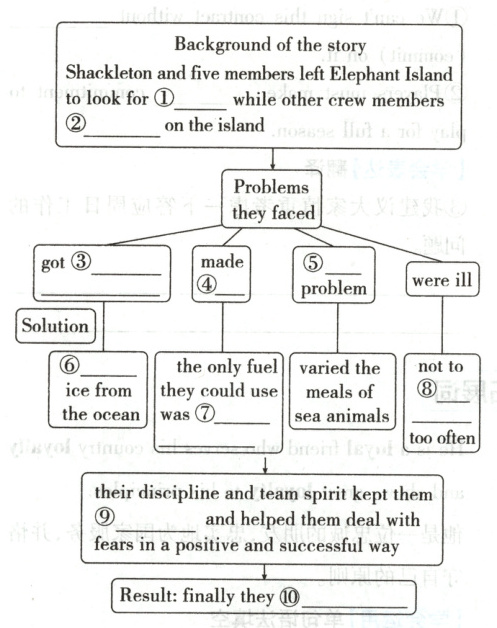
(二)判断正误(T/F)
1. It was difficult to imagine the danger ahead of Shackleton. ()
2. Staying alive took all of their time and energy. ()
3. When they were finally rescued,they were so happy that they could hide their tears. ()
4. They celebrated their birthdays, festivals and even the times when they caught a sea animal. ()
5. They did not find any vegetables or fruit on the island. ()
6. If it weren’t for sea animals, they would all return alive. ()
锲而不舍的回报
We watched as¹ Shackleton and the boat sailed away from Elephant Island. It was easy to imagine the danger ahead of them. Would they ever return to find us? What might happen to them? What if ² they were delayed? We felt so alone and desperate. But it was not for long. There was nothing like a good dinner and some music to cheer us up.
①引导 ﹍从句,表示从句中的动作与主句中的动作同时发生
②为固定短语,意为“﹍”
我们看着沙克尔顿和小船驶离象岛。不难想象他们要面临的危险。他们会回来找到我们吗?他们会发生什么事呢?如果他们被耽搁了,那怎么办?我们感到如此的孤独和绝望。不过,这种情绪并没有持续很久。没有什么比得上一顿好饭和一点儿音乐能让我们振作起来了。
Life fell into a regular pattern. Staying alive³ took all our time andenergy. For example, we needed water, and⁴ Elephant Island had none. We found that⁵ we could melt ice from the ocean and drink the water from it. But how could we make fire? There were no trees growing onAntarctica⁶ and no oil, so⁷ the only fuel we could use⁸ was animal fat.This gave off oily, black smoke, but⁹ it stayed burning even in strong ,修饰 trees
, winds.
③动名词短语作
④连接两个并列句
⑤引导 ﹍从句,作动词 found 的
⑥现在分词短语作
⑦连接两个并列句
⑧省略了引导词 ﹍的
﹍从句,修饰
⑨连接两个并列句
生活陷入了一个固定的模式。求生耗费了我们所有的时间和精力。例如,我们需要水,而象岛没有。我们发现可以把海上的冰融化成水,然后饮用。可是我们怎么生火呢?南极没有树木,也没有石油,我们可以使用的唯一燃料就是动物脂肪。这种燃料会产生油腻的黑烟,但它在强风中仍能保持燃烧。
Food was also a problem, as⑩ we did not find any vegetables or fruit on the island. One of our group members, Lionel Greenstreet, noted in his diary about how⑪ bored he was with the meals: “The food now is prettywell all meat of sea creatures.” If it weren’t for sea animals, we would all starve⑫. As a chef, it was my duty to cook⑬, so I tried to vary the meals inwhatever⑭ way I could. But it was difficult.
⑩引导 ﹍从句,作介词 about 的
⑪引导 ﹍的虚拟条件句
⑫it 为 ﹍,动词不定式 to cook 作
⑬引导 ﹍从句,作介词 in 的
⑭引导 ﹍从句
⑮as ... as ... 意为“和……一样”,表示 ﹍的比较;其中,第二个 as 引导
⑯省略了 ﹍从句,其后省略了
食物也是个问题,因为在岛上我们找不到任何蔬菜或水果。我们的一位团队成员,莱昂内尔·格林斯特里特,在日记中写下了他对三餐的厌烦程度:“现在的食物几乎全是海洋生物。”要不是有海洋生物,我们都得挨饿。作为一名厨师,我的职责是烹饪食物,于是我想方设法变换三餐的花样。但是,这实在太难了。
We had to be careful not to go outside too often, as⑮ the changing temperatures could make us ill. It was almost as dangerous to become too hot from wearing too many clothes as to become too cold from wearing toofew⑯. The sweat could freeze very quickly. Many of us also became ill from the black smoke of the animal fat we burnt⑰ for our fires. It damagedour eyes and burnt our lungs.
⑰省略了引导词﹍的
⑱引导 ﹍从句,修饰
⑲引导 ﹍从句,修饰
我们十分小心,避免过于频繁地外出,因为气温变化会使人生病。衣服穿得太多造成过热与衣服穿得太少造成过冷几乎是一样危险的。汗水会迅速结冰。我们燃烧动物脂肪取火,冒出的黑烟使我们很多人都得病了。这种黑烟损害我们的眼睛,而且伤害我们的肺部。
The twenty-two of us lived like this in the cold for four months. Our⑳discipline and team spirit kept us optimistic and helped us deal with ourfears in a positive and successful way. We also celebrated our birthdays, festivals, and even the times when ㉑we caught a sea animal. This was anepisode in my life that ㉒I would never forget.
⑳引导 ﹍从句
㉑such ... that ... 意为“ ﹍”,that 引导
㉒引导 ﹍从句
我们22个人就这样在冰天雪地里度过了四个月。纪律和团队精神使我们保持乐观,帮助我们积极、成功地应对恐惧感。生日、节日甚至捕获海洋动物之时,我们都会庆祝一番。这是我生命中永远不会忘却的一段经历。
When ㉓ we were finally rescued, we felt such relief and joy that many of us could not hide our tears ㉔. We were at last free to go home to warmbeds, good food, and the care of our family and friends. Our optimismand faith in Shackleton had helped us persevere in staying alive. And he paidus back by his commitment to save us from a slow but painful death.
㉓引导 ﹍从句
㉔such ... that ... 意为“ ﹍”,that 引导
最终获救时,我们如释重负、喜不自禁,我们许多人都难掩泪水。我们终于可以回家了,回归温暖的被窝、(享受)可口的食物以及家人朋友的关爱。我们的乐观和对沙克尔顿的信任让我们顽强地活了下来,而他则用他的承诺回报了我们——把我们从缓慢而痛苦的死亡线上拯救回来。
(一)课文导图填空
(二)判断正误(T/F)
1. It was difficult to imagine the danger ahead of Shackleton. ()
2. Staying alive took all of their time and energy. ()
3. When they were finally rescued,they were so happy that they could hide their tears. ()
4. They celebrated their birthdays, festivals and even the times when they caught a sea animal. ()
5. They did not find any vegetables or fruit on the island. ()
6. If it weren’t for sea animals, they would all return alive. ()
答案:
①时间状语 ②要是……会怎么样呢? ③主语 ⑤宾语 ⑥后置定语 ⑧that 定语 the only fuel ⑩原因状语 ⑪宾语 宾语 ⑬形式主语 真正的主语 ⑭宾语 ⑮原因状语 ⑯同级 比较状语 ⑰that/which the animal fat ⑱定语 the times ⑲定语 an episode ⑳时间状语 ㉑如此……以至于…… 结果状语 阅读领悟 (一)课文导图填空 ①rescue ②stayed ③drinking water ④fire ⑤food ⑥melted ⑦animal fat ⑧go outside ⑨optimistic ⑩were rescued (二)判断正误(T/F) 1.F 2.T 3.F 4.T 5.T 6.F
查看更多完整答案,请扫码查看

