

 搜索
搜索
2025年金版教程高中新课程创新导学案高中英语选择性必修第三册人教版
注:目前有些书本章节名称可能整理的还不是很完善,但都是按照顺序排列的,请同学们按照顺序仔细查找。练习册 2025年金版教程高中新课程创新导学案高中英语选择性必修第三册人教版 答案主要是用来给同学们做完题方便对答案用的,请勿直接抄袭。
第33页
- 第1页
- 第2页
- 第3页
- 第4页
- 第5页
- 第6页
- 第7页
- 第8页
- 第9页
- 第10页
- 第11页
- 第12页
- 第13页
- 第14页
- 第15页
- 第16页
- 第17页
- 第18页
- 第19页
- 第20页
- 第21页
- 第22页
- 第23页
- 第24页
- 第25页
- 第26页
- 第27页
- 第28页
- 第29页
- 第30页
- 第31页
- 第32页
- 第33页
- 第34页
- 第35页
- 第36页
- 第37页
- 第38页
- 第39页
- 第40页
- 第41页
- 第42页
- 第43页
- 第44页
- 第45页
- 第46页
- 第47页
- 第48页
- 第49页
- 第50页
- 第51页
- 第52页
- 第53页
- 第54页
- 第55页
- 第56页
- 第57页
- 第58页
- 第59页
- 第60页
- 第61页
- 第62页
- 第63页
- 第64页
- 第65页
- 第66页
- 第67页
- 第68页
- 第69页
- 第70页
- 第71页
- 第72页
- 第73页
- 第74页
- 第75页
- 第76页
- 第77页
- 第78页
- 第79页
- 第80页
- 第81页
- 第82页
- 第83页
- 第84页
- 第85页
- 第86页
- 第87页
- 第88页
- 第89页
- 第90页
- 第91页
- 第92页
- 第93页
- 第94页
- 第95页
- 第96页
- 第97页
- 第98页
- 第99页
- 第100页
- 第101页
- 第102页
- 第103页
- 第104页
- 第105页
- 第106页
HABITS FOR A HEALTHY LIFESTYLE
健康的生活方式需养成的习惯
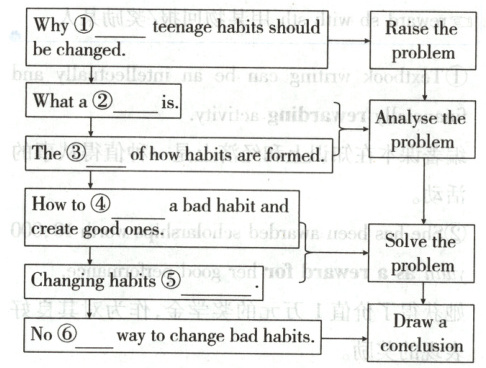
As¹ teenagers grow up, they become more independent and start making their own decisions. However, during this period, it can be easy for some of them to form bad habits. These bad habits, if left unchecked², could lead to more serious ones³ when they become adults. For example, some of them may become involved in tobacco or alcohol abuse⁴, which⁴ can lead to physical and mental health problems. To prevent harmful habits like these from dominating a teenager's life⁵ is essential. They must learn to recognise bad habits early and make appropriate changes.
在成长过程中,青少年会变得越来越独立,并且开始自己做决定。然而,在这一时期,他们中的一部分人容易养成不良习惯。如果任其发展,在他们长大成人后,这些不良习惯可能会导致更为严重的不良习惯。例如,有些青少年会沉溺于烟酒不能自拔,造成生理和心理健康问题。防止此类有害习惯主宰青少年的生活是至关重要的。他们必须学会早早认清不良习惯并作出适当的改变。
To change bad habits⁶ is never easy, even with many attempts.
There is a famous saying based on the philosophy of Aristotle⁷: "We are what we repeatedly do." In many ways, our lifestyle is the sum of choices⁸ we have made⁸. We make a choice to do something, and then we repeat it over and over again. Soon that choice becomes automatic and forms a habit that⁹ is much harder to change. The good news is that⑩ we can change, if⑪ we understand how⑫ habits work.
改变不良习惯从来都不是一件容易的事情,即使你三番五次地尝试。有一条基于亚里士多德哲学思想的著名谚语说:“重复的行为造就了我们。”从很多方面看,我们的生活方式是我们所作出的选择的总和。我们选择做某件事,接着我们反反复复地做这件事。不久之后,这项选择就变得自然而然,成为一种更加难以改变的习惯。好消息是,如果我们了解习惯是怎么运作的,我们就可以作出改变。
According to modern psychology¹³, we must first learn about the "habit cycle", which¹⁴ works like this:
• Firstly, there is a "cue", an action, event, or situation that acts as a signal to do something¹⁵.
• Secondly, there is a "routine", the regular action you take in response to the cue.
• Thirdly, there is the "reward", the good thing or feeling we get from the routine¹⁶.
根据现代心理学,我们必须首先了解“习惯循环”,其工作原理如下:
• 第一是“触发因素”,即一个行动、事件或状况,充当要做某事的讯号。
• 第二是“惯常行为”,即你响应触发因素而采取的常规行动。
• 第三是“回报”,即我们从惯常行为中获得的美好事物或感受。
For example, when¹⁷ we feel unhappy (cue), we eat lots of unhealthy snacks (routine¹⁸), which¹⁸ makes us feel happy (reward). The reward makes us much more likely to continue the cycle, and¹⁹ the bad habit of relying on unhealthy snacks is formed.
例如,当我们感到不高兴时(触发因素),我们会吃很多不健康零食(惯常行为),这让我们感到快乐(回报)。这一回报使我们更有可能继续这一循环,从而形成了依赖不健康零食这一不良习惯。
To facilitate a positive change²⁰ in our bad habits, we must first examine our bad habit cycles and then try to adapt them. We can do this by combining the information from our habit cycles with our own positive ideas²¹. For example, we could try to replace a negative routine²² with something more positive. So, when²³ we feel unhappy again (cue), rather than eat snacks, we could listen to some of our favourite music instead (routine), which²⁴ will make us feel relaxed (reward). Aside from changing bad habits, we can also use the habit cycle to create good habits. For example, when²⁵ we come to an escalator (cue), our normal routine is to ride it, but²⁶ we could change this routine into something more positive by taking the stairs instead.
想要促使不良习惯朝着积极的方向转化,我们必须首先审视自己的坏习惯循环,然后尽力去调整。为了做到这一点,我们可以把来自我们不良习惯循环的信息与我们自己的积极想法结合起来。例如,我们可以试着将一个消极的惯常行为替换为一个更积极的东西。因此,当我们再次感到不高兴时(触发因素),我们可以听几首自己最喜爱的音乐(惯常行为),而不是吃零食,这会使我们感到放松(回报)。除了改变不良习惯之外,我们还可以利用习惯循环来养成良好的习惯。例如,当我们走到电梯前的时候(触发因素),我们的惯常行为是乘坐电梯,但是我们可以改为走楼梯,从而将上述惯常行为改变为一个更积极的事情。
Many of us try to change bad habits quickly, and if²⁷ we are not successful straight away, we often become pessimistic and give up. In fact, the most successful way to change²⁸ is not suddenly, but over a period of time. As²⁹ the Chinese philosopher Laozi wrote, "A journey of a thousand miles begins with a single step." One step seems small, but it is essential. To reach the goal of change³⁰, a person must show some discipline and repeatedly take many small steps. After all, it is not easy to break bad habits.
我们中很多人试图迅速改变不良习惯,一旦没有立刻成功,我们往往变得悲观,继而放弃。事实上,改变不良习惯的最佳方法不是一蹴而就,而是需要一段时间。正如中国哲学家老子所说:“千里之行,始于足下。”一步似乎很小,却至关重要。为了实现改变这一目标,一个人必须展示出一定程度的自制力,不断地迈出许多小步。毕竟,戒除不良习惯并非易事。
For young people, there is plenty of time to change bad habits³¹. However, there is no "magic pill" or delete button that³² will help you; you have to think about your bad habits and decide on some changes. You have the power to build a happy and healthy life full of good habits³³!
对年轻人来说,有大量的时间可以改变不良习惯。然而,能帮助你的“魔力丸”或删除键并不存在;你必须思考自己的不良习惯,选定一些作出改变。你有能力构建一种充满良好习惯的快乐、健康的生活!
阅读领悟
(一)课文大意填空
(二)课文剖析选择题
1. Why are the teenagers easy to form bad habits?
A. Because they are fond of tobacco or alcohol.
B. Because they pay no attention to their health.
C. Because they intend to make their parents upset.
D. Because they are more independent and have their own ideas.
2. Why does the author quote Aristotle's words?
A. To show changing bad habits is never easy.
B. To imply we always repeat useless things.
C. To tell us our life is only in the control of ourselves.
D. To warn us to get ready for the difficulties.
3. Which of the following is considered as "reward"?
A. You take a walk around the school in the morning.
B. You feel happy after helping others.
C. You decide to borrow two books from the city library.
D. You're willing to volunteer in your community every weekend.
4. What attitude does the author take to changing bad habits?
A. Objective.
B. Pessimistic.
C. Positive.
D. Skeptical.
(三)问题链
1. What are the benefits of a healthy lifestyle?
2. Is it easy to get rid of bad habits? Why?
3. What should we do to form good habits?
健康的生活方式需养成的习惯
As¹ teenagers grow up, they become more independent and start making their own decisions. However, during this period, it can be easy for some of them to form bad habits. These bad habits, if left unchecked², could lead to more serious ones³ when they become adults. For example, some of them may become involved in tobacco or alcohol abuse⁴, which⁴ can lead to physical and mental health problems. To prevent harmful habits like these from dominating a teenager's life⁵ is essential. They must learn to recognise bad habits early and make appropriate changes.
在成长过程中,青少年会变得越来越独立,并且开始自己做决定。然而,在这一时期,他们中的一部分人容易养成不良习惯。如果任其发展,在他们长大成人后,这些不良习惯可能会导致更为严重的不良习惯。例如,有些青少年会沉溺于烟酒不能自拔,造成生理和心理健康问题。防止此类有害习惯主宰青少年的生活是至关重要的。他们必须学会早早认清不良习惯并作出适当的改变。
To change bad habits⁶ is never easy, even with many attempts.
There is a famous saying based on the philosophy of Aristotle⁷: "We are what we repeatedly do." In many ways, our lifestyle is the sum of choices⁸ we have made⁸. We make a choice to do something, and then we repeat it over and over again. Soon that choice becomes automatic and forms a habit that⁹ is much harder to change. The good news is that⑩ we can change, if⑪ we understand how⑫ habits work.
改变不良习惯从来都不是一件容易的事情,即使你三番五次地尝试。有一条基于亚里士多德哲学思想的著名谚语说:“重复的行为造就了我们。”从很多方面看,我们的生活方式是我们所作出的选择的总和。我们选择做某件事,接着我们反反复复地做这件事。不久之后,这项选择就变得自然而然,成为一种更加难以改变的习惯。好消息是,如果我们了解习惯是怎么运作的,我们就可以作出改变。
According to modern psychology¹³, we must first learn about the "habit cycle", which¹⁴ works like this:
• Firstly, there is a "cue", an action, event, or situation that acts as a signal to do something¹⁵.
• Secondly, there is a "routine", the regular action you take in response to the cue.
• Thirdly, there is the "reward", the good thing or feeling we get from the routine¹⁶.
根据现代心理学,我们必须首先了解“习惯循环”,其工作原理如下:
• 第一是“触发因素”,即一个行动、事件或状况,充当要做某事的讯号。
• 第二是“惯常行为”,即你响应触发因素而采取的常规行动。
• 第三是“回报”,即我们从惯常行为中获得的美好事物或感受。
For example, when¹⁷ we feel unhappy (cue), we eat lots of unhealthy snacks (routine¹⁸), which¹⁸ makes us feel happy (reward). The reward makes us much more likely to continue the cycle, and¹⁹ the bad habit of relying on unhealthy snacks is formed.
例如,当我们感到不高兴时(触发因素),我们会吃很多不健康零食(惯常行为),这让我们感到快乐(回报)。这一回报使我们更有可能继续这一循环,从而形成了依赖不健康零食这一不良习惯。
To facilitate a positive change²⁰ in our bad habits, we must first examine our bad habit cycles and then try to adapt them. We can do this by combining the information from our habit cycles with our own positive ideas²¹. For example, we could try to replace a negative routine²² with something more positive. So, when²³ we feel unhappy again (cue), rather than eat snacks, we could listen to some of our favourite music instead (routine), which²⁴ will make us feel relaxed (reward). Aside from changing bad habits, we can also use the habit cycle to create good habits. For example, when²⁵ we come to an escalator (cue), our normal routine is to ride it, but²⁶ we could change this routine into something more positive by taking the stairs instead.
想要促使不良习惯朝着积极的方向转化,我们必须首先审视自己的坏习惯循环,然后尽力去调整。为了做到这一点,我们可以把来自我们不良习惯循环的信息与我们自己的积极想法结合起来。例如,我们可以试着将一个消极的惯常行为替换为一个更积极的东西。因此,当我们再次感到不高兴时(触发因素),我们可以听几首自己最喜爱的音乐(惯常行为),而不是吃零食,这会使我们感到放松(回报)。除了改变不良习惯之外,我们还可以利用习惯循环来养成良好的习惯。例如,当我们走到电梯前的时候(触发因素),我们的惯常行为是乘坐电梯,但是我们可以改为走楼梯,从而将上述惯常行为改变为一个更积极的事情。
Many of us try to change bad habits quickly, and if²⁷ we are not successful straight away, we often become pessimistic and give up. In fact, the most successful way to change²⁸ is not suddenly, but over a period of time. As²⁹ the Chinese philosopher Laozi wrote, "A journey of a thousand miles begins with a single step." One step seems small, but it is essential. To reach the goal of change³⁰, a person must show some discipline and repeatedly take many small steps. After all, it is not easy to break bad habits.
我们中很多人试图迅速改变不良习惯,一旦没有立刻成功,我们往往变得悲观,继而放弃。事实上,改变不良习惯的最佳方法不是一蹴而就,而是需要一段时间。正如中国哲学家老子所说:“千里之行,始于足下。”一步似乎很小,却至关重要。为了实现改变这一目标,一个人必须展示出一定程度的自制力,不断地迈出许多小步。毕竟,戒除不良习惯并非易事。
For young people, there is plenty of time to change bad habits³¹. However, there is no "magic pill" or delete button that³² will help you; you have to think about your bad habits and decide on some changes. You have the power to build a happy and healthy life full of good habits³³!
对年轻人来说,有大量的时间可以改变不良习惯。然而,能帮助你的“魔力丸”或删除键并不存在;你必须思考自己的不良习惯,选定一些作出改变。你有能力构建一种充满良好习惯的快乐、健康的生活!
阅读领悟
(一)课文大意填空
(二)课文剖析选择题
1. Why are the teenagers easy to form bad habits?
A. Because they are fond of tobacco or alcohol.
B. Because they pay no attention to their health.
C. Because they intend to make their parents upset.
D. Because they are more independent and have their own ideas.
2. Why does the author quote Aristotle's words?
A. To show changing bad habits is never easy.
B. To imply we always repeat useless things.
C. To tell us our life is only in the control of ourselves.
D. To warn us to get ready for the difficulties.
3. Which of the following is considered as "reward"?
A. You take a walk around the school in the morning.
B. You feel happy after helping others.
C. You decide to borrow two books from the city library.
D. You're willing to volunteer in your community every weekend.
4. What attitude does the author take to changing bad habits?
A. Objective.
B. Pessimistic.
C. Positive.
D. Skeptical.
(三)问题链
1. What are the benefits of a healthy lifestyle?
2. Is it easy to get rid of bad habits? Why?
3. What should we do to form good habits?
答案:
(一)课文大意填空 1bad 2habit 3cycle 4change 5gradually 6easy (二)课文剖析选择题 1.D 2.A 3.B 4.C (三)问题链 1.The benefits of a healthy lifestyle include improved physical and mental health, increased energy, better sleep, and a lower risk of chronic diseases. 2.No, it's not easy to get rid of bad habits because they are habitual behaviors that require conscious effort and time to change. 3.To form good habits, we should set clear and achievable goals, create a plan, and be consistent with our efforts.
查看更多完整答案,请扫码查看

