

 搜索
搜索
第84页
- 第1页
- 第2页
- 第3页
- 第4页
- 第5页
- 第6页
- 第7页
- 第8页
- 第9页
- 第10页
- 第11页
- 第12页
- 第13页
- 第14页
- 第15页
- 第16页
- 第17页
- 第18页
- 第19页
- 第20页
- 第21页
- 第22页
- 第23页
- 第24页
- 第25页
- 第26页
- 第27页
- 第28页
- 第29页
- 第30页
- 第31页
- 第32页
- 第33页
- 第34页
- 第35页
- 第36页
- 第37页
- 第38页
- 第39页
- 第40页
- 第41页
- 第42页
- 第43页
- 第44页
- 第45页
- 第46页
- 第47页
- 第48页
- 第49页
- 第50页
- 第51页
- 第52页
- 第53页
- 第54页
- 第55页
- 第56页
- 第57页
- 第58页
- 第59页
- 第60页
- 第61页
- 第62页
- 第63页
- 第64页
- 第65页
- 第66页
- 第67页
- 第68页
- 第69页
- 第70页
- 第71页
- 第72页
- 第73页
- 第74页
- 第75页
- 第76页
- 第77页
- 第78页
- 第79页
- 第80页
- 第81页
- 第82页
- 第83页
- 第84页
- 第85页
- 第86页
- 第87页
- 第88页
- 第89页
- 第90页
- 第91页
- 第92页
- 第93页
- 第94页
- 第95页
- 第96页
- 第97页
- 第98页
- 第99页
- 第100页
- 第101页
- 第102页
- 第103页
- 第104页
- 第105页
- 第106页
- 第107页
- 第108页
- 第109页
- 第110页
- 第111页
- 第112页
- 第113页
- 第114页
- 第115页
- 第116页
- 第117页
- 第118页
- 第119页
- 第120页
- 第121页
- 第122页
- 第123页
- 第124页
- 第125页
- 第126页
- 第127页
- 第128页
- 第129页
- 第130页
- 第131页
- 第132页
- 第133页
- 第134页
- 第135页
- 第136页
- 第137页
- 第138页
一、以读促写
I’d like to introduce a famous story about wisdom. It took place in the Three Kingdoms period. Nearly everyone failed to weigh a huge elephant, but Cao Chong came up with a brilliant solution.
First, Cao Chong led the elephant onto a boat in the river. As the boat sank lower in the water, he marked (标记) the waterline on the boat’s side. Then, he had the elephant leave and ordered workers to put stones onto the boat until it sank to the same mark. Finally, he weighed all the stones to get the elephant’s weight. Everyone was amazed by his wisdom!
This story shows us that intelligence can solve problems that seem impossible. Instead of giving up, Cao Chong used creative thinking. It teaches use that when facing difficulties, we should look for smart solutions calmly.
二、写作任务
假如你是李华,学校校刊举办了一个“用英语讲好中国故事” 的征文比赛。请你准备一则关于智慧的中国古代故事,向校刊投稿。要求词数为 80 左右。
内容包括:1. 简介与概括; 2. 情节叙述; 3. 学习体会。
【灵感素材】
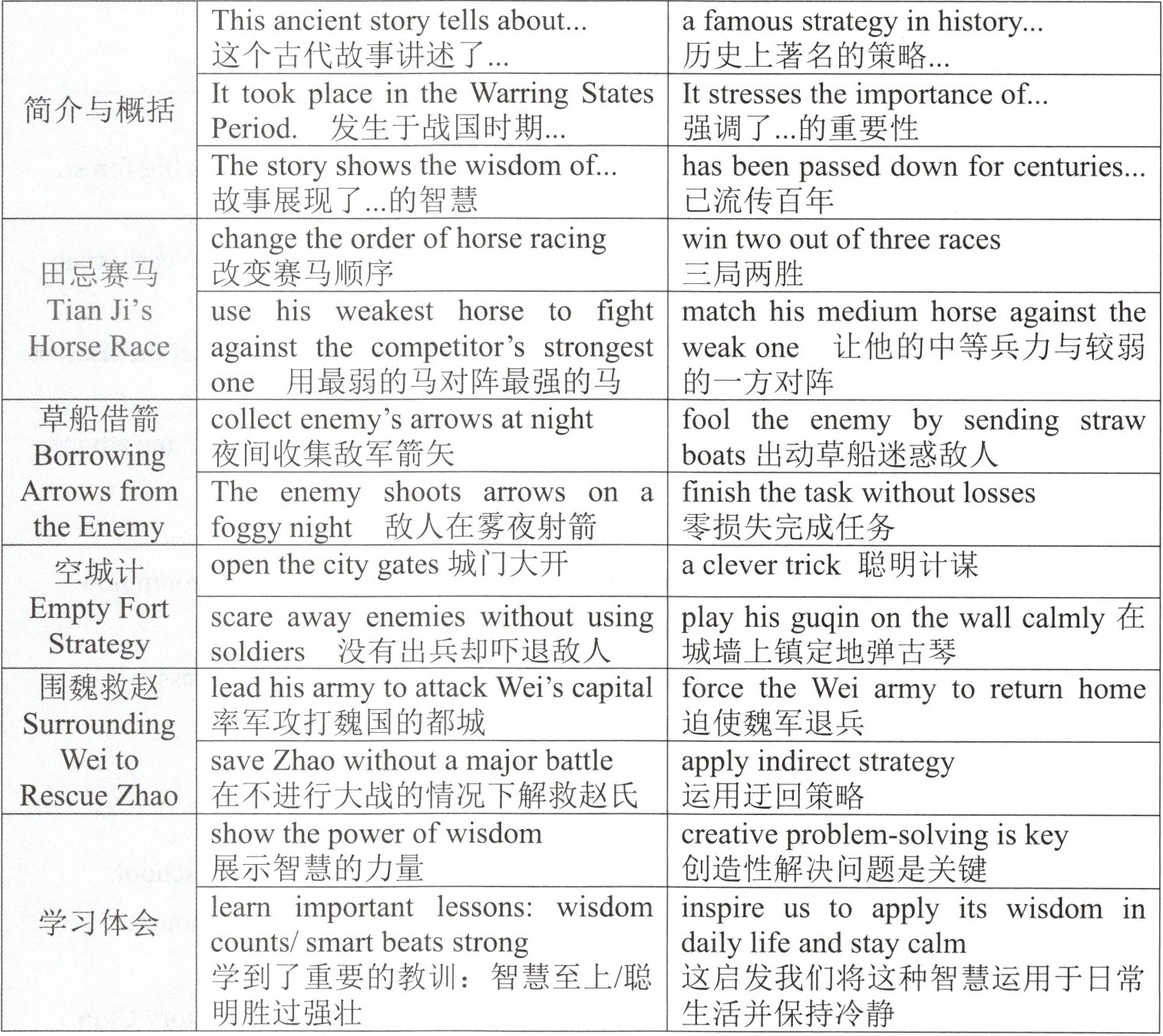
【必备短语】写出相关重点短语。
1. 中国古代智慧
2. 著名的策略
3. 打开城门
4. 假装镇定
5. 吓退敌人
6. 临危不乱
7. 运用智慧
8. 运用于日常生活
【亮点句型】写出与短文有关句型。
1. 这个计谋不仅拯救了该城,而且展示了他非凡的勇气。(...not only...but also...)
2. 当敌人到达时,诸葛亮正在城墙上弹琴。(When...)
3.通过这个聪明的计策,诸葛亮没用士兵就吓退了敌人。(By this clever trick, ...without using soldiers.)
4. 毫无疑问,现今我们也可以用智慧来解决问题。(It is certain that...)
【你的精彩】一篇好文要配上一手好字!
I’d like to introduce a famous story about wisdom. It took place in the Three Kingdoms period. Nearly everyone failed to weigh a huge elephant, but Cao Chong came up with a brilliant solution.
First, Cao Chong led the elephant onto a boat in the river. As the boat sank lower in the water, he marked (标记) the waterline on the boat’s side. Then, he had the elephant leave and ordered workers to put stones onto the boat until it sank to the same mark. Finally, he weighed all the stones to get the elephant’s weight. Everyone was amazed by his wisdom!
This story shows us that intelligence can solve problems that seem impossible. Instead of giving up, Cao Chong used creative thinking. It teaches use that when facing difficulties, we should look for smart solutions calmly.
二、写作任务
假如你是李华,学校校刊举办了一个“用英语讲好中国故事” 的征文比赛。请你准备一则关于智慧的中国古代故事,向校刊投稿。要求词数为 80 左右。
内容包括:1. 简介与概括; 2. 情节叙述; 3. 学习体会。
【灵感素材】
【必备短语】写出相关重点短语。
1. 中国古代智慧
ancient Chinese wisdom
2. 著名的策略
a famous strategy
3. 打开城门
open the city gates
4. 假装镇定
pretend to be calm
5. 吓退敌人
scare away the enemy
6. 临危不乱
keep one's head in the face of danger
7. 运用智慧
apply wisdom
8. 运用于日常生活
apply in daily life
【亮点句型】写出与短文有关句型。
1. 这个计谋不仅拯救了该城,而且展示了他非凡的勇气。(...not only...but also...)
This strategy not only saved the city, but also showed his extraordinary courage.
2. 当敌人到达时,诸葛亮正在城墙上弹琴。(When...)
When the enemy arrived, Zhuge Liang was playing the guqin on the wall.
3.通过这个聪明的计策,诸葛亮没用士兵就吓退了敌人。(By this clever trick, ...without using soldiers.)
By this clever trick, Zhuge Liang scared away the enemy without using soldiers.
4. 毫无疑问,现今我们也可以用智慧来解决问题。(It is certain that...)
It is certain that we can also solve problems with wisdom nowadays.
【你的精彩】一篇好文要配上一手好字!
I'd like to share the story of "Empty Fort Strategy". It took place in the Three Kingdoms period. Zhuge Liang, a wise man, used a clever trick. He opened the city gates and played his guqin on the wall calmly when the enemy arrived. He fooled the enemy into thinking there was an ambush inside, so the enemy retreated. This story shows the power of wisdom. It teaches us that we should keep calm when facing difficulties and use our intelligence to solve problems. We can also apply this wisdom in our daily life.
答案:
必备短语
1. ancient Chinese wisdom
2. a famous strategy
3. open the city gates
4. pretend to be calm
5. scare away the enemy
6. keep one's head in the face of danger
7. apply wisdom
8. apply in daily life
亮点句型
1. This strategy not only saved the city, but also showed his extraordinary courage.
2. When the enemy arrived, Zhuge Liang was playing the guqin on the wall.
3. By this clever trick, Zhuge Liang scared away the enemy without using soldiers.
4. It is certain that we can also solve problems with wisdom nowadays.
你的精彩
I'd like to share the story of "Empty Fort Strategy". It took place in the Three Kingdoms period. Zhuge Liang, a wise man, used a clever trick. He opened the city gates and played his guqin on the wall calmly when the enemy arrived. He fooled the enemy into thinking there was an ambush inside, so the enemy retreated. This story shows the power of wisdom. It teaches us that we should keep calm when facing difficulties and use our intelligence to solve problems. We can also apply this wisdom in our daily life.
Word count: about 80
1. ancient Chinese wisdom
2. a famous strategy
3. open the city gates
4. pretend to be calm
5. scare away the enemy
6. keep one's head in the face of danger
7. apply wisdom
8. apply in daily life
亮点句型
1. This strategy not only saved the city, but also showed his extraordinary courage.
2. When the enemy arrived, Zhuge Liang was playing the guqin on the wall.
3. By this clever trick, Zhuge Liang scared away the enemy without using soldiers.
4. It is certain that we can also solve problems with wisdom nowadays.
你的精彩
I'd like to share the story of "Empty Fort Strategy". It took place in the Three Kingdoms period. Zhuge Liang, a wise man, used a clever trick. He opened the city gates and played his guqin on the wall calmly when the enemy arrived. He fooled the enemy into thinking there was an ambush inside, so the enemy retreated. This story shows the power of wisdom. It teaches us that we should keep calm when facing difficulties and use our intelligence to solve problems. We can also apply this wisdom in our daily life.
Word count: about 80
查看更多完整答案,请扫码查看

