

 搜索
搜索
第64页
- 第1页
- 第2页
- 第3页
- 第4页
- 第5页
- 第6页
- 第7页
- 第8页
- 第9页
- 第10页
- 第11页
- 第12页
- 第13页
- 第14页
- 第15页
- 第16页
- 第17页
- 第18页
- 第19页
- 第20页
- 第21页
- 第22页
- 第23页
- 第24页
- 第25页
- 第26页
- 第27页
- 第28页
- 第29页
- 第30页
- 第31页
- 第32页
- 第33页
- 第34页
- 第35页
- 第36页
- 第37页
- 第38页
- 第39页
- 第40页
- 第41页
- 第42页
- 第43页
- 第44页
- 第45页
- 第46页
- 第47页
- 第48页
- 第49页
- 第50页
- 第51页
- 第52页
- 第53页
- 第54页
- 第55页
- 第56页
- 第57页
- 第58页
- 第59页
- 第60页
- 第61页
- 第62页
- 第63页
- 第64页
- 第65页
- 第66页
- 第67页
- 第68页
- 第69页
- 第70页
- 第71页
- 第72页
- 第73页
- 第74页
- 第75页
- 第76页
- 第77页
- 第78页
- 第79页
- 第80页
- 第81页
- 第82页
- 第83页
- 第84页
- 第85页
- 第86页
- 第87页
- 第88页
- 第89页
- 第90页
- 第91页
- 第92页
- 第93页
- 第94页
- 第95页
- 第96页
- 第97页
- 第98页
- 第99页
- 第100页
- 第101页
- 第102页
- 第103页
- 第104页
- 第105页
- 第106页
- 第107页
- 第108页
- 第109页
- 第110页
- 第111页
- 第112页
- 第113页
- 第114页
- 第115页
- 第116页
- 第117页
- 第118页
- 第119页
- 第120页
- 第121页
- 第122页
- 第123页
- 第124页
- 第125页
- 第126页
- 第127页
- 第128页
- 第129页
- 第130页
- 第131页
- 第132页
- 第133页
- 第134页
- 第135页
- 第136页
- 第137页
- 第138页
B
①People who have trouble walking or moving around often have a hard time enjoying the beach. But hundreds of beaches in Greece now offer a new way for people in wheelchairs to get into the water by themselves. It’s called Seatrac.
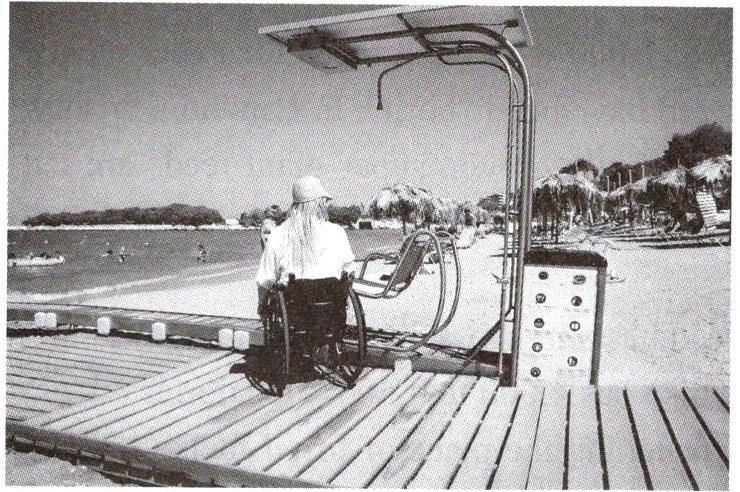
②Seatrac is a chair on a moving ramp (坡道). It can carry a disabled person into the sea. Once in the sea, the person can either stay in the chair, enjoying the water, or go for a swim. When the person wants to get out of the water, he can use the remote control (遥控器) to bring the chair back to the top of the ramp. It’s even possible for him or her to take a shower in the chair after a swim.
③Seatrac was invented and developed in Greece. The idea for it came when one of the inventors, Ignatios Fotiou, was talking with a friend who used a wheelchair. The friend said he enjoyed the sea, but didn’t like having to be carried into the ocean.
④Mr. Fotiou wanted to find an easier way for wheelchair users to get into the water. He worked hard with others to develop the Seatrac system. He made the system simple to put in place and easy to run. A wooden walkway allows wheelchair users to reach the Seatrac. The system is solar - powered, and can keep running even if the electricity goes out.
⑤This summer, the Seatrac system is being used at over 220 beaches in Greece and other countries. Thanks to Seatrac, people who use wheelchairs now can cool down in the sea.
(
A. Help the disabled go home after a swim.
B. Choose a suitable beach for the disabled.
C. Make the disabled move around the beach freely.
D. Help the disabled get in and out of the sea safely.
(
A. His friend’s difficulty. B. His deep love for the sea.
C. His partner’s advice. D. His wish to make friends.
(
A. The development of the electricity.
B. The advantages of the Seatrac system.
C. The future of solar - powered wheelchairs.
D. The friendship between Fotiou and his friend.
(
A. Natural. B. Cheap. C. Popular. D. Dangerous.
(
A. To show the development of the Seatrac system.
B. To encourage care for disabled people around us.
C. To introduce a new invention for wheelchair users.
C. To give advice on using solar - powered wheelchairs.
①People who have trouble walking or moving around often have a hard time enjoying the beach. But hundreds of beaches in Greece now offer a new way for people in wheelchairs to get into the water by themselves. It’s called Seatrac.
②Seatrac is a chair on a moving ramp (坡道). It can carry a disabled person into the sea. Once in the sea, the person can either stay in the chair, enjoying the water, or go for a swim. When the person wants to get out of the water, he can use the remote control (遥控器) to bring the chair back to the top of the ramp. It’s even possible for him or her to take a shower in the chair after a swim.
③Seatrac was invented and developed in Greece. The idea for it came when one of the inventors, Ignatios Fotiou, was talking with a friend who used a wheelchair. The friend said he enjoyed the sea, but didn’t like having to be carried into the ocean.
④Mr. Fotiou wanted to find an easier way for wheelchair users to get into the water. He worked hard with others to develop the Seatrac system. He made the system simple to put in place and easy to run. A wooden walkway allows wheelchair users to reach the Seatrac. The system is solar - powered, and can keep running even if the electricity goes out.
⑤This summer, the Seatrac system is being used at over 220 beaches in Greece and other countries. Thanks to Seatrac, people who use wheelchairs now can cool down in the sea.
(
D
) 6. What can Seatrac do according to the passage?A. Help the disabled go home after a swim.
B. Choose a suitable beach for the disabled.
C. Make the disabled move around the beach freely.
D. Help the disabled get in and out of the sea safely.
(
A
) 7. What made Mr. Fotiou decide to develop Seatrac?A. His friend’s difficulty. B. His deep love for the sea.
C. His partner’s advice. D. His wish to make friends.
(
B
) 8. What is Paragraph 4 mainly about?A. The development of the electricity.
B. The advantages of the Seatrac system.
C. The future of solar - powered wheelchairs.
D. The friendship between Fotiou and his friend.
(
C
) 9. Which of the following can best describe Seatrac according to the last paragraph?A. Natural. B. Cheap. C. Popular. D. Dangerous.
(
C
) 10. Why does the writer write this passage?A. To show the development of the Seatrac system.
B. To encourage care for disabled people around us.
C. To introduce a new invention for wheelchair users.
C. To give advice on using solar - powered wheelchairs.
答案:
6. D
7. A
8. B
9. C
10. C
7. A
8. B
9. C
10. C
查看更多完整答案,请扫码查看

