

 搜索
搜索
第85页
- 第1页
- 第2页
- 第3页
- 第4页
- 第5页
- 第6页
- 第7页
- 第8页
- 第9页
- 第10页
- 第11页
- 第12页
- 第13页
- 第14页
- 第15页
- 第16页
- 第17页
- 第18页
- 第19页
- 第20页
- 第21页
- 第22页
- 第23页
- 第24页
- 第25页
- 第26页
- 第27页
- 第28页
- 第29页
- 第30页
- 第31页
- 第32页
- 第33页
- 第34页
- 第35页
- 第36页
- 第37页
- 第38页
- 第39页
- 第40页
- 第41页
- 第42页
- 第43页
- 第44页
- 第45页
- 第46页
- 第47页
- 第48页
- 第49页
- 第50页
- 第51页
- 第52页
- 第53页
- 第54页
- 第55页
- 第56页
- 第57页
- 第58页
- 第59页
- 第60页
- 第61页
- 第62页
- 第63页
- 第64页
- 第65页
- 第66页
- 第67页
- 第68页
- 第69页
- 第70页
- 第71页
- 第72页
- 第73页
- 第74页
- 第75页
- 第76页
- 第77页
- 第78页
- 第79页
- 第80页
- 第81页
- 第82页
- 第83页
- 第84页
- 第85页
- 第86页
- 第87页
- 第88页
- 第89页
- 第90页
- 第91页
- 第92页
- 第93页
- 第94页
- 第95页
- 第96页
- 第97页
- 第98页
- 第99页
- 第100页
- 第101页
- 第102页
- 第103页
- 第104页
- 第105页
- 第106页
- 第107页
- 第108页
- 第109页
- 第110页
- 第111页
- 第112页
- 第113页
- 第114页
- 第115页
- 第116页
- 第117页
- 第118页
- 第119页
- 第120页
- 第121页
- 第122页
- 第123页
- 第124页
- 第125页
- 第126页
- 第127页
- 第128页
- 第129页
- 第130页
- 第131页
- 第132页
- 第133页
- 第134页
- 第135页
- 第136页
- 第137页
- 第138页
- 第139页
- 第140页
- 第141页
- 第142页
- 第143页
- 第144页
- 第145页
- 第146页
- 第147页
- 第148页
- 第149页
- 第150页
- 第151页
- 第152页
- 第153页
- 第154页
主题范畴:人与社会(科学与技术) 语篇类型:应用文 词数:191 难度:★★★☆☆ 建议用时:6分钟 参考答案:P218
全文翻译
An interesting experiment with oranges
Does an orange stay on the top of water or go down when placed in water? It seems like an easy question, but is it? Do this fun density(密度) science experiment for kids and answer the question while learning a special character of oranges.
How to do it:
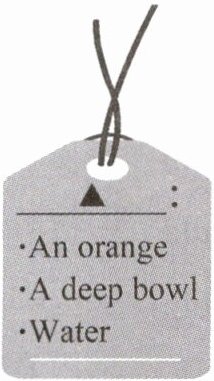
Step 1: Fill the bowl with water.
Step 2: Put the orange in water and watch what happens.
Step 3: Peel the rind(果皮) from the orange.
Step 4: Put the peeled orange in water, and what happens this time?
What happens:
● The first time you put the orange in the bowl of water, it stays on the top of water.
● After you peel the rind and put the orange in water again, it goes down to the bottom.
Why:
The rind of an orange is full of small air pockets(气囊) which help give it a lower density than water, making it stay on the top of water. Peeling the rind with all the air pockets from the orange makes its density higher than that of water, making it go down.
① Which of the following is the best to put in “ ▲ ”?
A. What to prepare
B. Where to do it
C. When to do it
D. Why to do it
② How many steps are there in this experiment?
A. Two.
B. Three.
C. Four.
D. Five.
③ What happens after putting the orange without the rind in water?
A. The orange goes bad.
B. The orange becomes bigger.
C. The orange stays on the top of water.
D. The orange goes down to the bottom.
④ What makes the orange have a lower density than water?
A. The juice inside the orange.
B. The rind with small air pockets.
C. The shape of the orange.
D. The color of the orange rind.
⑤ Who might be most interested in reading this passage?
A. A physics lover.
B. A nature lover.
C. A space lover.
D. A history lover.
全文翻译
An interesting experiment with oranges
Does an orange stay on the top of water or go down when placed in water? It seems like an easy question, but is it? Do this fun density(密度) science experiment for kids and answer the question while learning a special character of oranges.
How to do it:
Step 1: Fill the bowl with water.
Step 2: Put the orange in water and watch what happens.
Step 3: Peel the rind(果皮) from the orange.
Step 4: Put the peeled orange in water, and what happens this time?
What happens:
● The first time you put the orange in the bowl of water, it stays on the top of water.
● After you peel the rind and put the orange in water again, it goes down to the bottom.
Why:
The rind of an orange is full of small air pockets(气囊) which help give it a lower density than water, making it stay on the top of water. Peeling the rind with all the air pockets from the orange makes its density higher than that of water, making it go down.
① Which of the following is the best to put in “ ▲ ”?
A. What to prepare
B. Where to do it
C. When to do it
D. Why to do it
② How many steps are there in this experiment?
A. Two.
B. Three.
C. Four.
D. Five.
③ What happens after putting the orange without the rind in water?
A. The orange goes bad.
B. The orange becomes bigger.
C. The orange stays on the top of water.
D. The orange goes down to the bottom.
④ What makes the orange have a lower density than water?
A. The juice inside the orange.
B. The rind with small air pockets.
C. The shape of the orange.
D. The color of the orange rind.
⑤ Who might be most interested in reading this passage?
A. A physics lover.
B. A nature lover.
C. A space lover.
D. A history lover.
答案:
① A 句子还原题。根据How to do it部分中的内容可知,实验过程中用到了小标签中提到的橘子、碗和水。由此可知,此处指实验要用到的东西;再结合选项可知,A项"该做什么准备"符合语境。
② C 细节理解题。根据How to do it部分中的Step 1、Step 2、Step 3和Step 4可知,该实验分为四个步骤。
③ D 细节理解题。根据What happens部分中的"After you peel the rind and put the orange in water again, it goes down to the bottom."可知,剥了皮的橘子放入水中会沉入水底。
④ B 细节理解题。根据Why部分中的"The rind of an orange is full of small air pockets which help give it a lower density than water"可知,橘子皮中充满了小气囊,使其密度比水低。
⑤ A 推理判断题。通读全文可知,本文主要讲述了一个有趣的物理实验,故一位物理爱好者可能对本文最感兴趣。
② C 细节理解题。根据How to do it部分中的Step 1、Step 2、Step 3和Step 4可知,该实验分为四个步骤。
③ D 细节理解题。根据What happens部分中的"After you peel the rind and put the orange in water again, it goes down to the bottom."可知,剥了皮的橘子放入水中会沉入水底。
④ B 细节理解题。根据Why部分中的"The rind of an orange is full of small air pockets which help give it a lower density than water"可知,橘子皮中充满了小气囊,使其密度比水低。
⑤ A 推理判断题。通读全文可知,本文主要讲述了一个有趣的物理实验,故一位物理爱好者可能对本文最感兴趣。
查看更多完整答案,请扫码查看

