

 搜索
搜索
第41页
- 第1页
- 第2页
- 第3页
- 第4页
- 第5页
- 第6页
- 第7页
- 第8页
- 第9页
- 第10页
- 第11页
- 第12页
- 第13页
- 第14页
- 第15页
- 第16页
- 第17页
- 第18页
- 第19页
- 第20页
- 第21页
- 第22页
- 第23页
- 第24页
- 第25页
- 第26页
- 第27页
- 第28页
- 第29页
- 第30页
- 第31页
- 第32页
- 第33页
- 第34页
- 第35页
- 第36页
- 第37页
- 第38页
- 第39页
- 第40页
- 第41页
- 第42页
- 第43页
- 第44页
- 第45页
- 第46页
- 第47页
- 第48页
- 第49页
- 第50页
- 第51页
- 第52页
- 第53页
- 第54页
- 第55页
- 第56页
- 第57页
- 第58页
- 第59页
- 第60页
- 第61页
- 第62页
- 第63页
- 第64页
- 第65页
- 第66页
- 第67页
- 第68页
五、阅读理解
答案 19 - 21
主题:人与自然·环境保护 学科素养:思维品质
体裁:说明文 词数:约270 建议用时:8分钟
We produce a lot of rubbish every day. Where does all this rubbish go? Scientists have made a pyramid(金字塔)of the different ways of dealing with rubbish. The worst ways are at the bottom and the best ways are at the top.
The bottom of the pyramid is waste disposal(丢弃). This means simply putting rubbish in places like open waste - yards. Waste - yards produce smelly gases. They are harmful to the environment and our health.
A landfill(垃圾填埋场)is a huge hollow that can hold rubbish. In some landfills, waste is treated to make it less harmful before it is buried. Once a landfill is full, it is safely covered with earth. A park or a playground can then be built on top of it.
Another way to deal with rubbish is to burn it. This produces energy but can give out harmful gases into the air. In some places, these gases are cleaned before they are released.
In the middle of the pyramid is recycling. This means using rubbish to make new products. Used glass bottles, for example, can be changed to make new glass products. Waste paper can be broken up and mixed with water to make new paper.
Reusing is another good way to deal with rubbish. This means using “waste” in another way. Buying and selling second - hand things online is a good example.
Waste prevention is at the top of the pyramid. It means not producing rubbish in the first place. For example, you can say no to single - use plastic cups. Choose glass cups instead!
19. The underlined word “hollow” in Paragraph 3 means “____”.
A. park B. factory C. hole D. playground
20. How does the writer explain “recycling”?
A. By giving some examples.
B. By listing some numbers.
C. By making some surveys.
D. By asking some questions.
21. Which is the correct order of the missing part about the pyramid of dealing with rubbish?
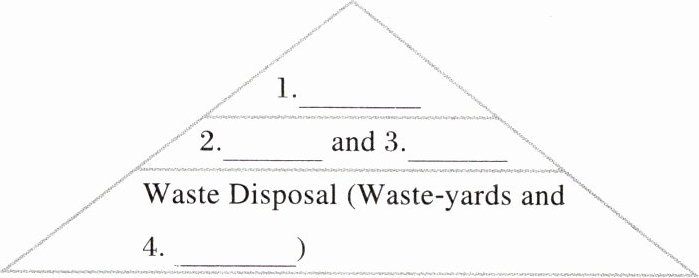
a. Landfills
b. Recycling
c. Waste Prevention
d. Reusing
A. 1—b, 2—c, 3—d, 4—a
B. 1—b, 2—d, 3—c, 4—a
C. 1—c, 2—b, 3—a, 4—d
D. 1—c, 2—b, 3—d, 4—a
答案 19 - 21
主题:人与自然·环境保护 学科素养:思维品质
体裁:说明文 词数:约270 建议用时:8分钟
We produce a lot of rubbish every day. Where does all this rubbish go? Scientists have made a pyramid(金字塔)of the different ways of dealing with rubbish. The worst ways are at the bottom and the best ways are at the top.
The bottom of the pyramid is waste disposal(丢弃). This means simply putting rubbish in places like open waste - yards. Waste - yards produce smelly gases. They are harmful to the environment and our health.
A landfill(垃圾填埋场)is a huge hollow that can hold rubbish. In some landfills, waste is treated to make it less harmful before it is buried. Once a landfill is full, it is safely covered with earth. A park or a playground can then be built on top of it.
Another way to deal with rubbish is to burn it. This produces energy but can give out harmful gases into the air. In some places, these gases are cleaned before they are released.
In the middle of the pyramid is recycling. This means using rubbish to make new products. Used glass bottles, for example, can be changed to make new glass products. Waste paper can be broken up and mixed with water to make new paper.
Reusing is another good way to deal with rubbish. This means using “waste” in another way. Buying and selling second - hand things online is a good example.
Waste prevention is at the top of the pyramid. It means not producing rubbish in the first place. For example, you can say no to single - use plastic cups. Choose glass cups instead!
19. The underlined word “hollow” in Paragraph 3 means “____”.
A. park B. factory C. hole D. playground
20. How does the writer explain “recycling”?
A. By giving some examples.
B. By listing some numbers.
C. By making some surveys.
D. By asking some questions.
21. Which is the correct order of the missing part about the pyramid of dealing with rubbish?
a. Landfills
b. Recycling
c. Waste Prevention
d. Reusing
A. 1—b, 2—c, 3—d, 4—a
B. 1—b, 2—d, 3—c, 4—a
C. 1—c, 2—b, 3—a, 4—d
D. 1—c, 2—b, 3—d, 4—a
答案:
19. C【点拨】词义猜测题。根据第三段中“A landfill is a huge hollow that can hold rubbish.”可知,垃圾填埋场可以容纳大量的垃圾,所以画线的单词与 hole 意思相近。故选 C。
20. A【点拨】细节理解题。根据第五段的内容“In the middle of... is recycling... Used glass bottles, for example...”可知,作者通过举一些例子来解释“回收利用”。故选 A。
21. D【点拨】细节理解题。根据第二段中“The bottom of the pyramid is waste disposal.”和第三段中“A landfill is a huge hollow that can hold rubbish.”可知,4 对应 a“垃圾填埋场”;根据最后一段中“Waste prevention is at the top of the pyramid.”可知,1 对应 c“废弃物的预防”。故选 D。
20. A【点拨】细节理解题。根据第五段的内容“In the middle of... is recycling... Used glass bottles, for example...”可知,作者通过举一些例子来解释“回收利用”。故选 A。
21. D【点拨】细节理解题。根据第二段中“The bottom of the pyramid is waste disposal.”和第三段中“A landfill is a huge hollow that can hold rubbish.”可知,4 对应 a“垃圾填埋场”;根据最后一段中“Waste prevention is at the top of the pyramid.”可知,1 对应 c“废弃物的预防”。故选 D。
查看更多完整答案,请扫码查看

